Loading...
Done
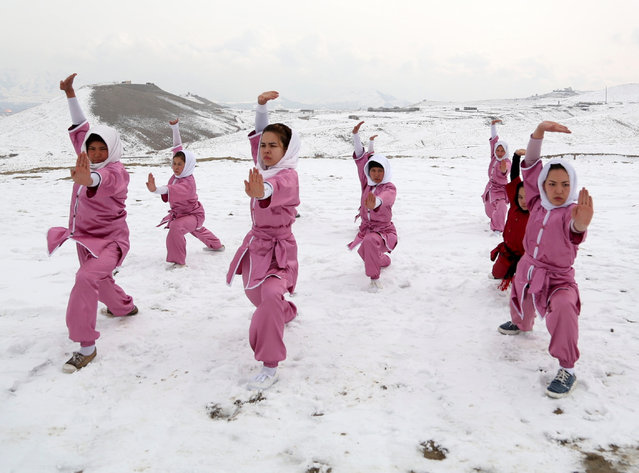
Afghan girl athletes perform Wushu on the top of a hill in Kabul, capital of Afghanistan, January 18, 2017. In the conservative Afghan society where people especially in the countryside deeply believe in the old traditions and don't allow their girls and female members of the family to go out of home, exercising sport in open is extremely risky, but a group of girls are broken the taboo and exercising Wushu on a hilltop where the temperature is minus 2 Celsius degrees. (Photo by Rahmat Alizadah/Xinhua/Barcroft Images)

Afghan girl athletes perform Wushu on the top of a hill in Kabul, capital of Afghanistan, January 18, 2017. In the conservative Afghan society where people especially in the countryside deeply believe in the old traditions and don't allow their girls and female members of the family to go out of home, exercising sport in open is extremely risky, but a group of girls are broken the taboo and exercising Wushu on a hilltop where the temperature is minus 2 Celsius degrees. (Photo by Rahmat Alizadah/Xinhua/Barcroft Images)
Details
21 Jan 2017 11:26:00
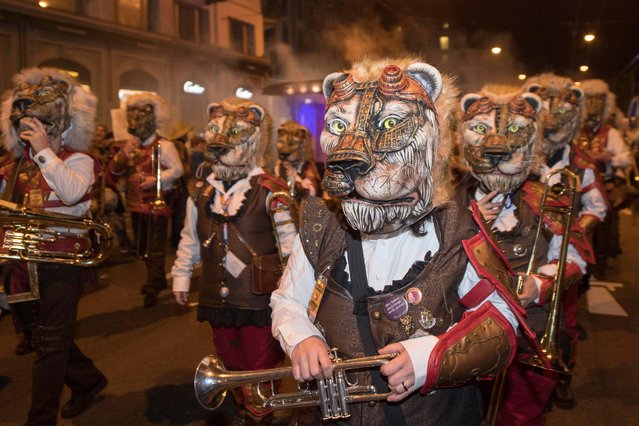
Masked Guggen music bands parade through the streets on the occasion of the beginning of the Fasnacht Carnival of Lucerne, Switzerland, early 23 February 2017. (Photo by Urs Flueeler/EPA)

Masked Guggen music bands parade through the streets on the occasion of the beginning of the Fasnacht Carnival of Lucerne, Switzerland, early 23 February 2017. (Photo by Urs Flueeler/EPA)
Details
25 Feb 2017 00:01:00
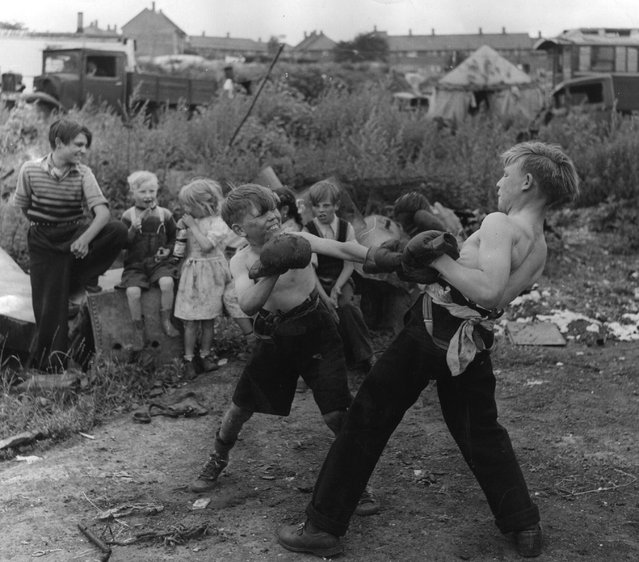
The unromantic gypsies. Children boxing in a gypsy camp in Kent, England on July 1, 1951. Like all boys these gypsy lads like to try their hand at boxing. Encouraged by their friends they fight it out on Corke's Meadow. Few Romanies now live a life of wandering romance. Most are like the three hundred squatters of Corke's Meadow, Kent, which is part of a “gypsy problem” that involves about 100,000 today. Of those about 25,000 can be rightly called gypsies, the rest are Mumpers and Posh-rats and Hobos. Corke's Meadow has both kinds. “Picture Post” cameraman Bert Hardy photographs the Corke's Meadow gypsies in their encampment. (Photo by Hulton-Deutsch Collection/Corbis via Getty Images)

The unromantic gypsies. Children boxing in a gypsy camp in Kent, England on July 1, 1951. Like all boys these gypsy lads like to try their hand at boxing. Encouraged by their friends they fight it out on Corke's Meadow. Few Romanies now live a life of wandering romance. Most are like the three hundred squatters of Corke's Meadow, Kent, which is part of a “gypsy problem” that involves about 100,000 today. Of those about 25,000 can be rightly called gypsies, the rest are Mumpers and Posh-rats and Hobos. Corke's Meadow has both kinds. “Picture Post” cameraman Bert Hardy photographs the Corke's Meadow gypsies in their encampment. (Photo by Hulton-Deutsch Collection/Corbis via Getty Images)
Details
12 Mar 2017 00:01:00
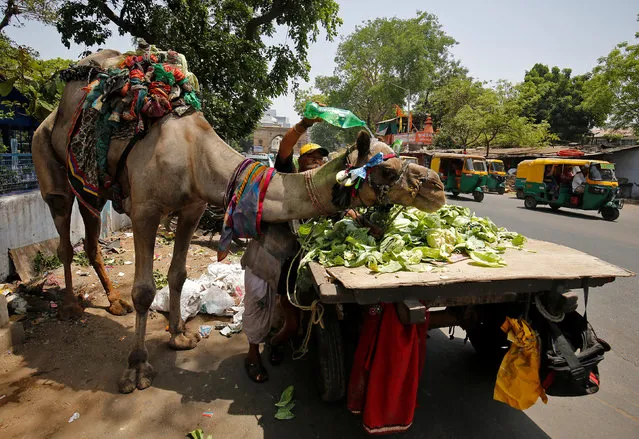
A man pours water on his camel on a hot summer day in Ahmedabad, India, May 18, 2017. (Photo by Amit Dave/Reuters)

A man pours water on his camel on a hot summer day in Ahmedabad, India, May 18, 2017. (Photo by Amit Dave/Reuters)
Details
22 May 2017 07:21:00
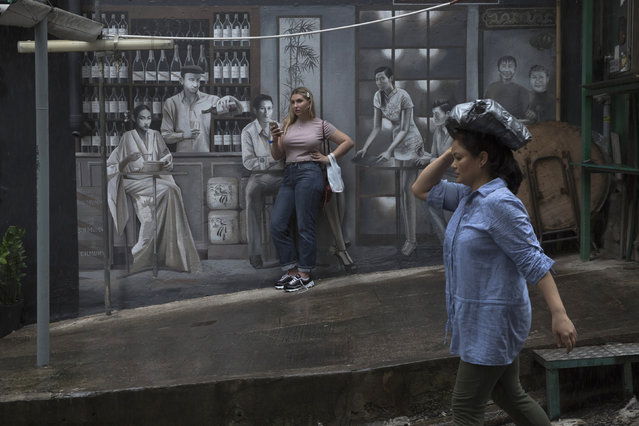
In this June 12, 2017 photo, a woman stands in front of a mural on the slope in Central district, Hong Kong. (Photo by Kin Cheung/AP Photo)

In this June 12, 2017 photo, a woman stands in front of a mural on the slope in Central district, Hong Kong. Once known as Victoria after the British queen, Hong Kong island's waterfront formed the core of the British settlement after Hong Kong island was handed over as a colony in 1842. Today as Hong Kong approaches the 20th anniversary of its return to China, it remains a bustling commercial and financial center as well as the location of the main government offices. However, along the streets that angle sharply upward toward the mountains above, a more relaxed pace of life endures. (AP Photo/Kin Cheung)
Details
28 Jun 2017 08:18:00
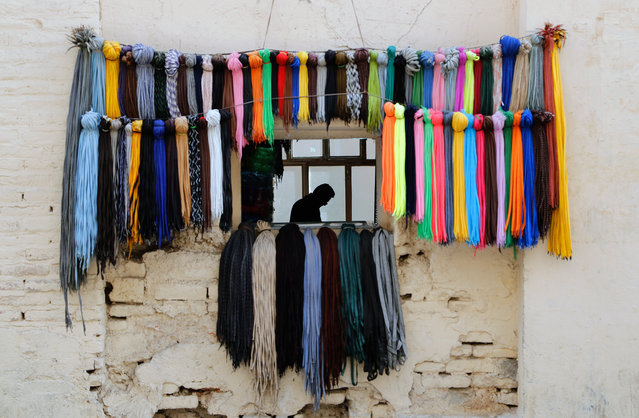
An Iranian man sells colorful ropes at  the Tehrans old Bazaar, the place where the main economy trades take place, in Tehran, Iran, 25 January 2016. Reports state that Iranian officials expected the Iranian economy to grow on an average of eight percent over the coming five years following the lifting of sanctions against Iran. (Photo by Abedin Taherkenareh/EPA)

An Iranian man sells colorful ropes at the Tehrans old Bazaar, the place where the main economy trades take place, in Tehran, Iran, 25 January 2016. Reports state that Iranian officials expected the Iranian economy to grow on an average of eight percent over the coming five years following the lifting of sanctions against Iran. (Photo by Abedin Taherkenareh/EPA)
Details
02 Feb 2016 12:53:00
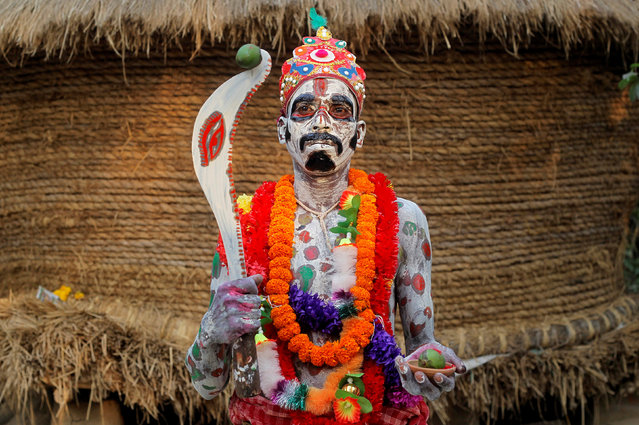
A devotee with his body painted poses as he waits to perform during a ritual as part of the annual Shiva Gajan religious festival at Sona Palasi village, in West Bengal, India, April 11, 2016. Devotees offer sacrifices and perform acts of devotion during the festival in the hopes of winning the favour of Hindu god Shiva and ensuring the fulfillment of their wishes, and also to mark the end of the Bengali calendar year. (Photo by Rupak De Chowdhuri/Reuters)

A devotee with his body painted poses as he waits to perform during a ritual as part of the annual Shiva Gajan religious festival at Sona Palasi village, in West Bengal, India, April 11, 2016. Devotees offer sacrifices and perform acts of devotion during the festival in the hopes of winning the favour of Hindu god Shiva and ensuring the fulfillment of their wishes, and also to mark the end of the Bengali calendar year. (Photo by Rupak De Chowdhuri/Reuters)
Details
13 Apr 2016 09:42:00
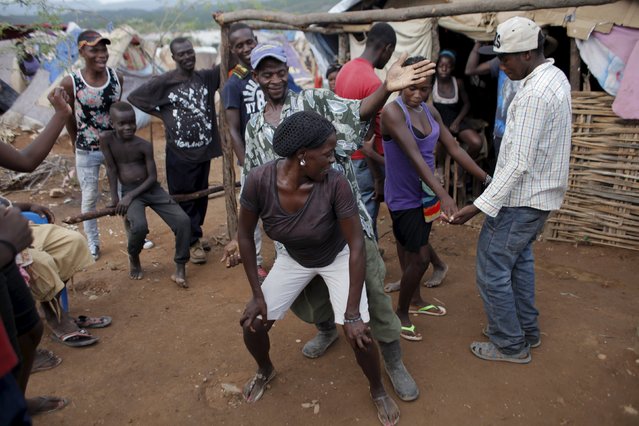
People enjoy themselves as they dance to Dominican music at a refugee camp for Haitians returning from the Dominican Republic on the outskirts of Anse-a-Pitres, Haiti, September 6, 2015. (Photo by Andres Martinez Casares/Reuters)

People enjoy themselves as they dance to Dominican music at a refugee camp for Haitians returning from the Dominican Republic on the outskirts of Anse-a-Pitres, Haiti, September 6, 2015. Dominican officials last month began implementing a controversial immigration program targeting Haitian migrants and Dominican-born people of Haitian descent. The program centers on round-ups and deportations that have triggered concerns about a slow-growing border migration crisis in the poorest country in the Americas. So far about 1,500 people have been deported at a pace of 50 to 100 per day, according to relief officials with access to records supplied by the Dominican government. (Photo by Andres Martinez Casares/Reuters)
Details
21 Sep 2015 11:29:00