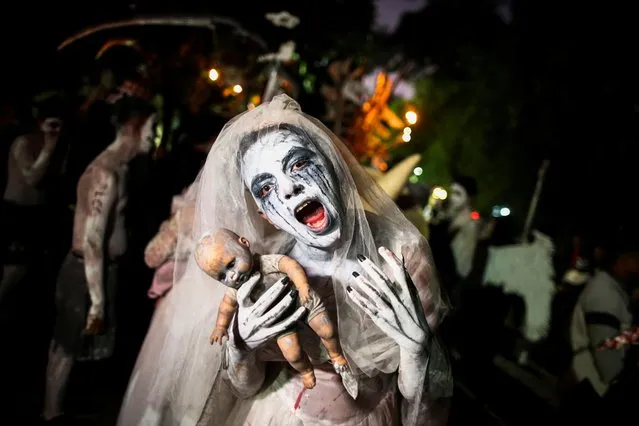
A reveller dressed as “La Llorona” participates in a parade known as “La Calabiuza” on the eve of the Day of the Dead in Tonacatepeque, El Salvador on November 1, 2022. (Photo by Jose Cabezas/Reuters)
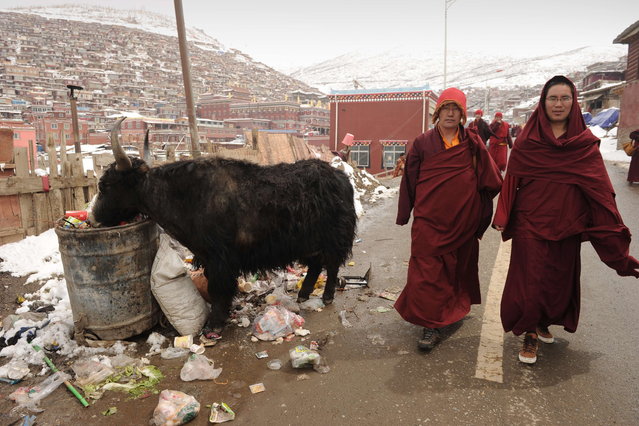
This photo taken on April 5, 2013 shows Buddhist monks passing a yak in Seda Monastery, the largest Tibetan Buddhist school in the world, with up to 40,000 monks and nuns in residence for some parts of the year. Seda, known to Tibetans as Serthar is located in Ganzi prefecture in the west of China's Sichuan province and has become a hotbed of protests and violence since the Tibetan uprisings of March 2008. (Photo by Peter Parks/AFP Photo)
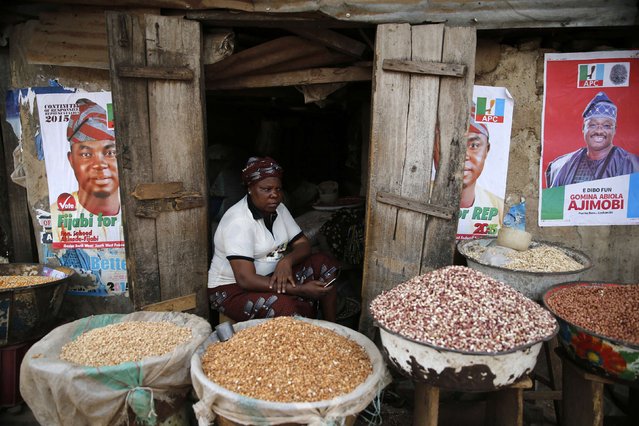
Latefat Alao, 56, a ethnic Yoruba Muslim woman, waits for customers in front of her in Beere market in Ibadan, southwest Nigeria, January 29, 2015. Much of the grain and wheat traders like Alao sell comes from the north and Boko Haram's campaign has negatively affected farmers and food markets. Reuters photographer Akintunde Akinleye photographed Nigerians and asked them about their views on the elections as well as their hopes and concerns for the country. (Photo by Akintunde Akinleye/Reuters)
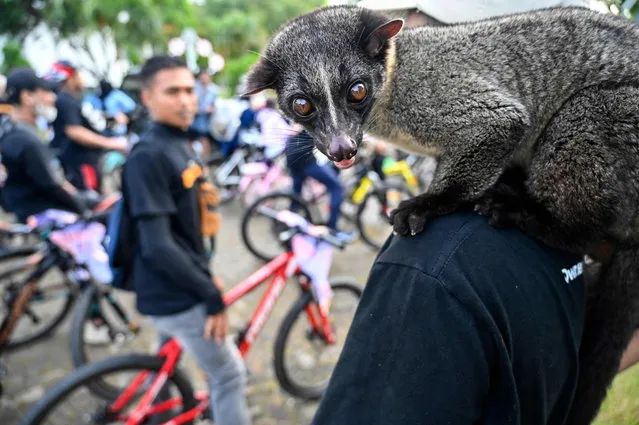
A man carries a civet while taking part in an animal welfare campaign ahead of the World Animal Day celebrations on October 4, in Banda Aceh on October 2, 2022. (Photo by Chaideer Mahyuddin/AFP Photo)
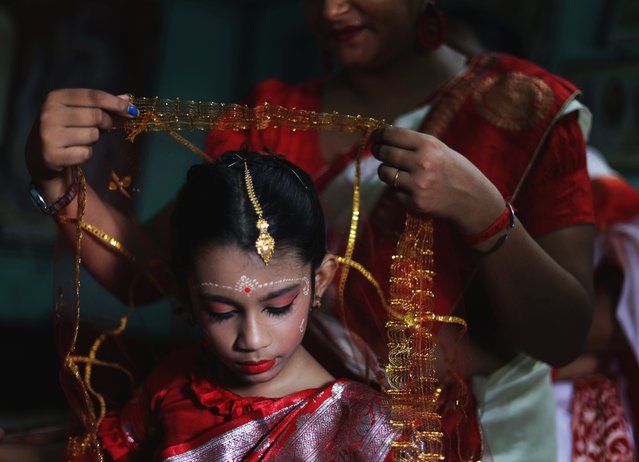
Indian girl, Amrita Bannerjee, gets dressed as the Goddess Durga, during Kumari Puja ritual as part of the Durga Puja festival at Shidaspur village, far north of Kolkata, India, 30 September 2025. During the Kumari Puja, devotees worship a girl aged between six and twelve, symbolizing the Kanya Kumari (virgin) form of the Goddess Durga Devi. Hindu devotees believe that Kanya is a living embodiment of the goddess Durga. (Photo by Piyal Adhikary/EPA)
Model Bella Hadid celebrates her 20th birthday with her mother Yolanda Foster, The Weeknd and Shanina Shaik at Up & Down in New York City, NY on October 10, 2016. (Photo by TheStewartofNY/Splash News)
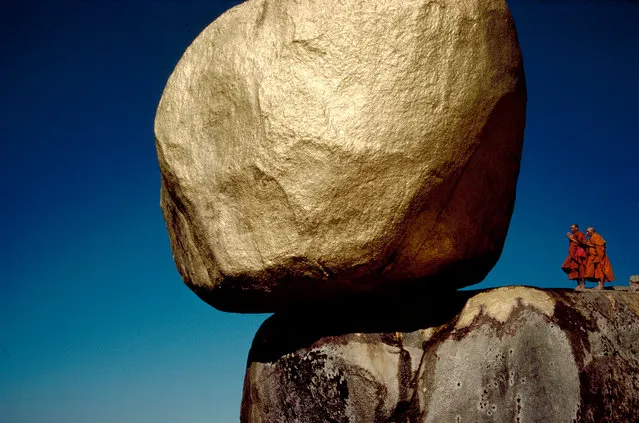
Kyaiktiyo, Burma, 1978. The Golden Rock at Shwe Pyi Daw (the Golden Country), the Buddhist holy place. Hiroji Kubota writes: “I was desperate to keep a distance from America for a while; luckily, I found Burma and its gentle and compassionate people. In the spring of 1978, on the top of the hill where I took this photo, I had two Leica bodies: the one with Tri-X and the other with Kodachrome 64. Soon after, I realised that the colour one looked very colourful and was more powerful. That was my decisive moment, to become a colour photographer”. (Photo by Hiroji Kubota/Magnum Photos)