Loading...
Done
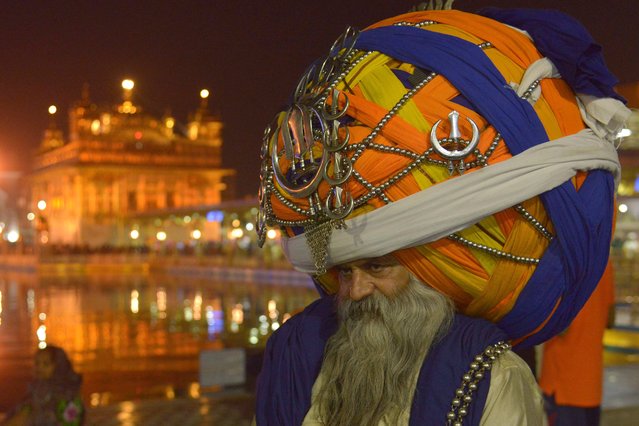
An Indian Sikh Nihang (a traditional Sikh religious warrior) Baba 'Avtar' Singh wears an oversized giant traditional turban as he pay respects at the Golden temple in Amritsar on November 10, 2015 on the eve of the Indian festival of Diwali, the festival of lights. (Photo by Narinder Nanu/AFP Photo)

An Indian Sikh Nihang (a traditional Sikh religious warrior) Baba 'Avtar' Singh wears an oversized giant traditional turban as he pay respects at the Golden temple in Amritsar on November 10, 2015 on the eve of the Indian festival of Diwali, the festival of lights. There will be no spectacular show of light and fireworks this Diwali at the Golden Temple as the Shiromani Gurdwara Parbandhak Committee (SGPC) has decided not to celebrate the festival in the wake of series of incidents of alleged desecration of the Guru Granth Sahib (Sikh holy book). (Photo by Narinder Nanu/AFP Photo)
Details
22 Nov 2015 08:05:00
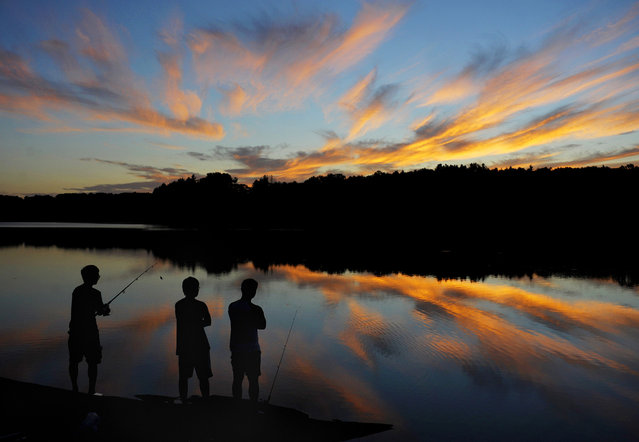
UConn students from Storrs, Conn., Gary Tu, Danny Wang and Victor Zheng, fish at Shenipsit Lake in Tolland, Conn. during sunset on Tuesday, August 19, 2014. (Photo by Jim Michaud/AP Photo/Journal Inquirer)

UConn students from Storrs, Conn., Gary Tu, Danny Wang and Victor Zheng, fish at Shenipsit Lake in Tolland, Conn. during sunset on Tuesday, August 19, 2014. (Photo by Jim Michaud/AP Photo/Journal Inquirer)
Details
21 Aug 2014 10:23:00
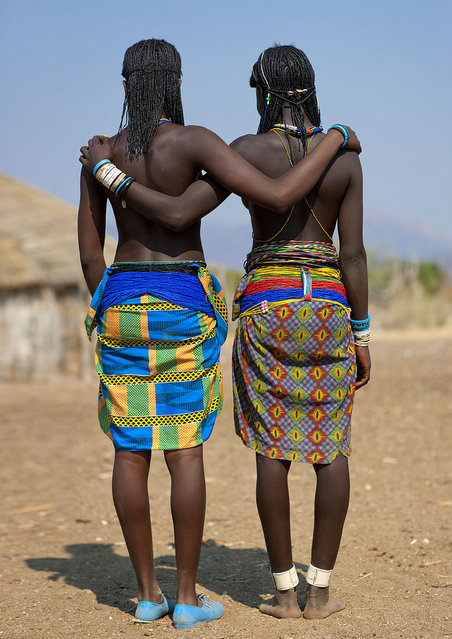
“Show us our butts! Mucawana tribe – Angola. In Soba village, the Muhacaona (Mucawana) tribe, perhaps the best place i have visited. They use cow dung and fat to make this so nice haircut, and love the beads. They asked me to make pictures of their backs... and butts to see on the camera screen if everything was perfect!”. (Eric Lafforgue)

“Show us our butts! Mucawana tribe – Angola. In Soba village, the Muhacaona (Mucawana) tribe, perhaps the best place i have visited. They use cow dung and fat to make this so nice haircut, and love the beads. They asked me to make pictures of their backs... and butts to see on the camera screen if everything was perfect!”. (Photo and comments by Eric Lafforgue)
Details
09 Nov 2012 15:04:00
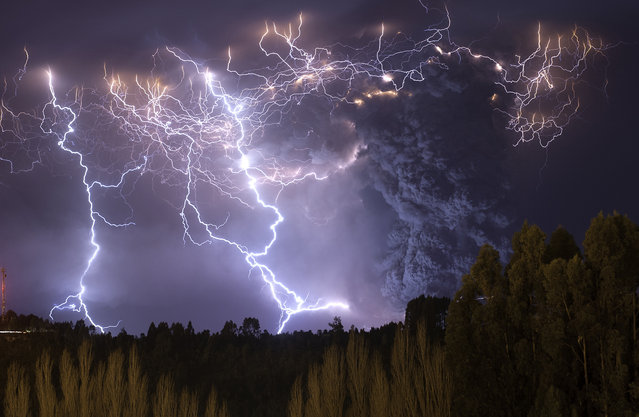
The eruption of Cordon Caulle began on June 4, 2011, located in the Region of Los Rios in Chile. For about 12 months, people and animals became accustomed to living with the daily fall of ash, which also caused problems in the air traffic in South America. The explosions and lightning during first days of the eruption could be seen from hundreds of miles around. This photograph was taken on the second night of eruption from the town of Lago Ranco. (Photo and caption by Francisco Negroni/National Geographic Traveler Photo Contest)

The eruption of Cordon Caulle began on June 4, 2011, located in the Region of Los Rios in Chile. For about 12 months, people and animals became accustomed to living with the daily fall of ash, which also caused problems in the air traffic in South America. The explosions and lightning during first days of the eruption could be seen from hundreds of miles around. This photograph was taken on the second night of eruption from the town of Lago Ranco. (Photo and caption by Francisco Negroni/National Geographic Traveler Photo Contest)

ATTENTION! All pictures are presented in high resolution. To see Hi-Res images – just TWICE click on any picture. In other words, click small picture – opens the BIG picture. Click BIG picture – opens VERY BIG picture.
Details
23 Jun 2013 11:24:00
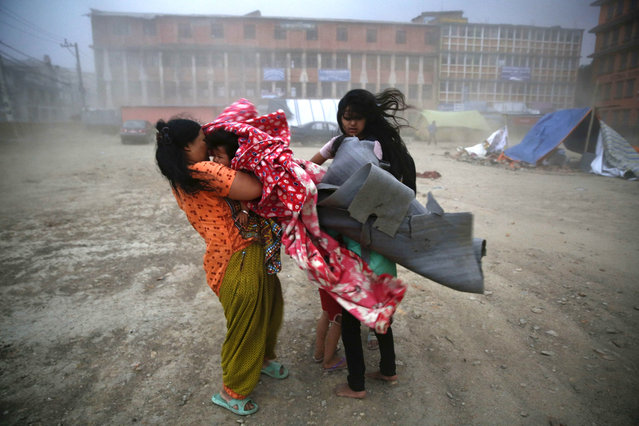
A storm whips through a tented area occupied by Nepalese earthquake survivors as a mother grabs her infant child and runs to find shelter in Kathmandu, Nepal 23 May 2015. Nepalese, who lost their homes in earthquake and fear aftershocks, have been living in temporary shelter in open ground which they had to flee because of the heavy rain and powerful wind. (Photo by Narendra Shrestha/EPA)

A storm whips through a tented area occupied by Nepalese earthquake survivors as a mother grabs her infant child and runs to find shelter in Kathmandu, Nepal 23 May 2015. Nepalese, who lost their homes in earthquake and fear aftershocks, have been living in temporary shelter in open ground which they had to flee because of the heavy rain and powerful wind. (Photo by Narendra Shrestha/EPA)
Details
25 May 2015 10:00:00
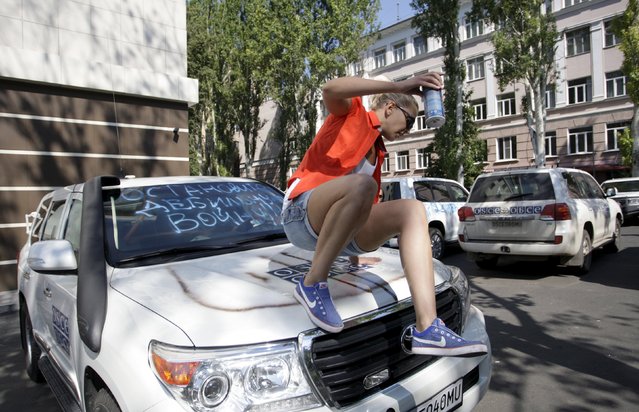
A demonstrator jumps from a vehicle of the Organisation for Security and Co-operation in Europe (OSCE) during a protest to demand what protesters say is true information from the OSCE about the shelling in Donetsk, Ukraine, July 23, 2015. The graffiti reads, “Stop moronic war!”. (Photo by Alexander Ermochenko/Reuters)

A demonstrator jumps from a vehicle of the Organisation for Security and Co-operation in Europe (OSCE) during a protest to demand what protesters say is true information from the OSCE about the shelling in Donetsk, Ukraine (since April 2014, the city is the administrative centre of the Donetsk People's Republic), July 23, 2015. The graffiti reads, “Stop moronic war!”. (Photo by Alexander Ermochenko/Reuters)
Details
24 Jul 2015 12:13:00
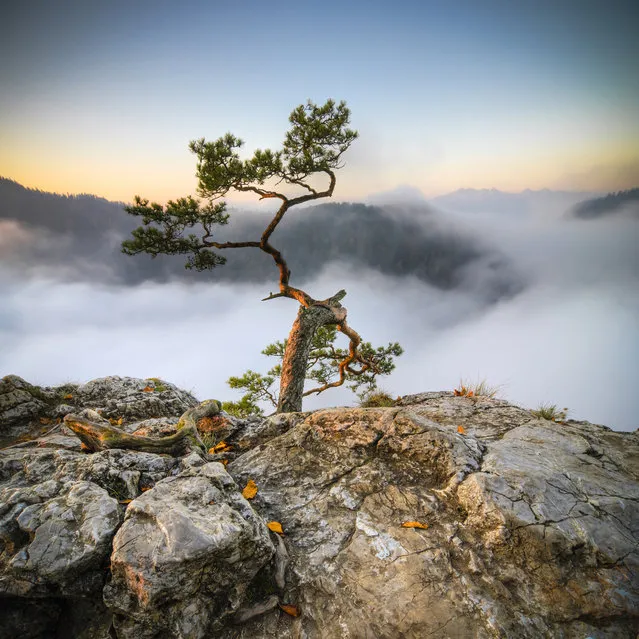
“Sokolica”. Sokolica, Poland. (Photo and caption by Marcin Kęsek/National Geographic Traveler Photo Contest)

“Sokolica”. Sokolica, Poland. (Photo and caption by Marcin Kęsek/National Geographic Traveler Photo Contest)

ATTENTION! All pictures are presented in high resolution. To see Hi-Res images – just TWICE click on any picture. In other words, click small picture – opens the BIG picture. Click BIG picture – opens VERY BIG picture.
Details
25 Jun 2013 09:13:00
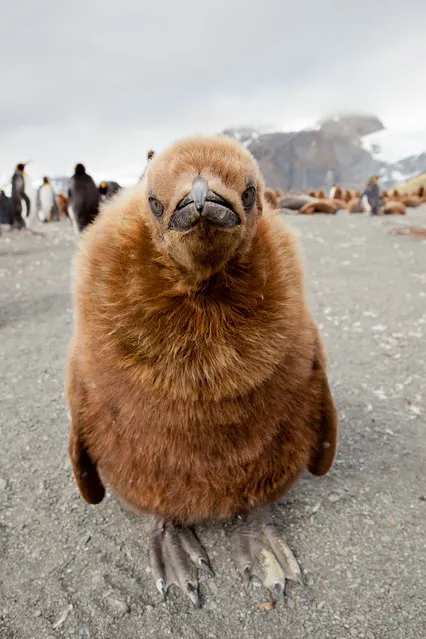
“Cub”. In the colony of penguins in South Georgia. (Photo and caption by Ondrej Zaruba/National Geographic Traveler Photo Contest)

“Cub”. In the colony of penguins in South Georgia. (Photo and caption by Ondrej Zaruba/National Geographic Traveler Photo Contest)

ATTENTION! All pictures are presented in high resolution. To see Hi-Res images – just TWICE click on any picture. In other words, click small picture – opens the BIG picture. Click BIG picture – opens VERY BIG picture.
Details
28 Jun 2013 12:32:00