Loading...
Done
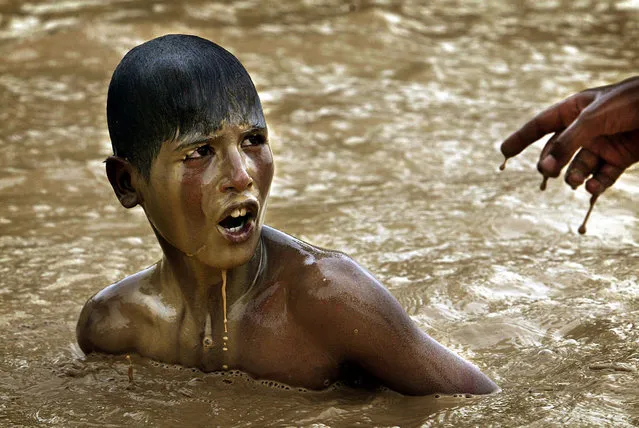
Iraqi teenagers swim in waste water from the nearby Tuweitha nuclear facility near Baghdad, Iraq on May 28, 2003. Iraqis are consuming contaminated water unaware of the dangerous pollutants that can cause severe ill health. (Photo by Damir Sagolj/Reuters)

Iraqi teenagers swim in waste water from the nearby Tuweitha nuclear facility near Baghdad, Iraq on May 28, 2003. Iraqis are consuming contaminated water unaware of the dangerous pollutants that can cause severe ill health. (Photo by Damir Sagolj/Reuters)
Details
24 Jun 2019 00:05:00
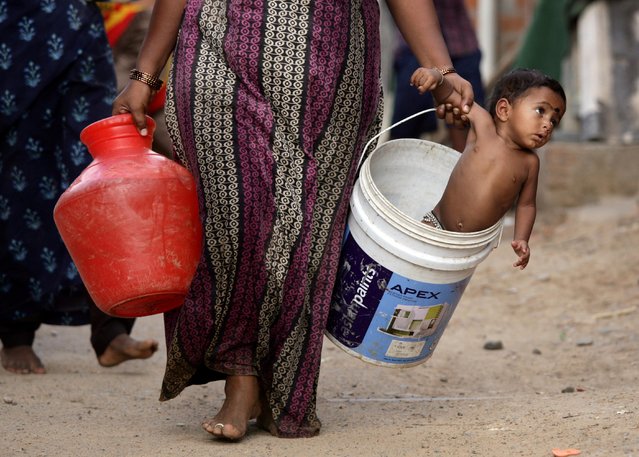
A woman carries her son in a bucket after collecting water from a municipal water tanker on the outskirts of Chennai, India, July 4, 2019. (Photo by P. Ravikumar/Reuters)

A woman carries her son in a bucket after collecting water from a municipal water tanker on the outskirts of Chennai, India, July 4, 2019. (Photo by P. Ravikumar/Reuters)
Details
16 Jul 2019 00:01:00
In this aerial view fishing boats are seen on the shore of the Lake Malawi at the Senga village on May 20, 2019 in Senga, Malawi. Hundreds of local traders gather each morning and afternoon at Senga, but fish populations are falling in Lake Malawi, Africa's third largest body of freshwater. (Photo by Gianluigi Guercia/AFP Photo)

In this aerial view fishing boats are seen on the shore of the Lake Malawi at the Senga village on May 20, 2019 in Senga, Malawi. Hundreds of local traders gather each morning and afternoon at Senga, but fish populations are falling in Lake Malawi, Africa's third largest body of freshwater. (Photo by Gianluigi Guercia/AFP Photo)
Details
18 Jul 2019 00:03:00
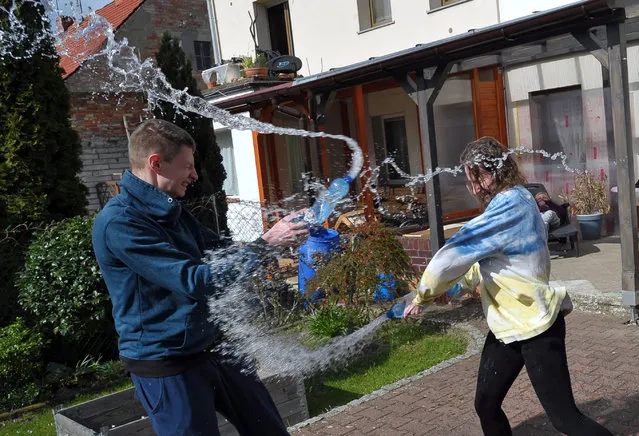
A Polish girl and a boy throw water over each other on Wet Monday in Szczecin, northwestern Poland, 13 April 2020. Wet Monday is a Catholic celebration held on Easter Monday mostly in Poland, but also in the Czech Republic, Slovakia, Hungary and some parts of western Ukraine. Due to the lockdown it is forbidden to celebrate this holiday in public. (Photo by Marcin Bielecki/EPA/EFE)

A Polish girl and a boy throw water over each other on Wet Monday in Szczecin, northwestern Poland, 13 April 2020. Wet Monday is a Catholic celebration held on Easter Monday mostly in Poland, but also in the Czech Republic, Slovakia, Hungary and some parts of western Ukraine. Due to the lockdown it is forbidden to celebrate this holiday in public. (Photo by Marcin Bielecki/EPA/EFE)
Details
15 Apr 2020 00:07:00
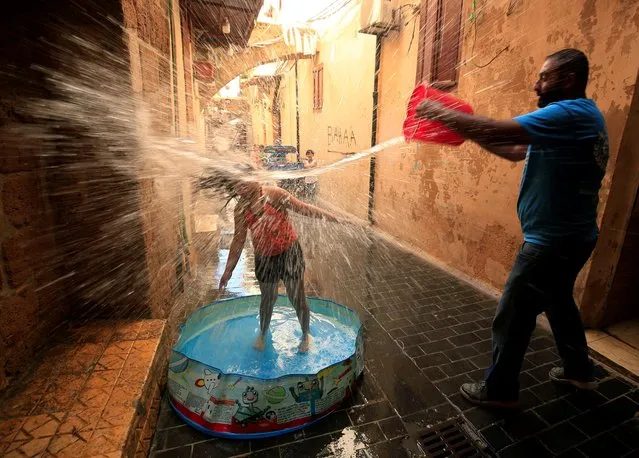
A man throws water on a girl playing in a pool, during a hot weather, amid concerns over the spread of coronavirus disease (COVID-19), in Sidon, southern Lebanon on May 21, 2020. (Photo by Ali Hashisho/Reuters)

A man throws water on a girl playing in a pool, during a hot weather, amid concerns over the spread of coronavirus disease (COVID-19), in Sidon, southern Lebanon on May 21, 2020. (Photo by Ali Hashisho/Reuters)
Details
24 May 2020 00:05:00
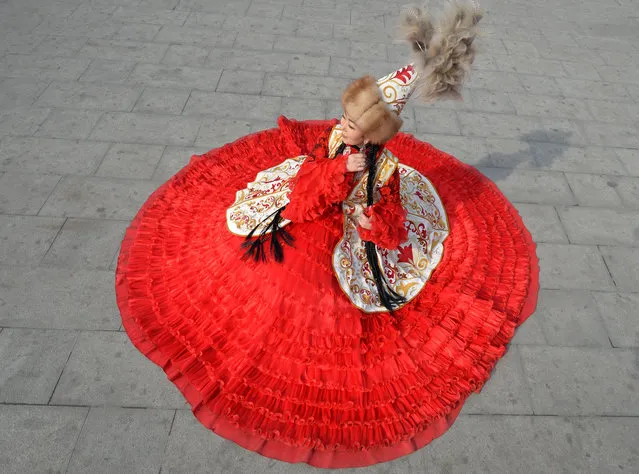
A woman wearing a traditional costume attends the celebrations marking the National Flag Day and the Day of Kyrgyz national “Ak-kalpak” hat at the central Ala-Too Square in Bishkek on March 4, 2021. (Photo by Vyacheslav Oseledko/AFP Photo)

A woman wearing a traditional costume attends the celebrations marking the National Flag Day and the Day of Kyrgyz national “Ak-kalpak” hat at the central Ala-Too Square in Bishkek on March 4, 2021. (Photo by Vyacheslav Oseledko/AFP Photo)
Details
05 Mar 2021 10:41:00
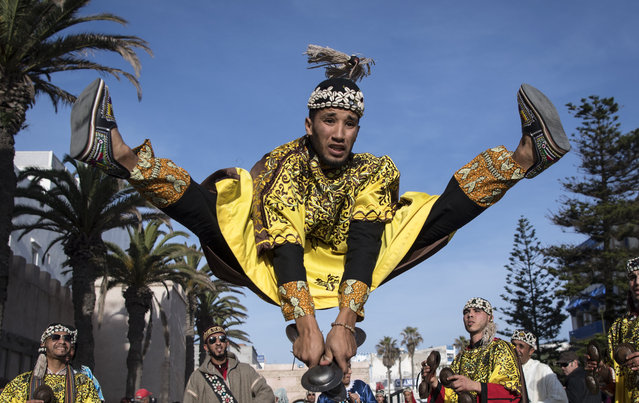
A Gnawa traditional group performs in the city of Essaouira on December 14, 2019, to celebrate the decision of adding the Gnawa culture to UNESCO's list of Intangible Cultural Heritage of Humanity. Gnawa culture, a centuries-old Moroccan practice rooted in music, African rituals and Sufi traditions, was added to UNESCO's list of Intangible Cultural Heritage of Humanity earlier in the week. Gnawa refers to a “set of musical productions, fraternal practices and therapeutic rituals where the secular mixes with the sacred”, according to the nomination submitted by Morocco. Often dressed in colourful outfits, Gnawa musicians play the guenbri, a type of lute with three strings, accompanied by steel castanets called krakebs. (Photo by Fadel Senna/AFP Photo)

A Gnawa traditional group performs in the city of Essaouira on December 14, 2019, to celebrate the decision of adding the Gnawa culture to UNESCO's list of Intangible Cultural Heritage of Humanity. Gnawa culture, a centuries-old Moroccan practice rooted in music, African rituals and Sufi traditions, was added to UNESCO's list of Intangible Cultural Heritage of Humanity earlier in the week. Gnawa refers to a “set of musical productions, fraternal practices and therapeutic rituals where the secular mixes with the sacred”, according to the nomination submitted by Morocco. Often dressed in colourful outfits, Gnawa musicians play the guenbri, a type of lute with three strings, accompanied by steel castanets called krakebs. (Photo by Fadel Senna/AFP Photo)
Details
18 Dec 2019 00:05:00
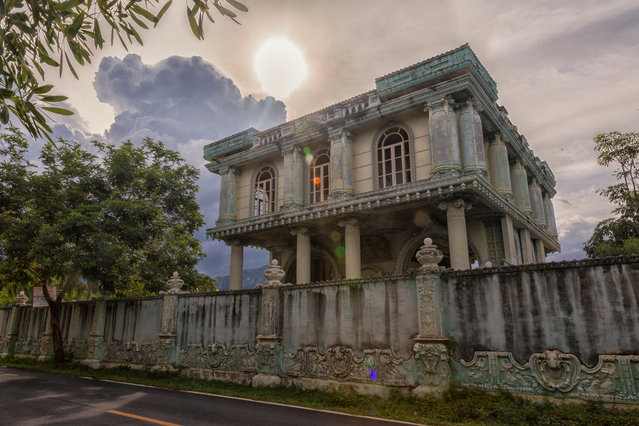
The sun begins to set over this rusty beachside mansion that has been left abandoned for more than 25 years in Thailand, June 2017. A deserted beachside mansion in southern Thailand has retained its beauty – despite no one living there for more than 25 years. In June this year abandoned photographer, Dax Ward, ventured to the Prachuap Khiri-Khan Province to capture the haunting attraction on camera. (Photo by Dax Ward/Barcroft Images)

The sun begins to set over this rusty beachside mansion that has been left abandoned for more than 25 years in Thailand, June 2017. A deserted beachside mansion in southern Thailand has retained its beauty – despite no one living there for more than 25 years. In June this year abandoned photographer, Dax Ward, ventured to the Prachuap Khiri-Khan Province to capture the haunting attraction on camera. (Photo by Dax Ward/Barcroft Images)
Details
07 Aug 2017 07:39:00