Loading...
Done
Wu Lingling, a nurse from Central Hospital of Shanghai Fengxian District says goodbye to her husband Zhao Kun before leaving for Wuhan at Shanghai South Railway Station in east China's Shanghai, January 27, 2020. A team comprised of 50 medical workers from 40 hospitals in Shanghai left for Wuhan City on Monday to aid the novel coronavirus control efforts there. (Photo by Ding Ting/Xinhua News AgencyAlamy Live News)

Wu Lingling, a nurse from Central Hospital of Shanghai Fengxian District says goodbye to her husband Zhao Kun before leaving for Wuhan at Shanghai South Railway Station in east China's Shanghai, January 27, 2020. A team comprised of 50 medical workers from 40 hospitals in Shanghai left for Wuhan City on Monday to aid the novel coronavirus control efforts there. (Photo by Ding Ting/Xinhua News AgencyAlamy Live News)
Details
29 Jan 2020 00:07:00
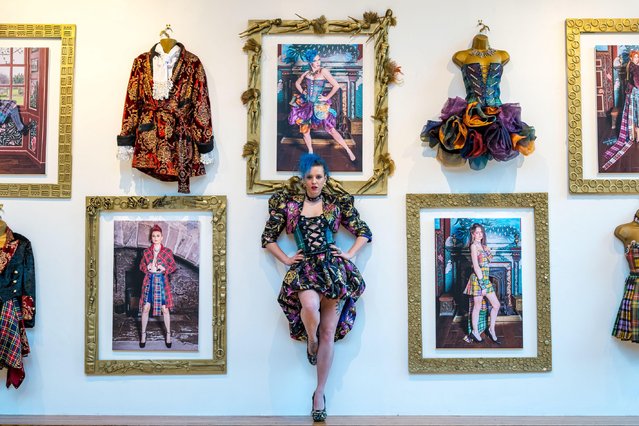
New exhibition of sustainable fashion explores the role of tartan in Scottish traditional dance, opening on April 23, 2024 as part of the Pomegranates festival in Edinburgh, Scotland. Vengefully Changed Allegiance is asolo exhibition by fashion designer Alison Harm, founder of Edinburgh Psychomoda clothing brand, who uses industry scraps, vintage clot and broken jewellery. (Photo by Sally Anderson/Alamy Live News)

New exhibition of sustainable fashion explores the role of tartan in Scottish traditional dance, opening on April 23, 2024 as part of the Pomegranates festival in Edinburgh, Scotland. Vengefully Changed Allegiance is asolo exhibition by fashion designer Alison Harm, founder of Edinburgh Psychomoda clothing brand, who uses industry scraps, vintage clot and broken jewellery. (Photo by Sally Anderson/Alamy Live News)
Details
23 Aug 2025 03:12:00
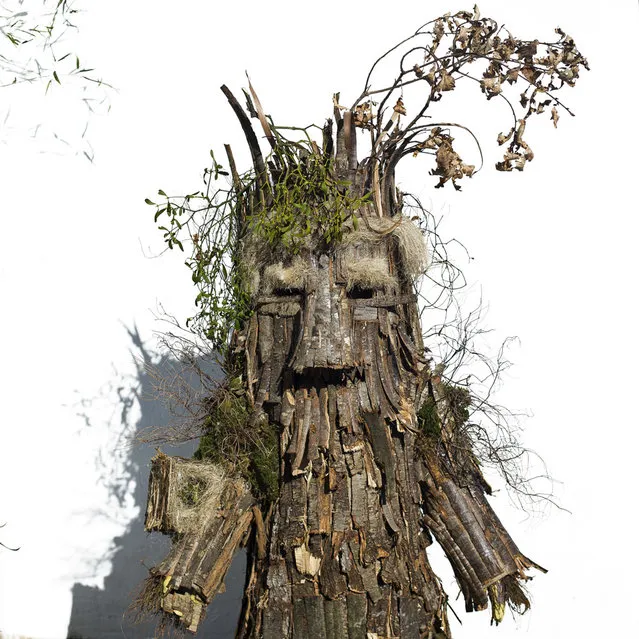
A man dressed as a  “Trapajon”, representing entities of nature, poses for a picture after taking part in the Vijanera Festival in Silio, northern Spain, Sunday, Jan. 6, 2013. The Vijanera masquerade, of pre-Roman origin, is the first carnival of the year in Europe symbolizing the triumph of good over evil and involving the participation of crowds of residents wearing different masks, animal skins and brightly colored clothing with its own complex function and symbolism and becoming the living example of the survival of archaic cults to nature. (Photo by Daniel Ochoa de Olza/AP Photo)

A man dressed as a “Trapajon”, representing entities of nature, poses for a picture after taking part in the Vijanera Festival in Silio, northern Spain, Sunday, Jan. 6, 2013. The Vijanera masquerade, of pre-Roman origin, is the first carnival of the year in Europe symbolizing the triumph of good over evil and involving the participation of crowds of residents wearing different masks, animal skins and brightly colored clothing with its own complex function and symbolism and becoming the living example of the survival of archaic cults to nature. (Photo by Daniel Ochoa de Olza/AP Photo)
Details
19 Jan 2013 13:01:00
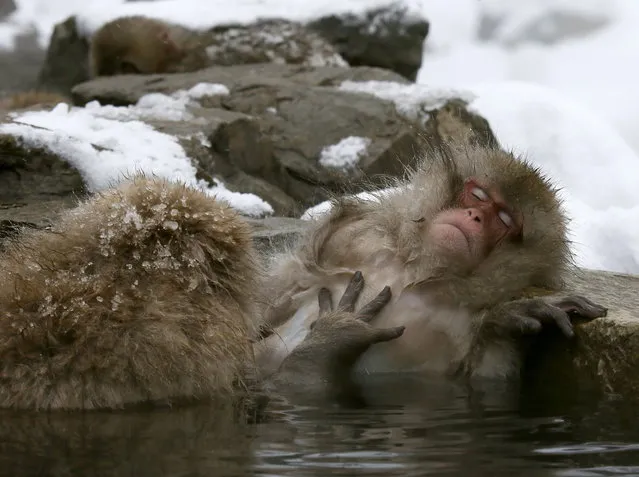
Japanese Macaque monkeys soak in the warmth of mountain hotsprings at Jigokudani Monkey Park, in Yamanouchi, central Japan, 19 January 2014. The Japanese Macaques (Macaca fuscata), also referred to as Snow Monkeys, live freely in this area that is covered by snow one third of the year. (Photo by Kimimasa Mayama/EPA)

Japanese Macaque monkeys soak in the warmth of mountain hotsprings at Jigokudani Monkey Park, in Yamanouchi, central Japan, 19 January 2014. The Japanese Macaques (Macaca fuscata), also referred to as Snow Monkeys, live freely in this area that is covered by snow one third of the year. Jigokudani is the only known place in the world where monkeys bathe in natural hot springs. As a habit, they come down from the mountains where they spend the night and bath during the day. (Photo by Kimimasa Mayama/EPA)
Details
21 Jan 2014 11:36:00
In this February 5, 2014 photo, Divaldo Aguiar, who plays the part of Pachencho, is carried in a mock coffin during the Burial of Pachencho celebration, through a cemetery in Santiago de Las Vegas, Cuba. Cuban villagers stage a mock funeral and burial of Pachencho, with a living man playing the part of Pachencho, in a boozy festival that has become an annual tradition in this small town near Havana, held each February 5 for the last 30 years. (Photo by Enric Marti/AP Photo)

In this February 5, 2014 photo, Divaldo Aguiar, who plays the part of Pachencho, is carried in a mock coffin during the Burial of Pachencho celebration, through a cemetery in Santiago de Las Vegas, Cuba. Cuban villagers stage a mock funeral and burial of Pachencho, with a living man playing the part of Pachencho, in a boozy festival that has become an annual tradition in this small town near Havana, held each February 5 for the last 30 years. (Photo by Enric Marti/AP Photo)
Details
10 Feb 2014 09:24:00
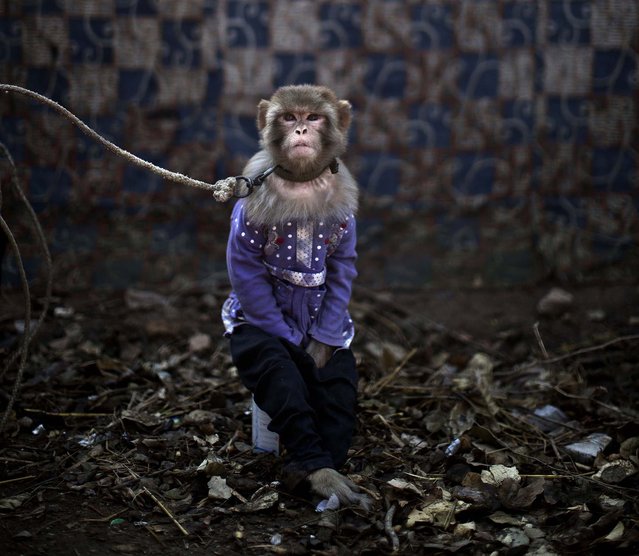
In this Tuesday, February 11, 2014, photo, a trained monkey, that makes a living for her Pakistani owner by performing to a crowd in public and private places, sits held by a leash, in Rawalpindi, Pakistan. For Pakistanis who raise and train the monkeys they are an important source of income in an impoverished country, and they form a strong bond with the animals. The monkeys are usually captured in the wild when they are babies and then trained. A trained monkey can fetch 20,000 to 30,000 rupees ($190 to $285). (Photo by Muhammed Muheisen/Associated Press)

In this Tuesday, February 11, 2014, photo, a trained monkey, that makes a living for her Pakistani owner by performing to a crowd in public and private places, sits held by a leash, in Rawalpindi, Pakistan. For Pakistanis who raise and train the monkeys they are an important source of income in an impoverished country, and they form a strong bond with the animals. The monkeys are usually captured in the wild when they are babies and then trained. A trained monkey can fetch 20,000 to 30,000 rupees ($190 to $285). (Photo by Muhammed Muheisen/Associated Press)
Details
23 Feb 2014 09:50:00
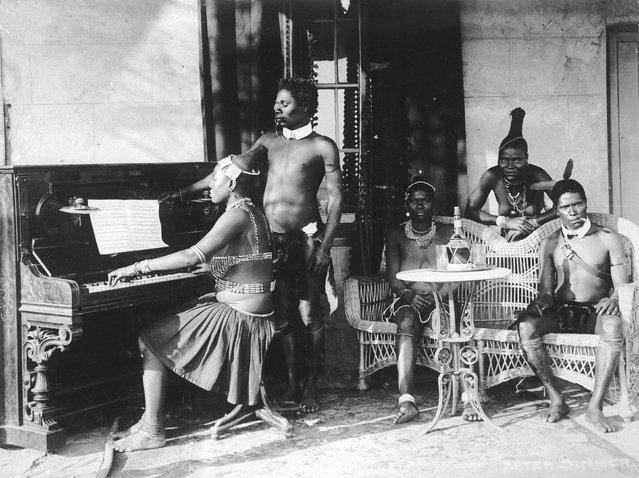
circa 1925:  A Zulu woman playing the piano while a group of others sit and listen.  (Photo by General Photographic Agency/Getty Images)

“The Zulu are the largest South African ethnic group, with an estimated 10–11 million people living mainly in the province of KwaZulu-Natal. Small numbers also live in Zimbabwe, Zambia, and Mozambique. Their language, Zulu, is a Bantu language; more specifically, part of the Nguni subgroup. The Zulu Kingdom played a major role in South African history during the 19th and 20th centuries. Under apartheid, Zulu people were classed as third-class citizens and suffered from state-sanctioned discrimination. They remain today the most numerous ethnic group in South Africa, and now have equal rights along with all other citizens”. – Wikipedia.

Photo: A Zulu woman playing the piano while a group of others sit and listen (to put it briefly, Englishmen scoff over Zulu). South Africa, circa 1925. (Photo by General Photographic Agency)

Details
03 Feb 2014 09:40:00
People gather at the site of a bomb explosion in Sanaa December 23, 2014. Five bombs exploded on Tuesday in Sanaa's old quarter, where many supporters of the Shi'ite Muslim Houthi group live, killing at least one person and wounding another, a Yemeni security official said. (Photo by Khaled Abdullah/Reuters)

People gather at the site of a bomb explosion in Sanaa December 23, 2014. Five bombs exploded on Tuesday in Sanaa's old quarter, where many supporters of the Shi'ite Muslim Houthi group live, killing at least one person and wounding another, a Yemeni security official said. No one has claimed responsibility for the attacks, but the Houthis have been fighting the Sunni Islamist militant al Qaeda group and allied tribesmen since its gunmen captured Sanaa in September and forced the resignation of a government they had long seen as corrupt. (Photo by Khaled Abdullah/Reuters)
Details
24 Dec 2014 13:55:00