Loading...
Done
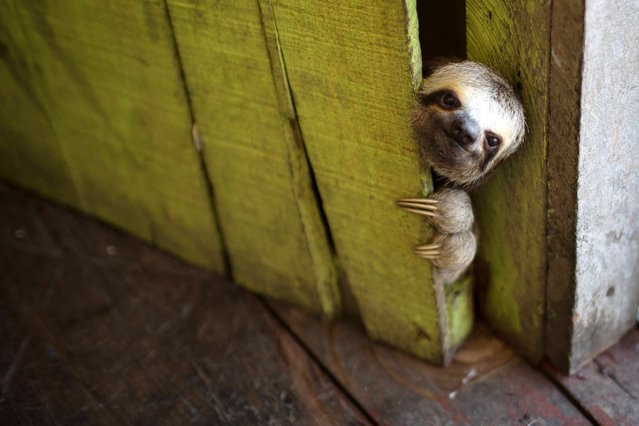
A sloth peeks out from behind a door on a floating house in the “Lago do Janauari” near Manaus, Brazil, Tuesday, May 20, 2014. Manaus is one of the host cities for the 2014 World Cup in Brazil. (Photo by Felipe Dana/AP Photo)

A sloth peeks out from behind a door on a floating house in the “Lago do Janauari” near Manaus, Brazil, Tuesday, May 20, 2014. Manaus is one of the host cities for the 2014 World Cup in Brazil. (Photo by Felipe Dana/AP Photo)
Details
24 May 2014 13:25:00
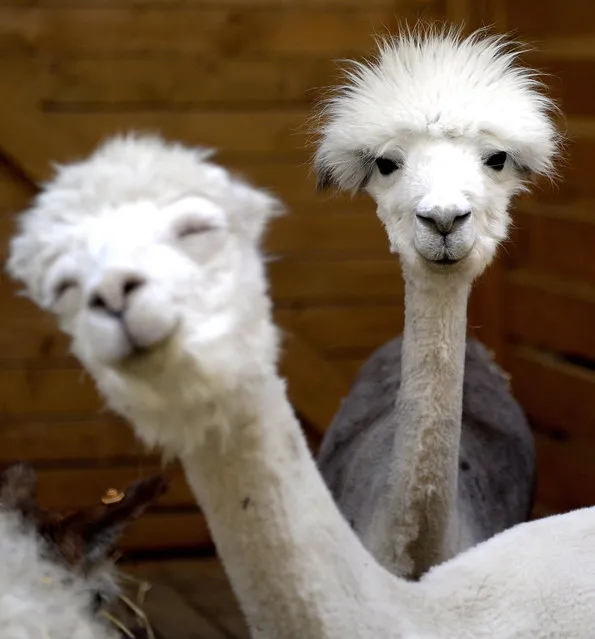
Alpacas peek out of their box in Kielnarowa, Poland, June 11, 2014. A total of 35 female and 3 male alpacas were imported from Chile by the Rzeszow University of Information Technology and Management Center Zoo to be used for the therapy of children. Alpacas also provide one of the most expensive wools. (Photo by Darek Demanowicz/EPA)

Alpacas peek out of their box in Kielnarowa, Poland, June 11, 2014. A total of 35 female and 3 male alpacas were imported from Chile by the Rzeszow University of Information Technology and Management Center Zoo to be used for the therapy of children. Alpacas also provide one of the most expensive wools. (Photo by Darek Demanowicz/EPA)
Details
14 Jun 2014 12:13:00
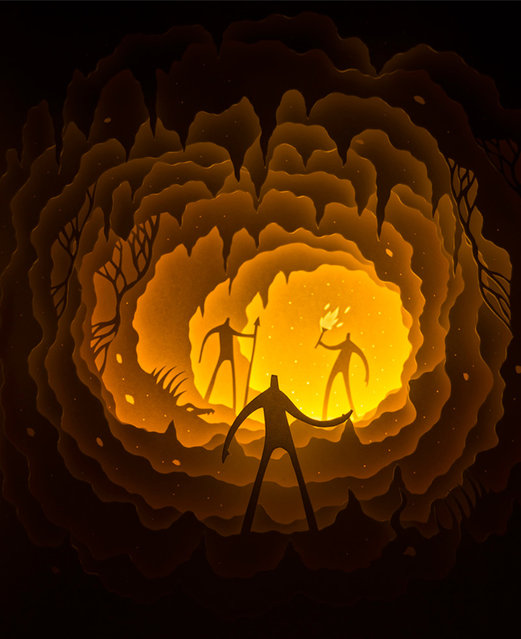
Illuminated Cut Paper Light Boxes By Hari And Deepti

Illuminated Cut Paper Light Boxes by Hari & DeeptiDeepti Nair and Harikrishnan Panicker (known collectively as Hari & Deepti) are an artist couple who create paper cut light boxes. Each diorama is made from layers of cut watercolor paper placed inside a shadow box and is lit from behind with flexible LED light strips. The small visual narratives depicted in each work often play off aspects of light including stars, flames, fireflies, and planets.
Details
17 Jun 2014 12:07:00
World Bodypainting Festival 2014. Photographed July 4th in Poertschach am Woerthersee, Austria July 4, 2014. (Photo by Jan Hetfleisch/Getty Images)

The World Bodypainting Festival held from July 4 to 6 at Lake Worthersee in Austria's southern Carinthia province included artists from around the world, drawing visitors to the “Mecca of Bodypainting”, according to the World Bodypainting Association. Photo: World Bodypainting Festival 2014. Photographed July 4th in Poertschach am Woerthersee, Austria July 4, 2014. (Photo by Jan Hetfleisch/Getty Images)
Details
08 Jul 2014 14:18:00
A "scissors" dancer grabs her shoe with her mouth while performing in a national scissors dance competition in the outskirts of Lima December 1, 2013. (Photo by Enrique Castro-Mendivil/Reuters)

A “scissors” dancer grabs her shoe with her mouth while performing in a national scissors dance competition in the outskirts of Lima December 1, 2013. The Danza de las tijeras, or scissors dance, is a traditional dance from the Peruvian southern region of the Andes, in which two or more performers take turns dancing while accompanied with music from a harp and a violin. Dancers would display various skills and moves, which include cutting the air with the use of a scissors. (Photo by Enrique Castro-Mendivil/Reuters)
Details
03 Dec 2013 11:43:00
Danny McWilliams, 56, is seen at his 36-foot-long replica of Walt Disney movie version of the Nautilus submarine from Jules Verne's “20,000 Leagues Under the Sea” at his rural home in Ellijay, Georgia, USA, 04 December 2013. (Photo by Erik S. Lesser/EPA)

Danny McWilliams, 56, is seen at his 36-foot-long replica of Walt Disney movie version of the Nautilus submarine from Jules Verne's “20,000 Leagues Under the Sea” at his rural home in Ellijay, Georgia, USA, 04 December 2013. (Photo by Erik S. Lesser/EPA)
Details
06 Dec 2013 09:47:00
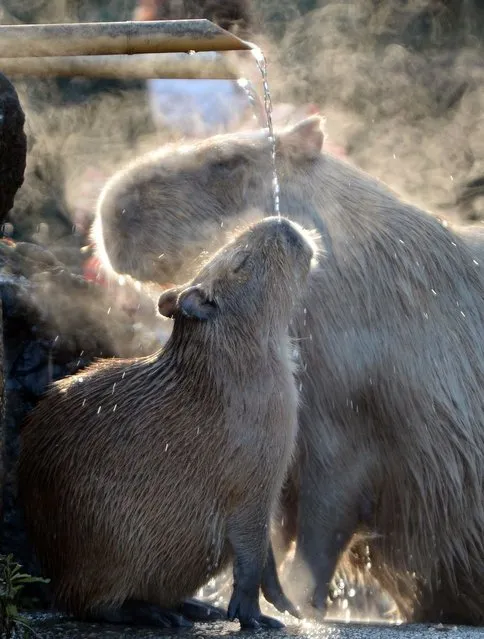
Capybaras bathe in the hot spring water at the Saitama Children's zoo in Higashi Matsuyama city, Saitama prefecture on December 25, 2013. 13 capybaras in the zoo, originally from South America, enjoyed the hot spring water. (Photo by Toshifumi Kitamura/AFP Photo)

Capybaras bathe in the hot spring water at the Saitama Children's zoo in Higashi Matsuyama city, Saitama prefecture on December 25, 2013. 13 capybaras in the zoo, originally from South America, enjoyed the hot spring water. (Photo by Toshifumi Kitamura/AFP Photo)
Details
28 Dec 2013 12:46:00
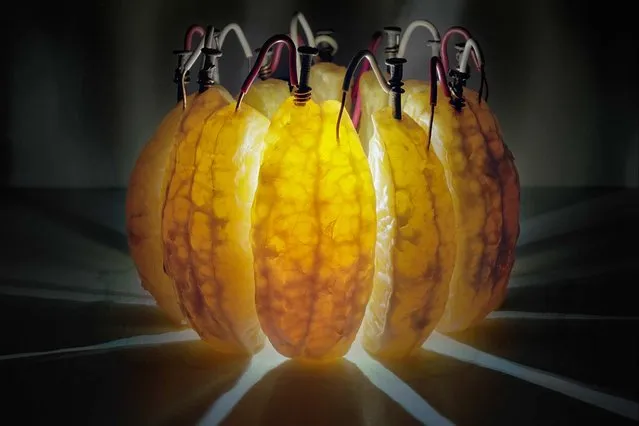
Wedges of an orange generate enough current and electrical juice – 3.5 volts – to power an LED. The fruit’s citric acid helps electrons flow from galvanized nails to copper wire in this 14-hour exposure. This image was published in September’s Visions of Earth, a trio of photos that appear in each issue of National Geographic. (Photo by Caleb Charland/National Geographic)

Wedges of an orange generate enough current and electrical juice – 3.5 volts – to power an LED. The fruit’s citric acid helps electrons flow from galvanized nails to copper wire in this 14-hour exposure. This image was published in September’s Visions of Earth, a trio of photos that appear in each issue of National Geographic. (Photo by Caleb Charland/National Geographic)
Details
06 Jan 2014 12:09:00