Loading...
Done
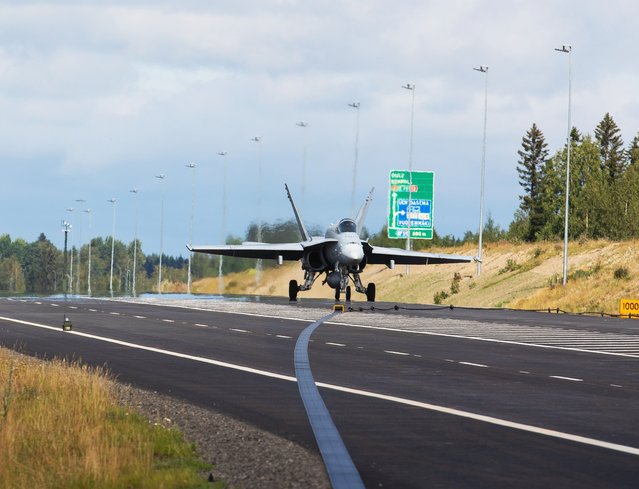
An F-18 Hornet fighter jet on May 27, 2025 lands and takes off from a highway during Baana 25, a military exercise held by the Finnish air force. (Photo by The Times)

An F-18 Hornet fighter jet on May 27, 2025 lands and takes off from a highway during Baana 25, a military exercise held by the Finnish air force. (Photo by The Times)
Details
04 Oct 2025 05:05:00
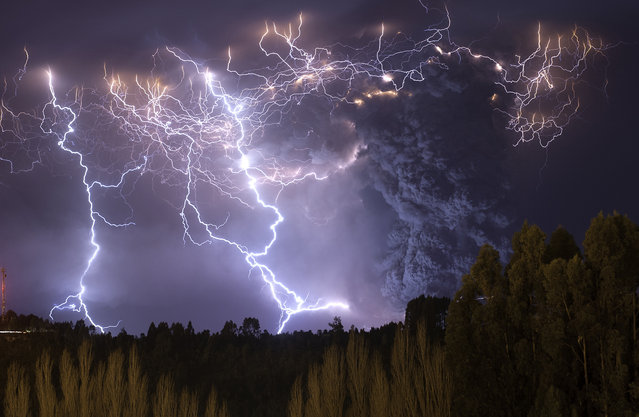
The eruption of Cordon Caulle began on June 4, 2011, located in the Region of Los Rios in Chile. For about 12 months, people and animals became accustomed to living with the daily fall of ash, which also caused problems in the air traffic in South America. The explosions and lightning during first days of the eruption could be seen from hundreds of miles around. This photograph was taken on the second night of eruption from the town of Lago Ranco. (Photo and caption by Francisco Negroni/National Geographic Traveler Photo Contest)

The eruption of Cordon Caulle began on June 4, 2011, located in the Region of Los Rios in Chile. For about 12 months, people and animals became accustomed to living with the daily fall of ash, which also caused problems in the air traffic in South America. The explosions and lightning during first days of the eruption could be seen from hundreds of miles around. This photograph was taken on the second night of eruption from the town of Lago Ranco. (Photo and caption by Francisco Negroni/National Geographic Traveler Photo Contest)

ATTENTION! All pictures are presented in high resolution. To see Hi-Res images – just TWICE click on any picture. In other words, click small picture – opens the BIG picture. Click BIG picture – opens VERY BIG picture.
Details
23 Jun 2013 11:24:00
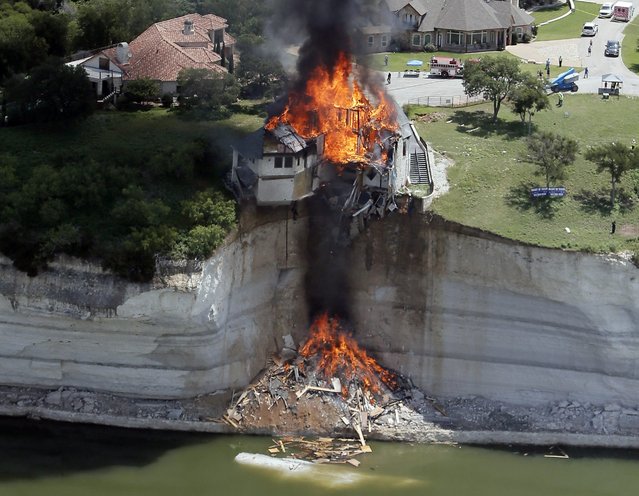
Smoke rises from a house days after part of the ground it was resting on collapsed into Lake Whitney, Texas in this June 13, 2014 file photo. I was covering the controlled burn of a house slowly falling into Lake Whitney due to the decaying cliff underneath.  Asked to take photos from an aerial perspective, an instructor and I took off from Grand Prairie Municipal Airport around 9am. (Photo and caption by Brandon Wade/Reuters)

Smoke rises from a house days after part of the ground it was resting on collapsed into Lake Whitney, Texas in this June 13, 2014 file photo. I was covering the controlled burn of a house slowly falling into Lake Whitney due to the decaying cliff underneath. Asked to take photos from an aerial perspective, an instructor and I took off from Grand Prairie Municipal Airport around 9am. The burn, scheduled to start an hour later, was delayed. I love flying, but patience proved challenging as circling for nearly three hours gets boring fast. Once the fire started we only had 15 minutes to take photos because the plane was booked at 1pm. The owners invested their retirement savings in the house and were even advised by geologists that the ground was stable. To watch your investment literally go up in flames must take its toll emotionally. The owners said they don't expect their insurance to cover the loss. (Photo and caption by Brandon Wade/Reuters)
Details
27 Nov 2014 15:01:00
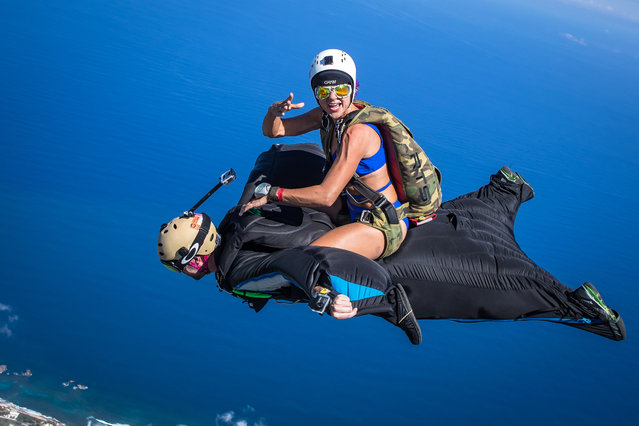
Robyn Young surfs on the back of Oliver Miller as they descend upon Arecibo, Puerto Rico. (Photo by Jeff Donohue/Caters News)

This might quite simply be the oddest skydive youll ever see – as a pair of daredevils simulate a rodeo ride as they hurtle towards earth. In the bizarre pictures, skydiver Robyn Young managed to straddle co-jumper Oliver Miller, as they plummet through the sky – and amazingly, pal Jeff Donohue caught it all on camera. The pair managed to perform the stunt before going their separate ways and pulling their parachute cords during the skydive over recibo, Puerto Rico, last month. Here: Robyn Young surfs on the back of Oliver Miller as they descend upon Arecibo, Puerto Rico. (Photo by Jeff Donohue/Caters News)
Details
06 Mar 2017 00:06:00
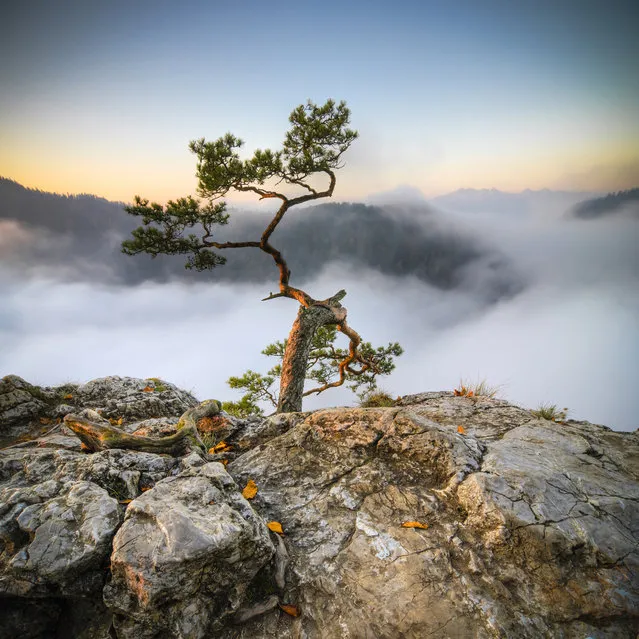
“Sokolica”. Sokolica, Poland. (Photo and caption by Marcin Kęsek/National Geographic Traveler Photo Contest)

“Sokolica”. Sokolica, Poland. (Photo and caption by Marcin Kęsek/National Geographic Traveler Photo Contest)

ATTENTION! All pictures are presented in high resolution. To see Hi-Res images – just TWICE click on any picture. In other words, click small picture – opens the BIG picture. Click BIG picture – opens VERY BIG picture.
Details
25 Jun 2013 09:13:00
Coffins are lined up near the wreckage of the bus, on July 29, 2013. (Photo by Salvatore Laporta/Associated Press)

Coffins are lined up near the wreckage of the bus, on July 29, 2013. (Photo by Salvatore Laporta/Associated Press)
Details
30 Jul 2013 08:32:00
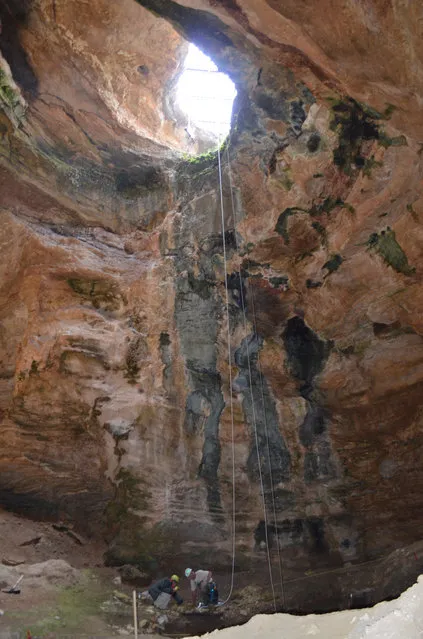
This July 2014 image provided by the Bureau of Land Management shows the interior of the Natural Trap Cave in north-central Wyoming. The cave holds the remains of tens of thousands of animals, including many now-extinct species, from the late Pleistocene period tens of thousands of years ago. Scientists have resumed digging for the first time in more than 30 years. (Photo by AP Photo/Bureau of Land Management)

This July 2014 image provided by the Bureau of Land Management shows the interior of the Natural Trap Cave in north-central Wyoming. The cave holds the remains of tens of thousands of animals, including many now-extinct species, from the late Pleistocene period tens of thousands of years ago. Scientists have resumed digging for the first time in more than 30 years. (Photo by AP Photo/Bureau of Land Management)
Details
10 Aug 2014 10:35:00
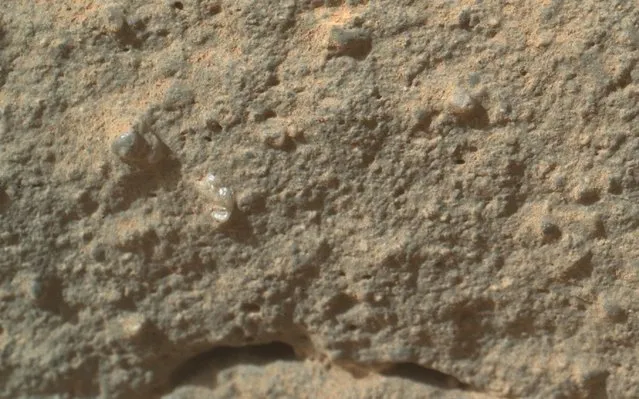
Scientists say that a “Martian flower”, seen here in an image from the Curiosity rover's Mars Hand Lens Imager, is a 2-millimeter-wide grain or pebble that's embedded in the surrounding rock. Another, darker-colored mineral grain can be seen above and to the left. (Photo by NASA)

“The scientists behind NASA's $2.5 billion Curiosity rover mission on Mars on Tuesday explained the nature of a tiny, gleaming "flower" embedded in Red Planet rock, and revealed where they'll be using the SUV-sized robot's drill for the first time”. – Alan Boyle via NBCNews.com

Photo: Scientists say that a “Martian flower”, seen here in an image from the Curiosity rover's Mars Hand Lens Imager, is a 2-millimeter-wide grain or pebble that's embedded in the surrounding rock. Another, darker-colored mineral grain can be seen above and to the left. (Photo by NASA)
Details
16 Jan 2013 11:12:00