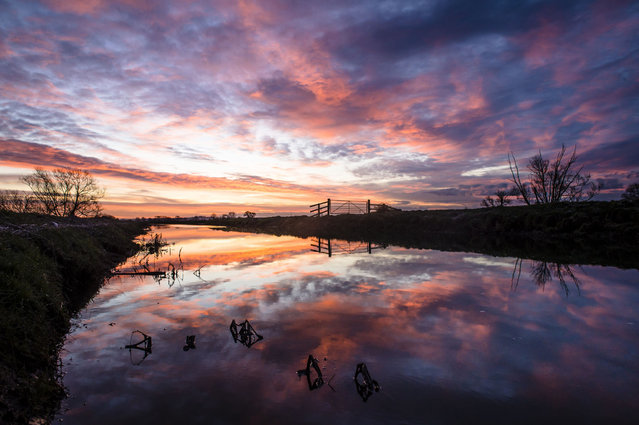
The sun rises over the River Brue on the Somerset Levels as temperatures in parts of the south west drop below freezing, on January, 20, 2015. (Photo by Ben Birchall/PA Wire)
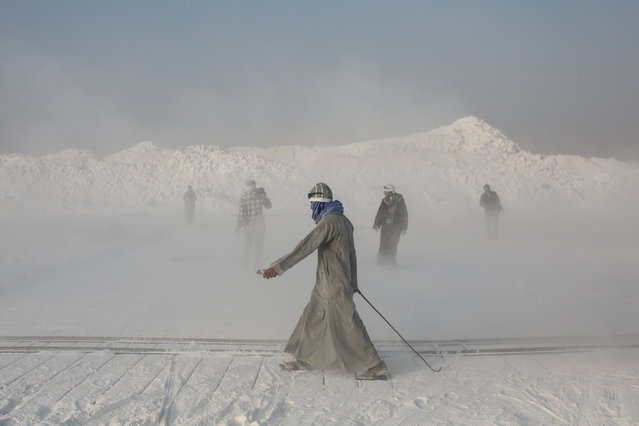
In this Wednesday, March 18, 2015 photo, limestone quarry workers walk through a cloud of dust spewed into the air by rotor blades of the stone-cutting machinery in the desert of Minya, southern Egypt. Around 45,000 people, including children, work in an estimated 1,500 quarries, digging out stones that later will be used in construction or powdered to be used by pharmaceutical and ceramic companies. (Photo by Mosa'ab Elshamy/AP Photo)
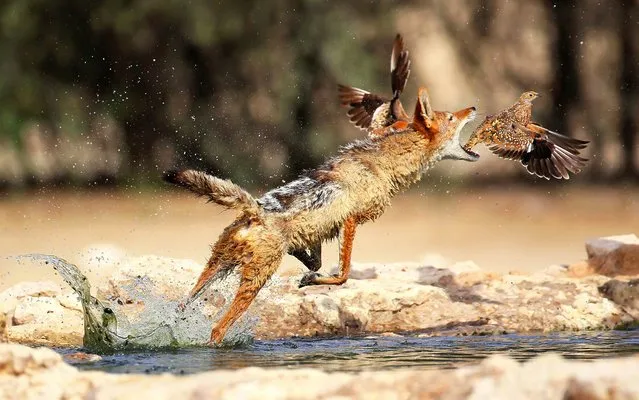
Against the scorching sun, a hungry jackal chases a flock of birds looking for a quick morning snack. Taken in South Africa's Kgalagadi Transfrontier National Park, these images capture the moment a lone hunter tries, and then succeeds, in his pursuit. (Photo by John Mullineux/Solent News)
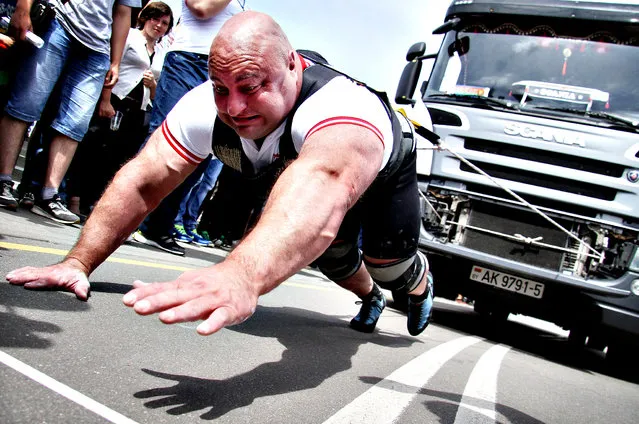
An athlete pulls a 15-tonne truck during a Truck-Pull event marking the upcoming Independence Day in the Belarus capital Minsk, on July 3, 2014. The former Soviet nation celebrates its Independence Day on July 3 in memory of the end of Belarus occupation by Nazi Germany troops during the Red Army main summer offensive in 1944. (Photo by Sergei Gapon/AFP Photo)
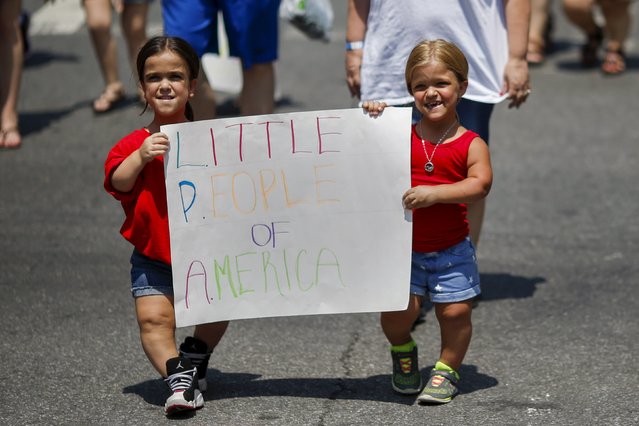
Girls suffering from dwarfism take part in the disability pride parade in New York, July 12, 2015. The parade grand marshal was former U.S. Sen. Tom Harkin, the Iowa Democrat who 25 years ago sponsored the Americans With Disabilities Act. (Photo by Eduardo Munoz/Reuters)
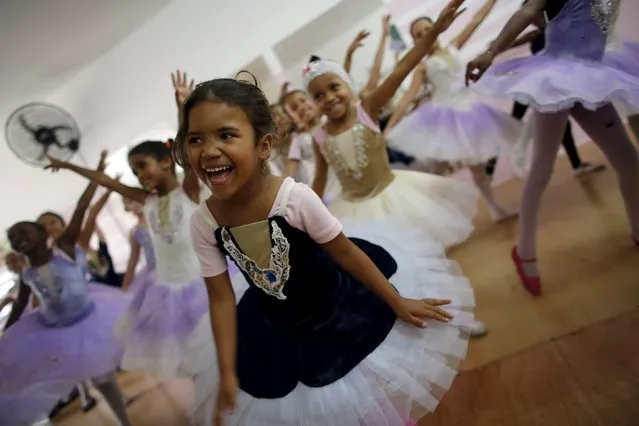
Young girls take ballet lessons at the New Dreams dance studio in the Luz neighborhood known to locals as Cracolandia (Crackland) in Sao Paulo, Brazil, August 14, 2015. For the young girls learning to jump and plie, the dance studio provides a way forward and out of the difficult environment they have grown up in. Brazil is one of the world's highest consuming countries of crack cocaine, and Cracolandia, or “Crack Land”, located in the outskirts of Sao Paulo, is one of the most intense and brutal hubs. (Photo by Nacho Doce/Reuters)
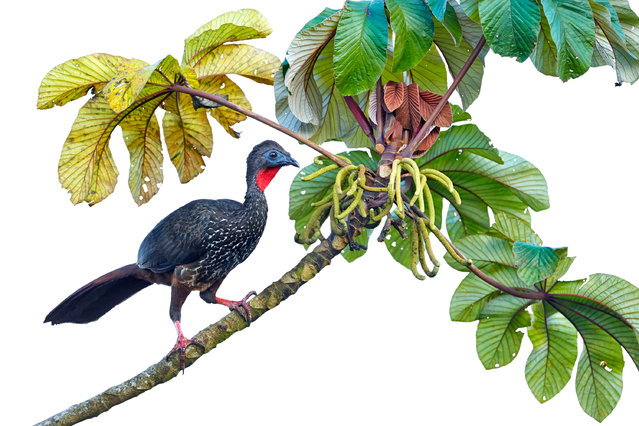
Highly commended birds : Crested guan by Tim Hunt (UK). ‘This photo shows a crested guan in the cloud forests of Costa Rica as it pauses while foraging on a lone branch. Due to the clouds that are so typical for this habitat, I could often only photograph the bird’s silhouette against a grey sky. But then, for a short moment only, the sun broke through the clouds, and I overexposed the image by over two stops in order to blow out the background and allow this beautifully marked bird to stand out’. (Photo by Tim Hunt/GDT European Wildlife Photographer of the Year 2015)
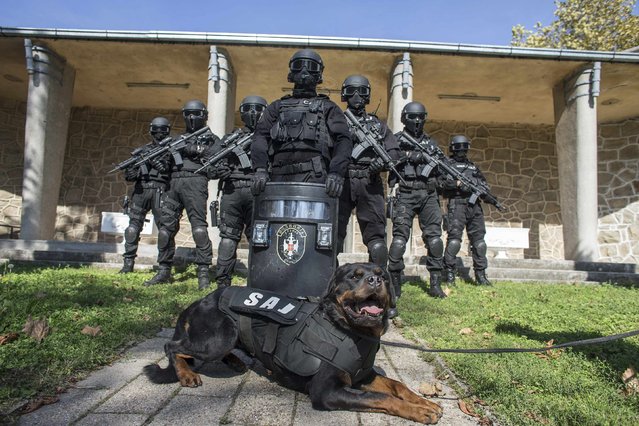
Serbian police officers of the Special Anti-Terrorist Unit pose for a picture in their base outside Belgrade October 8, 2014. When the killing of an unarmed black teenager by a white policeman in Ferguson, Missouri, in August sparked sometimes violent protests, the response of police in camouflage gear and armoured vehicles wielding stun grenades and assault rifles seemed more like a combat operation than a public order measure. Some U.S. police departments have recently acquired U.S. military-surplus hardware from wars abroad, but there are many law enforcers around the world whose rules of engagement also allow the use of lethal force with relatively few restrictions. But for every regulation that gives police wide scope to use firearms, there is another code that sharply limits their use. In Serbia, police may use measures ranging from batons to special vehicles, water cannon and tear gas on groups of people who have gathered illegally and are behaving in a way that is violent or could cause violence, but they may use firearms only when life is endangered. (Photo by Marko Djurica/Reuters)