Loading...
Done
Porcelain Figurines By Martin Klimas

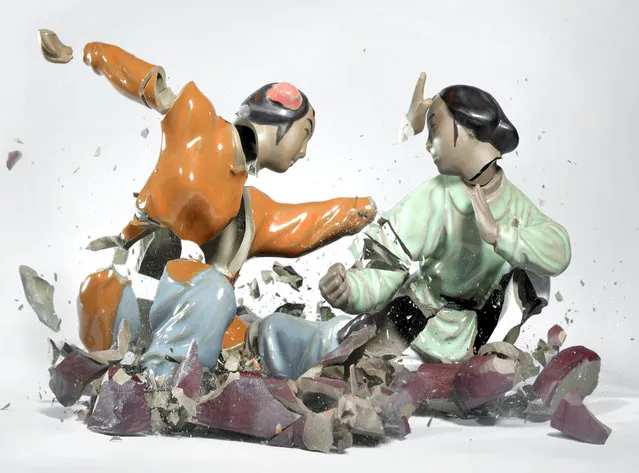
From a height of three meters, porcelain figurines are dropped on the ground, and the sound they make when they hit trips the shutter release. The result: razor-sharp images of disturbing beauty—temporary sculptures made visible to the human eye by high-speed photography technology. The porcelain statuette bursting into pieces isn't what really captures the attention; the fascination lies in the genesis of a dynamic figure that replaces the static pose. In contrast to the inertness of the intact kitsch figurines Klimas started out with, the photographs of their destruction possess a powerfully narrative character.
Details
21 Apr 2014 12:59:00
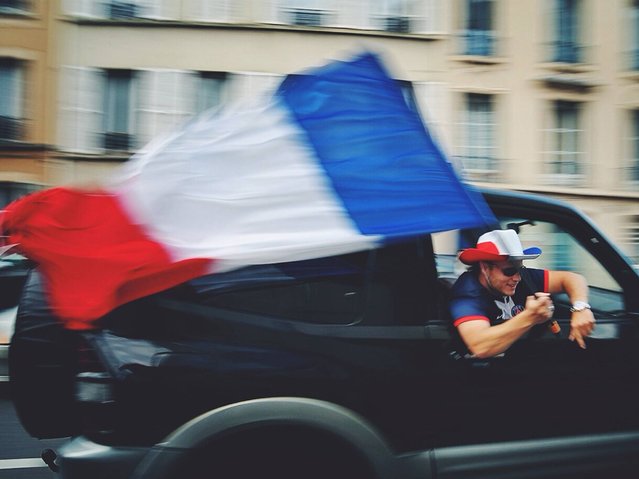
France: French fans cheering for their team. (Photo by Anthony Lepinay)

Sports have the ability to transform groups of strangers into a united community. In the celebratory spirit surrounding the 2014 FIFA World Cup, Sony and the World Photography Organisation present UNITED – a contest honouring the passion of football fans around the world. Seven inspirational photographers have been selected by Sony and WPO to capture the atmosphere and celebration of the World Cup across the globe. Photo: France – French fans cheering for their team. (Photo by Anthony Lepinay)
Details
09 Jul 2014 12:22:00
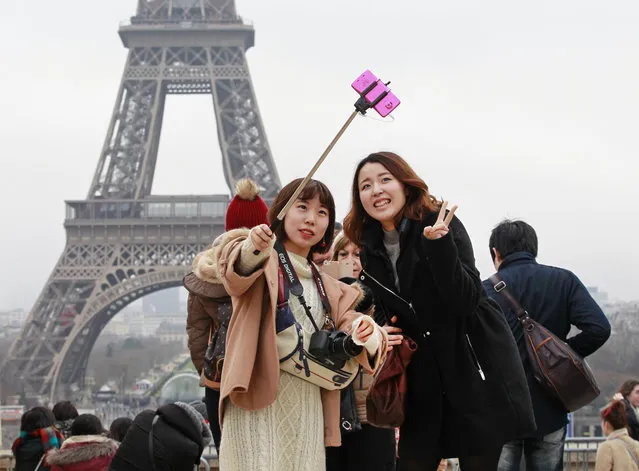
Tourists use a selfie stick on the Trocadero Square, with  the Eiffel Tower in background, in Paris, Tuesday, January 6, 2015. (Photo by Remy de la Mauviniere/AP Photo)

Tourists use a selfie stick on the Trocadero Square, with the Eiffel Tower in background, in Paris, Tuesday, January 6, 2015. Selfie sticks have become popular among tourists because you don't have to ask strangers to take your picture, and you can capture a wide view in a selfie without showing your arm. But some people find selfie sticks obnoxious, arguing that they detract from the travel experience. (Photo by Remy de la Mauviniere/AP Photo)
Details
09 Jan 2015 13:15:00
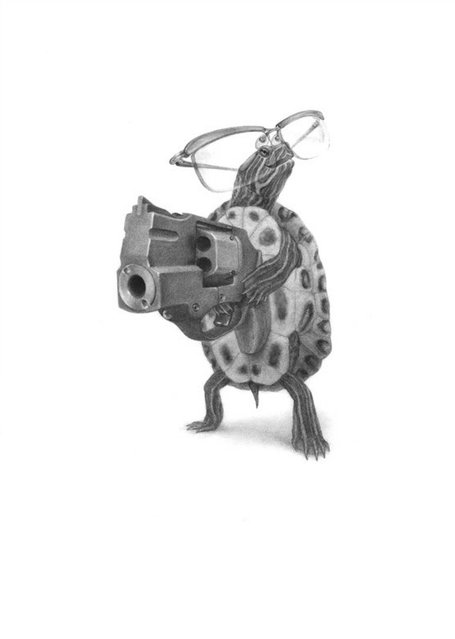
Gun-Toting Animals By Xiau Fong
Tempering the violence of modern weaponry with charmingly rendered creatures, artist Xiau-Fong Wee captures a dark humor in her quirky drawings. While some of the weapons appear terrifyingly realistic, others such as in the ray gun wielding bunny portrait, speaks more to the fantastical worlds of science fiction. The anthropomorphic dispositions of the spectacle-wearing creatures also range in merry reverie to stern seriousness, adding to the delightful nature of these well-executed portraits. View more of the drawings below.
Details
27 Jul 2013 08:08:00
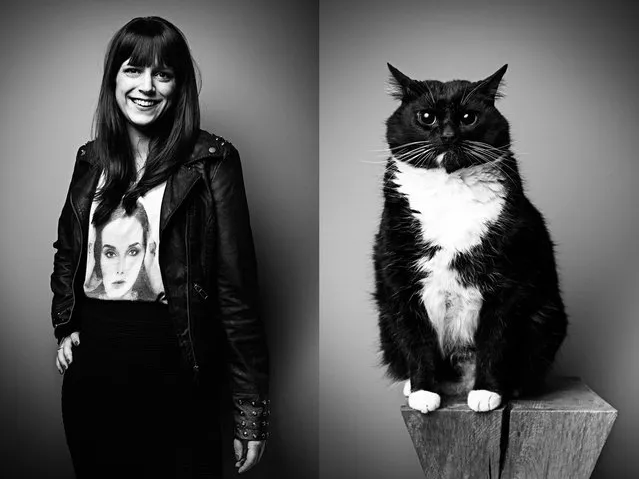
Pet owner Isabel with her blind housecat, “Captain Jack”. (Photo by Tobias Lang)

German photographer Tobias Lang had a brilliant idea, he started photographing his friends and their pets and suddenly folks from all over the world where asking him to capture them too. Check out his Facebook page to see. Tobias is in the process of putting together a coffee table book of his impressive collection. Photo: Pet owner Isabel with her blind housecat, “Captain Jack”. (Photo by Tobias Lang)
Details
30 Jul 2013 08:37:00
Melted Ice Cream By Michael Massaia

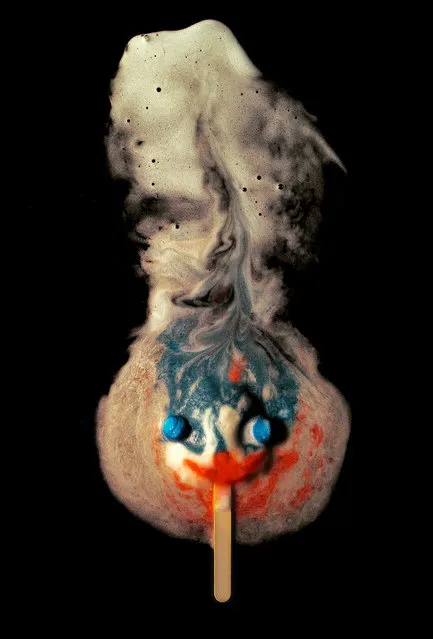
Michael Massaia's photographs are as nostalgic as they are disturbing. His long-exposure images capture a subject matter familiar to most. From a SpongeBob SquarePants popsicle to a Neapolitan ice cream sandwich, he frames the frozen treats most people's summer memories are made of. Yet, Massaia doesn't just realistically render his ice cream. He distorts the childhood favorites by melting them before his lens, until the pops resemble ominous pools of paint or celestial snapshots.
Details
09 Jul 2015 08:32:00
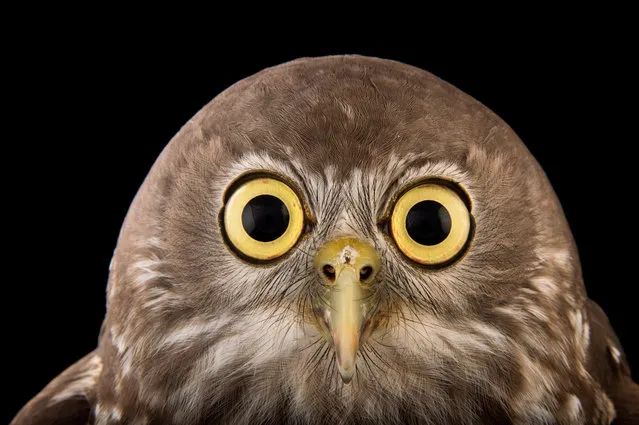
The National Geographic Photo Ark is a travelling exhibition of photographer Joel Sartore’s quest to create a photo archive of biodiversity around the world. So far, Sartore has captured studio portraits of more than 6,000 species – a number that he hopes to double. On 1 July, the ark will open at Melbourne zoo – the first time it has been exhibited in the southern hemisphere. More than 50 portraits will be on display, including many of Australian endangered animals being protected by programs at the zoo itself. These captions have been edited from text supplied by Melbourne zoo. Here: Barking owl. So-named because its call sounds like a barking dog, these birds are native to Australia, Indonesia and Papua New Guinea. In Victoria they are listed as an endangered species, and in 2003 there were estimated to be fewer than 50 breeding pairs. The main threat to the species in Victoria is loss of habitat, especially large trees with hollows in which they can nest and on which many of their prey depend. Apart from a bark, they may utter a chilling scream when they feel threatened. (Photo by Joel Sartore/National Geographic Photo Ark/The Guardian)

The National Geographic Photo Ark is a travelling exhibition of photographer Joel Sartore’s quest to create a photo archive of biodiversity around the world. So far, Sartore has captured studio portraits of more than 6,000 species – a number that he hopes to double. On 1 July, the ark will open at Melbourne zoo – the first time it has been exhibited in the southern hemisphere. More than 50 portraits will be on display, including many of Australian endangered animals being protected by programs at the zoo itself. These captions have been edited from text supplied by Melbourne zoo. Here: Barking owl. (Photo by Joel Sartore/National Geographic Photo Ark/The Guardian)
Details
01 Jul 2017 07:45:00
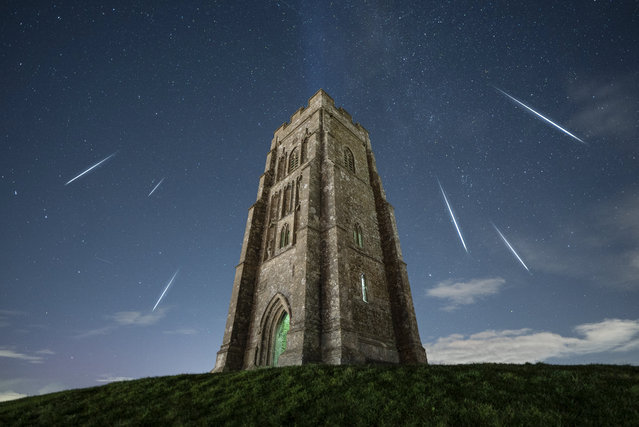
An amazing photo shows a rare meteor shower captured from Glastonbury Tor, UK. Astrophotographer Josh Dury took the photo when the skies cleared for 30 minutes in the early hours of the morning on January 4, 2024. Josh said the Quadrantids meteor shower is an active shower where up to 100 meteors can be seen per hour, although it only peaks for a few hours during January. He said that meteor showers are produced by debris left over from comets – but what produces the meteors during the Quadrantids meteor shower is unknown. (Photo by Josh Dury/South West News Service)

An amazing photo shows a rare meteor shower captured from Glastonbury Tor, UK. Astrophotographer Josh Dury took the photo when the skies cleared for 30 minutes in the early hours of the morning on January 4, 2024. Josh said the Quadrantids meteor shower is an active shower where up to 100 meteors can be seen per hour, although it only peaks for a few hours during January. He said that meteor showers are produced by debris left over from comets – but what produces the meteors during the Quadrantids meteor shower is unknown. (Photo by Josh Dury/South West News Service)
Details
09 Apr 2025 04:06:00