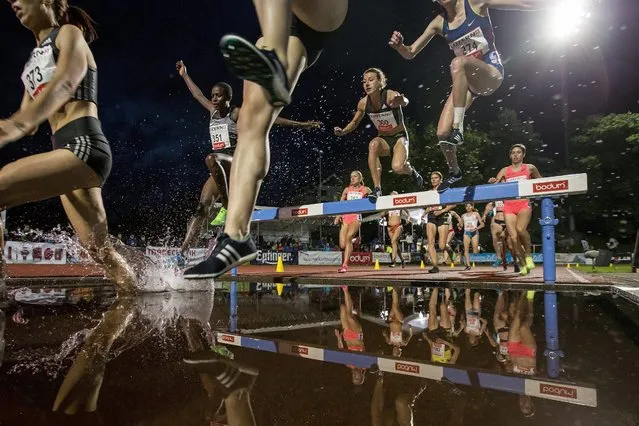
Athlets run during the women's 3000 meter steeplechase at the International Athletics Meeting in Lucerne, Switzerland, 14 June 2016. (Photo by Alexandra Wey/EPA)
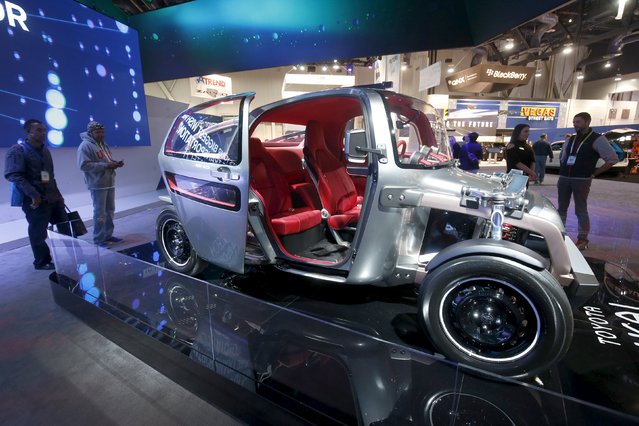
A three-seater Toyota Kikai concept car is displayed during the 2016 CES trade show in Las Vegas, Nevada January 8, 2016. (Photo by Steve Marcus/Reuters)
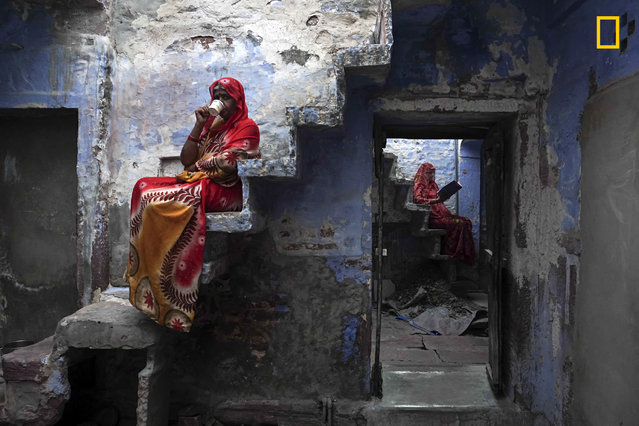
“These Rajasthani sisters were sitting on the staircase inside their house relaxing and enjoy a cup of masala chai”. (Photo by Firdaus Hadzri/National Geographic Travel Photographer of the Year Contest)
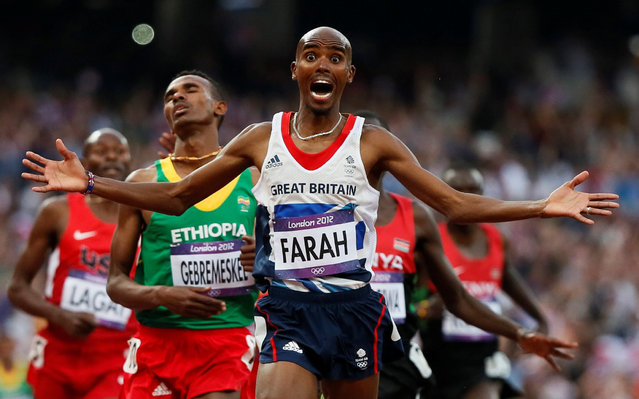
The Rio de Janeiro Olympics kick off on August 5 for some two weeks of competitive games drawing athletes as well as audiences from around the world. As they prepare to cover the event, Reuters photographers look back on their favourite pictures from past Olympics where they captured the action on the ground as well as the participants' tears and joy that followed. (Photo by Lucy Nicholson/Reuters)
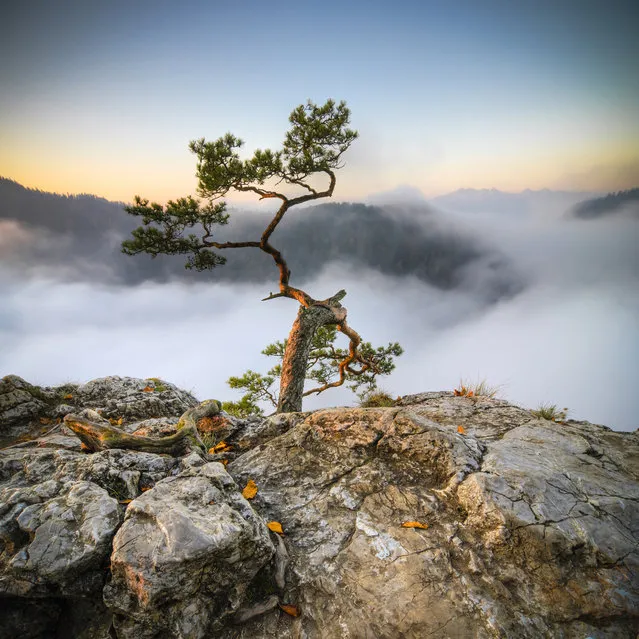
“Sokolica”. Sokolica, Poland. (Photo and caption by Marcin Kęsek/National Geographic Traveler Photo Contest)
ATTENTION! All pictures are presented in high resolution. To see Hi-Res images – just TWICE click on any picture. In other words, click small picture – opens the BIG picture. Click BIG picture – opens VERY BIG picture.
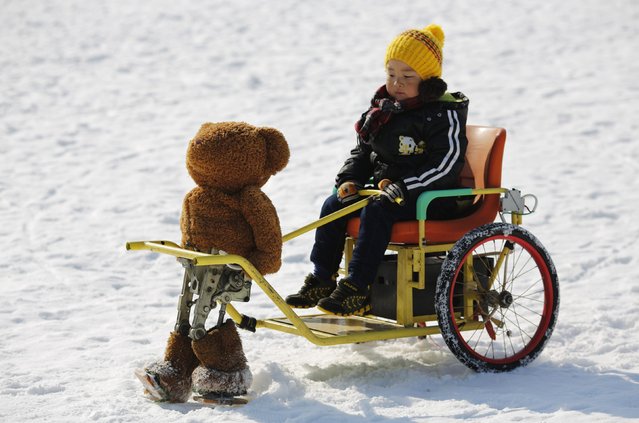
A boy rides on a snow wagon towed by a robot dressed as a Teddy bear, which only moves forward by moving its legs, during the Ice and snow carnival at Taoranting park in Beijing February 9, 2015. (Photo by Kim Kyung-Hoon/Reuters)
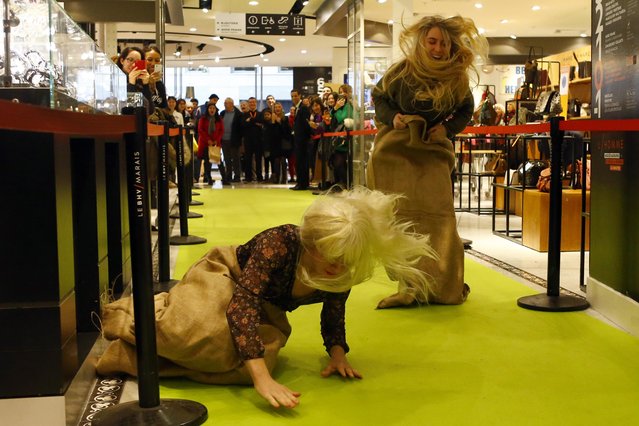
Participants, one of them loosing balance, jump in a sack race at a shopping center in Paris to win a 500 euros voucher (537 USD), on the first day of the winter sales in Paris, France, Wednesday, January 6 , 2016. The five-week 2016 winter sales start everywhere across France on Wednesday Jan. 6 and end on Feb. 16. (Photo by Francois Mori/AP Photo)
On August 31, 2012, a long filament of solar material that had been hovering in the sun's atmosphere, the corona, erupted out into space at 4:36 p.m. EDT. The coronal mass ejection, or CME, traveled at over 900 miles per second. The CME did not travel directly toward Earth, but did connect with Earth's magnetic environment, or magnetosphere, causing aurora to appear on the night of Monday, September 3. (Photo by NASA/GSFC/SDO via The Atlantic)