Loading...
Done


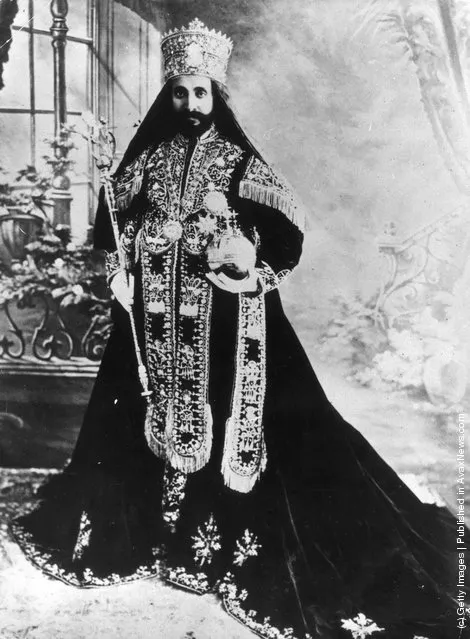
“Haile Selassie I (23 July 1892 – 27 August 1975), born Tafari Makonnen, was Ethiopia's regent from 1916 to 1930 and Emperor of Ethiopia from 1930 to 1974. The heir to a dynasty that traced its origins to the 13th century, and from there by tradition back to King Solomon and Queen Makeda, Empress of Axum, known in the Abrahamic tradition as the Queen of Sheba. Haile Selassie is a defining figure in both Ethiopian and African history.

Haile Selassie is revered as the returned Messiah of the Bible, God incarnate, among the Rastafari movement, the number of followers of which is estimated between 200,000 and 800,000. Begun in Jamaica in the 1930s, the Rastafari movement perceives Haile Selassie as a messianic figure who will lead a future golden age of eternal peace, righteousness, and prosperity. He himself remained an Ethiopian Orthodox Christian throughout his life”. – Wikipedia

Photo: Negusa Negasti, Emperor of Ethiopia Haile Selassie I, known as “Lord of Lords”, “The Conquering Lion of the tribe of Judah”, “Light of the world”, “Elect of God”, in full ceremonial regalia following his coronation. (Photo by Hulton Archive/Getty Images)
Details
21 Jun 2011 11:04:00
Mimi Pineda, 15, whose parents are from El Salvador, rides to church in a limousine with her friend Christian Flores, 17, during her quinceanera in Santa Clarita, California August 23, 2014. Quinceanera is a rite of passage celebrated on the fifteenth birthday of many female Latino teenagers. (Photo by Lucy Nicholson/Reuters)

Reuters photographer Lucy Nicholson documented some of the migrant communities that live in Los Angeles. Los Angeles is a culturally thriving city and one of the most ethnically diverse in the United States, with a population that is 48.5 percent Latino and 11.3 percent Asian, according to a 2010 census. Immigration has become a hot button issue ahead of U.S. midterm elections on November 4, and despite arguments from the White House that legal migration benefits businesses, a recent opinion poll found most Americans believe migrants place a burden on the economy. (Photo by Lucy Nicholson/Reuters)
Details
02 Nov 2014 11:03:00
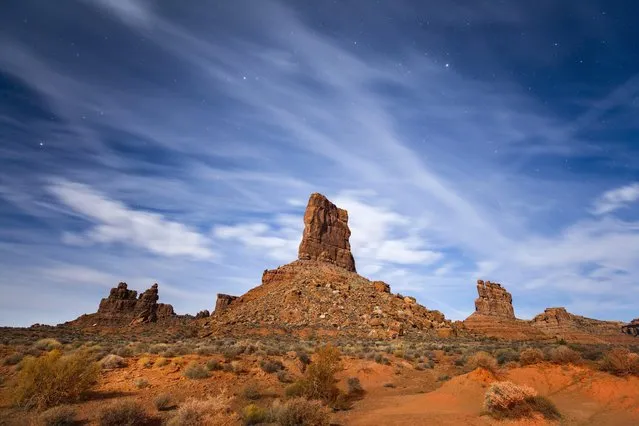
Moonlight illuminates sandstone buttes in the Valley of the Gods in the proposed Bear Ears National Monument near Mexican Hat, Utah, USA, 12 November 2016. (Photo by Jim Lo Scalzo/EPA)

Moonlight illuminates sandstone buttes in the Valley of the Gods in the proposed Bear Ears National Monument near Mexican Hat, Utah, USA, 12 November 2016. In October 2015, a coalition of five Indian nations, including the Hopi, Ute, and Navajo, formally proposed the monument, attempting to preserve the parcel's 100,000 archeological sites from ongoing looting and grave robbing. Less than two months before handing over the White House to President Elect Trump, President Obama must decide if it's worth the political capital to designate Bear Ears a national monument. (Photo by Jim Lo Scalzo/EPA)
Details
07 Dec 2016 11:53:00
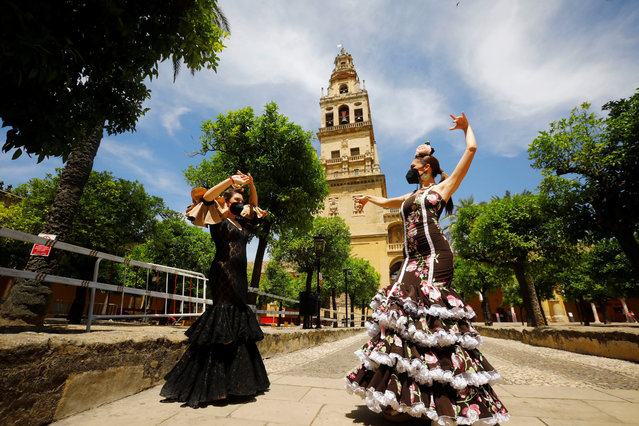
Women wearing traditional dresses dance next to Cathedral–Mosque of Cordoba, Andalusia, Spain, 26 May 2021, to celebrate the Cordoba Fair that was suspended due to coronavirus COVID-19 pandemic for a second consecutive year. The Cordoba Fair is held every year in May for a week during which flamenco, food, and wine are the main attractions for thousands of people. (Photo by Salas/EPA/EFE)

Women wearing traditional dresses dance next to Cathedral–Mosque of Cordoba, Andalusia, Spain, 26 May 2021, to celebrate the Cordoba Fair that was suspended due to coronavirus COVID-19 pandemic for a second consecutive year. The Cordoba Fair is held every year in May for a week during which flamenco, food, and wine are the main attractions for thousands of people. (Photo by Salas/EPA/EFE)
Details
27 May 2021 09:00:00
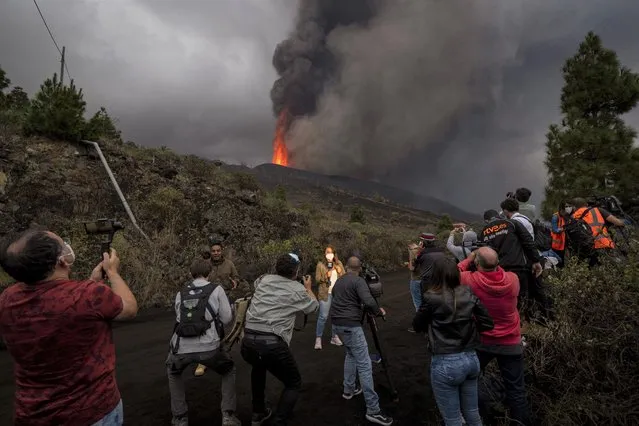
Journalists report during a media tour near the volcano on the island of La Palma in the Canaries, Spain, Wednesday, September 22, 2021. A volcano on a small Spanish island in the Atlantic Ocean erupted on Sunday, forcing the evacuation of thousands of people. Experts say the volcanic eruption and its aftermath on a Spanish island could last for up to 84 days. The Canary Island Volcanology Institute said Wednesday it based its calculation on the length of previous eruptions on the archipelago. (Photo by Emilio Morenatti/AP Photo)

Journalists report during a media tour near the volcano on the island of La Palma in the Canaries, Spain, Wednesday, September 22, 2021. A volcano on a small Spanish island in the Atlantic Ocean erupted on Sunday, forcing the evacuation of thousands of people. Experts say the volcanic eruption and its aftermath on a Spanish island could last for up to 84 days. The Canary Island Volcanology Institute said Wednesday it based its calculation on the length of previous eruptions on the archipelago. (Photo by Emilio Morenatti/AP Photo)
Details
05 Oct 2021 09:18:00
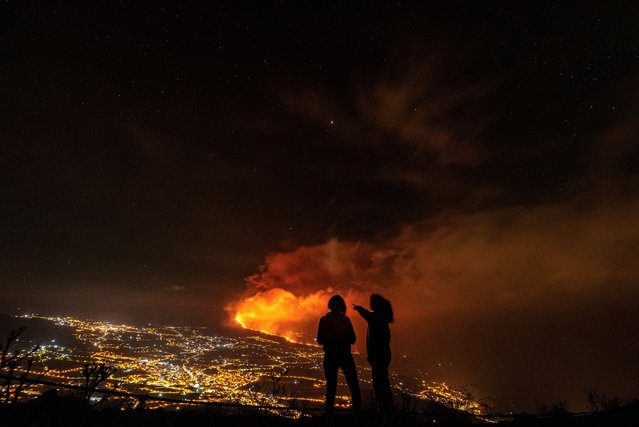
Two women look at the Cumbre Vieja volcanic eruption from the distance in Los Llanos de Ariadne in La Palma, Canary Islands, Spain, late 05 October 2021 (issued 06 October 2021). The main cone of the La Palma volcano suffered a partial collapse of its structure 03 October, while effusive activity has increased after 15 days of its beginning. According to experts the volcano is far from ending its volcanic activity. (Photo by Miguel Calero/EPA/EFE)

Two women look at the Cumbre Vieja volcanic eruption from the distance in Los Llanos de Ariadne in La Palma, Canary Islands, Spain, late 05 October 2021 (issued 06 October 2021). The main cone of the La Palma volcano suffered a partial collapse of its structure 03 October, while effusive activity has increased after 15 days of its beginning. According to experts the volcano is far from ending its volcanic activity. (Photo by Miguel Calero/EPA/EFE)
Details
07 Oct 2021 08:27:00
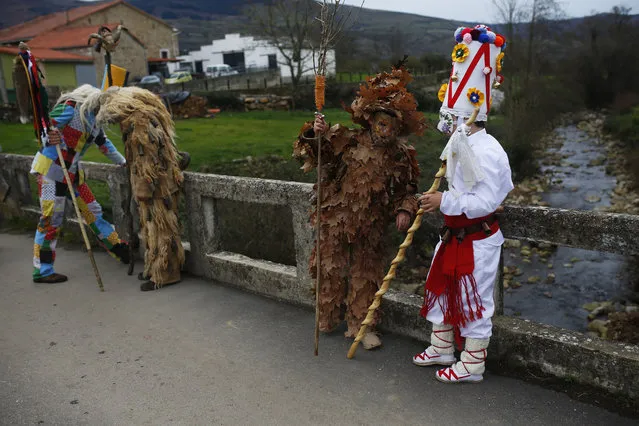
People dressed in costumes have a break while marching during the Vijanera Festival, in the small village of Silio, northern Spain, Sunday, January 3, 2016. The Vijanera masquerade, of pre-Roman origin, is the first carnival of the year in Europe symbolizing the triumph of good over evil and involving the participation of crowds of residents wearing different masks, animal skins and brightly coloured clothing with its own complex function and symbolism and becoming the living example of the survival of archaic cults to nature. (Photo by Francisco Seco/AP Photo)

People dressed in costumes have a break while marching during the Vijanera Festival, in the small village of Silio, northern Spain, Sunday, January 3, 2016. The Vijanera masquerade, of pre-Roman origin, is the first carnival of the year in Europe symbolizing the triumph of good over evil and involving the participation of crowds of residents wearing different masks, animal skins and brightly coloured clothing with its own complex function and symbolism and becoming the living example of the survival of archaic cults to nature. (Photo by Francisco Seco/AP Photo)
Details
04 Jan 2016 10:17:00
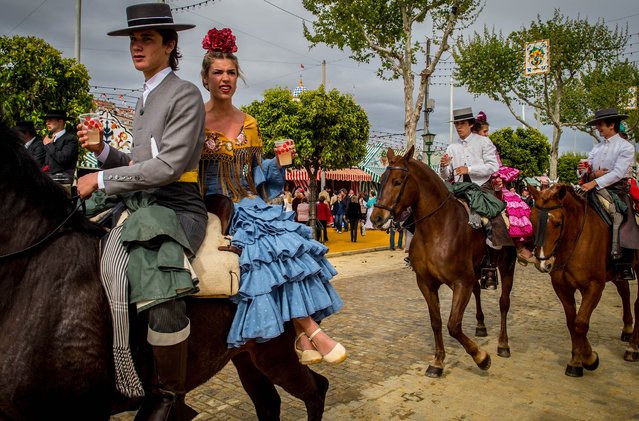
Participants in traditional dress ride on horseback as they enjoy the atmosphere at the Feria de Abril (April's Fair) on April 12, 2016 in Seville, Spain. The Feria de Abril has a history that dates back to 1857 and takes place a fortnight after Easter each year. The origin of the fair was a cattle market but the event quickly turned its goal from commerce to having fun. More than 1 million local and international participants are expected to attend the Feria de Abril. (Photo by David Ramos/Getty Images)

Participants in traditional dress ride on horseback as they enjoy the atmosphere at the Feria de Abril (April's Fair) on April 12, 2016 in Seville, Spain. The Feria de Abril has a history that dates back to 1857 and takes place a fortnight after Easter each year. The origin of the fair was a cattle market but the event quickly turned its goal from commerce to having fun. More than 1 million local and international participants are expected to attend the Feria de Abril. (Photo by David Ramos/Getty Images)
Details
14 Apr 2016 12:25:00