Loading...
Done
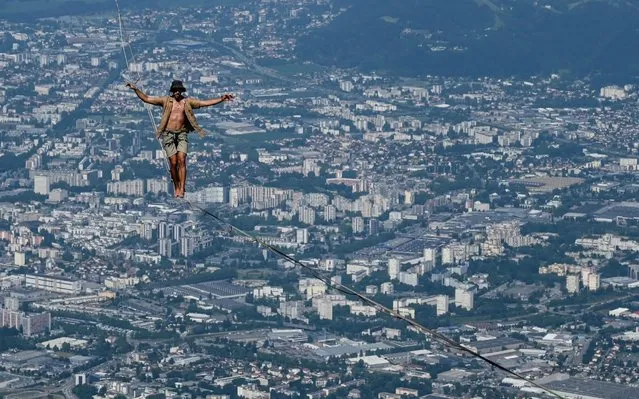
A man walks on a slackline during the 7th edition of the European “Marmotte Highline Project” (MHP) festival in Lans-en-Vercors, near Grenoble, eastern France, on July 4, 2019. The event, during which the participants will be able to evolve on the various highlines located in the Regional Natural Park of Vercors, takes place until July 7, 2019. (Photo by Philippe Desmazes/AFP Photo)

A man walks on a slackline during the 7th edition of the European “Marmotte Highline Project” (MHP) festival in Lans-en-Vercors, near Grenoble, eastern France, on July 4, 2019. The event, during which the participants will be able to evolve on the various highlines located in the Regional Natural Park of Vercors, takes place until July 7, 2019. (Photo by Philippe Desmazes/AFP Photo)
Details
06 Jul 2019 00:07:00
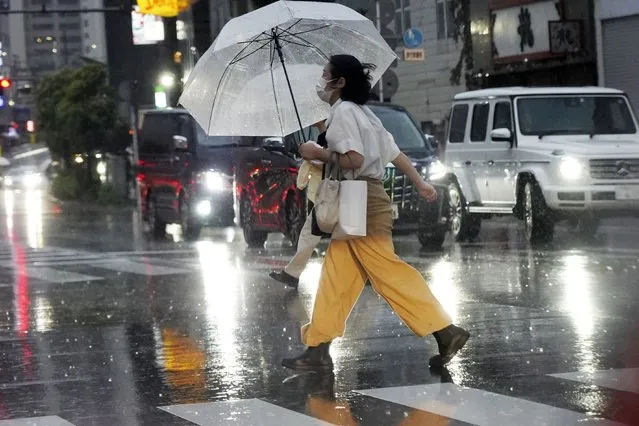
A person holds an umbrella against strong wind and rain as he walks on a street Friday, June 2, 2023, in Kawasaki near Tokyo, as a tropical storm was approaching. (Photo by Eugene Hoshiko/AP Photo)

A person holds an umbrella against strong wind and rain as he walks on a street Friday, June 2, 2023, in Kawasaki near Tokyo, as a tropical storm was approaching. (Photo by Eugene Hoshiko/AP Photo)
Details
08 Jul 2023 02:46:00
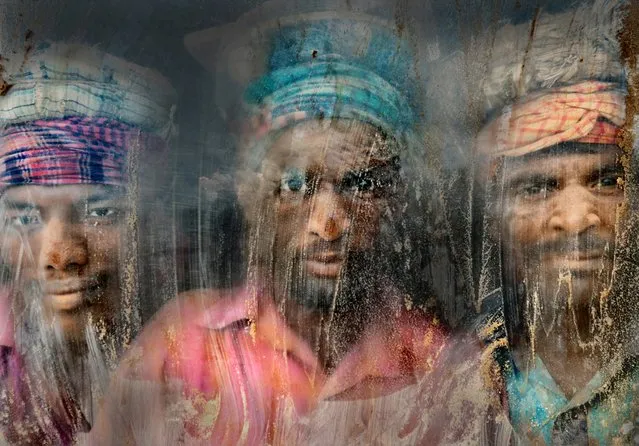
Gravel Workmen of Chittagong, Bangladesh, by Faisal Azim. Gravel workmen look through a glass window at a gravel-crushing yard in Chittagong. Full of dust and sand, it is an extremely unhealthy environment for working, but still hundreds of people work here for their livelihoods. (Photo by Faisal Azim/2016 Atkins CIWEM Environmental Photographer of the Year)

From Tibetan monks playing basket ball with ice thawing high up in the Himalayas, to the pollution that hides behind the Taj Mahal, here’s pick from 60 exceptional environmental photographs, by photographers and filmmakers from 70 countries, that will go on show at the Royal Geographical Society in London from 29 June to 21 August. The winners will be announced on 28 June. Here: Gravel Workmen of Chittagong, Bangladesh, by Faisal Azim. Gravel workmen look through a glass window at a gravel-crushing yard in Chittagong. Full of dust and sand, it is an extremely unhealthy environment for working, but still hundreds of people work here for their livelihoods. (Photo by Faisal Azim/2016 Atkins CIWEM Environmental Photographer of the Year)
Details
01 Jun 2016 12:25:00
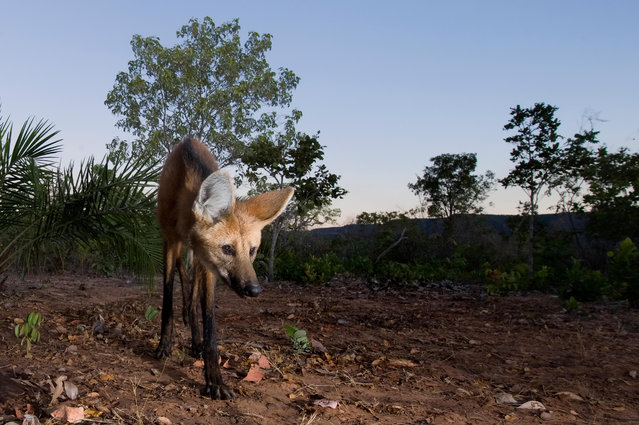
The maned wolf is among the large mammals in the Brazilian Cerrado that are threatened by the increasing conversion of grasslands into farmland for grazing and growing crops. (Photo by Ben Cranke/Nature Picture Library/Alamy Stock Photo)

Global wildlife populations will decline by 67% by 2020 unless urgent action is taken to reduce human impact on species and ecosystems, warns the biennial Living Planet Index report from WWF (World Wide Fund for Nature) and ZSL (Zoological Society of London). From elephants to eels, here are some of the wildlife populations most affected by human activity. Here: The maned wolf is among the large mammals in the Brazilian Cerrado that are threatened by the increasing conversion of grasslands into farmland for grazing and growing crops. (Photo by Ben Cranke/Nature Picture Library/Alamy Stock Photo)
Details
28 Oct 2016 10:47:00
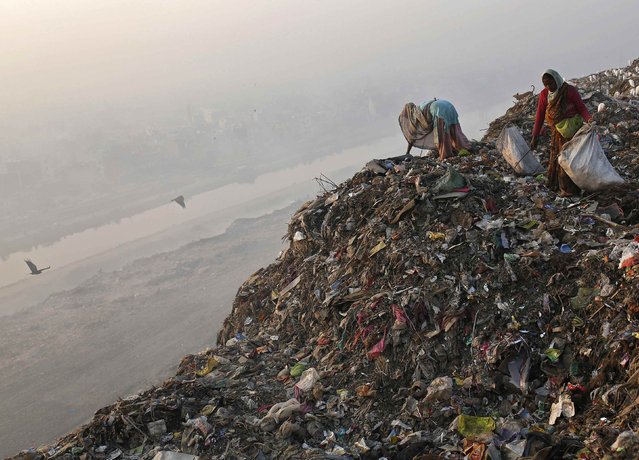
Rag pickers collect recyclable material at a garbage dump in New Delhi November 19, 2014. (Photo by Ahmad Masood/Reuters)

Rag pickers collect recyclable material at a garbage dump in New Delhi November 19, 2014. (Photo by Ahmad Masood/Reuters)
Details
20 Nov 2014 12:41:00
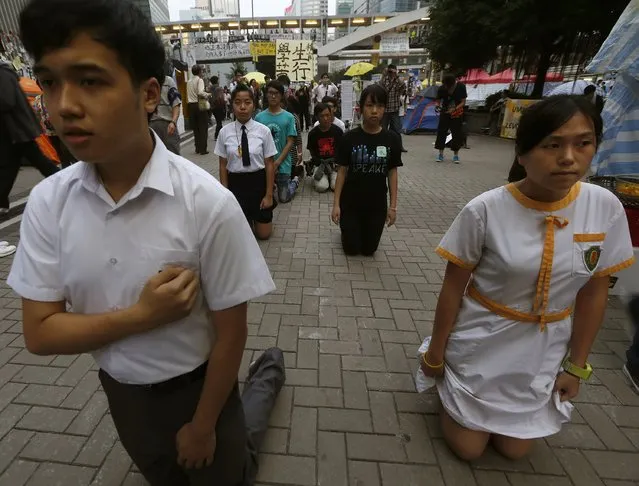
Secondary school students perform a barefoot “pilgrimage of suffering” to support the Occupy Central civil disobedience movement at the Admiralty protest site in Hong Kong November 30, 2014. It has been two months since police first fired tear gas to disperse demonstrators from the main protest site in the Admiralty district next to government offices in the heart of the Asian financial centre. (Photo by Bobby Yip/Reuters)

Secondary school students perform a barefoot “pilgrimage of suffering” to support the Occupy Central civil disobedience movement at the Admiralty protest site in Hong Kong November 30, 2014. It has been two months since police first fired tear gas to disperse demonstrators from the main protest site in the Admiralty district next to government offices in the heart of the Asian financial centre. (Photo by Bobby Yip/Reuters)
Details
01 Dec 2014 13:41:00


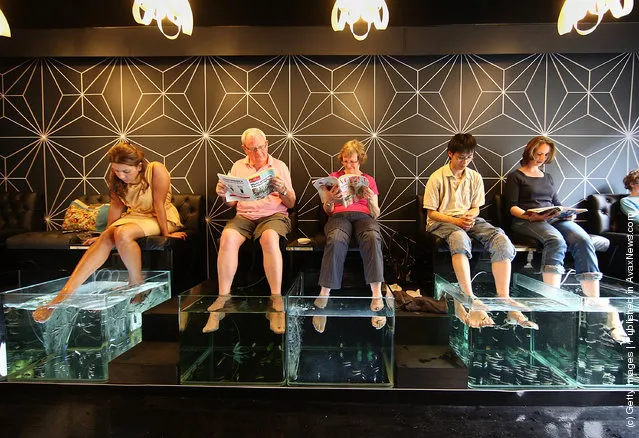
“Doctor fish is the name given to two species of fish: Garra rufa and Cyprinion macrostomus. Other nicknames include nibble fish, kangal fish, physio fish and doctorfishen; in non-medical contexts, Garra rufa is called the reddish log sucker. They live and breed in the outdoor pools of some Turkish spas, where they feed on the skin of patients with psoriasis. The fish are like combfishes in that they only consume the affected and dead areas of the skin, leaving the healthy skin to grow, with the outdoor location of the treatment bringing beneficial effects. The spas are not meant as a curative treatment option, only as a temporary alleviation of symptoms, and patients usually revisit the spas every few months”. – Wikipedia

Photo: Visitors to the Aqua Sheko fish therapy spa have their feet exfoliated on June 24, 2010 in London, England. Customers sit with their feet in a tank filled with 100-150 Garra Rufa fish which remove any dead skin by nibbling and sucking. A half hour session is then followed by a foot massage. (Photo by Peter Macdiarmid/Getty Images)

Details
22 Jun 2011 10:44:00
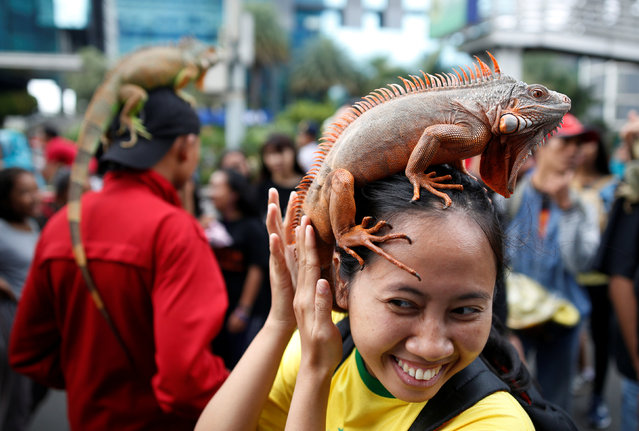
A woman holds an iguana perched on her head at a gathering of a reptile club during a car-free day in central Jakarta, Indonesia February 5, 2017. (Photo by Darren Whiteside/Reuters)

A woman holds an iguana perched on her head at a gathering of a reptile club during a car-free day in central Jakarta, Indonesia February 5, 2017. (Photo by Darren Whiteside/Reuters)
Details
20 Feb 2017 00:01:00