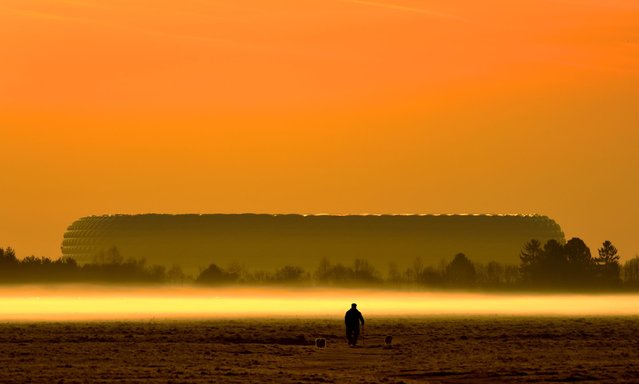
A man is silhouetted in front of the Allianz-Arena as he walks his dogs at sunrise in Munich, southern Germany, Friday, April 10, 2015. (Photo by Peter Kneffel/AP Photo/DPA)
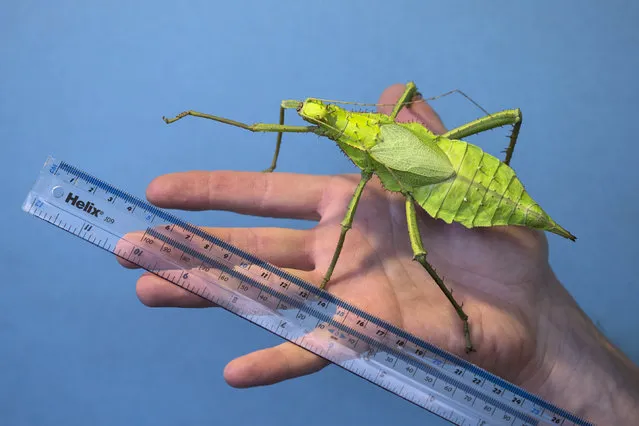
A “jungle nymph” is measured during the annual weight-in ZSL London Zoo on August 21, 2014 in London, England. The height and mass of every animal in the zoo, of which there are over 16,000, is recorded and submitted to the Zoological Information Management System. This is combined with animal measurement data collected from over 800 zoos and aquariums in almost 80 countries, from which zoologists can compare information on thousands of endangered species. (Photo by Oli Scarff/Getty Images)
David Lazar is a travel photographer and musician from Brisbane, Australia, who loves to capture moments of life, beauty and culture through photography. He is drawn to locations which have a rich cultural background and he is especially interested in portrait and landscape photography.
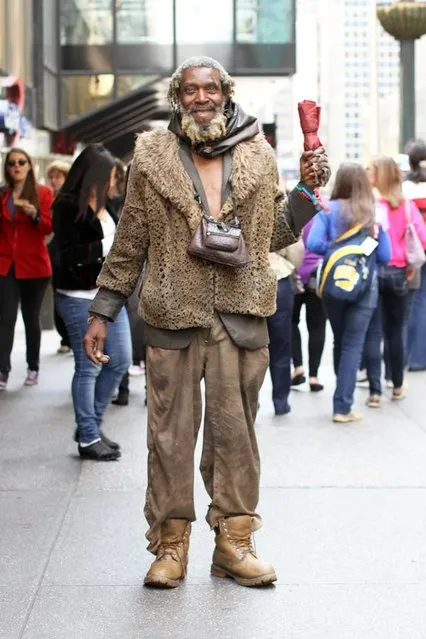
New York City is populated with millions of people that each serve as an essential piece of the city's eclectic pie. The Big Apple's offering of unique and diverse individuals is arguably unmatched. We always hear about what a melting pot this immense metropolis is with its endless supply of quirky characters and the ongoing photo series known as Humans of New York proves it.
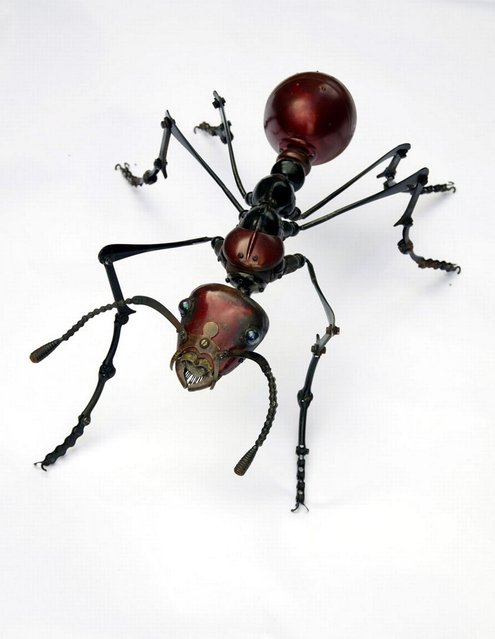
An amazing artist transforms scrap metal into incredible sculptures of insects, birds, fish, and other animals. Edouard Martinet from Brittany, France, creates the sculptures from all manner of salvaged parts and junk, including car and bicycle parts, typewriters, and medical equipment. Photo: An ant by Edouard Martinet. (Photo by Edouard Martiniet/Caters News)
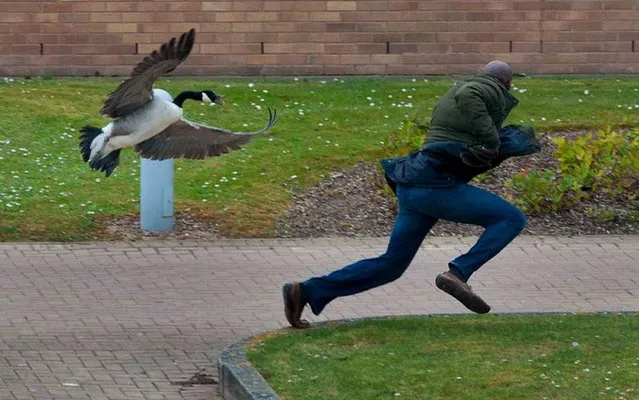
A goose has terrorized students at the University of Warwick, Coventry, UK, on May 22, 2013. The bird built its nest near a block of student apartments and attacks anyone who goes near the nest. (Photo by Caters News/The Grosby Group)
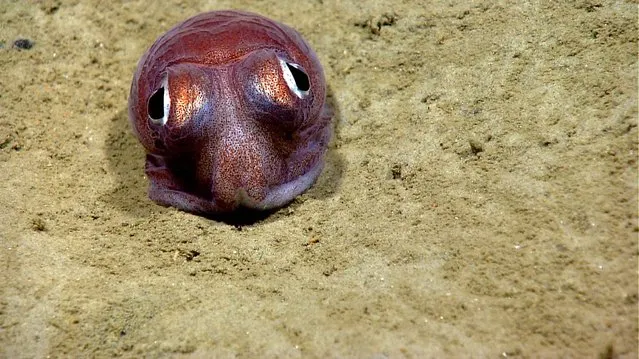
An octopus is filmed by the National Oceanic and Atmospheric Administration ship Okeanos Explorer and its robotic sub. (Photo by National Oceanic and Atmospheric Administration)
I know, this answer was a little too short, so let me explain in a little more detail.
Imagine tossing a coin. Normally, any normal coin toss has two possible outcomes - heads or tails - with each one having a 50% chance of happening. Ideally, that is, because factors like the force of your finger tossing the coin, gravity, the wind, the moon phase and a passing TARDIS can all influence the outcome of the toss - but I have deviated from the subject.