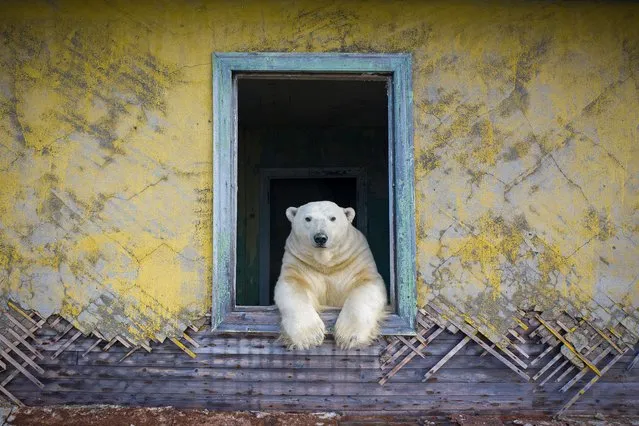
Polar frame, by Dmitry Kokh, Russia. When Kokh’s boat approached the small island of Kolyuchin in the Russian High Arctic, which had been abandoned by humans since 1992, he was surprised to spot movement in one of the houses. Binoculars revealed polar bears – more than 20 in total – exploring the ghost town. Dmitry used a low-noise drone to document them. (Photo by Dmitry Kokh/Wildlife Photographer of the Year 2022)
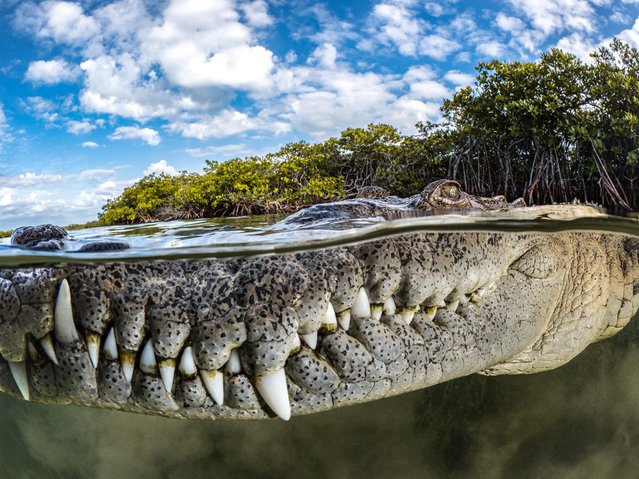
Guardian of the Mangroves – Overall Winner. Tanya Houppermans, Cuba. A curious American crocodile (Crocodylus acutus) swims right up to Tanya, at Gardens of the Queen (Jardines De La Reina), an archipelago off the coast of Cuba. It has been strictly protected since 1996, and is one of the most untouched marine ecosystems in the world. “The healthy population of American crocodiles is down to the pristine condition of the mangroves and I wanted to capture close ups of this gentle giant in its natural habitat. I hope this image can illustrate that protecting areas like this is so critical”. (Photo by Tanya Griffin Houppermans/Mangrove Photographer of the Year)
“Why do you keep blowing the trumpet, young man?
You'd better lie in a coffin, young man!”
On that life-affirming note, let me congratulate you (yes, it's been a tough year, and the next one will be even tougher better). Happy New Year! And now disco.
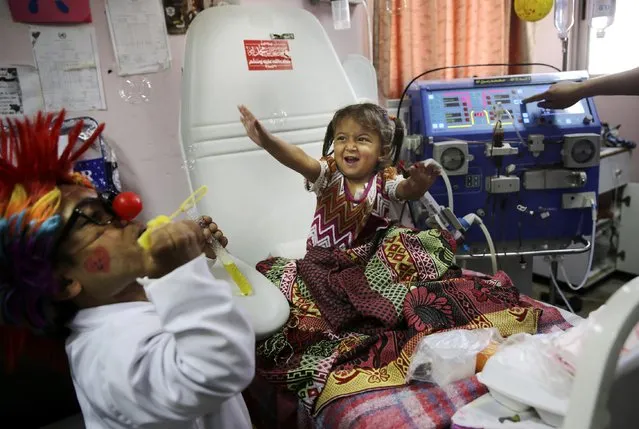
In this Thursday, March 17, 2016 photo, 33-year-old Palestinian clown doctor Alaa Miqdad, left, entertains 3-year-old patient Yaqin Shawaf, who suffers from dialysis, in the department of kidney diseases at Al-Rantisi children's hospital in Gaza City. (Photo by Adel Hana/AP Photo)
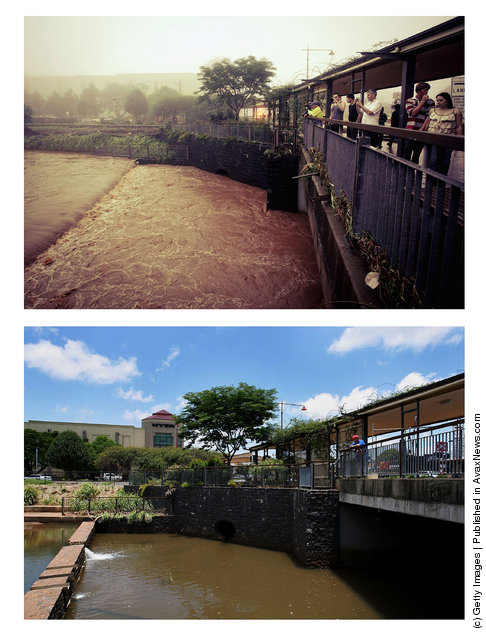
In this composite image (top) flooding is seen in the Toowoomba central business district on January 10, 2011 and (bottom) the same location as seen on January 5, 2012 in Toowoomba, Australia. January 10 marks the one year anniversary of the inland tsunami that devestated southern Queensland's Lockyer valley killing 23 people. (Photos by Dan Proud (top) and Lisa Maree Williams (bottom) /Getty Images)