Loading...
Done
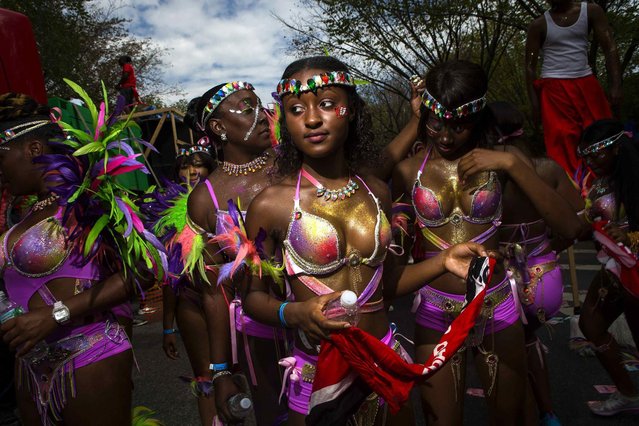
Participants wearing costumes take part in the West Indian Day Parade in the Brooklyn borough of New York September 1, 2014. (Photo by Eric Thayer/Reuters)

Participants wearing costumes take part in the West Indian Day Parade in the Brooklyn borough of New York September 1, 2014. The parade, which draws a crowd of a million plus, celebrates Caribbean culture. (Photo by Eric Thayer/Reuters)
Details
02 Sep 2014 12:43:00
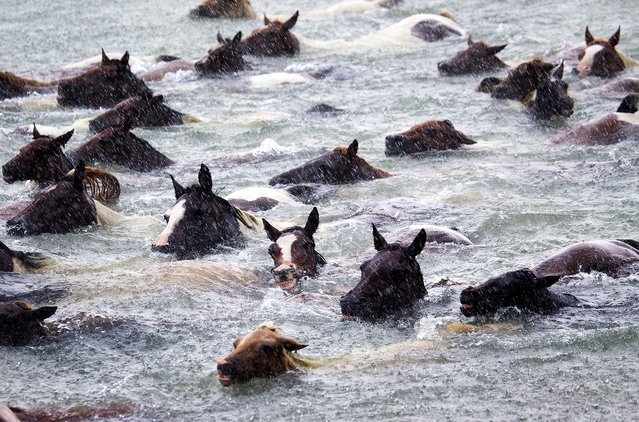
During a storm with heavy rain, wild ponies swim towards the shore in the annual Chincoteague Pony Swim. (Photo by Jay Diem/Eastern Shore News)

Chincoteague Ponies swim across Assateague Channel in a heavy downpour on Wednesday, July 24, 2013 during the 88th Annual Chincoteague Pony Swim. A portion of the herd will be auctioned on Thursday. (Photo by Jay Diem/Eastern Shore News)
Details
26 Jul 2013 05:29:00


An Israeli soldier salutes as she attends a military cemetery ahead of the start of Remembrance Day at the graves of killed comrades on May 8, 2011 in Jerusalem, Israel. The 64th anniversary of the creation of Israel in 1948 has fallen on the Monday as determined by the Hebrew calendar and is preceded by the annual memorial recognising Israel's fallen soldiers. (Photo by Uriel Sinai/Getty Images)
Details
09 May 2011 11:21:00


Actress Tang Wei poses at the “Wu Xia” portrait session during the 64th Annual Cannes Film Festival on May 15, 2011 in Cannes, France. (Photo by Andreas Rentz/Getty Images)
Details
16 May 2011 10:20:00
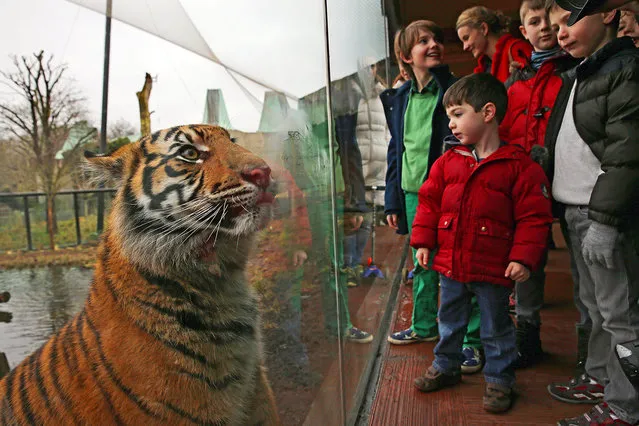
A Sumatran Tiger looks at visiting children from it's enclosure during the ZSL London Zoo's annual stocktake of animals on January 5, 2015 in London, England. (Photo by Dan Kitwood/Getty Images)

A Sumatran Tiger looks at visiting children from it's enclosure during the ZSL London Zoo's annual stocktake of animals on January 5, 2015 in London, England. The zoo's annual stocktake requires keepers to check on the numbers of every one of the 800 different animal species, including every invertebrate, bird, fish, mammal, reptile, and amphibian. (Photo by Dan Kitwood/Getty Images)
Details
06 Jan 2015 12:08:00
A half-naked shrine parishioner using a wooden tub pours cold water onto himself during an annual cold-endurance festival at the Kanda Myojin Shinto shrine in Tokyo, Saturday, January 10, 2015. Pouring cold water on their bodies is believed to purify their souls. (Photo by Eugene Hoshiko/AP Photo)

A half-naked shrine parishioner using a wooden tub pours cold water onto himself during an annual cold-endurance festival at the Kanda Myojin Shinto shrine in Tokyo, Saturday, January 10, 2015. Pouring cold water on their bodies is believed to purify their souls. (Photo by Eugene Hoshiko/AP Photo)
Details
11 Jan 2015 12:52:00
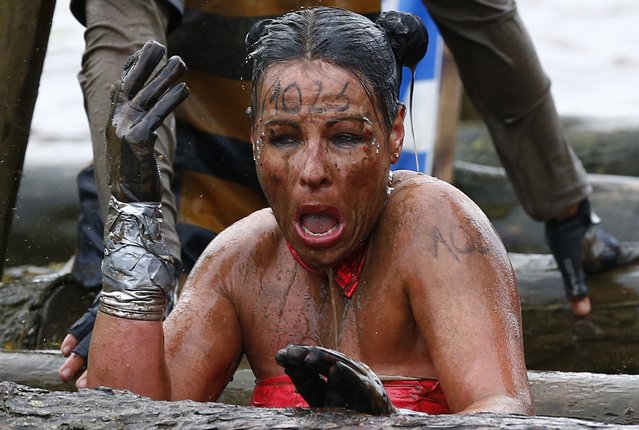
A competitor reacts as she emerges from the water during the Tough Guy event in Perton, central England, January 26, 2014. (Photo by Darren Staples/Reuters)

A competitor reacts as she emerges from the water during the Tough Guy event in Perton, central England, January 26, 2014. The annual Tough Guy race – “the toughest race in the world” – at Perton in Staffordshire. Tough Guy claims to be the world’s most demanding one-day survival ordeal. First staged in 1987, the Tough Guy Challenge has been widely described as one of the hardest races of it’s type with up to one-third of the starters failing to finish in a typical year. (Photo by Darren Staples/Reuters)
Details
29 Jan 2014 10:49:00
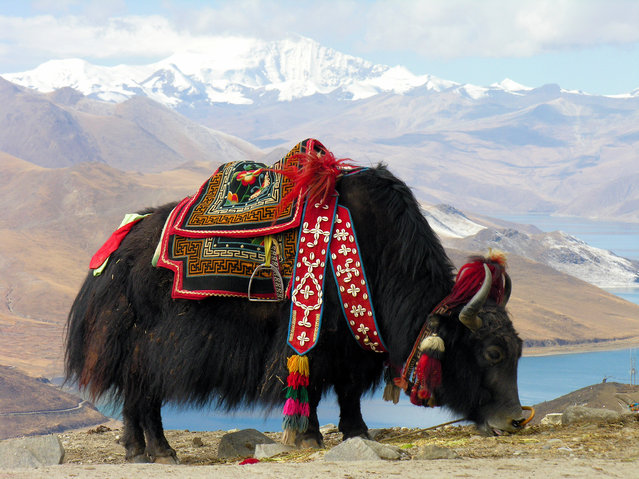
Yak near Yamdrok lake, Tibet. It is a long-haired bovinae found throughout the Himalayan region of south Central Asia, the Tibetan Plateau and as far north as Mongolia and Russia. The Tibetan economy is dominated by subsistence agriculture. Due to limited arable land, the primary occupation of the Tibetan Plateau is raising livestock, such as sheep, cattle, goats, camels, yaks, dzo, and horses. The Tibetan yak is an integral part of Tibetan life. (Photo by Dennis Jarvis)

Yak near Yamdrok lake, Tibet. It is a long-haired bovinae found throughout the Himalayan region of south Central Asia, the Tibetan Plateau and as far north as Mongolia and Russia. The Tibetan economy is dominated by subsistence agriculture. Due to limited arable land, the primary occupation of the Tibetan Plateau is raising livestock, such as sheep, cattle, goats, camels, yaks, dzo, and horses. The Tibetan yak is an integral part of Tibetan life. (Photo by Dennis Jarvis)
Details
10 Jun 2015 10:48:00