Loading...
Done
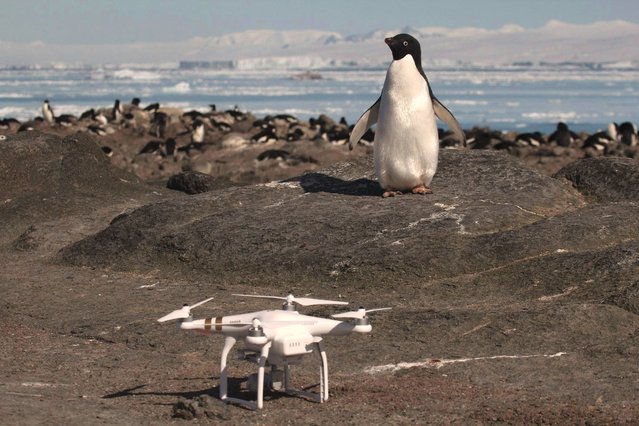
This undated handout photograph released by Stony Brook University/ Louisiana State University on March 2, 2018, shows an Adélie penguin (R) looking at a drone at breeding colony on Heroina Island, Danger Islands, Antarctica. A thriving “hotspot” of some 1.5 million Adelie penguins has been discovered on the remote Danger Islands in the east Antarctic, surprised scientists announced on March 2, 2018. (Photo by Rachael Herman/AFP Photo/Louisiana State University AND Stony Brook University)

This undated handout photograph released by Stony Brook University/ Louisiana State University on March 2, 2018, shows an Adélie penguin looking at a drone at breeding colony on Heroina Island, Danger Islands, Antarctica. A thriving “hotspot” of some 1.5 million Adelie penguins has been discovered on the remote Danger Islands in the east Antarctic, surprised scientists announced on March 2, 2018. (Photo by Rachael Herman/AFP Photo/Louisiana State University AND Stony Brook University)
Details
04 Mar 2018 00:03:00
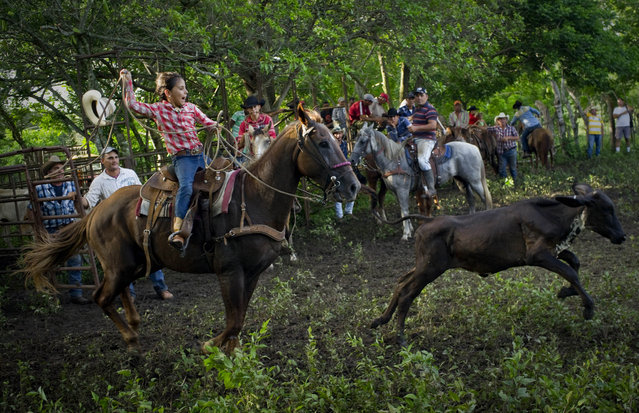
In this July 29, 2016 photo, cowgirl Dariadna Corujo winds up to lasso a calf during an improvised rodeo event at a farm in Sancti Spiritus, central Cuba. At the tender age of 6, Dariadna is already an expert barrel racer and calf roper. In the flat grasslands of Sancti Spiritus, a group of neighboring cattle ranchers founded a non-governmental organization called Future Ranchers more than a decade ago to revive Cuba’s rodeo culture, which dates back centuries to Spanish colonial times. (Photo by Ramon Espinosa/AP Photo)

In this July 29, 2016 photo, cowgirl Dariadna Corujo winds up to lasso a calf during an improvised rodeo event at a farm in Sancti Spiritus, central Cuba. At the tender age of 6, Dariadna is already an expert barrel racer and calf roper. In the flat grasslands of Sancti Spiritus, a group of neighboring cattle ranchers founded a non-governmental organization called Future Ranchers more than a decade ago to revive Cuba’s rodeo culture, which dates back centuries to Spanish colonial times. (Photo by Ramon Espinosa/AP Photo)
Details
03 Aug 2016 11:39:00
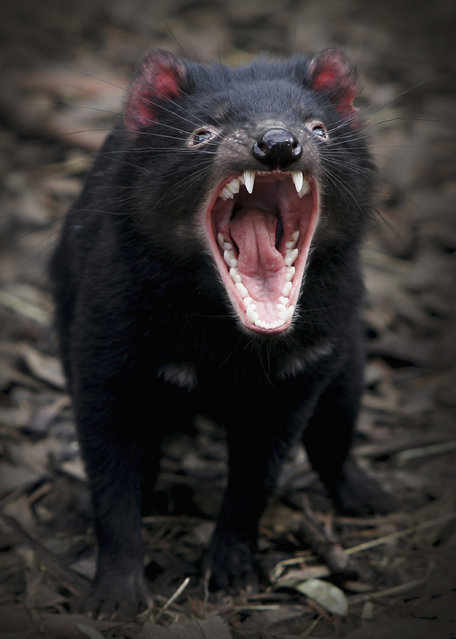
A Tasmanian Devil bears it's teeth at a quarantine facility August 31, 2005 in Hobart, Australia. The Devil, a native marsupial unique to Tasmania, is under threat from Devil Facial Tumor Disease (DFTD) which is decimating numbers throughout Tasmania. (Photo by Ian Waldie/Getty Images)

“The Tasmanian devil (Sarcophilus harrisii) is a carnivorous marsupial of the family Dasyuridae now found in the wild only in the Australian island state of Tasmania. The size of a small dog, it became the largest carnivorous marsupial in the world following the extinction of the thylacine in 1936. It is characterised by its stocky and muscular build, black fur, pungent odour, extremely loud and disturbing screech, keen sense of smell, and ferocity when feeding”. – Wikipedia. Photo: A Tasmanian Devil bears it's teeth at a quarantine facility August 31, 2005 in Hobart, Australia. (Photo by Ian Waldie/Getty Images)
Details
27 Jan 2014 09:45:00
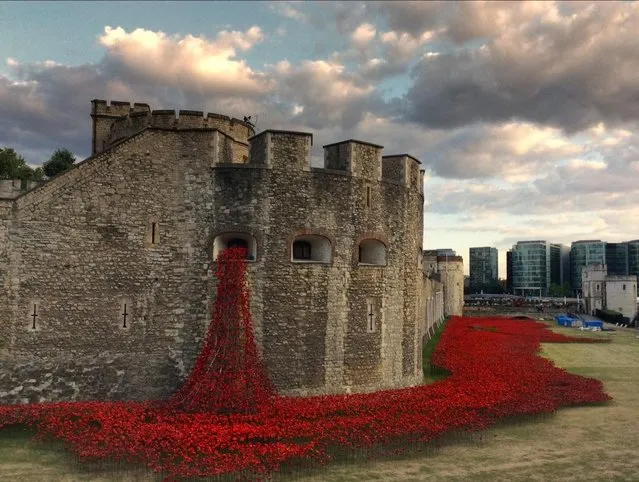
Ceramic Poppies Surround the Tower of London

To commemorate the centennial of Britain’s involvement in the First World War, ceramic artist Paul Cummins and stage designer Tom Piper conceived of a staggering installation of ceramic poppies planted in the famous dry moat around the Tower of London. Titled “Blood Swept Lands and Seas of Red,” the final work will consist of 888,246 red ceramic flowers—each representing a British or Colonial military fatality—that flow through grounds around the tower.
Details
04 Mar 2015 11:47:00
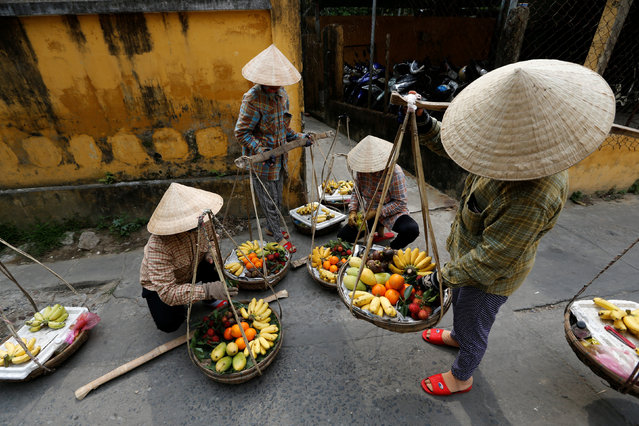
Women wearing traditional hats, known as a non la, sell fruits in Hoi An, Vietnam April 4, 2016. (Photo by Jorge Silva/Reuters)

Women wearing traditional hats, known as a non la, sell fruits in Hoi An, Vietnam April 4, 2016. The non la hats are made of readily available materials such as palm leaves, tree bark and bamboo and are visible everywhere in the city, a UNESCO World Heritage site. Hoi An's history as a busy trading port is evident throughout its architecture, a mix of eras and styles, with traditional wooden Vietnamese houses, Chinese temples and French colonial buildings. (Photo by Jorge Silva/Reuters)
Details
11 May 2016 11:32:00
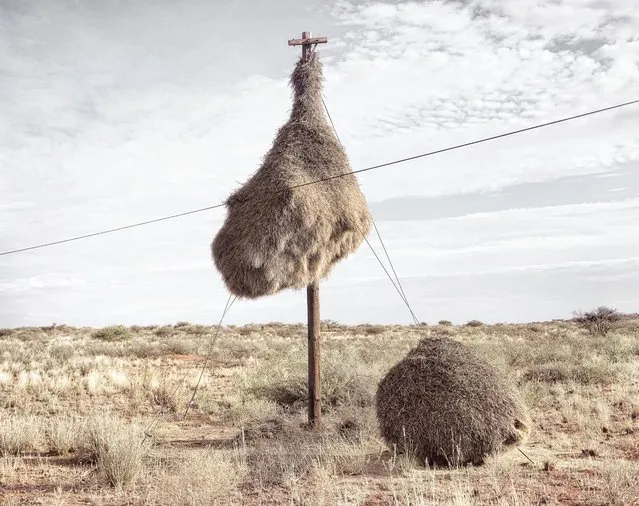
Assimilation By Dillon Marsh

Captured by South African photographer Dillon Marsh, these fantastic photographs depict the many designs employed by sociable weavers to build sturdy nests that are safe from intruders such as cobras and tree snakes. They are also nice cool during the day, and stay warm during cold desert nights. A University of Stellenbosch graduate, Marsh is currently interested in landscape photographer who seeks out anomalies that can be arranged in a photographic series. Assimilation depicts scores of intricate weaver’s nests atop utility poles in Southern Africa. Colonies of sociable weavers have been known to stay attached to one particular nest for up to 100 years, according to The San Diego Zoo.
Details
15 Feb 2014 14:47:00
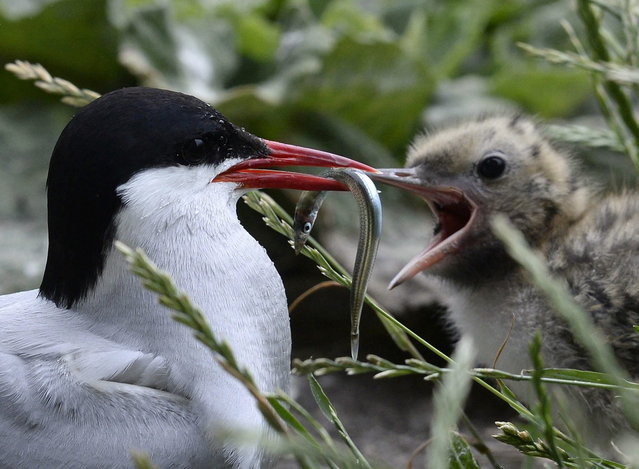
An arctic tern feeds its chick on the Farne Islands off the Northumberland coast, northern England July 8, 2013. (Photo by Nigel Roddis/Reuters)

An arctic tern feeds its chick on the Farne Islands off the Northumberland coast, northern England July 8, 2013. The Farne Islands, which lie off the coast of northeast England, are home to a huge array of wildlife. The islands are owned and protected by the British conservation charity, the National Trust, which says they host some 23 species of seabird, as well as a substantial colony of grey seals, who come to have their pups there in the autumn. Every five years the National Trust carries out a census of the islands' population of puffins, and this year's survey showed there were almost 40,000 nesting pairs on the islands – an 8 percent rise from 2008. (Photo by Nigel Roddis/Reuters)
Details
11 Dec 2013 09:21:00
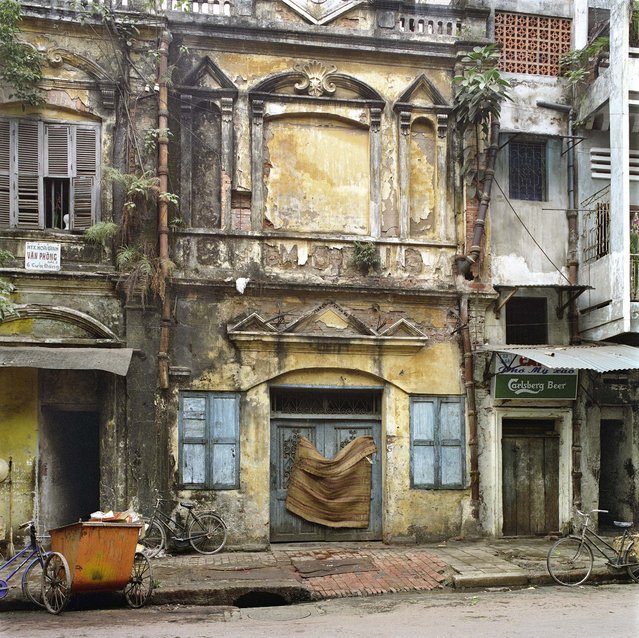
54 Hàng Ga (Chicken Street), 1994. (Photo by  William E. Crawford from the book “Hanoi Streets 1985-2015: In the Years of Forgetting”)

Documentary photographer William E. Crawford was one of the first Western photographers to gain access to North Vietnam after the war ended. He has photographed the capital, Hanoi, at regular intervals since 1985, concentrating on the colonial and indigenous architecture, urban details, landscapes and intimate portraits of people in their home settings, street scenes and the city’s surrounding countryside. Here: 54 Hàng Ga (Chicken Street), 1994. (Photo by William E. Crawford from the book “Hanoi Streets 1985-2015: In the Years of Forgetting”)
Details
27 Jun 2018 00:01:00