Loading...
Done
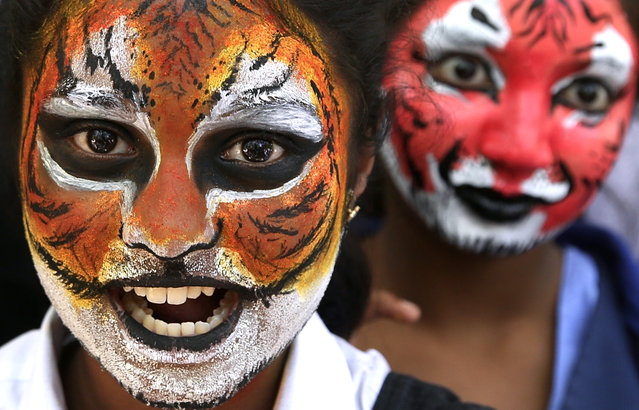
Schoolchildren with face paint resembling tigers take part in a “Kids for Tigers” campaign in Bangalore, India 27 January 2023. The campaign tries to raise awareness on environmental education with outreach programs, workshops, and information on saving tigers in schools and colleges across the country. (Photo by Jagadeesh N.V./EPA/EFE)

Schoolchildren with face paint resembling tigers take part in a “Kids for Tigers” campaign in Bangalore, India 27 January 2023. The campaign tries to raise awareness on environmental education with outreach programs, workshops, and information on saving tigers in schools and colleges across the country. (Photo by Jagadeesh N.V./EPA/EFE)
Details
06 Feb 2023 09:09:00
Indian bride takes part in a mass marriage ceremony under chief minister's welfare scheme (Mukhyamantri Kanyadan Yojna) on the occasion of the Basant Panchami festival, in Bhopal, India, 30 January 2020. Reports state, some 600 couples tied up the nuptial knot in various mass marriage ceremonies in Bhopal on Basant Panchami day, which is considered auspicious for marriages. Some communities undertake the responsibility of arranging mass marriages for couples belonging to the financially weaker caste of the society. (Photo by Sanjeev Gupta/EPA/EFE/Rex Features/Shutterstock)

Indian bride takes part in a mass marriage ceremony under chief minister's welfare scheme (Mukhyamantri Kanyadan Yojna) on the occasion of the Basant Panchami festival, in Bhopal, India, 30 January 2020. (Photo by Sanjeev Gupta/EPA/EFE/Rex Features/Shutterstock)
Details
10 Feb 2020 10:17:00
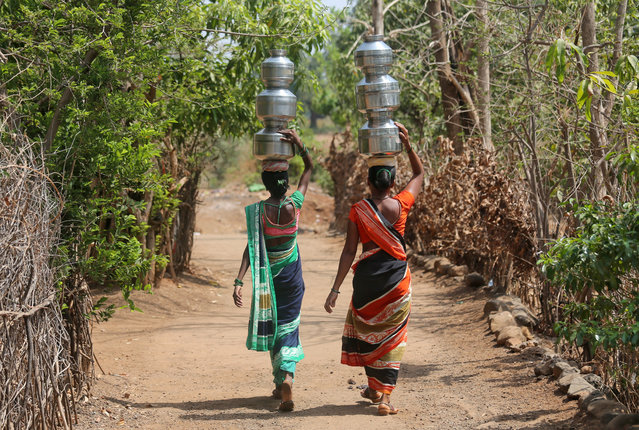
Women carry pitchers after filling them with water from a hand pump to their houses in Thane district in the western state of Maharashtra, India, May 30, 2019. (Photo by Francis Mascarenhas/Reuters)

Women carry pitchers after filling them with water from a hand pump to their houses in Thane district in the western state of Maharashtra, India, May 30, 2019. (Photo by Francis Mascarenhas/Reuters)
Details
04 Jun 2019 00:01:00
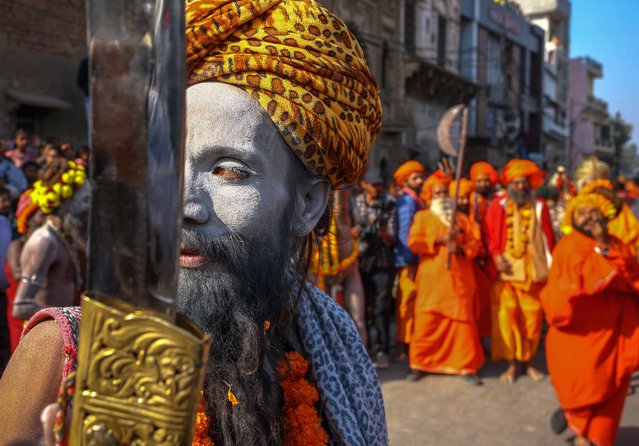
Sadhus take part in a religious roadshow ( Peshwai )  on December 14, 2024 in Allahabad, India. Kumbh Mela in 2025 is a Maha Kumbh, which is a significant Hindu festival celebrated once every 144 years at Prayagraj (Allahabad). Scheduled from January 13 to February 26, 2025, it attracts millions of devotees for ritual bathing at the confluence of the Ganges, Yamuna, and the mythical Saraswati rivers, marking a unique spiritual occasion with enhanced significance compared to regular Kumbh Mela. (Photo by Ritesh Shukla/Getty Images)

Sadhus take part in a religious roadshow (Peshwai) on December 14, 2024 in Allahabad, India. Kumbh Mela in 2025 is a Maha Kumbh, which is a significant Hindu festival celebrated once every 144 years at Prayagraj (Allahabad). Scheduled from January 13 to February 26, 2025, it attracts millions of devotees for ritual bathing at the confluence of the Ganges, Yamuna, and the mythical Saraswati rivers, marking a unique spiritual occasion with enhanced significance compared to regular Kumbh Mela. (Photo by Ritesh Shukla/Getty Images)
Details
26 Dec 2024 01:40:00
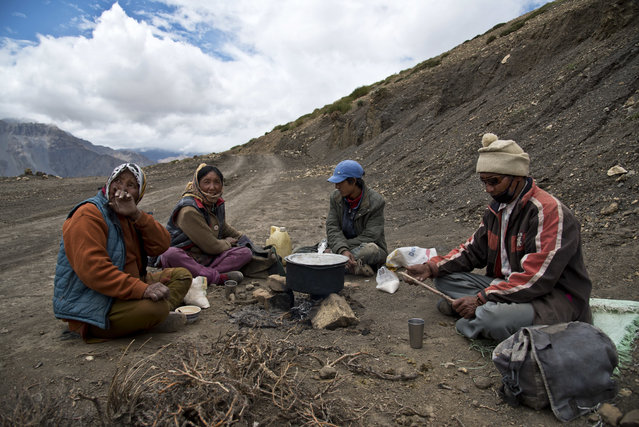
In this August 17, 2016, photo, from left to right, Chhering Chodom, 60, Tashi Yangzom, 50, Lobsang Chhering, 27, and Dorje Tandup, 58, drink milk tea on the side of the road. For centuries, the sleepy valley nestled in the Indian Himalayas remained a hidden Buddhist enclave forbidden to outsiders. Enduring the harsh year-round conditions of the high mountain desert, the people of Spiti Valley lived by a simple communal code – share the Earth's bounty, be hospitable to neighbors, and eschew greed and temptation at all turns. That's all starting to change, for better or worse. Since India began allowing its own citizens as well as outsiders to visit the valley in the early 1990s, tourism and trade have boomed. And the marks of modernization, such as solar panels, asphalt roads and concrete buildings, have begun to appear around some of the villages that dot the remote landscape at altitudes above 4,000 meters (13,000 feet). (Photo by Thomas Cytrynowicz/AP Photo)

In this August 17, 2016, photo, from left to right, Chhering Chodom, 60, Tashi Yangzom, 50, Lobsang Chhering, 27, and Dorje Tandup, 58, drink milk tea on the side of the road. For centuries, the sleepy valley nestled in the Indian Himalayas remained a hidden Buddhist enclave forbidden to outsiders. Enduring the harsh year-round conditions of the high mountain desert, the people of Spiti Valley lived by a simple communal code – share the Earth's bounty, be hospitable to neighbors, and eschew greed and temptation at all turns. That's all starting to change, for better or worse. (Photo by Thomas Cytrynowicz/AP Photo)
Details
15 Sep 2016 09:22:00
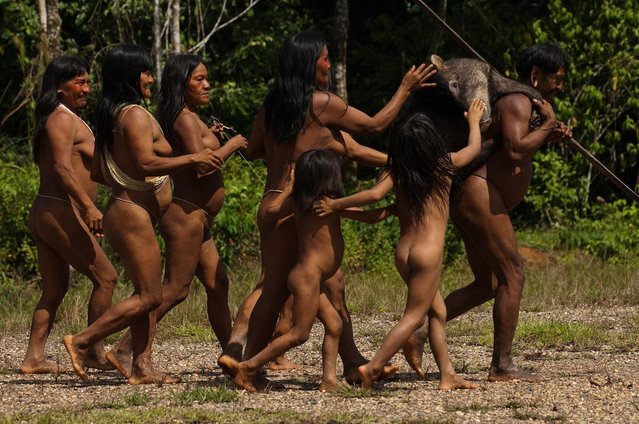
Spectacular images offering insight into the lives of the Huaorani people in the Ecuadorian Amazon have been revealed showing how they use traditional methods to hunt monkeys for food. The stunning pictures were taken by conservation photographer Pete Oxford from Torquay, Devon in the Ecuadorian Amazon. “The Huaorani Indians are a forest people highly in tune with their environment. Many are now totally acculturated since the 1950s by missionaries”, said Pete. “Today they face radical change to their culture to the proximity of oil exploration within their territory and the Yasuni National Park and Biosphere Reserve, they are vastly changed. Some still live very traditionally and for this shoot, through my Huaorani friend, a direct relative of those photographed he wanted to depict them as close to their original culture as possible. They still largely hunt with blow pipes and spears eating a lot of monkeys and peccaries”. The Huaorani are also known as the Waorani, Waodani or the Waos and are native Amerindians. Their lands are located between the Curaray and Napo rivers and speak the Huaorani language. Pete says that during his visit he was welcomed into the group and hopes that ancient cultures can be saved. Here: The tribe were seen celebrating after a hunter returned to camp with a wild pig. (Photo by Pete Oxford/Mediadrumworld.com)

Spectacular images offering insight into the lives of the Huaorani people in the Ecuadorian Amazon have been revealed showing how they use traditional methods to hunt monkeys for food. The stunning pictures were taken by conservation photographer Pete Oxford from Torquay, Devon in the Ecuadorian Amazon. Here: The tribe were seen celebrating after a hunter returned to camp with a wild pig. (Photo by Pete Oxford/Mediadrumworld.com)
Details
20 Jan 2017 07:58:00
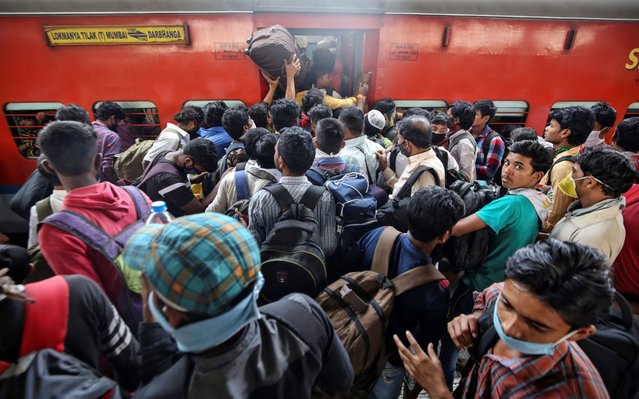
Migrant workers and their families board an overcrowded passenger train, after government imposed restrictions on public gatherings in attempts to prevent spread of coronavirus disease (COVID-19), in Mumbai, India, March 21, 2020. (Photo by Prashant Waydande/Reuters)

Migrant workers and their families board an overcrowded passenger train, after government imposed restrictions on public gatherings in attempts to prevent spread of coronavirus disease (COVID-19), in Mumbai, India, March 21, 2020. (Photo by Prashant Waydande/Reuters)
Details
29 Mar 2020 00:01:00
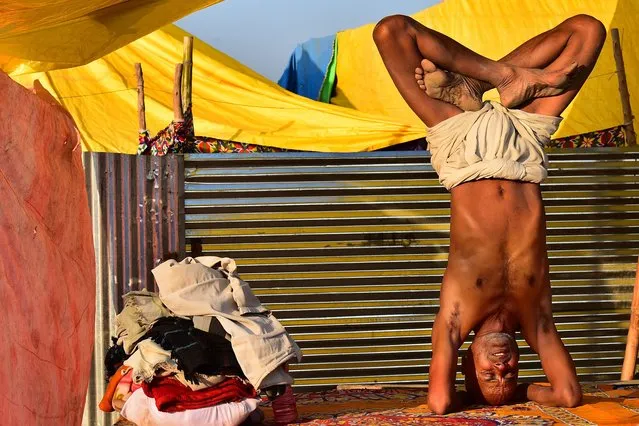
An ascetic performs yoga at his makeshift tent near the banks of Sangam -the confluence of the Ganges, Yamuna and mythical Saraswati river during the Magh Mela festival in Allahabad on January 28, 2022. (Photo by Sanjay Kanojia/AFP Photo)

An ascetic performs yoga at his makeshift tent near the banks of Sangam -the confluence of the Ganges, Yamuna and mythical Saraswati river during the Magh Mela festival in Allahabad on January 28, 2022. (Photo by Sanjay Kanojia/AFP Photo)

Details
08 Feb 2022 05:38:00