Loading...
Done


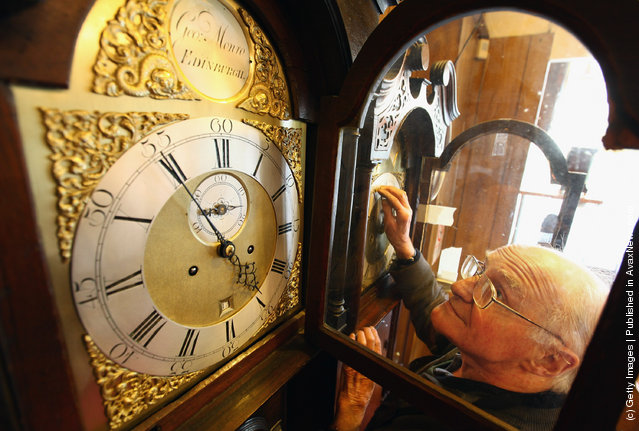
Archie McQuater, 82-year-old clockmaker at Craiglea clocks, adjusts a clock face to British Summer Time (BST) on March 25, 2011 in Edinburgh, Scotland. Clocks will be put forward by one hour at 1:00 AM GMT on Sunday March 27, 2011 officially the start of British Summer Time. British Summer Time will end this year on October 30. (Photo by Jeff J Mitchell/Getty Images)
Details
26 Mar 2011 12:06:00


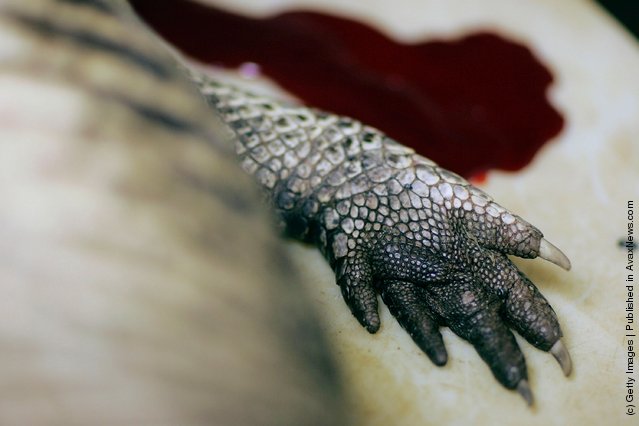
An alligator is skinned at All American Gator August 16, 2006 in Pembroke Park, Florida. The company processes gators for their skins, meat and trophies and was at full capacity a day after the start of gator hunting season. This year more than 4,000 licenses were sold with each license allowing hunters to kill two gators. The hunt has been expanded by 41 days over previous years, running August 15 to November 1. (Photo by Joe Raedle/Getty Images)
Details
04 Apr 2011 10:51:00


Odin, a five year-old White Bengal Tiger dives for a piece of meat thrown to him by a trainer during a big cat show at Six Flags Discovery Kingdom June 1, 2007 in Vallejo, California. Unlike most cats that are afraid of water, Odin loves diving in the pool to retrieve bits of meat fed to him by his trainers. (Photo by Justin Sullivan/Getty Images)
Details
25 Apr 2011 10:32:00
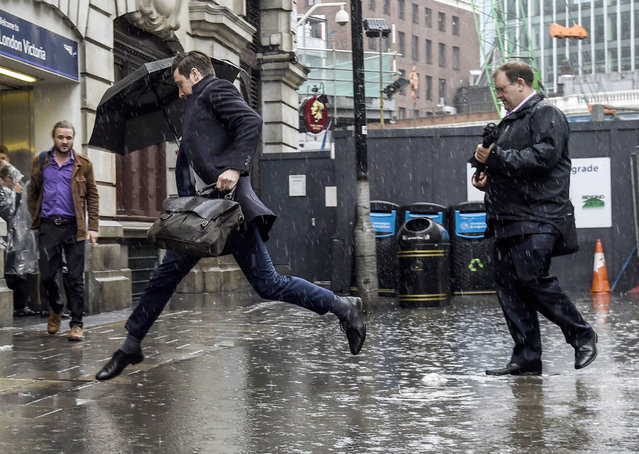
A man jumps over a puddle outside Victoria Station, as heavy rain falls,  in London, Monday June 20, 2016. Monday marks the Summer Solstice – the longest day of the year and the astronomical change of seasons when days are longest and nights are shortest in the Northern Hemisphere. (Photo by Lauren Hurley/PA Wire via AP Photo)

A man jumps over a puddle outside Victoria Station, as heavy rain falls, in London, Monday June 20, 2016. Monday marks the Summer Solstice – the longest day of the year and the astronomical change of seasons when days are longest and nights are shortest in the Northern Hemisphere. (Photo by Lauren Hurley/PA Wire via AP Photo)
Details
21 Jun 2016 07:25:00
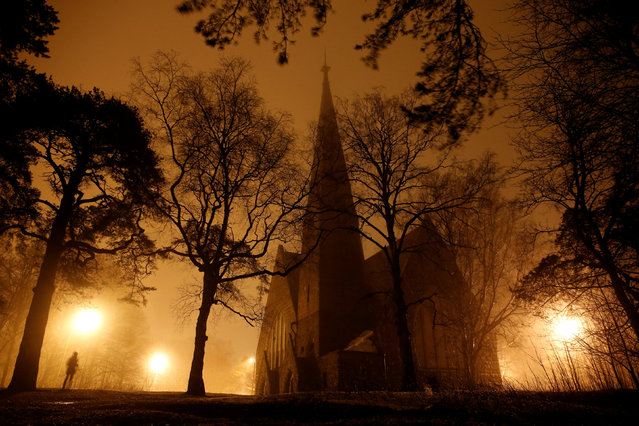
A view through mist shows the Kirk of Saint Mary Magdalene in Primorsk, Leningrad Region, Russia on March 24, 2019. (Photo by Anton Vaganov/Reuters)

A view through mist shows the Kirk of Saint Mary Magdalene in Primorsk, Leningrad Region, Russia on March 24, 2019. (Photo by Anton Vaganov/Reuters)
Details
28 Sep 2019 00:03:00
#14 Kathellen of Brazil show her dejection after the 2019 FIFA Women's World Cup France Round Of 16 match between France and Brazil at Stade Oceane on June 23, 2019 in Le Havre, France. (Photo by Yves Herman/Reuters)

#14 Kathellen of Brazil show her dejection after the 2019 FIFA Women's World Cup France Round Of 16 match between France and Brazil at Stade Oceane on June 23, 2019 in Le Havre, France. (Photo by Yves Herman/Reuters)
Details
05 Jul 2019 00:01:00
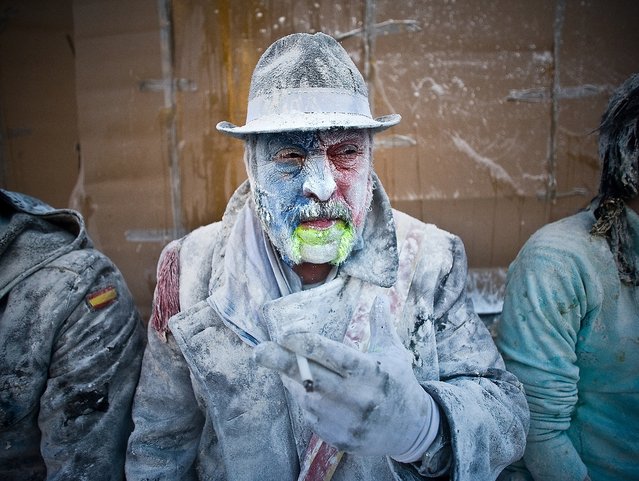
A Reveller smokes during the battle of “Enfarinats”, a flour fight in celebration of the Els Enfarinats festival. (Photo by David Ramos)

It’s a classic tale of dictatorship gone wrong and the fight for freedom. Like in any good battle, there’s fire, albeit from firecrackers, but the ammunition in this one is – flour. It takes place in a Hemingway-esque Spanish village. The battle of “Enfarinats” in celebration of the Els Enfarinats festival, rages on on December 28, 2012 in Ibi, Spain. Citizens of Ibi annually celebrate the festival with a fight using flour, eggs and firecrackers. The battle takes place between two groups, a group of married men called “Els Enfarinats” who take the control of the village for one day pronouncing a number of ridiculous laws and fining the citizens that infringe them and a group called “La Oposicio” who try to restore order. At the end of the day the money collected from the fines is donated to charitable causes in the village. The festival has been celebrated since 1981 after the town of Ibi recovered the tradition but the origins remain unknown.

Photo: A Reveller smokes during the battle of “Enfarinats”, a flour fight in celebration of the Els Enfarinats festival. (Photo by David Ramos)
Details
30 Dec 2012 10:28:00
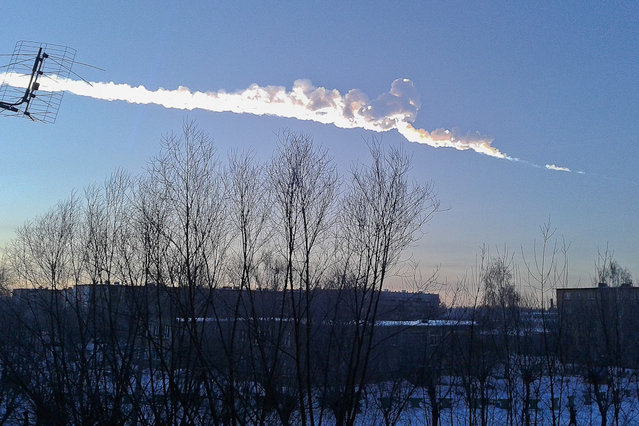
Meteor falls in Russia's Chelyabinsk region on February 15 , 2013. (Photo by Alexey Bulaew/RIA Nowosti)

“A meteor streaked across the sky above Russia's Ural Mountains on Friday morning, causing sharp explosions and injuring more than 500 people (20 had been hospitalized in serious condition), many of them hurt by broken glass. “There was panic. People had no idea what was happening. Everyone was going around to people's houses to check if they were OK”, said Sergey Hametov, a resident of Chelyabinsk, about 1500 kilometres (930 miles) east of Moscow, the biggest city in the affected region”. (Photo by Alexey Bulaew/RIA Nowosti)
Details
15 Feb 2013 12:04:00