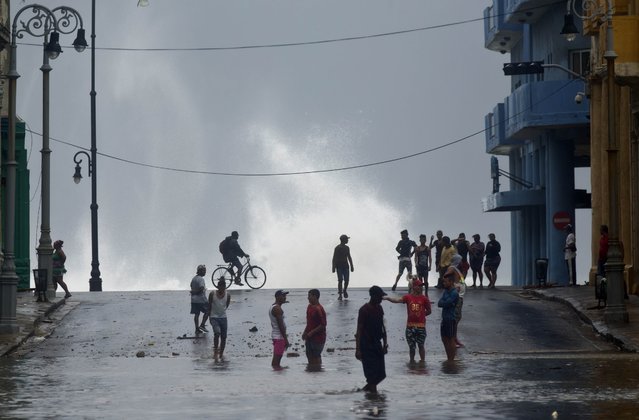
Residents watch the ocean waves crash into the water front, after the passage of Hurricane Irma, in Cuba, Sunday, September 10, 2017. (Photo by Ramon Espinosa/AP Photo)
Lilly Caron, 8, of Bridgeton, Maine, Jason Homchick, of San Diego, and Lilly's father Jason Caron, (obscured), ride the Sky Swing at Seacoast Adventure, Thursday, July 14, 2016, in Wyndham, Maine. The 100-foot-tall swing gives riders the combined thrills of sky diving and hang gliding. (Photo by Robert F. Bukaty/AP Photo)
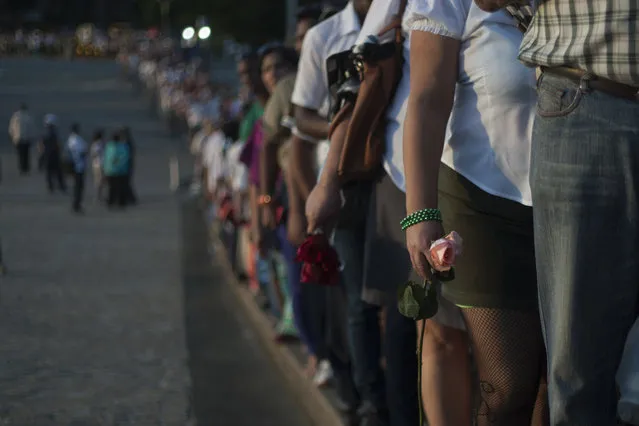
People wait in line to pay their last respects to the late Fidel Castro in Havana, Cuba, Monday, November 28, 2016. Cuba's government has declared nine days of national mourning following Castro's death on Nov. 25. (Photo by Fernando Medina/AP Photo)
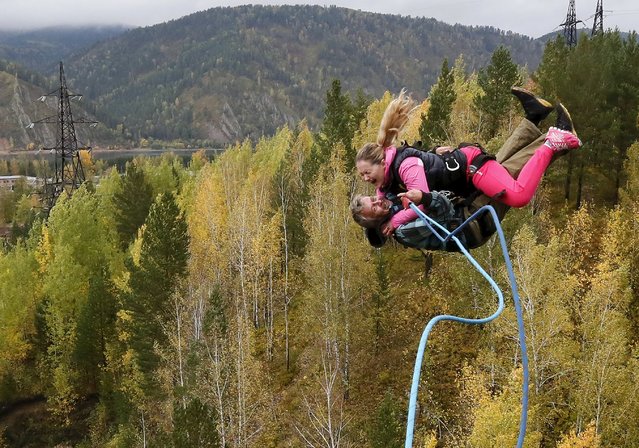
Members of the “Exit Point” amateur rope-jumping group jump from a 44-metre high (144-ft) waterpipe bridge in the Siberian Taiga area outside Krasnoyarsk, September 13, 2015. Rope-jumping, an extreme sport, involves jumping from a high point using an advanced leverage system combining mountaineering and rope safety equipment. (Photo by Ilya Naymushin/Reuters)
Visitors review their cell phone photos of an installation called “Plexus A1” by artist Gabriel Dawe, one of nine large-scale art installations displayed at the “Wonders” exhibit at the Renwick Art Gallery in Washington, DC, Wednesday, January 13, 2016. Built in the 1860s, the Renwick was the first American building to be designed specifically as an art museum; it recently reopened after a two year renovation. (Photo by Jim Lo Scalzo/EPA)
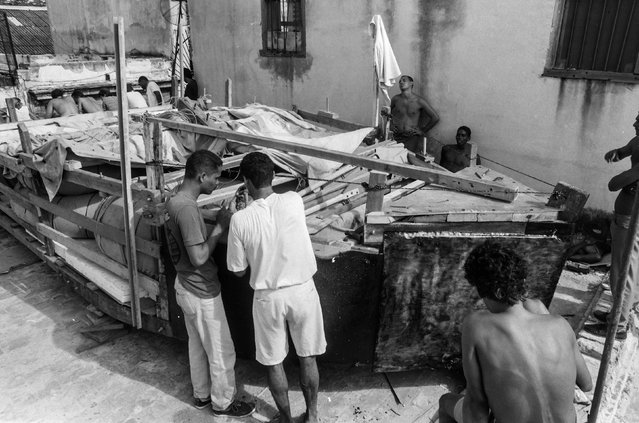
Rolando Pujol Rodriguez photographed the Cuban raft exodus in 1994, and twenty years later Enrique de la Osa took portraits of some of the people who made it to the United States, in this story which combines archive and present day images. Here: People put the finishing touches to a makeshift boat on a rooftop before lowering it onto a truck and launching it into the Straits of Florida towards the U.S., on the last day of the 1994 Cuban raft exodus in Havana, in this September 13, 1994 file photo. (Photo by Rolando Pujol Rodriguez/Reuters)
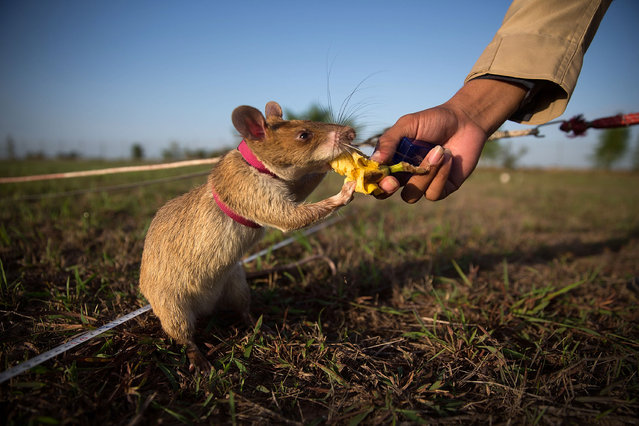
A mine detection rat is given banana as a reward after successfully identifying an inactive mine on July 2, 2015 in Siem Reap, Cambodia. The Cambodian Mine Action Center (CMAC) working with the Belgian NGO APOPO has recently begun testing the feasability of using large mine detection rats from Tanzania to help clear fields of mines and unexploded ordnance in one of the most bombed and mined countries in the world. (Photo by Taylor Weidman/Getty Images)