Loading...
Done
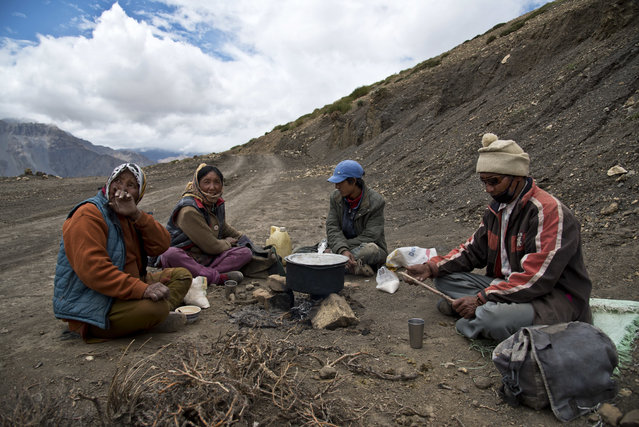
In this August 17, 2016, photo, from left to right, Chhering Chodom, 60, Tashi Yangzom, 50, Lobsang Chhering, 27, and Dorje Tandup, 58, drink milk tea on the side of the road. For centuries, the sleepy valley nestled in the Indian Himalayas remained a hidden Buddhist enclave forbidden to outsiders. Enduring the harsh year-round conditions of the high mountain desert, the people of Spiti Valley lived by a simple communal code – share the Earth's bounty, be hospitable to neighbors, and eschew greed and temptation at all turns. That's all starting to change, for better or worse. Since India began allowing its own citizens as well as outsiders to visit the valley in the early 1990s, tourism and trade have boomed. And the marks of modernization, such as solar panels, asphalt roads and concrete buildings, have begun to appear around some of the villages that dot the remote landscape at altitudes above 4,000 meters (13,000 feet). (Photo by Thomas Cytrynowicz/AP Photo)

In this August 17, 2016, photo, from left to right, Chhering Chodom, 60, Tashi Yangzom, 50, Lobsang Chhering, 27, and Dorje Tandup, 58, drink milk tea on the side of the road. For centuries, the sleepy valley nestled in the Indian Himalayas remained a hidden Buddhist enclave forbidden to outsiders. Enduring the harsh year-round conditions of the high mountain desert, the people of Spiti Valley lived by a simple communal code – share the Earth's bounty, be hospitable to neighbors, and eschew greed and temptation at all turns. That's all starting to change, for better or worse. (Photo by Thomas Cytrynowicz/AP Photo)
Details
15 Sep 2016 09:22:00
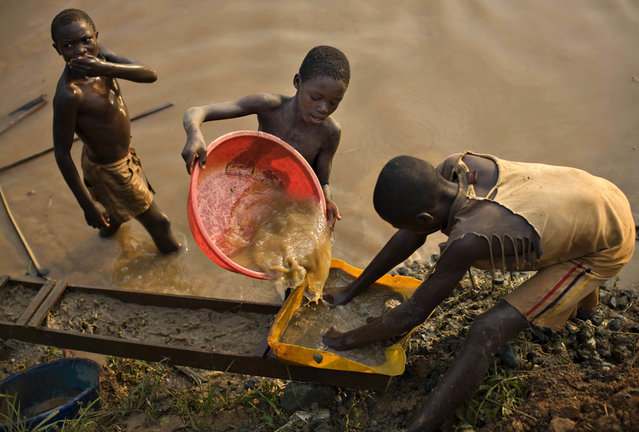
Boys pan for gold on a riverside at Iga Barriere, 25 km (15 miles) from Bunia, in the resource-rich Ituri region of eastern Congo February 16, 2009. Ituri is one of many areas of the country to have experienced bitter ethnic conflict between rival tribes in recent years. Massacres have left tens of thousands dead. It is this fighting that led U.S. authorities to take the unprecedented step of naming Congo in section 1502 of the Dodd-Frank financial regulation act, which says U.S.-listed companies that source gold, tungsten, tantalum and tin from Congo or its neighbours must assure the U.S. stock exchange regulator that their business is not helping fund conflict. (Photo by Finbarr O'Reilly/Reuters)

Boys pan for gold on a riverside at Iga Barriere, 25 km (15 miles) from Bunia, in the resource-rich Ituri region of eastern Congo February 16, 2009. Ituri is one of many areas of the country to have experienced bitter ethnic conflict between rival tribes in recent years. Massacres have left tens of thousands dead. It is this fighting that led U.S. authorities to take the unprecedented step of naming Congo in section 1502 of the Dodd-Frank financial regulation act, which says U.S.-listed companies that source gold, tungsten, tantalum and tin from Congo or its neighbours must assure the U.S. stock exchange regulator that their business is not helping fund conflict. (Photo by Finbarr O'Reilly/Reuters)
Details
12 Nov 2016 10:24:00
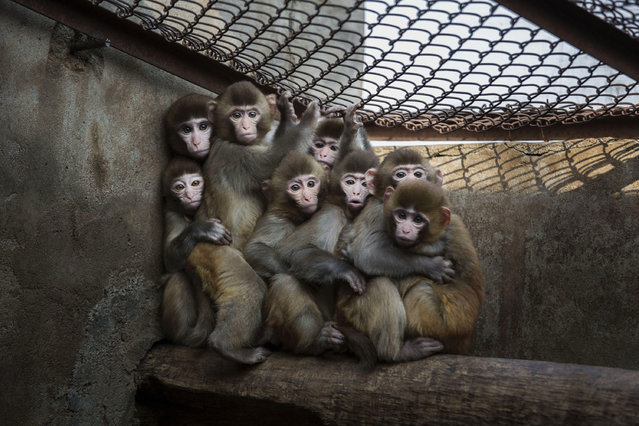
Macaque monkeys crowd together in their cage at a monkey farm on February 3, 2016 in Xinye county, Henan province, China. The area boasts a centuries-long and lucrative history of raising and training monkeys for performance. In Xinye, villagers are seeing an increase in business with the lunar calendar's “Year of the Monkey”. Farmers say most of the monkeys are bred and raised for domestic zoos, circuses, and performing groups, but add that some are also sold for medical research in China and the United States. Despite the popularity of the tradition, critics contend the training methods and conditions constitute animal cruelty. (Photo by Kevin Frayer/Getty Images)

Macaque monkeys crowd together in their cage at a monkey farm on February 3, 2016 in Xinye county, Henan province, China. The area boasts a centuries-long and lucrative history of raising and training monkeys for performance. In Xinye, villagers are seeing an increase in business with the lunar calendar's “Year of the Monkey”. Farmers say most of the monkeys are bred and raised for domestic zoos, circuses, and performing groups, but add that some are also sold for medical research in China and the United States. Despite the popularity of the tradition, critics contend the training methods and conditions constitute animal cruelty. (Photo by Kevin Frayer/Getty Images)
Details
31 Dec 2016 09:56:00
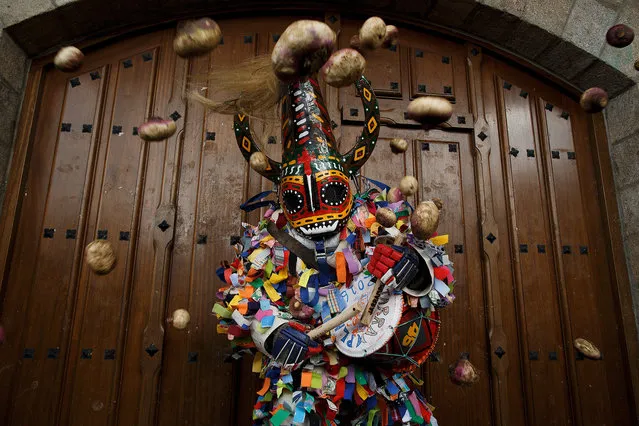
People throw turnips at the Jarramplas as he comes out from the church beating his drum during the Jarramplas Festival on January 20, 2016 in Piornal, Caceres province, Spain. The centuries old Jarramplas festival takes place annually every January 19-20 on Saint Sebastian Day and this year they expect to use more than 20 thousand kilogrames of turnips. Even though the exact origins of the festival are not known, various theories exist including the mythological punishment of Caco by Hercules. (Photo by Pablo Blazquez Dominguez/Getty Images)

People throw turnips at the Jarramplas as he comes out from the church beating his drum during the Jarramplas Festival on January 20, 2016 in Piornal, Caceres province, Spain. The centuries old Jarramplas festival takes place annually every January 19-20 on Saint Sebastian Day and this year they expect to use more than 20 thousand kilogrames of turnips. Even though the exact origins of the festival are not known, various theories exist including the mythological punishment of Caco by Hercules, a relation to ceremonies celebrated by the American Indians that were seen by the first conquerors, to a cattle thief ridiculed and expelled by his village neighbours. It is generally believed to symbolize the expulsion of everything bad. (Photo by Pablo Blazquez Dominguez/Getty Images)
Details
21 Jan 2016 13:21:00
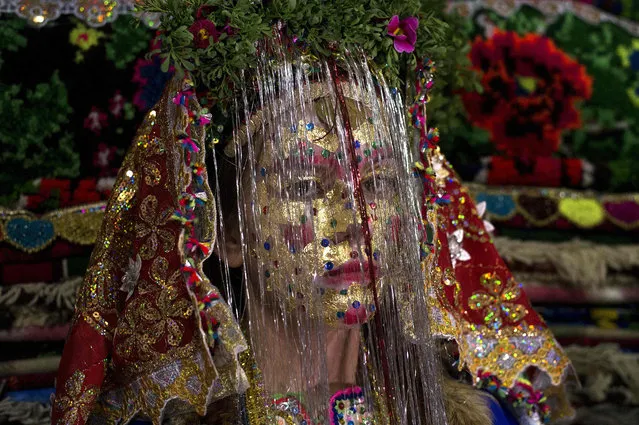
Emilia Pechinkova, a 24-years-old Bulgarian Pomak (Bulgarian speaking Muslims) bride poses for a photograph following the “gelina” or face painting ceremony carried out by female guests and relatives in preparation for her three-day wedding ceremony in the village of Draginovo, 100 kms southeast of Sofia on April 22, 2016. Bulgaria's Muslim population is one of the highest in the European Union. (Photo by Nikolay Doychinov/AFP Photo)

Emilia Pechinkova, a 24-years-old Bulgarian Pomak (Bulgarian speaking Muslims) bride poses for a photograph following the “gelina” or face painting ceremony carried out by female guests and relatives in preparation for her three-day wedding ceremony in the village of Draginovo, 100 kms southeast of Sofia on April 22, 2016. Bulgaria's Muslim population is one of the highest in the European Union. During the Communist regime religious rituals were not tolerated, and Muslims were forced to abandon wearing their traditional wedding outfits. Recently, more young Pomak women want to include traditional wedding customs that were forbidden during the regime, regardless of their secular lifestyles and the high cost of such a wedding. (Photo by Nikolay Doychinov/AFP Photo)
Details
25 Apr 2016 09:55:00
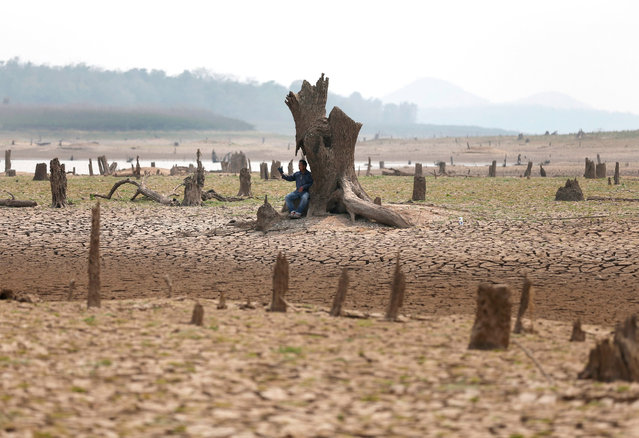
A photo made available on 14 March 2016 shows a Thai villager takes selfie photograph on drought parched land at the dried up Mae Chang reservoir in Lampang province, northern Thailand, 12 March 2016. The ruined village including ancient temple had been underwater for 34 years since the Mae Chang reservoir was built in 1982, the area has now re-emerged after water in the reservoir dried up caused by the severe drought. Thailand is facing the worst drought in decades hardest hit by El Nino phenomenon combined with seasonal hot weather. (Photo by Rungroj Yongrit/EPA)

A photo made available on 14 March 2016 shows a Thai villager takes selfie photograph on drought parched land at the dried up Mae Chang reservoir in Lampang province, northern Thailand, 12 March 2016. The ruined village including ancient temple had been underwater for 34 years since the Mae Chang reservoir was built in 1982, the area has now re-emerged after water in the reservoir dried up caused by the severe drought. Thailand is facing the worst drought in decades hardest hit by El Nino phenomenon combined with seasonal hot weather. (Photo by Rungroj Yongrit/EPA)
Details
28 Apr 2016 11:51:00
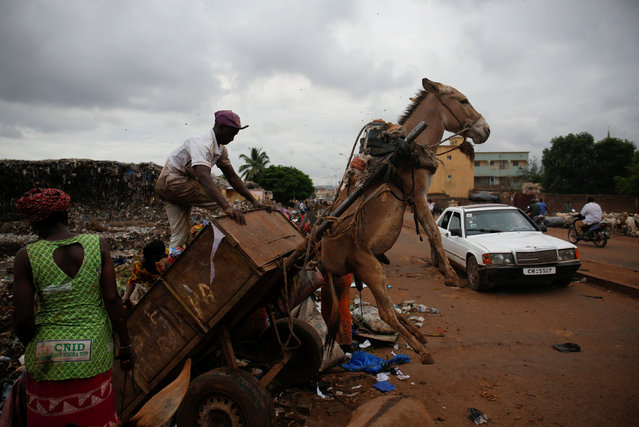
A waste picker unloads garbage at a waste transfer station in Bamako, Mali, August 19, 2018. In the Malian capital of Bamako, donkey carts driven by young men like 19-year-old Arouna Diabate play a vital role battling the fast-growing city's waste problem. Every morning before dawn, Diabate hitches his donkey to a cart and sets off on his rounds, going door-to-door to collect household garbage which he delivers to a local waste transfer station for a monthly salary of around $35. “I won't be picking up trash with a donkey cart for the rest of my life, but for now people appreciate us because we help clean up the homes of Bamako”, Diabate said. (Photo by Luc Gnago/Reuters)

A waste picker unloads garbage at a waste transfer station in Bamako, Mali, August 19, 2018. In the Malian capital of Bamako, donkey carts driven by young men like 19-year-old Arouna Diabate play a vital role battling the fast-growing city's waste problem. Every morning before dawn, Diabate hitches his donkey to a cart and sets off on his rounds, going door-to-door to collect household garbage which he delivers to a local waste transfer station for a monthly salary of around $35. “I won't be picking up trash with a donkey cart for the rest of my life, but for now people appreciate us because we help clean up the homes of Bamako”, Diabate said. (Photo by Luc Gnago/Reuters)
Details
18 Sep 2018 00:01:00
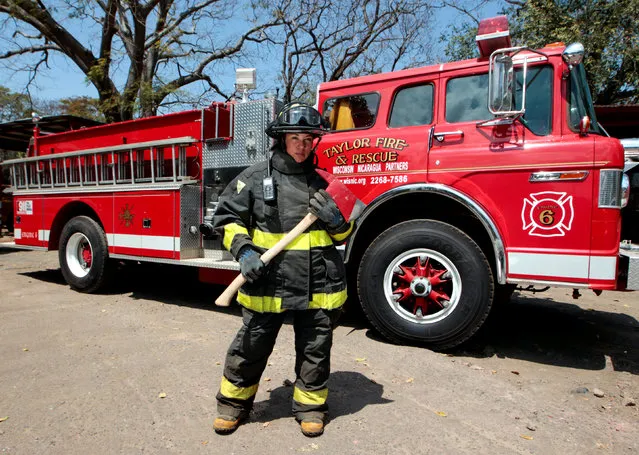
Yolaina Chavez Talavera, 31, a firefighter, poses for a photograph in front of a truck at a fire station in Managua, Nicaragua, February 22, 2017. “In my early days as a female firefighter, men, my team mates, thought that I would not last long in the organisation due to the hard training. However, in practice I showed them that I am able to take on tasks at the same level as men. I think women must fight to break through in all areas, in the midst of the machismo that still persists in Nicaragua and in Hispanic countries”, Talavera said. (Photo by Oswaldo Rivas/Reuters)

Wednesday March 8 marks International Women's Day, with festivals, concerts and exhibitions among the numerous events planned around the world to celebrate the achievements of women in society. The annual event has been held since the early 1900s and traditionally promotes a different theme each year, with this year's edition calling on people to #BeBoldForChange and push for a more gender-inclusive working world. Reuters photographers have been speaking with women in a range of professions around the world about their experiences of gender inequality. Here: Yolaina Chavez Talavera, 31, a firefighter, poses for a photograph in front of a truck at a fire station in Managua, Nicaragua, February 22, 2017. (Photo by Oswaldo Rivas/Reuters)
Details
04 Mar 2017 00:06:00