Loading...
Done
Animals Yawning

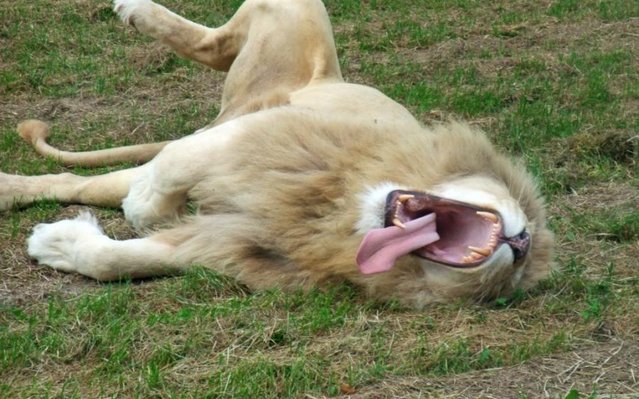
In animals, yawning can serve as a warning signal. For example, Charles Darwin, in his book The Expression of the Emotions in Man and Animals, mentioned that baboons yawn to threaten their enemies, possibly by displaying large canine teeth. Similarly, Siamese fighting fish yawn only when they see a conspecific (same species) or their own mirror-image, and their yawn often accompanies aggressive attack. Guinea pigs also yawn in a display of dominance or anger, displaying their impressive incisor teeth. This is often accompanied by teeth chattering, purring and scent marking.

Details
11 Aug 2012 09:12:00
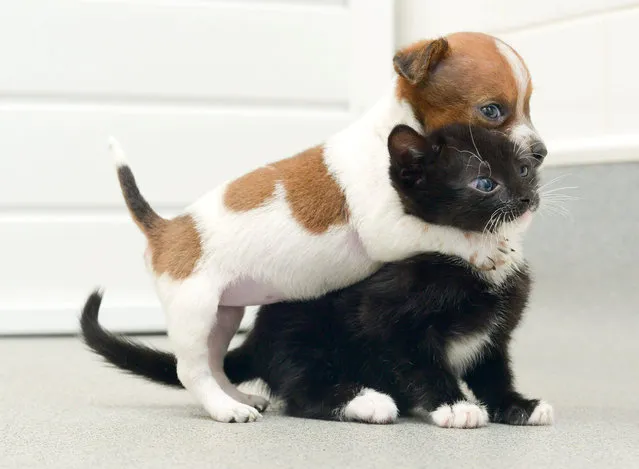
Kitty and Buttons

This adorable and unlikely pair of best friends are inseperable. Kitty the kitten was abandoned and Buttons the Jack Russell was rejected by his mum. They eat, sleep and play together while they are being hand reared at our centre in Old Windsor, Berkshire. We would love for them to find a new home together when they are ready to leave our care in the near future.


SEE ALSO: True Friendship AND True Friendship Pat Two
Details
26 Oct 2012 10:35:00
“Where the Summer Grass Leads”. (Kindra Nikole)

“Hello! My name is Kindra, and photography, over the last six months has become a happily all-consuming activity for me. Through my photos and creation of them, I escape into another world entirely, and then share that world with others. It brings me unending amounts of joy, and I never plan to stop!”. – Kindra Nikole

Photo: “Where the Summer Grass Leads”. (Photo by Kindra Nikole)
Details
25 Nov 2012 11:03:00
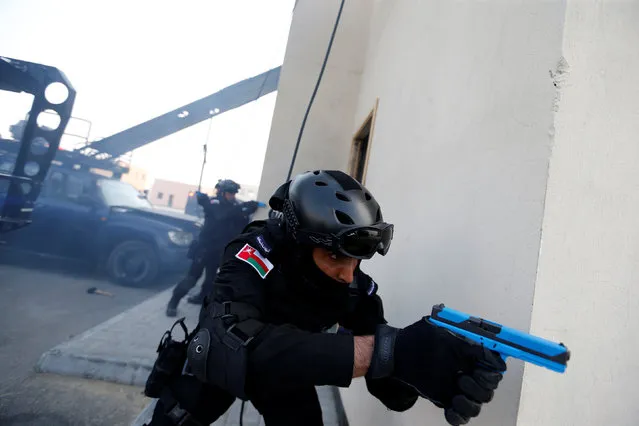
Omani Tactical & Commando personnel are seen during the month-long GCC joint security exercise “Arabian Gulf Security 1” in Manama, Bahrain November 1, 2016. (Photo by Hamad I. Mohammed/Reuters)

Omani Tactical & Commando personnel are seen during the month-long GCC joint security exercise “Arabian Gulf Security 1” in Manama, Bahrain November 1, 2016. “Arabian Gulf Security 1” exercises will continue until mid-November with the participation of the UAE, Saudi Arabia, Oman, Qatar and Kuwait. (Photo by Hamad I. Mohammed/Reuters)
Details
02 Nov 2016 11:48:00
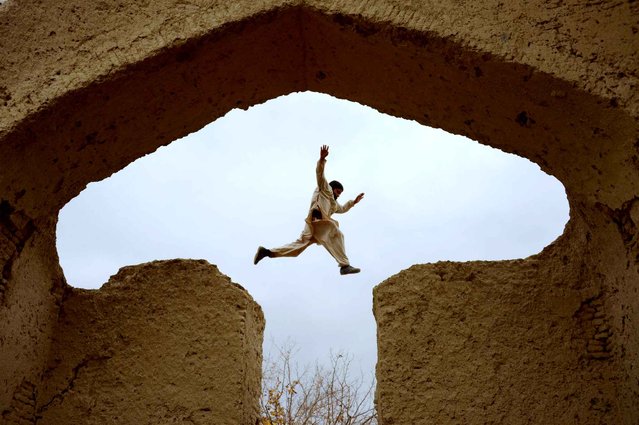
An Afghan boy plays in the ruins of a house that at one point belonged to the 13th-century Persian poet, Islamic scholar and Sufi mystic Jalal ad-Din Muhammad Rumi on the outskirts of Mazar-i-Sharif on November 25, 2015. (Photo by Farshad Usyan/AFP Photo)

An Afghan boy plays in the ruins of a house that at one point belonged to the 13th-century Persian poet, Islamic scholar and Sufi mystic Jalal ad-Din Muhammad Rumi on the outskirts of Mazar-i-Sharif on November 25, 2015. (Photo by Farshad Usyan/AFP Photo)
Details
26 Jan 2016 11:52:00
A fan of Serbia scuffles with Albania's Mergim Mavraj during their Euro 2016 Group I qualifying soccer match at the FK Partizan stadium in Belgrade October 14, 2014. The Euro 2016 qualifier between Serbia and Albania was abandoned on Tuesday following a brawl between players from both sides. (Photo by Marko Djurica/Reuters)

A fan of Serbia scuffles with Albania's Mergim Mavraj during their Euro 2016 Group I qualifying soccer match at the FK Partizan stadium in Belgrade October 14, 2014. The Euro 2016 qualifier between Serbia and Albania was abandoned on Tuesday following a brawl between players from both sides. (Photo by Marko Djurica/Reuters)
Details
15 Oct 2014 13:19:00
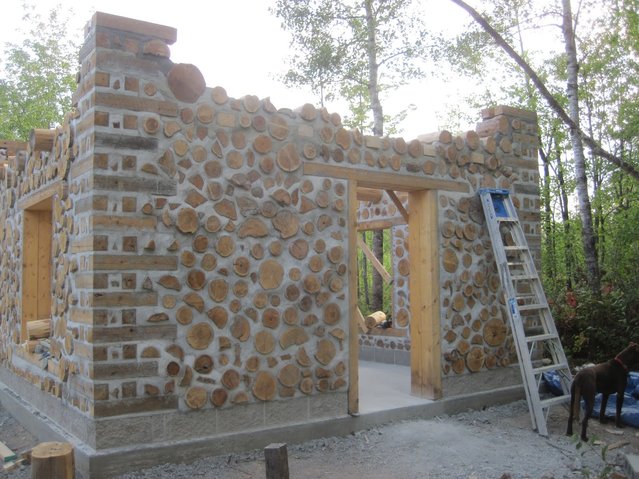
Cordwood Construction - Natural Building

Cordwood construction is a method of natural building that originated roughly one thousand years ago in Greece and Siberia. This method involves using pieces of wood that slightly protrude from the mortar, giving the walls an attractive appearance. Usually, the walls are made 12 to 24 inches thick. However, in some parts of Canada, the walls can be as thick as 36 inches. This method appeals to many people due to its ease of construction economy of resources. Cordwood Construction can be separated into two main types: mortar-insulation-mortar (M-I-M) and Throughwall. M-I-M is a more preferable and widely used choice as it allows for better insulating properties.
Details
27 Nov 2014 15:10:00


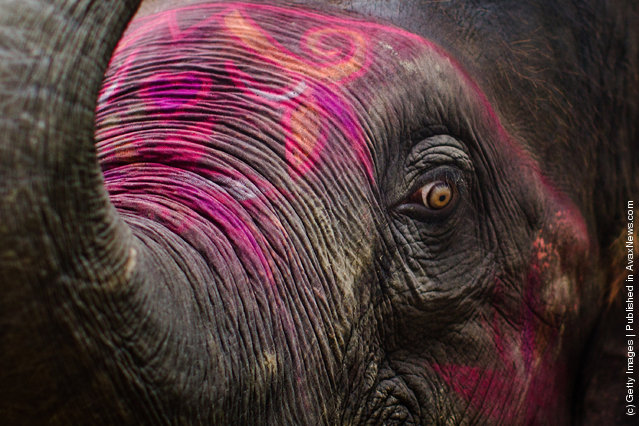
SONEPUR, INDIA - NOVEMBER 15: An elephant is painted in decorative colours during the Sonepur Mela on November 15, 2011 in Sonepur near Patna, India. The cattle fair, held in the Indian state of Bihar, has its origins during ancient times, when people traded elephants and horses across the auspicious river Ganges. The mela used to attract traders from places as distant as Central Asia. It is one of Asia's largest cattle fairs and lasts for a fortnight. (Photo by Daniel Berehulak/Getty Images)
Details
16 Nov 2011 02:42:00