Loading...
Done
Galapagos – Rocking the Cradle: Four major ocean currents converge along the Galapagos archipelago, creating the conditions for an extraordinary diversity of animal life, April 25, 2016. The islands are home to at least 7,000 flora and fauna species, of which 97 percent of the reptiles, 80 percent of the land birds, 50 percent of the insects and 30 percent of the plants are endemic. The local ecosystem is highly sensitive to the changes in temperature, rainfall and ocean currents that characterize the climatic events known as El Niño and La Niña. These changes cause marked fluctuations in weather and food availability. Many scientists expect the frequency of El Niño and La Niña to increase as a result of climate change, making the Galapagos a possible early-warning location for its effects. (Photo by Thomas P. Peschak for National Geographic/World Press Photo)

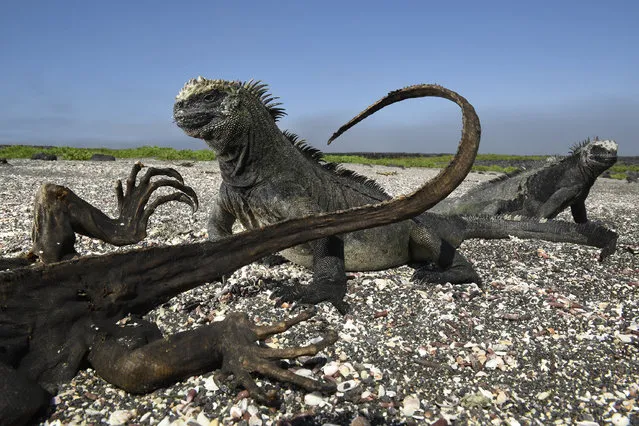
Galapagos – Rocking the Cradle: Four major ocean currents converge along the Galapagos archipelago, creating the conditions for an extraordinary diversity of animal life, April 25, 2016. The islands are home to at least 7,000 flora and fauna species, of which 97 percent of the reptiles, 80 percent of the land birds, 50 percent of the insects and 30 percent of the plants are endemic. (Photo by Thomas P. Peschak for National Geographic/World Press Photo)
Details
16 Apr 2018 00:01:00
Naked activists for animal rights, covered in fake blood, perform during a protest against the use of fur and leather, at Catalunya Square in Barcelona, Spain, December 16, 2018. (Photo by Albert Gea/Reuters)

Naked activists for animal rights, covered in fake blood, perform during a protest against the use of fur and leather, at Catalunya Square in Barcelona, Spain, December 16, 2018. (Photo by Albert Gea/Reuters)
Details
18 Dec 2018 00:03:00
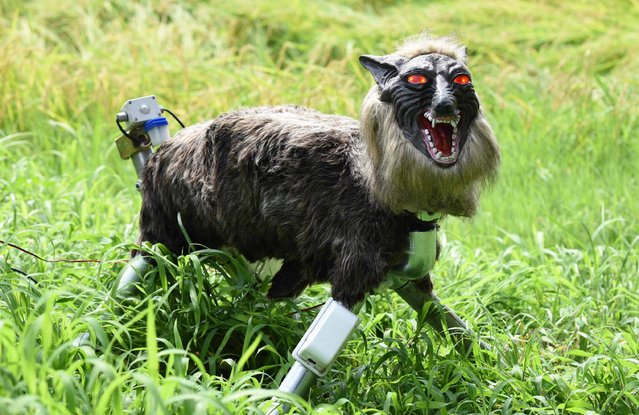
A wolf-like robot “Super Monster Wolf” stands beside a rice field to drive away wild animals that cause damages to crops in Kisarazu, Chiba prefecture, on August 25, 2017. The agricultural coopetative association JA Kisarazu-shi introduced the 65cm-long and 50cm-high robot recently on a trial basis which can detect wild animals such as boars and deers with an infrared ray sensor when they approach and intimidates them, flashing the red LED eyes and blaring 48 types of sounds including a wolf growl and human voice. (Photo by Toru Yamanaka/AFP Photo)

A wolf-like robot “Super Monster Wolf” stands beside a rice field to drive away wild animals that cause damages to crops in Kisarazu, Chiba prefecture, on August 25, 2017. The agricultural coopetative association JA Kisarazu-shi introduced the 65cm-long and 50cm-high robot recently on a trial basis which can detect wild animals such as boars and deers with an infrared ray sensor when they approach and intimidates them, flashing the red LED eyes and blaring 48 types of sounds including a wolf growl and human voice. (Photo by Toru Yamanaka/AFP Photo)
Details
27 Aug 2017 07:17:00
A racegoer is given some water as he lays on the ground following 2017 Stakes Day at Flemington Racecourse on November 11, 2017 in Melbourne, Australia. (Photo by Scott Barbour/Getty Images)

A racegoer is given some water as he lays on the ground following 2017 Stakes Day at Flemington Racecourse on November 11, 2017 in Melbourne, Australia. (Photo by Scott Barbour/Getty Images)
Details
12 Nov 2017 08:52:00
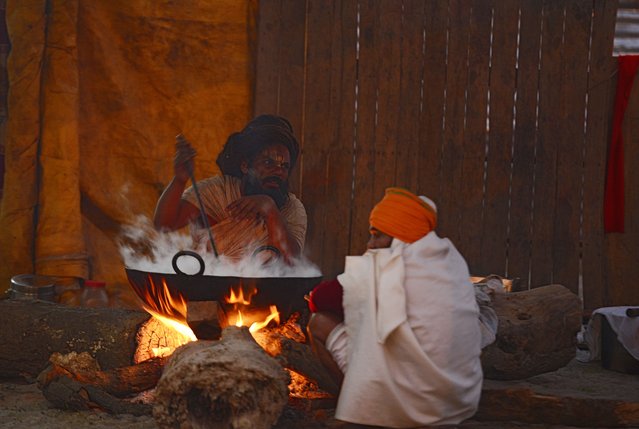
This picture taken on December 31, 2017 shows an Indian sadhu preparing food at a camp at Sangam, ahead of the Magh Mela festival, in Allahabad. The Magh Mela, which is known as a mini-Kumbh Mela, is scheduled to start January 2 and continue until February 13 with auspicious bathing dates throughout the 45 day period. (Photo by Sanjay Kanojia/AFP Photo)

This picture taken on December 31, 2017 shows an Indian sadhu preparing food at a camp at Sangam, ahead of the Magh Mela festival, in Allahabad. The Magh Mela, which is known as a mini-Kumbh Mela, is scheduled to start January 2 and continue until February 13 with auspicious bathing dates throughout the 45 day period. (Photo by Sanjay Kanojia/AFP Photo)
Details
02 Jan 2018 08:38:00
Men wear masks as they sit in the metro in Prague, Czech Republic, 17 March 2020. According to media reports, the Czech government decided to impose a two-week quarantine in the country on the evening of 15 March, and ban all international travel from 16 March 2020. Currently 383 cases of the coronavirus SARS-CoV-2, which causes the Covid-19 disease, have been officially confirmed in Czech Republic. (Photo by Martin Divisek/EPA/EFE)

Men wear masks as they sit in the metro in Prague, Czech Republic, 17 March 2020. According to media reports, the Czech government decided to impose a two-week quarantine in the country on the evening of 15 March, and ban all international travel from 16 March 2020. Currently 383 cases of the coronavirus SARS-CoV-2, which causes the Covid-19 disease, have been officially confirmed in Czech Republic. (Photo by Martin Divisek/EPA/EFE)
Details
19 Mar 2020 00:07:00
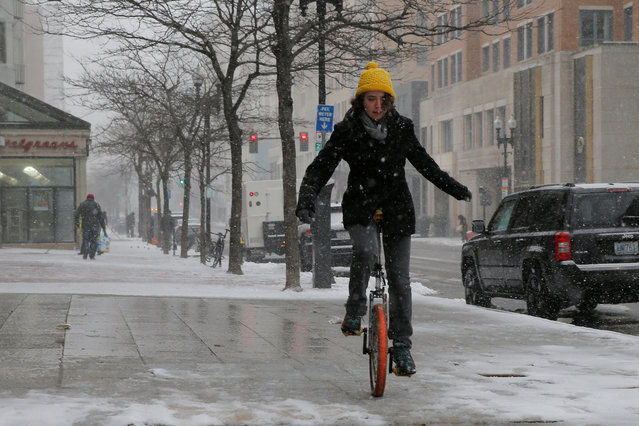
Rebecca Bailey rides a unicycle during a winter nor'easter snow storm in Boston, Massachusetts, U.S. February 9, 2017. (Photo by Brian Snyder/Reuters)

Rebecca Bailey rides a unicycle during a winter nor'easter snow storm in Boston, Massachusetts, U.S. February 9, 2017. (Photo by Brian Snyder/Reuters)
Details
11 Feb 2017 00:01:00
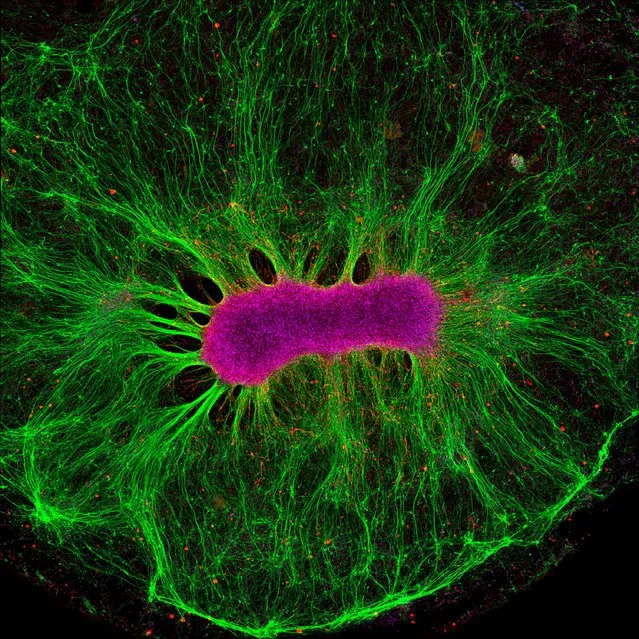
Brain-on-a-chip. Dazzling in green and magenta this image shows the nerve fibres (in green) produced by neural stem cells (in magenta) as they grow on a synthetic gel. Captured by a technique known as confocal microscopy, the image is part of research shedding light on how tinkering with the environment can affect the way in which nerve fibres grow. (Photo by Collin Edington and Iris Lee/Massachusetts Institute of Technology/Wellcome Images)

Brain-on-a-chip. Dazzling in green and magenta this image shows the nerve fibres (in green) produced by neural stem cells (in magenta) as they grow on a synthetic gel. Captured by a technique known as confocal microscopy, the image is part of research shedding light on how tinkering with the environment can affect the way in which nerve fibres grow. (Photo by Collin Edington and Iris Lee/Massachusetts Institute of Technology/Wellcome Images)
Details
17 Mar 2017 00:01:00