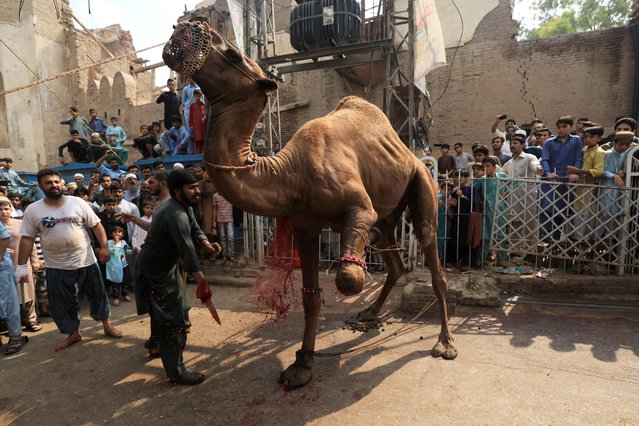
Men and children gather as a camel is being slaughtered in celebration of Eid al-Adha, in Peshawar, Pakistan on August 12, 2019. (Photo by Fayaz Aziz/Reuters)
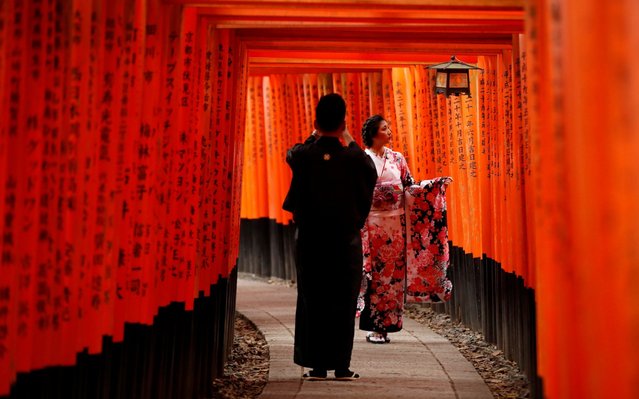
A woman in yukata, casual summer kimono, poses for a photo at Fushimi Inari Taisha in Kyoto, Japan on October 2, 2019. (Photo by Matthew Childs/Reuters)
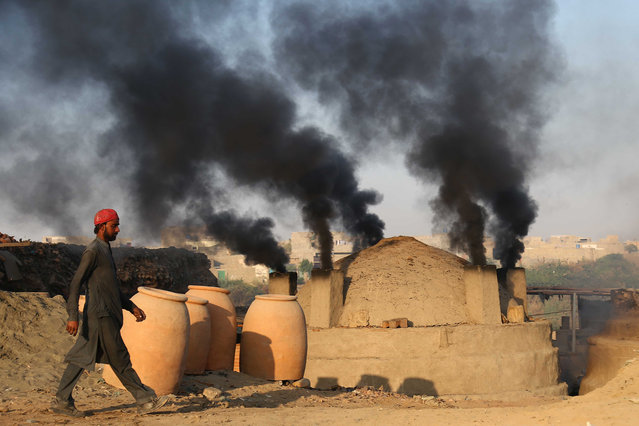
A man stands near smoke billowing from a brick kiln in Karachi, Pakistan, 14 December 2018. According to the UN report, carbon dioxide (CO2) emissions have increased for the first time in four years. The United Nations Conference COP24, held in Katowice, Poland, until 14 December 2018, searches for a common position in the fight against climate change. (Photo by Shahzaib Akber/EPA/EFE)
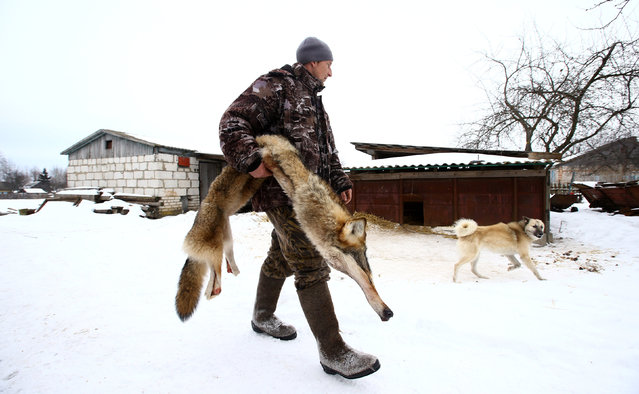
Nikolay Skidan, a hunter, carries the skin of a wolf in the village of Khrapkovo, Belarus February 1, 2017. Wolf fur grows thickest in winter, so Belarussian hunter Vladimir Krivenchik only sets his traps once snow is on the ground. He and his wife live on the edge of the Chernobyl exclusion zone – 2,600 square km of land on the Belarus-Ukraine border that was contaminated by a nuclear disaster in 1986. (Photo by Vasily Fedosenko/Reuters)
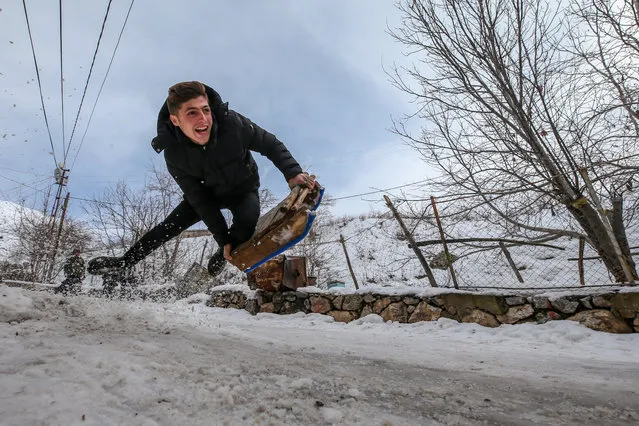
A boy sleds through snow as he enjoys the snow in Bahcesaray district called as planet nine because of roads blocked by snow in winter, in Van province of Turkey on January 22, 2020. (Photo by Ozkan Bilgin/Anadolu Agency via Getty Images)
A performer blows fire during Chinese Lunar New Year celebrations in Chinatown, Binondo, Manila, Philippines, January 25, 2020. (Photo by Eloisa Lopez/Reuters)
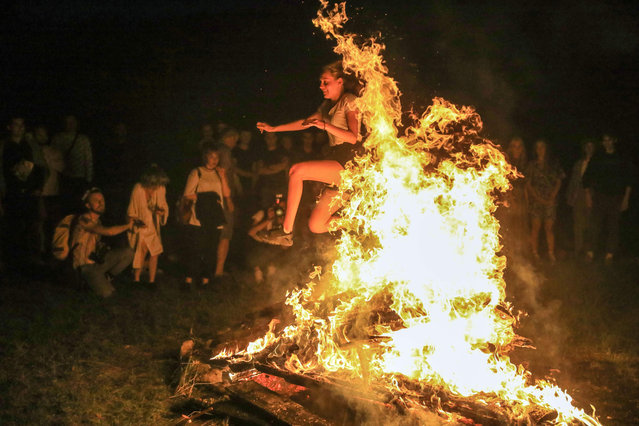
People take part in a traditional mid-summer solstice night celebration (Rasos Festival) at the Open-Air Museum of Lithuania in Rumsiskes, east of Kaunas, Lithuania, on late June 23, 2020. (Photo by Petras Malukas/AFP Photo)
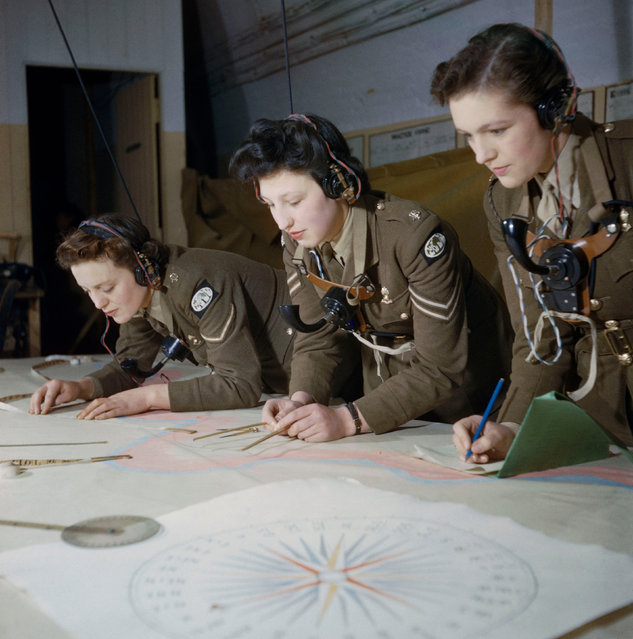
Auxiliary Territorial Service (ATS) plotters at work at Coastal Artillery Headquarters in Dover, December 1942. The Auxiliary Territorial Service was the women's branch of the British Army during the Second World War. It was formed on 9 September 1938, initially as a women's voluntary service, and existed until 1 February 1949, when it was merged into the Women's Royal Army Corps. The ATS had its roots in the Women's Auxiliary Army Corps (WAAC), which was formed in 1917 as a voluntary service. During the First World War its members served in a number of jobs including clerks, cooks, telephonists and waitresses. The WAAC was disbanded after four years in 1921. (Photo by Ted Dearberg/IWM/PA Wire)