Soviet cosmonaut and the first man to travel in space, Yury Alekseyvich Gagarin (1934–1968) arriving in London for a Russian trade fair. (Photo by Douglas Miller/Getty Images)
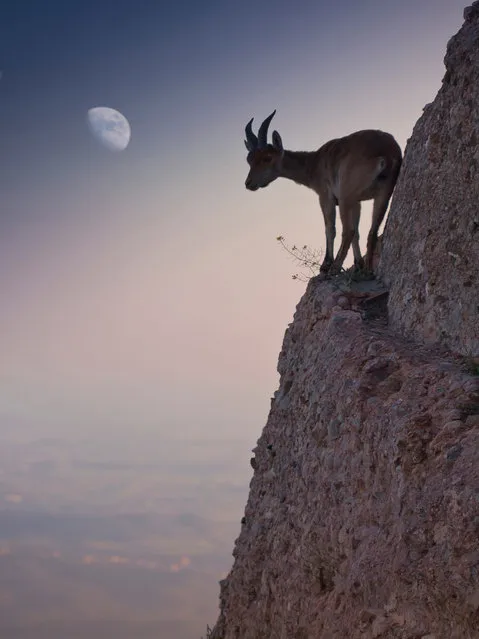
“For a bouquet of flowers”. Photographs made in the last hours of the day. A goat is directed by a dangerous way to eat a small bouquet of flowers. Location: España, Barcelona, Montserrat. (Photo and caption by Renato Lopez Baldo/National Geographic Traveler Photo Contest)
ATTENTION! All pictures are presented in high resolution. To see Hi-Res images – just TWICE click on any picture. In other words, click small picture – opens the BIG picture. Click BIG picture – opens VERY BIG picture.
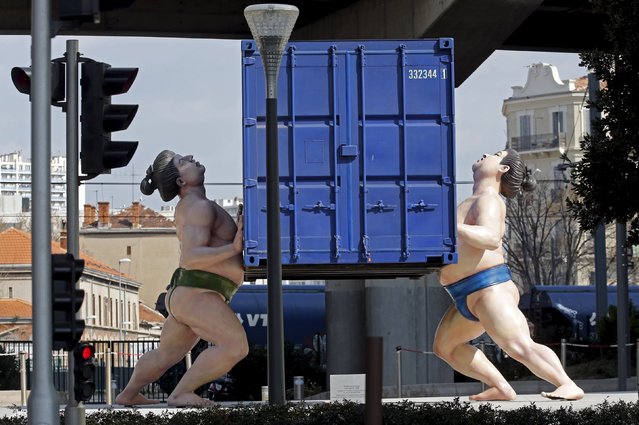
The sculpture “It Takes Two to Tango” by Scottish sculptor David Mach is seen in front of the headquarters of the CMA-CGM shipping company office tower in the port of Marseille, France, March 15, 2016. (Photo by Jean-Paul Pelissier/Reuters)
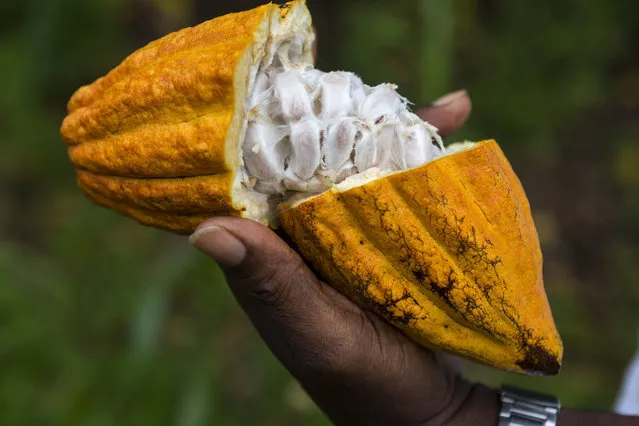
Chocolate is the greatest gift the Earth has given us. The dessert table would be a sad sight without it. It’s so beloved, so appreciated, that the Swedish scientist who named the cocoa plant that gives us chocolate called it Theobroma cacao, which means “food of the gods”. Here: Farmer holding a freshly cut cocoa bean pod, revealing the pulp and seed inside on a rainforest farm. (Photo by Doug McKinlay/Getty Images)
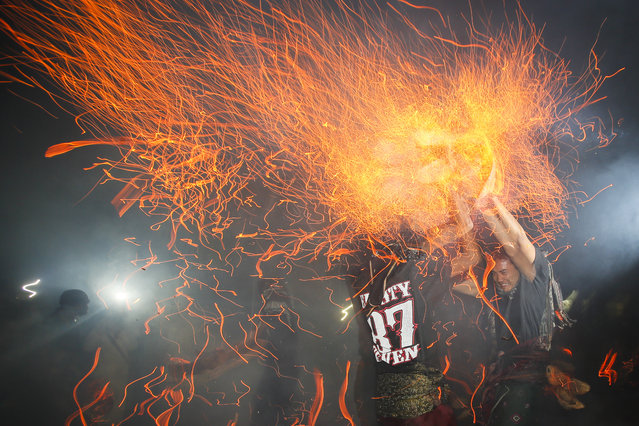
Balinese men throw fire on each other during a sacred ritual called “Mesabatan Api” or a fire fight at a temple in Tuban, Bali, Indonesia, 9 October 2014. October 9, 2014. During the ritual Balinese Hindu men took the blazing coconut husks barehanded, swinging and throwing them each other. Balinese believe that fire can destroy evil, and the ritual is aimed to get rid of the negative forces. (Photo by Made Nagi/EPA)
Youth council member Mia Buckles plays with 18-month-old Kobe Buckles-Benson as Canada's Prime Minister Justin Trudeau visits the Cowessess First Nation, where a search had found 751 unmarked graves from the former Marieval Indian Residential School near Grayson, Saskatchewan, Canada on July 6, 2021. (Photo by Shannon VanRaes/Reuters)
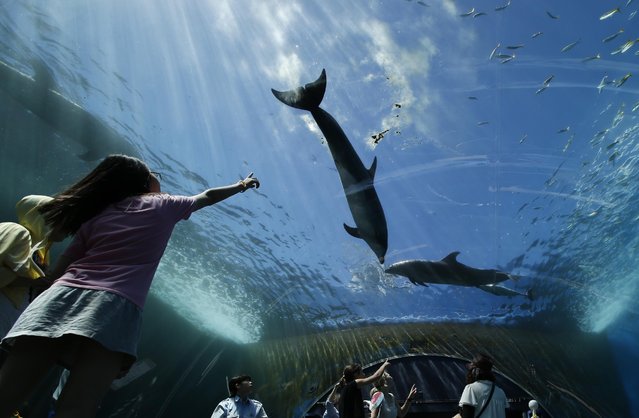
Bottlenose dolphins swim over visitors in water tank at the Hakkeijima Sea Paradise aquarium-amusement park complex in Yokohama, southwest of Tokyo, Tuesday, July 21, 2015. Temperatures in Tokyo's metropolitan area neared around 96 degree Fahrenheit, or 35 degree Celsius, on Tuesday. (Photo by Shuji Kajiyama/AP Photo)
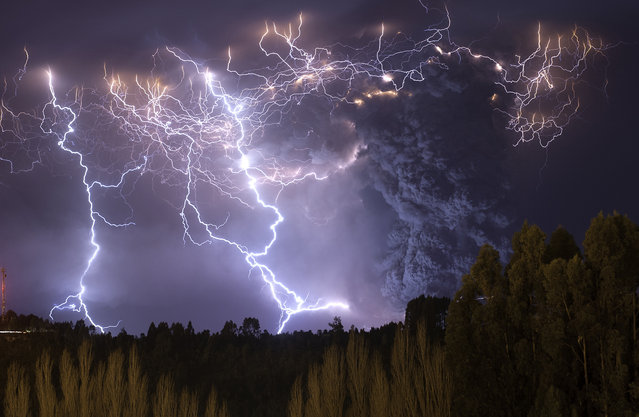
The eruption of Cordon Caulle began on June 4, 2011, located in the Region of Los Rios in Chile. For about 12 months, people and animals became accustomed to living with the daily fall of ash, which also caused problems in the air traffic in South America. The explosions and lightning during first days of the eruption could be seen from hundreds of miles around. This photograph was taken on the second night of eruption from the town of Lago Ranco. (Photo and caption by Francisco Negroni/National Geographic Traveler Photo Contest)
ATTENTION! All pictures are presented in high resolution. To see Hi-Res images – just TWICE click on any picture. In other words, click small picture – opens the BIG picture. Click BIG picture – opens VERY BIG picture.