Loading...
Done
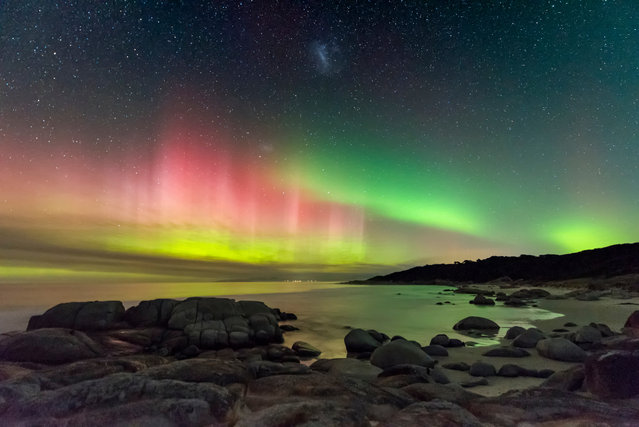
Aurora Australis from Beerbarrel Beach, by James Stone. Runner Up: Aurorae. (Photo by James Stone/Astronomy Photographer of the Year)

Aurora Australis from Beerbarrel Beach, by James Stone. Runner Up: Aurorae. (Photo by James Stone/Astronomy Photographer of the Year)
Details
14 Sep 2019 00:05:00
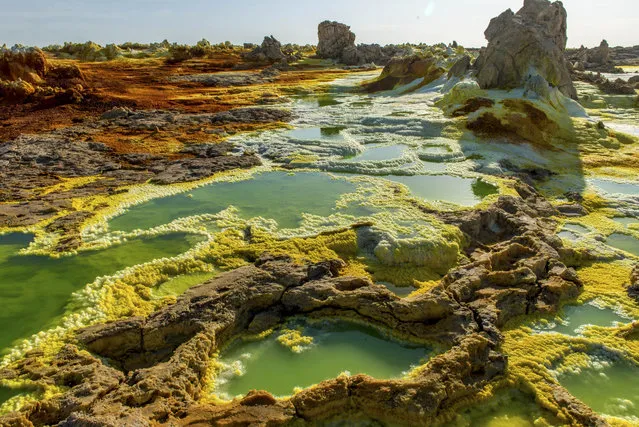
Despite the amazing sight, Netal said that seeing the pools came with a downside. “The smell was horrible, and it was difficult to breath”. (Photo by Neta Dekel/Caters News Agency)

These stunning images show the beauty and drama of Mother Nature at work. Captured deep in heart of the Danakil Desert in East Africa, the images show the acid pools near the Erta Ale volcano. Pools of brightly colored acid can be seen amid the dramatic blast of volcanic ash. The photos were taken by Neta Dekel, an Israeli photographer. He the acid pools were one of the most extraordinary sights he had ever seen. (Photo by Neta Dekel/Caters News Agency)
Details
27 Jun 2018 00:03:00
Woman taunts naked man. (Photo by riskms/Getty Images)

Woman taunts naked man. (Photo by riskms/Getty Images)
Details
05 Aug 2018 00:01:00
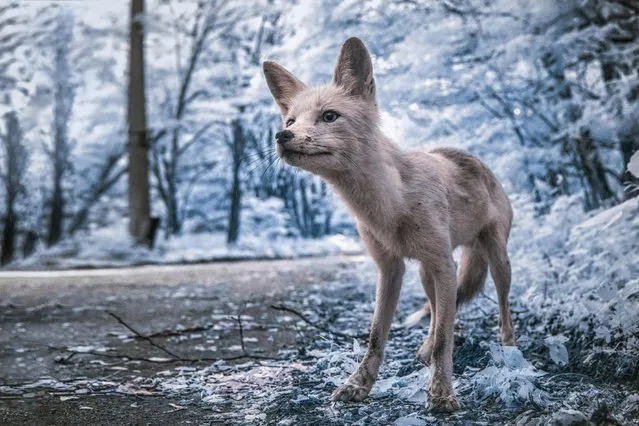
Simon – a friendly fox, who often approaches tourists in the exclusion zone, asking for food. (Photo by Vladimir Mitgutin/Caters News Agency)

This fascinating photo series looks at the bleak isolation of Chernobyl as never before. Employing infrared filters, photographer Vladimir Mitgutin is able to bring out details of decay – an abandoned bus, a radar system, an amusement park, a doll, a sports hall, a piano – frozen in time. Here: Simon – a friendly fox, who often approaches tourists in the exclusion zone, asking for food. (Photo by Vladimir Mitgutin/Caters News Agency)
Details
12 Feb 2018 00:02:00
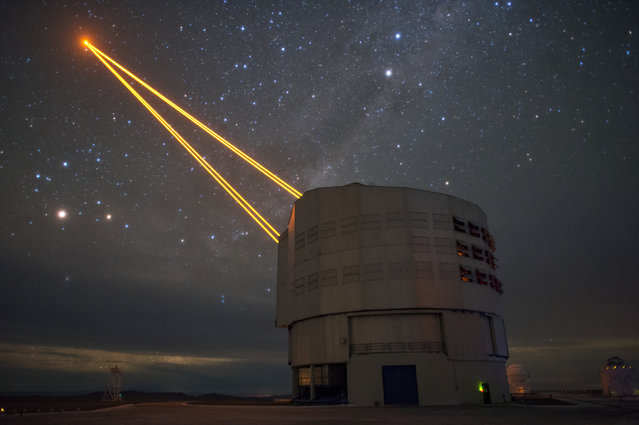
Four pillars of light from the 4 Laser Guide Star Facility on ESO's Very Large Telescope (VLT) are shown reaching into the Chilean night sky in this image from ESO Photo Ambassador Fred Kamphues, on September 2, 2016. The lasers are a key part of the adaptive optics system on the VLT. Adaptive optics allows astronomers to drastically reduce the atmospheric distortion present at even the best sites in the world for astronomy, including Paranal in Chile, the home of the VLT. (Photo by F. Kamphues/ESO)

Four pillars of light from the 4 Laser Guide Star Facility on ESO's Very Large Telescope (VLT) are shown reaching into the Chilean night sky in this image from ESO Photo Ambassador Fred Kamphues, on September 2, 2016. The lasers are a key part of the adaptive optics system on the VLT. Adaptive optics allows astronomers to drastically reduce the atmospheric distortion present at even the best sites in the world for astronomy, including Paranal in Chile, the home of the VLT. (Photo by F. Kamphues/ESO)
Details
23 Feb 2017 00:06:00
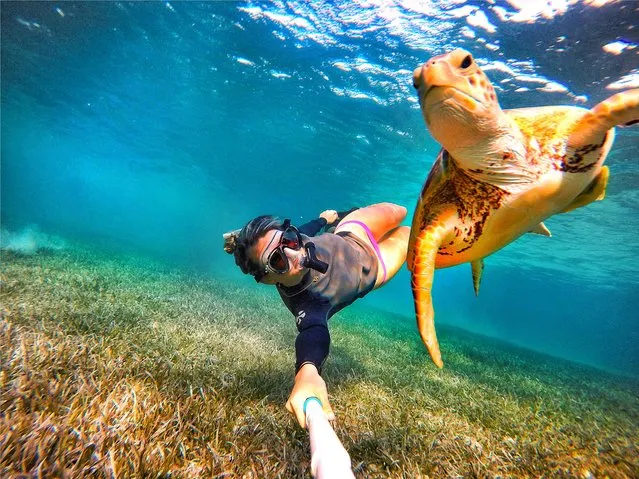
Underwater pictures show the 23-year-old diver cosying up to a range of animals. (Photo by Amelia Klonaris/Mediadrumworld)

Dublin student beat depression by befriending sharks, stingrays and pigs in the Bahamas. Awesome underwater pictures show the 23-year-old diver cosying up to a range of animals including turtles, stingray and sharks. The sunny selfies were taken in the Bahamas by Stuart’s Cove dive instructor and native of the island, Amelia Klonaris – who beat depression by embracing her incredible beach paradise lifestyle. (Photo by Amelia Klonaris/Mediadrumworld)
Details
01 Jul 2017 07:38:00
Office s*x. (Photo by Orange-Melody/Getty Images)

Office sеx. (Photo by Orange-Melody/Getty Images)
Details
09 Sep 2017 08:30:00
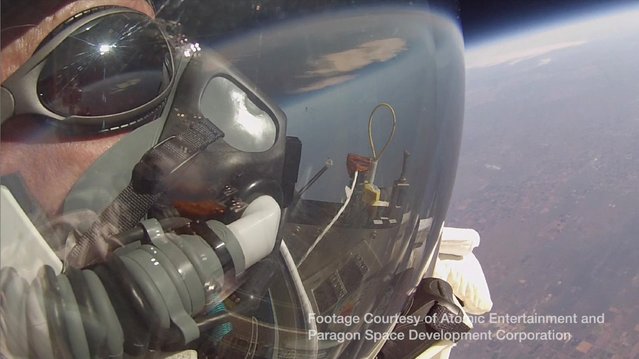
Google's vice president Alan Eustace looks out of his spacesuit into the stratosphere prior to a record-breaking skydive over New Mexico, in this still image taken from video October 24, 2014, a handout courtesy of the Paragon Space Development Corporation. Eustace was lifted up 135,890 ft (41,420 metres) by an enormous balloon while wearing a specially designed pressurized space suit, the Paragon Space Development Corporation said. (Photo by Reuters/Paragon Space Development Corporation)

Google's vice president Alan Eustace looks out of his spacesuit into the stratosphere prior to a record-breaking skydive over New Mexico, in this still image taken from video October 24, 2014, a handout courtesy of the Paragon Space Development Corporation. Eustace was lifted up 135,890 ft (41,420 metres) by an enormous balloon while wearing a specially designed pressurized space suit, the Paragon Space Development Corporation said. Eustace remained in a free fall for approximately 4.5 minutes before landing safely nearly 70 miles (43.4 kms) from his launch point, setting a world record for the highest skydive and breaking the sound barrier in the process. Eustace landed safely on the ground just 15 minutes after he was lifted into the air. (Photo by Reuters/Paragon Space Development Corporation)
Details
26 Oct 2014 12:16:00