Loading...
Done
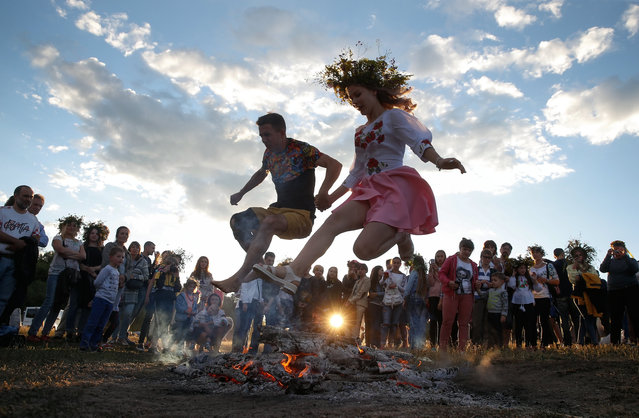
Ukrainians jump over a fire in Kiev, Ukraine, 06 July 2017, as they celebrate the traditional pagan holiday of Ivana Kupala. Ivana Kupala is celebrated, during the summer solstice, on the shortest night of the year, marking the beginning of summer and is celebrated in Ukraine, Belarus, Poland and Russia on the night of 06 July. People sing and dance around bonfires, play games and perform traditional rituals. Young people jump over bonfires in order to test their bravery. Couples holding hands jump over the flames to test their love. If the couple does not succeed it is predicted to split up. Traditionally, children and young unmarried women wear wreaths of wild flowers on their heads to symbolize purity. (Photo by Sergey Dolzhenko/EPA)

Ukrainians jump over a fire in Kiev, Ukraine, 06 July 2017, as they celebrate the traditional pagan holiday of Ivana Kupala. Ivana Kupala is celebrated, during the summer solstice, on the shortest night of the year, marking the beginning of summer and is celebrated in Ukraine, Belarus, Poland and Russia on the night of 06 July. People sing and dance around bonfires, play games and perform traditional rituals. Young people jump over bonfires in order to test their bravery. Couples holding hands jump over the flames to test their love. If the couple does not succeed it is predicted to split up. Traditionally, children and young unmarried women wear wreaths of wild flowers on their heads to symbolize purity. (Photo by Sergey Dolzhenko/EPA)
Details
08 Jul 2017 09:05:00
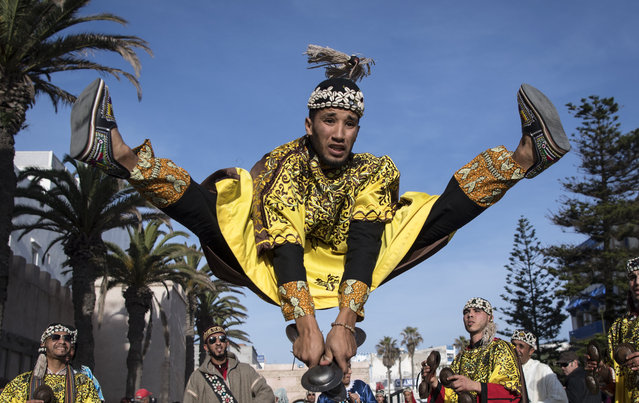
A Gnawa traditional group performs in the city of Essaouira on December 14, 2019, to celebrate the decision of adding the Gnawa culture to UNESCO's list of Intangible Cultural Heritage of Humanity. Gnawa culture, a centuries-old Moroccan practice rooted in music, African rituals and Sufi traditions, was added to UNESCO's list of Intangible Cultural Heritage of Humanity earlier in the week. Gnawa refers to a “set of musical productions, fraternal practices and therapeutic rituals where the secular mixes with the sacred”, according to the nomination submitted by Morocco. Often dressed in colourful outfits, Gnawa musicians play the guenbri, a type of lute with three strings, accompanied by steel castanets called krakebs. (Photo by Fadel Senna/AFP Photo)

A Gnawa traditional group performs in the city of Essaouira on December 14, 2019, to celebrate the decision of adding the Gnawa culture to UNESCO's list of Intangible Cultural Heritage of Humanity. Gnawa culture, a centuries-old Moroccan practice rooted in music, African rituals and Sufi traditions, was added to UNESCO's list of Intangible Cultural Heritage of Humanity earlier in the week. Gnawa refers to a “set of musical productions, fraternal practices and therapeutic rituals where the secular mixes with the sacred”, according to the nomination submitted by Morocco. Often dressed in colourful outfits, Gnawa musicians play the guenbri, a type of lute with three strings, accompanied by steel castanets called krakebs. (Photo by Fadel Senna/AFP Photo)
Details
18 Dec 2019 00:05:00
A woman is helped with adorning her hair with jewelry, part of the traditional clothing known as “Pollera”, before the annual Thousand Polleras parade in Las Tablas, in the province of Los Santos January 10, 2015. According to local residents, the Pollera dates back to the 18th century and was worn by the Spanish lower classes. (Photo by Carlos Jasso/Reuters)

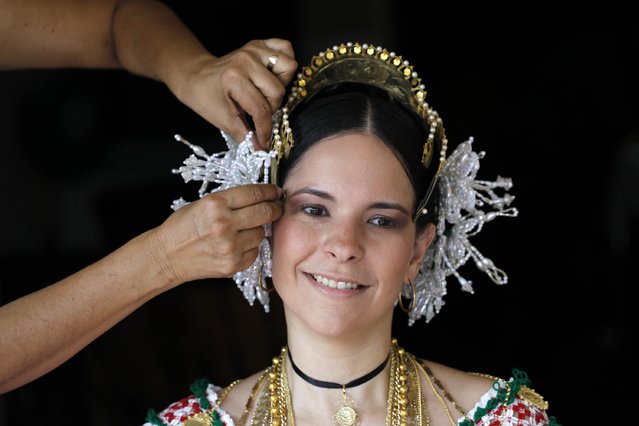
A woman is helped with adorning her hair with jewelry, part of the traditional clothing known as “Pollera”, before the annual Thousand Polleras parade in Las Tablas, in the province of Los Santos January 10, 2015. According to local residents, the Pollera dates back to the 18th century and was worn by the Spanish lower classes. Today, it has become the Panamanian national costume. The dress is made entirely by hand and the jewellery worn is pure gold and worth thousands of dollars. (Photo by Carlos Jasso/Reuters)
Details
12 Jan 2015 15:46:00
A believer dressed as a “diablo” (devil) jumps at the San Blas' (Saint Blaise) procession during the “Endiablada” festival in Almonacid del Marquesado, in central Spain February 3, 2015. In the “Endiablada”, an undated traditional festival in honour of the Candelaria Virgin and San Blas. (Photo by Susana Vera/Reuters)

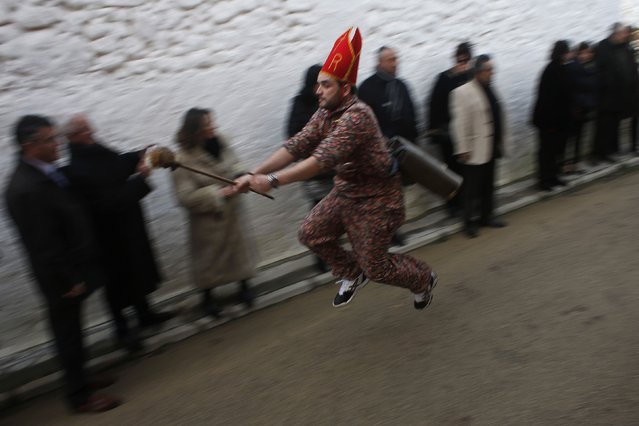
A believer dressed as a “diablo” (devil) jumps at the San Blas' (Saint Blaise) procession during the “Endiablada” festival in Almonacid del Marquesado, in central Spain February 3, 2015. In the “Endiablada”, an undated traditional festival in honour of the Candelaria Virgin and San Blas, believers are dressed in colourful costumes, wear a mitre with lead cowbells tied to their waists that ring as they wander around the village and in front of the saints' statues during their processions. (Photo by Susana Vera/Reuters)
Details
05 Feb 2015 12:02:00
A woman in traditional clothes wears a pin showing North Korea's founder Kim Il-sung (L) and former leader Kim Jong-il, on her dress as she welcomes foreign reporters to a temple during a government organised tour just outside Pyongyang October 8, 2015. North Korea is getting ready to celebrate the 70th anniversary of the founding of its ruling Workers' Party of Korea on October 10. (Photo by Damir Sagolj/Reuters)

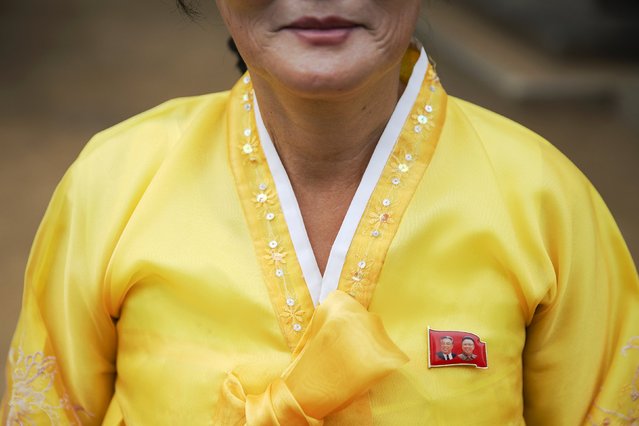
A woman in traditional clothes wears a pin showing North Korea's founder Kim Il-sung (L) and former leader Kim Jong-il, on her dress as she welcomes foreign reporters to a temple during a government organised tour just outside Pyongyang October 8, 2015. North Korea is getting ready to celebrate the 70th anniversary of the founding of its ruling Workers' Party of Korea on October 10. (Photo by Damir Sagolj/Reuters)
Details
11 Oct 2015 08:04:00
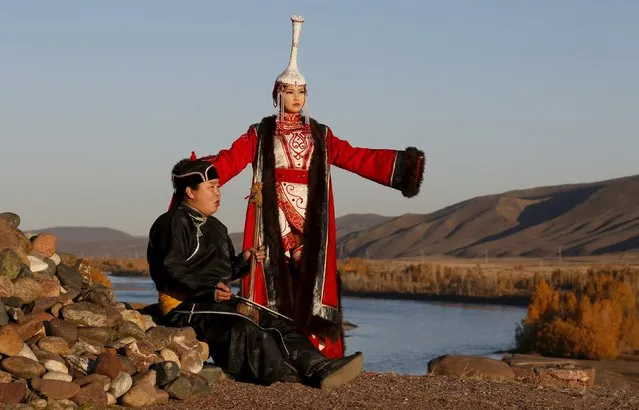
Master of throat singing (or Khoomei) Aikhan Orzhak (L) and model Choigana Kertek, dressed in traditional costume, perform during sunset at the Aldyn Bulak area on the bank of the Yenisei River outside the village of Ust-Elegest in Tuva region, Southern Siberia, Russia, October 7, 2015. The region is inhabited by Tuvans, historically cattle-herding nomads, who nowadays practise two main confessions - Buddhism and Shamanism. (Photo by Ilya Naymushin/Reuters)

Master of throat singing (or Khoomei) Aikhan Orzhak (L) and model Choigana Kertek, dressed in traditional costume, perform during sunset at the Aldyn Bulak area on the bank of the Yenisei River outside the village of Ust-Elegest in Tuva region, Southern Siberia, Russia, October 7, 2015. The region is inhabited by Tuvans, historically cattle-herding nomads, who nowadays practise two main confessions – Buddhism and Shamanism. (Photo by Ilya Naymushin/Reuters)
Details
17 Oct 2015 08:03:00
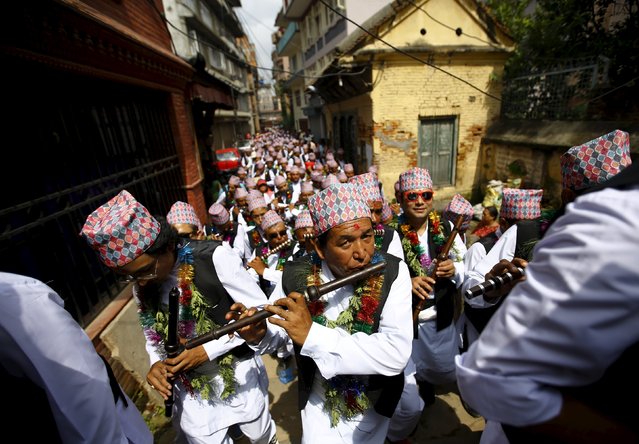
Devotees in traditional attire play flutes as they take part in a parade commemorating the Neku Jatra-Mataya festival, the Festival of Lights, in Lalitpur, Nepal August 31, 2015. Devotees celebrate the Buddhist festival which marks the victory of Sakyamuni Buddha over Mara, by praying for the souls of departed family members and holding parades throughout the city. (Photo by Navesh Chitrakar/Reuters)

Devotees in traditional attire play flutes as they take part in a parade commemorating the Neku Jatra-Mataya festival, the Festival of Lights, in Lalitpur, Nepal August 31, 2015. Devotees celebrate the Buddhist festival which marks the victory of Sakyamuni Buddha over Mara, by praying for the souls of departed family members and holding parades throughout the city. (Photo by Navesh Chitrakar/Reuters)
Details
18 Nov 2015 08:01:00
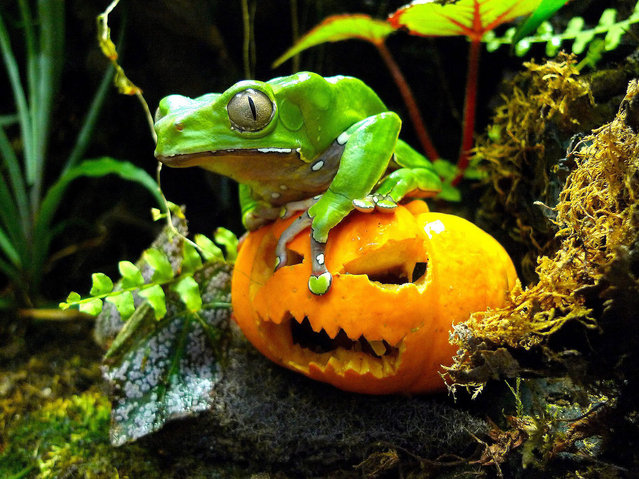
Alfred the frog looks almost as scary as the pumpkin he is perched on at London Zoo 26 October 2011. Keepers at the zoo have joined in the Halloween tradition by supplying pumpkin lunches to some of their animals, including the giant waxy monkey frog.  However Alfred is not quite the giant figure his species name suggests. (Photo by EPA/Zoological Society of London)

Alfred the frog looks almost as scary as the pumpkin he is perched on at London Zoo 26 October 2011. Keepers at the zoo have joined in the Halloween tradition by supplying pumpkin lunches to some of their animals, including the giant waxy monkey frog. However Alfred is not quite the giant figure his species name suggests – he actually measures up at around 4 inches (10 centimeters). (Photo by EPA/Zoological Society of London)
Details
31 Oct 2014 11:54:00