Loading...
Done
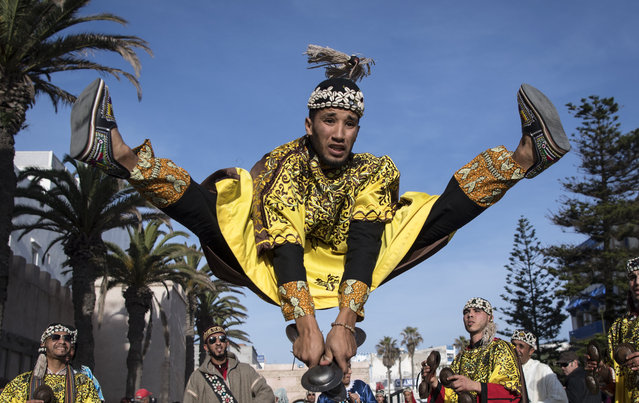
A Gnawa traditional group performs in the city of Essaouira on December 14, 2019, to celebrate the decision of adding the Gnawa culture to UNESCO's list of Intangible Cultural Heritage of Humanity. Gnawa culture, a centuries-old Moroccan practice rooted in music, African rituals and Sufi traditions, was added to UNESCO's list of Intangible Cultural Heritage of Humanity earlier in the week. Gnawa refers to a “set of musical productions, fraternal practices and therapeutic rituals where the secular mixes with the sacred”, according to the nomination submitted by Morocco. Often dressed in colourful outfits, Gnawa musicians play the guenbri, a type of lute with three strings, accompanied by steel castanets called krakebs. (Photo by Fadel Senna/AFP Photo)

A Gnawa traditional group performs in the city of Essaouira on December 14, 2019, to celebrate the decision of adding the Gnawa culture to UNESCO's list of Intangible Cultural Heritage of Humanity. Gnawa culture, a centuries-old Moroccan practice rooted in music, African rituals and Sufi traditions, was added to UNESCO's list of Intangible Cultural Heritage of Humanity earlier in the week. Gnawa refers to a “set of musical productions, fraternal practices and therapeutic rituals where the secular mixes with the sacred”, according to the nomination submitted by Morocco. Often dressed in colourful outfits, Gnawa musicians play the guenbri, a type of lute with three strings, accompanied by steel castanets called krakebs. (Photo by Fadel Senna/AFP Photo)
Details
18 Dec 2019 00:05:00
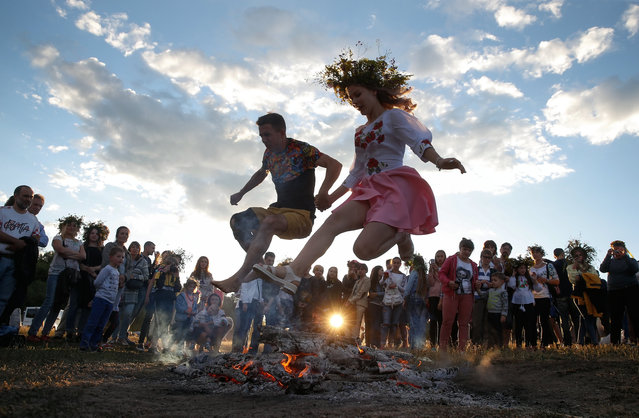
Ukrainians jump over a fire in Kiev, Ukraine, 06 July 2017, as they celebrate the traditional pagan holiday of Ivana Kupala. Ivana Kupala is celebrated, during the summer solstice, on the shortest night of the year, marking the beginning of summer and is celebrated in Ukraine, Belarus, Poland and Russia on the night of 06 July. People sing and dance around bonfires, play games and perform traditional rituals. Young people jump over bonfires in order to test their bravery. Couples holding hands jump over the flames to test their love. If the couple does not succeed it is predicted to split up. Traditionally, children and young unmarried women wear wreaths of wild flowers on their heads to symbolize purity. (Photo by Sergey Dolzhenko/EPA)

Ukrainians jump over a fire in Kiev, Ukraine, 06 July 2017, as they celebrate the traditional pagan holiday of Ivana Kupala. Ivana Kupala is celebrated, during the summer solstice, on the shortest night of the year, marking the beginning of summer and is celebrated in Ukraine, Belarus, Poland and Russia on the night of 06 July. People sing and dance around bonfires, play games and perform traditional rituals. Young people jump over bonfires in order to test their bravery. Couples holding hands jump over the flames to test their love. If the couple does not succeed it is predicted to split up. Traditionally, children and young unmarried women wear wreaths of wild flowers on their heads to symbolize purity. (Photo by Sergey Dolzhenko/EPA)
Details
08 Jul 2017 09:05:00
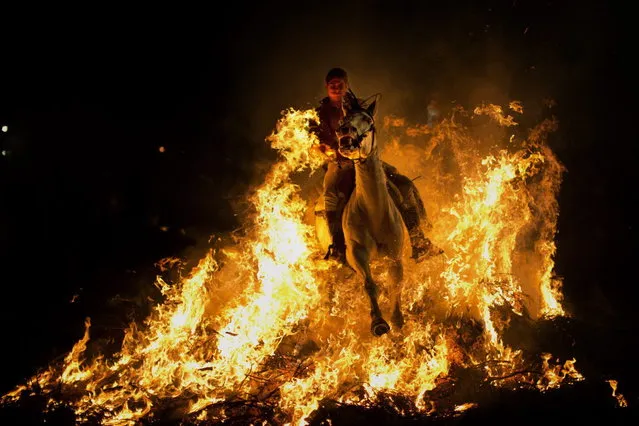
A man rides a horse through a bonfire as part of a ritual in honor of Saint Anthony, the patron saint of animals, in San Bartolome de Pinares, about 100 km west of Madrid, Spain on Thursday, January 16, 2014. On the eve of Saint Anthony's Day, hundreds ride their horses through the narrow cobblestone streets of the small village of San Bartolome during the “Luminarias”, a tradition that dates back 500 years and is meant to purify the animals with the smoke of the bonfires and protect them for the year to come. (Photo by Emilio Morenatti/AP Photo)

A man rides a horse through a bonfire as part of a ritual in honor of Saint Anthony, the patron saint of animals, in San Bartolome de Pinares, about 100 km west of Madrid, Spain on Thursday, January 16, 2014. On the eve of Saint Anthony's Day, hundreds ride their horses through the narrow cobblestone streets of the small village of San Bartolome during the “Luminarias”, a tradition that dates back 500 years and is meant to purify the animals with the smoke of the bonfires and protect them for the year to come. (Photo by Emilio Morenatti/AP Photo)
Details
24 Jan 2014 11:56:00
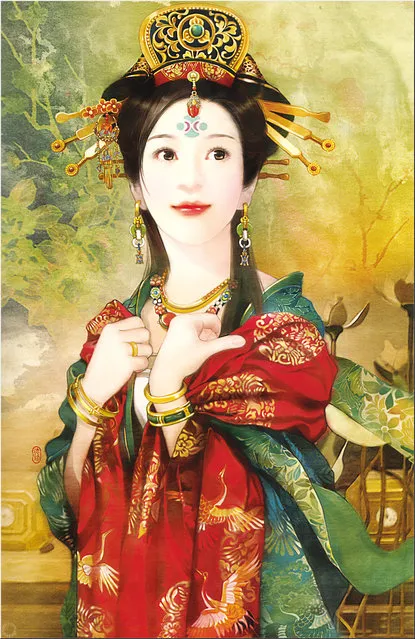
Der Jen (Dezhen; 德珍繪館) – The beauty of Brocade

“Der Jen (Dezhen; 德珍繪館) has achieved fame in her homeland and that fame is now spreading to other parts of the world as more and more people become familiar with her beautiful paintings. This Taiwanese artist depicts these beautiful ladies in classic, traditional dress that would have been worn by members of the royal court or an empress herself. Traditional hair styles and jewelry depicted in her pieces are also considered authentic. Der Jens art can be found in Chinese advertising, childrens magazines, romance novels, tarot cards, and even on public transit tickets. Its also making its way to our pcs as desktop wallpaper”.

Photo: Der Jen (Dezhen; 德珍繪館) – “The beauty of Brocade” (please click to enlarge).
Details
17 Oct 2012 12:03:00
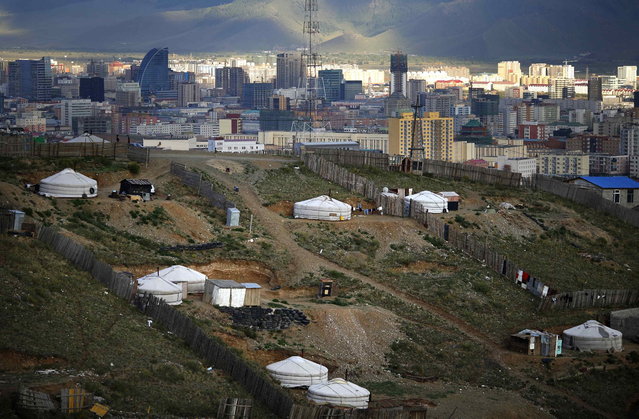
Gers, traditional Mongolian tents, are seen on a hill in an area known as a ger district in Ulan Bator June 26, 2013. (Photo by Carlos Barria/Reuters)

Gers, traditional Mongolian tents, are seen on a hill in an area known as a ger district in Ulan Bator June 26, 2013. Approximately 60 percent of the population of Ulan Bator live in settlements known as ger districts and in many cases residents have limited access to basic services such as water and sanitation. According to a 2010 National Population Center census, every year between thirty and forty thousand people migrate from the countryside to the capital Ulan Bator. Ger districts in the city have been expanding rapidly in recent years. Mongolia is the world's least densely populated country, with 2.8 million people spread across an area around three times the size of France. (Photo by Carlos Barria/Reuters)
Details
11 Aug 2013 11:45:00
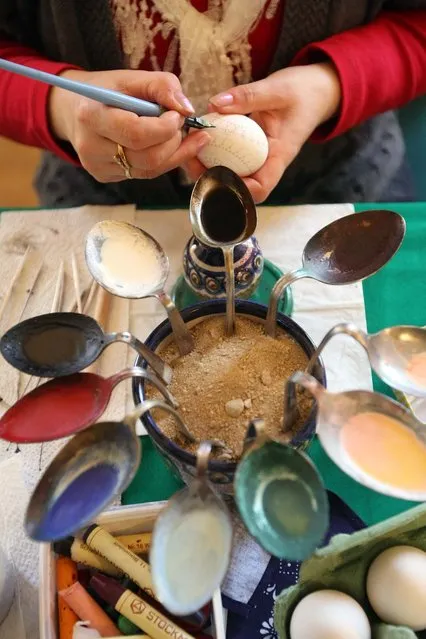
A Sorb egg painter decorates an Easter egg while using bent spoons full of melted wax as coloring at the annual Easter egg market on March 16, 2013 in Schleife, Germany. Easter is a particularly important time of year for Sorbs, a Slavic minority in eastern Germany, and the period includes the tradition of painting Easter eggs that include visual elements intended to ward off evil. Many Sorbs still speak Sorbian, a language closely related to Polish and Czech.  (Photo by Adam Berry)

A Sorb egg painter decorates an Easter egg while using bent spoons full of melted wax as coloring at the annual Easter egg market on March 16, 2013 in Schleife, Germany. Easter is a particularly important time of year for Sorbs, a Slavic minority in eastern Germany, and the period includes the tradition of painting Easter eggs that include visual elements intended to ward off evil. Many Sorbs still speak Sorbian, a language closely related to Polish and Czech. (Photo by Adam Berry)
Details
19 Mar 2013 06:41:00
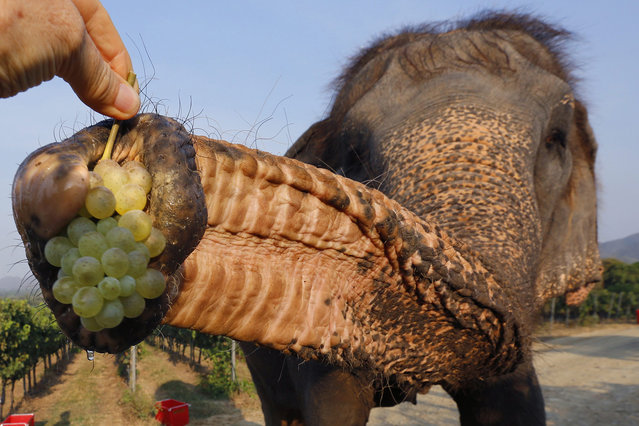
Tourists feed freshly picked grapes to 40-year-old elephant Boonruen, a long-term resident of the Hua Hin Hills vineyard, that used to be an elephant corral in Hua Hin, about 200km southwest of Bangkok, Thailand, 08 March 2016. The winery is among a handful of companies producing new latitude wines in non-traditional wine areas of the world near the equator. Harvest is only once a year in Thailand, this year in March. (Photo by Barbara Walton/EPA)

Tourists feed freshly picked grapes to 40-year-old elephant Boonruen, a long-term resident of the Hua Hin Hills vineyard, that used to be an elephant corral in Hua Hin, about 200km southwest of Bangkok, Thailand, 08 March 2016. The winery is among a handful of companies producing new latitude wines in non-traditional wine areas of the world near the equator. Harvest is only once a year in Thailand, this year in March. (Photo by Barbara Walton/EPA)
Details
20 Mar 2016 11:20:00
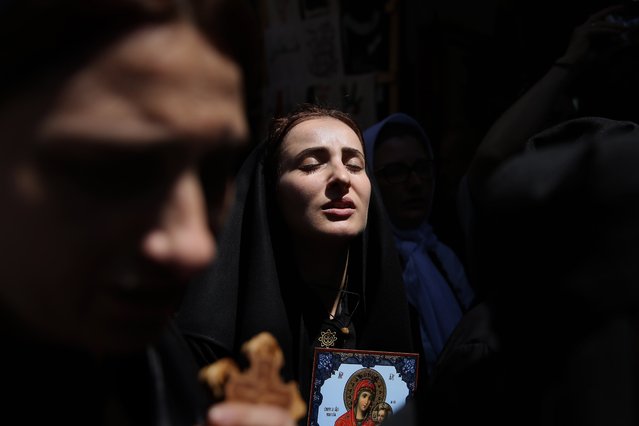
Orthodox Christian pilgrims from Abkhazia walk along the Via Dolorosa (Way of Suffering), during the Good Friday procession in Jerusalem's old city on April 29, 2016. Thousands of pilgrims took part in processions along the route where, according to tradition, Jesus carried the cross during his last days. (Photo by Gali Tibbon/AFP Photo)

Orthodox Christian pilgrims from Abkhazia walk along the Via Dolorosa (Way of Suffering), during the Good Friday procession in Jerusalem's old city on April 29, 2016. Thousands of pilgrims took part in processions along the route where, according to tradition, Jesus carried the cross during his last days. (Photo by Gali Tibbon/AFP Photo)
Details
30 Apr 2016 09:27:00