Loading...
Done
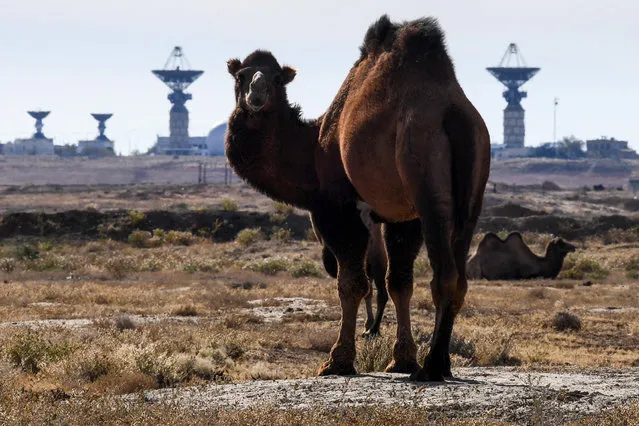
A camel is pictured in front of the Saturn tracking complex at the Russian-leased Baikonur cosmodrome in Kazakhstan on October 9, 2018. An astronaut and cosmonaut are due to travel to the ISS on October 11 aboard a Russian Soyuz MS-10 spacecraft from the Baikonur Cosmodrome in Kazakhstan. (Photo by Kirill Kudryavtsev/AFP Photo)

A camel is pictured in front of the Saturn tracking complex at the Russian-leased Baikonur cosmodrome in Kazakhstan on October 9, 2018. An astronaut and cosmonaut are due to travel to the ISS on October 11 aboard a Russian Soyuz MS-10 spacecraft from the Baikonur Cosmodrome in Kazakhstan. (Photo by Kirill Kudryavtsev/AFP Photo)
Details
08 Feb 2019 00:01:00
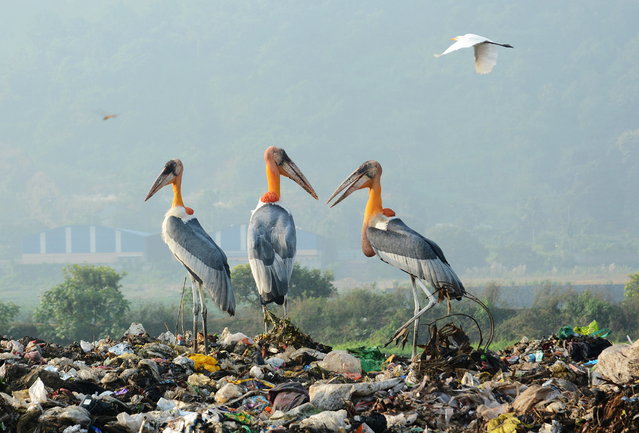
A flock of Adjutants storks sit on a garbage dump at Borgaon in Guwahati, Assam, India, 17 October 2019. Wildlife activists and environmentalists have protested in the past for shifting the garbage dump to another site since it is situated near the Deepor Beel Bird Sanctuary. (Photo by EPA/EFE/Stringer)

A flock of Adjutants storks sit on a garbage dump at Borgaon in Guwahati, Assam, India, 17 October 2019. Wildlife activists and environmentalists have protested in the past for shifting the garbage dump to another site since it is situated near the Deepor Beel Bird Sanctuary. (Photo by EPA/EFE/Stringer)
Details
20 Oct 2019 00:03:00
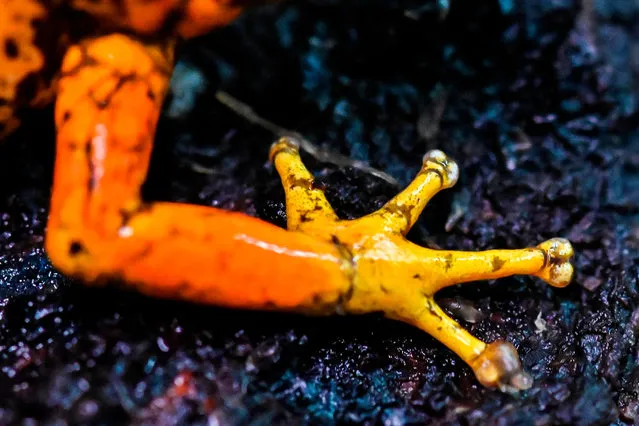
A leg of a “diablito” frog (Oophaga sylvatica) is photographed in a laboratory at a laboratory in the zoo of Cali, Colombia, on July 19, 2019. Colombia is the second country with the largest number of amphibians in the world after Brazil. More than 40% of amphibian species worldwide are in danger of extinction. (Photo by Luis Robayo/AFP Photo)

A leg of a “diablito” frog (Oophaga sylvatica) is photographed in a laboratory at a laboratory in the zoo of Cali, Colombia, on July 19, 2019. Colombia is the second country with the largest number of amphibians in the world after Brazil. More than 40% of amphibian species worldwide are in danger of extinction. (Photo by Luis Robayo/AFP Photo)
Details
28 Nov 2020 00:03:00
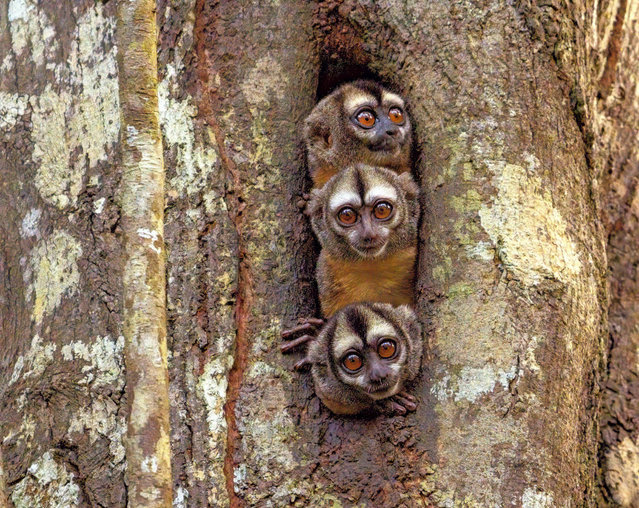
A curious trio of owl monkeys peep out of a tree hollow on the Marañón River near the city of Nauta, Peru in April 2024. (Photo by James Cai/Solent News)

A curious trio of owl monkeys peep out of a tree hollow on the Marañón River near the city of Nauta, Peru in April 2024. (Photo by James Cai/Solent News)
Details
05 May 2024 04:29:00
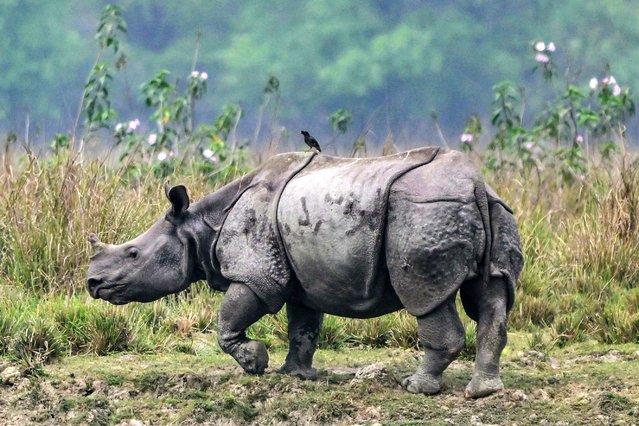
An Indian one-horned rhinoceros grazes on a dry wetland at the Pobitora Wildlife Sanctuary on the southern bank of the Brahmaputra River in Morigaon district of India's Assam state on April 4, 2025. (Photo by Biju Boro/AFP Photo)

An Indian one-horned rhinoceros grazes on a dry wetland at the Pobitora Wildlife Sanctuary on the southern bank of the Brahmaputra River in Morigaon district of India's Assam state on April 4, 2025. (Photo by Biju Boro/AFP Photo)
Details
20 Apr 2025 02:59:00
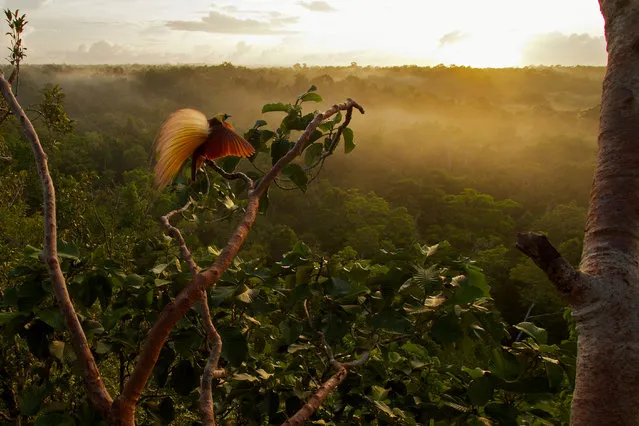
A greater bird of paradise (Paradisaea apoda) displaying in Badigaki Forest, Wokam Island (Aru Islands, Indonesia). Found here in Aru and on adjacent New Guinea, the greater bird of paradise represents about 40 different species of birds of paradise that depend on intact rainforest across the New Guinea region spanning eastern Indonesia and Papua New Guinea. With more than 80% of forest cover still intact, this region represents the largest remaining block of rainforest in the entire Asia-Pacific. (Photo by Tim Laman/naturepl.com/LDY Agency)

A greater bird of paradise (Paradisaea apoda) displaying in Badigaki Forest, Wokam Island (Aru Islands, Indonesia). Found here in Aru and on adjacent New Guinea, the greater bird of paradise represents about 40 different species of birds of paradise that depend on intact rainforest across the New Guinea region spanning eastern Indonesia and Papua New Guinea. With more than 80% of forest cover still intact, this region represents the largest remaining block of rainforest in the entire Asia-Pacific. (Photo by Tim Laman/naturepl.com/LDY Agency)
Details
14 Nov 2021 05:57:00
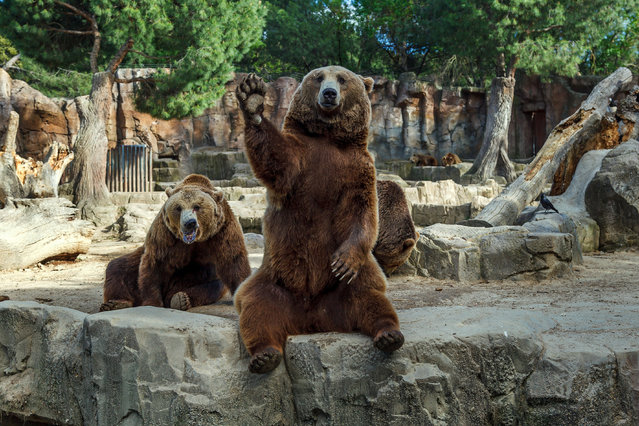
A photographer could bear-ly believe his eyes when a bear started waving at him. The friendly animal wandered to the front of his enclosure before sitting back in full view of zoo guests. He then lifts his powerful paw and excitedly waves in an almost human-like way at his new audience. The hilarious encounter was captured by keen photographer Andrey Slepnev, 31, while on a trip to Madrid Zoo, Spain on March 24, 2016. (Photo by Andrey Slepnev/Caters News)

A photographer could bear-ly believe his eyes when a bear started waving at him. The friendly animal wandered to the front of his enclosure before sitting back in full view of zoo guests. He then lifts his powerful paw and excitedly waves in an almost human-like way at his new audience. The hilarious encounter was captured by keen photographer Andrey Slepnev, 31, while on a trip to Madrid Zoo, Spain on March 24, 2016. (Photo by Andrey Slepnev/Caters News)
Details
11 Oct 2016 11:25:00
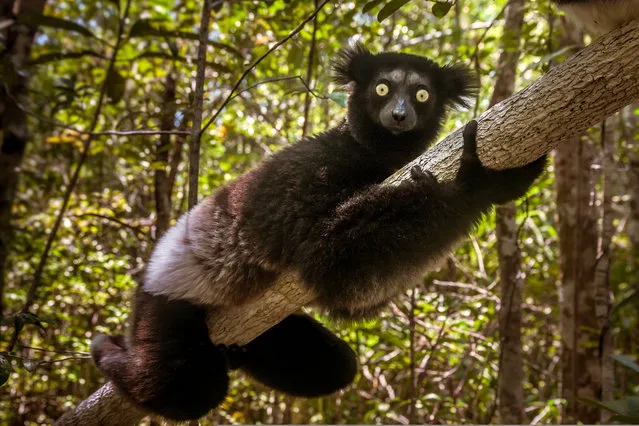
The secretive indri (Indri indri) of Madagascar, the largest living lemur. It is also critically endangered and highly evolutionarily distinct with no close relatives, which makes its branch one of most precarious on the mammal evolutionary tree. In the likely event that the indri goes extinct, we will lose 19m years of unique evolutionary history from the mammal tree of life. (Photo by Pierre-Yves Babelon/Aarhus University)

The secretive indri (Indri indri) of Madagascar, the largest living lemur. It is also critically endangered and highly evolutionarily distinct with no close relatives, which makes its branch one of most precarious on the mammal evolutionary tree. In the likely event that the indri goes extinct, we will lose 19m years of unique evolutionary history from the mammal tree of life. (Photo by Pierre-Yves Babelon/Aarhus University)
Details
18 Nov 2018 00:02:00