Loading...
Done
A Russian-made rifle, carried by this woman when she was captured in Nearby Brush, is slung around her neck by South Vietnamese soldiers before they began their interrogation of her as Viet Cong suspect near AP La Ghi in Vietnam, August 25, 1965. The girl behind the woman, also was captured in the brush. (Photo by AP Photo)

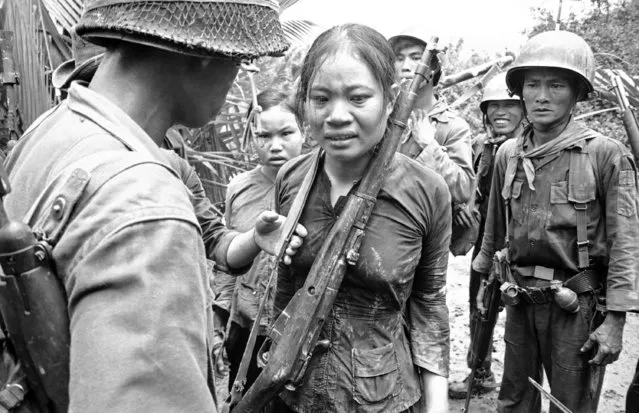
A Russian-made rifle, carried by this woman when she was captured in Nearby Brush, is slung around her neck by South Vietnamese soldiers before they began their interrogation of her as Viet Cong suspect near AP La Ghi in Vietnam, August 25, 1965. The girl behind the woman, also was captured in the brush. (Photo by AP Photo)
Details
26 Aug 2015 09:55:00
U.S. Army helicopters providing support for U.S. ground troops  fly into a staging area fifty miles northeast of Saigon, Vietnam, August 28, 1966. Helicopter fuel is stored in the large rubber tanks, foreground. (Photo by Henri Huet/AP Photo)

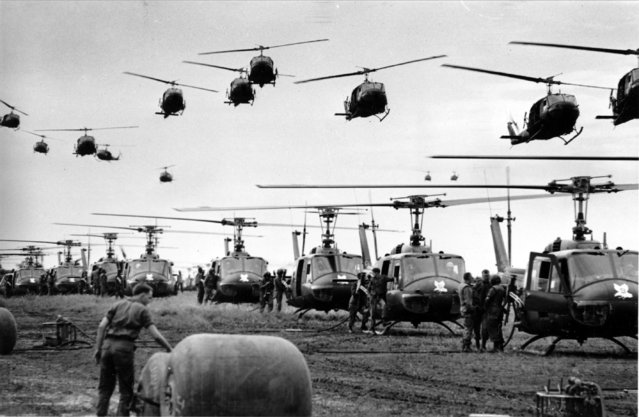
U.S. Army helicopters providing support for U.S. ground troops fly into a staging area fifty miles northeast of Saigon, Vietnam, August 28, 1966. Helicopter fuel is stored in the large rubber tanks, foreground. (Photo by Henri Huet/AP Photo)
Details
29 Aug 2015 11:05:00
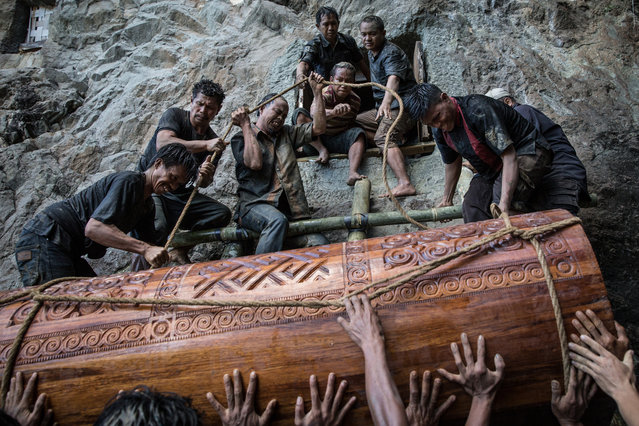
It is said that Torajans are people who “live to die”. For this Indonesian ethnic group, funerals are such extravagant events that they sometimes attract tourists. Families can postpone burials years (and the deceased are considered sick and hosted at home until the funeral) until the family can raise enough money and gather as many relatives as possible. And then it’s a jubilant multiday social event with a parade, dances and animal sacrifices. Agung Parameswara photographed these funerary practices when he traveled to South Sulawesi province, where the Torajans live. But often, their funeral isn’t the last time the dead are seen. In August, crypts are opened, coffins are slid back out and bodies delicately unsheathed. This tender ritual is known as Ma’Nene, which is customarily performed every few years. (Photo by Agung Parameswara/The Washington Post)

It is said that Torajans are people who “live to die”. For this Indonesian ethnic group, funerals are such extravagant events that they sometimes attract tourists. Families can postpone burials years (and the deceased are considered sick and hosted at home until the funeral) until the family can raise enough money and gather as many relatives as possible. And then it’s a jubilant multiday social event with a parade, dances and animal sacrifices. Agung Parameswara photographed these funerary practices when he traveled to South Sulawesi province, where the Torajans live. (Photo by Agung Parameswara/The Washington Post)
Details
06 Oct 2016 09:15:00
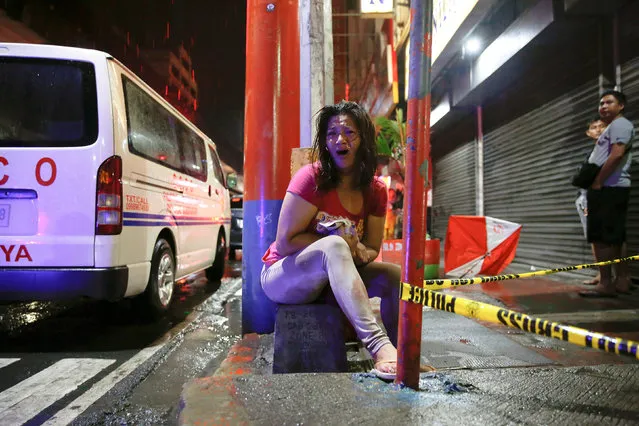
A woman cries after her husband was shot dead by unidentified gunmen riding motorcycles in Manila, Philippines late October 10, 2016. (Photo by Damir Sagolj/Reuters)

A woman cries after her husband was shot dead by unidentified gunmen riding motorcycles in Manila, Philippines late October 10, 2016. According to police reports, around 2,300 people have been killed in Philippine President Rodrigo Duterte's war against illegal drugs. The figure was revised by the police from an original tally of around 3,600 deaths. (Photo by Damir Sagolj/Reuters)
Details
26 Oct 2016 10:53:00
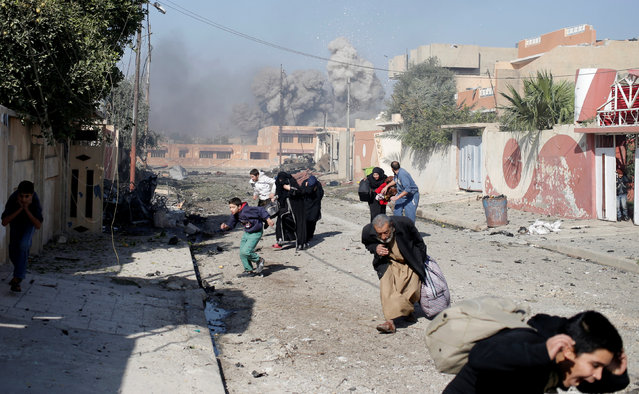
People run in panic after a coalition airstrike hit Islamic State fighters positions in Tahrir neighbourhood of Mosul, Iraq, November 17, 2016. (Photo by Goran Tomasevic/Reuters)

People run in panic after a coalition airstrike hit Islamic State fighters positions in Tahrir neighbourhood of Mosul, Iraq, November 17, 2016. (Photo by Goran Tomasevic/Reuters)
Details
19 Nov 2016 11:12:00
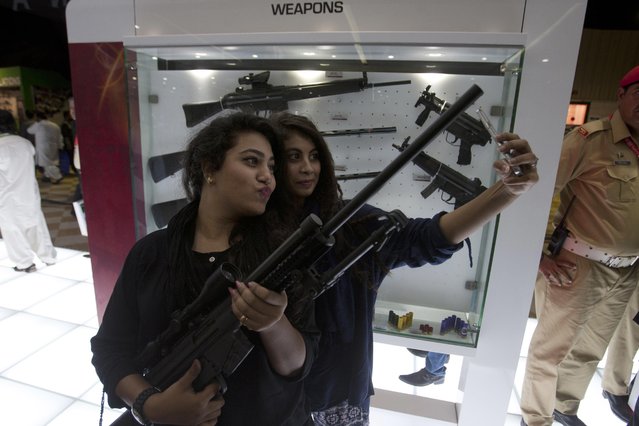
Pakistan girls make selfies holding a Pakistan-made weapon displayed at the four-day International Defence Exhibition and Seminar (IDEAS) 2016 in Karachi, Pakistan, Wednesday, November 23, 2016. (Photo by Shakil Adil/AP Photo)

Pakistan girls make selfies holding a Pakistan-made weapon displayed at the four-day International Defence Exhibition and Seminar (IDEAS) 2016 in Karachi, Pakistan, Wednesday, November 23, 2016. (Photo by Shakil Adil/AP Photo)
Details
05 Dec 2016 11:50:00
Barrier tape is tied around 15-month-old Shivani's ankle to prevent her from running away, while her mother Sarta Kalara works at a construction site nearby, in Ahmedabad, India, April 19, 2016. Kalara says she has no option but to tether her daughter Shivani to a stone despite her crying, while she and her husband work for 250 rupees ($3.8) each a shift digging holes for electricity cables in the city of Ahmedabad. There are about 40 million construction workers in India, at least one in five of them women, and the majority poor migrants who shift from site to site, building infrastructure for India's booming cities. Across the country it is not uncommon to see young children rolling in the sand and mud as their parents carry bricks or dig for new roads or luxury houses. (Photo by Amit Dave/Reuters)

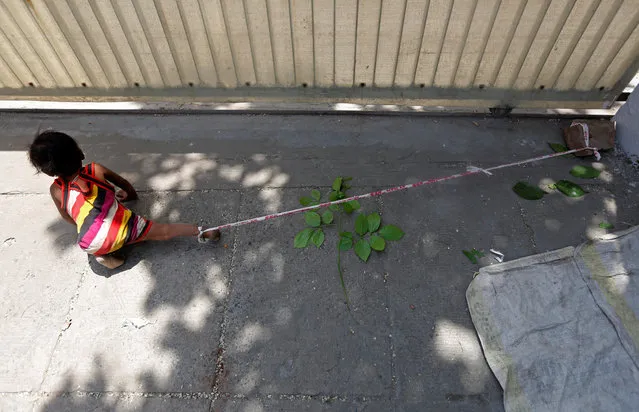
Barrier tape is tied around 15-month-old Shivani's ankle to prevent her from running away, while her mother Sarta Kalara works at a construction site nearby, in Ahmedabad, India, April 19, 2016. Kalara says she has no option but to tether her daughter Shivani to a stone despite her crying, while she and her husband work for 250 rupees ($3.8) each a shift digging holes for electricity cables in the city of Ahmedabad. There are about 40 million construction workers in India, at least one in five of them women, and the majority poor migrants who shift from site to site, building infrastructure for India's booming cities. Across the country it is not uncommon to see young children rolling in the sand and mud as their parents carry bricks or dig for new roads or luxury houses. (Photo by Amit Dave/Reuters)
Details
14 Dec 2016 07:39:00
“Early morning in Mandawa, rural Rajasthan: it was the morning of Diwali and the streets were swept by smiling women in brightly coloured sarees as I took an early morning cup of chai. Celebrations started later, when darkness fell”. (Photo by Hamish Scott-Brown/Guardian Witness)

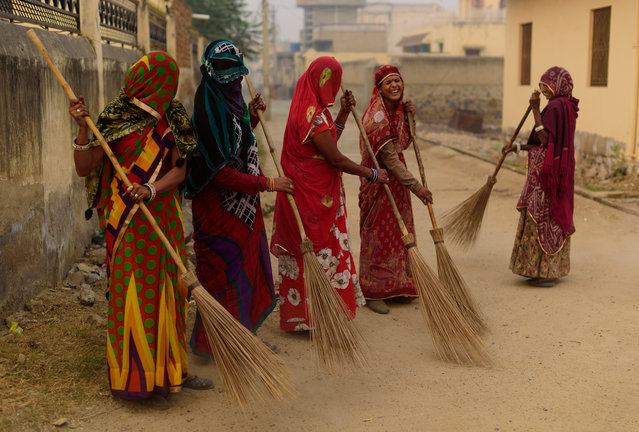
“Early morning in Mandawa, rural Rajasthan: it was the morning of Diwali and the streets were swept by smiling women in brightly coloured sarees as I took an early morning cup of chai. Celebrations started later, when darkness fell”. (Photo by Hamish Scott-Brown/Guardian Witness)
Details
20 Dec 2016 12:57:00