Loading...
Done
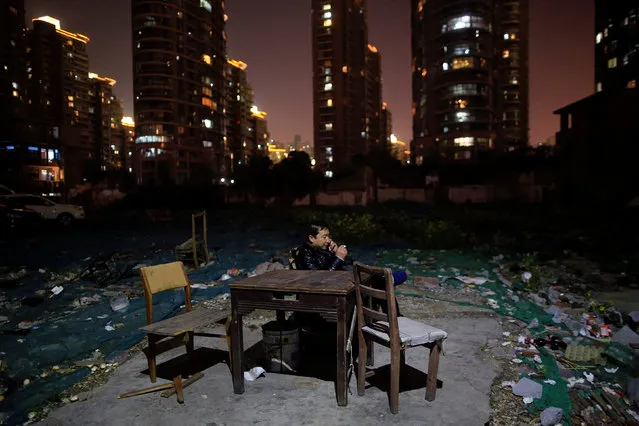
Li Guoqiang talks on his phone outside his house at Guangfuli neighbourhood, in Shanghai, China, April 1, 2016. Li, 38, is a deliveryman who rents a place at Guangfuli. (Photo by Aly Song/Reuters)

Li Guoqiang talks on his phone outside his house at Guangfuli neighbourhood, in Shanghai, China, April 1, 2016. Li, 38, is a deliveryman who rents a place at Guangfuli. In a corner of Shanghai, surrounded by a cement wall, lies one of the world's most valuable fields of debris and garbage. On paper, the Guangfuli neighbourhood is a real estate investor's dream: a plot in the middle of one of the world's most expensive and fast-rising property markets. But the reality is more like a developer's nightmare, thanks to hundreds of people living there who have refused to budge from their ramshackle homes for nearly 16 years as the local authority sought to clear the land for new construction. (Photo by Aly Song/Reuters)
Details
06 May 2016 13:54:00
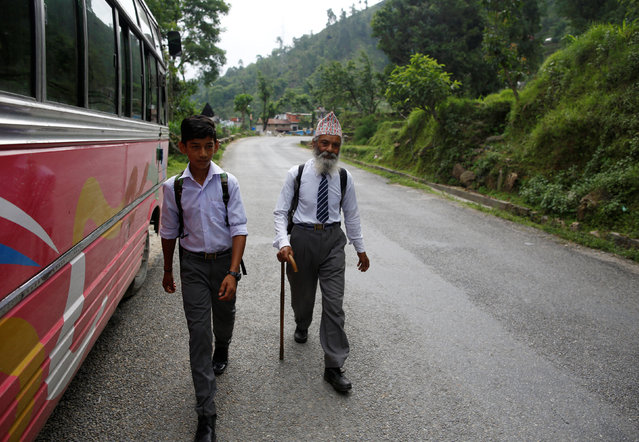
Durga Kami, 68, who is studying tenth grade at Shree Kala Bhairab Higher Secondary School, walks with his classmate Sagar Thapa, 14, as they head to school in Syangja, Nepal, June 5, 2016. (Photo by Navesh Chitrakar/Reuters)

Durga Kami, 68, who is studying tenth grade at Shree Kala Bhairab Higher Secondary School, walks with his classmate Sagar Thapa, 14, as they head to school in Syangja, Nepal, June 5, 2016. (Photo by Navesh Chitrakar/Reuters)
Details
16 Jun 2016 12:51:00
Takeoka Chisaka, Hiroshima, Japan. “One morning in August 1945, I was walking home from the night shift at a factory in Hiroshima. As I reached my door, there was a huge explosion. When I came to, my head was bleeding and I had been blasted 30m away”. (Photo and caption by Sasha Maslov)

Takeoka Chisaka, Hiroshima, Japan. “One morning in August 1945, I was walking home from the night shift at a factory in Hiroshima. As I reached my door, there was a huge explosion. When I came to, my head was bleeding and I had been blasted 30m away. The atomic bomb had detonated. When I found my mother, her eyes were badly burned. A doctor said they had to come out, but he didn’t have the proper tools so used a knife instead. It was hellish. I became a peace-worker after the war. In the 1960s, at a meeting at the UN, I met one of the people who created the atomic bomb. He apologised”. (Photo and caption by Sasha Maslov)
Details
11 May 2015 11:56:00
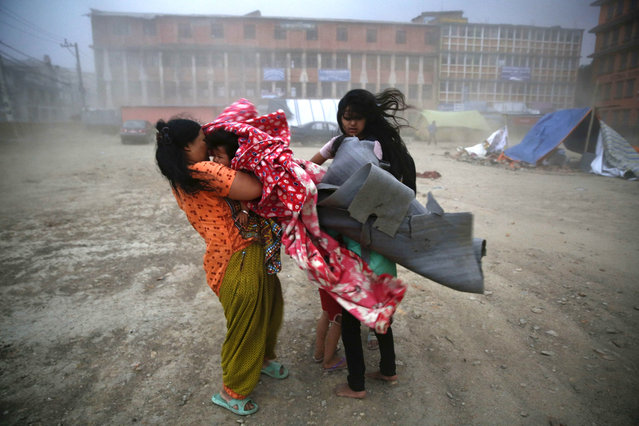
A storm whips through a tented area occupied by Nepalese earthquake survivors as a mother grabs her infant child and runs to find shelter in Kathmandu, Nepal 23 May 2015. Nepalese, who lost their homes in earthquake and fear aftershocks, have been living in temporary shelter in open ground which they had to flee because of the heavy rain and powerful wind. (Photo by Narendra Shrestha/EPA)

A storm whips through a tented area occupied by Nepalese earthquake survivors as a mother grabs her infant child and runs to find shelter in Kathmandu, Nepal 23 May 2015. Nepalese, who lost their homes in earthquake and fear aftershocks, have been living in temporary shelter in open ground which they had to flee because of the heavy rain and powerful wind. (Photo by Narendra Shrestha/EPA)
Details
25 May 2015 10:00:00
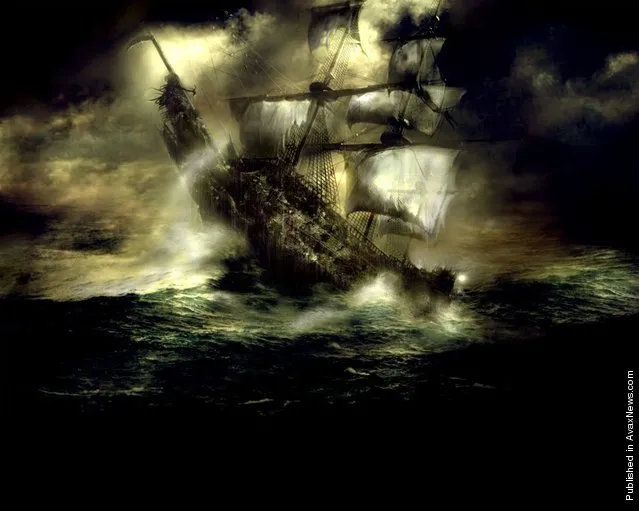
Ocean voyage

Do you think that history is a science? Well, not exactly. First, and foremost, history is the state's “legend of wars”, it’s official regalia. Of course, public historians are not interested in scientific truth – quite the opposite. In this respect, any attempt to present a state’s history as altruistic and benevolent as possible is welcomed and encouraged – as opposed to any revisionism attempts that may be more accurate. In this matter, Chinese have surpassed us all – they revised in highly creative manner (but rather shamelessly) the technology already invented by Europeans, a process that resulted in oldest state on the planet. Here is an interesting paradox: ask any sinologist about the Middle Kingdom during second century B.C., and he will describe it to you in such a vivid manner as if he has been living there all his life – but as soon as you will ask him to describe Chinese history in the 19-20th centuries… let's say, his eagerness will be greatly diminished. However, we will discuss China in a different article, and in the meantime we will try to understand how exactly historic “legend of wars” is formed and functions – based on a specific and well-known example. A great example is Ferdinand Magellan's first voyage around the world.
Details
14 Nov 2011 09:11:00
A Snowboarder participates in a waterslide contest, which consists of gliding over a water pool embedded in snow, during the closing event of the ski resort of Nendaz, southwestern Switzerland, Monday, April 21, 2014. (Photo by Maxime Schmid/AP Photo/Keystone)

A Snowboarder participates in a waterslide contest, which consists of gliding over a water pool embedded in snow, during the closing event of the ski resort of Nendaz, southwestern Switzerland, Monday, April 21, 2014. (Photo by Maxime Schmid/AP Photo/Keystone)
Details
26 Apr 2014 12:33:00
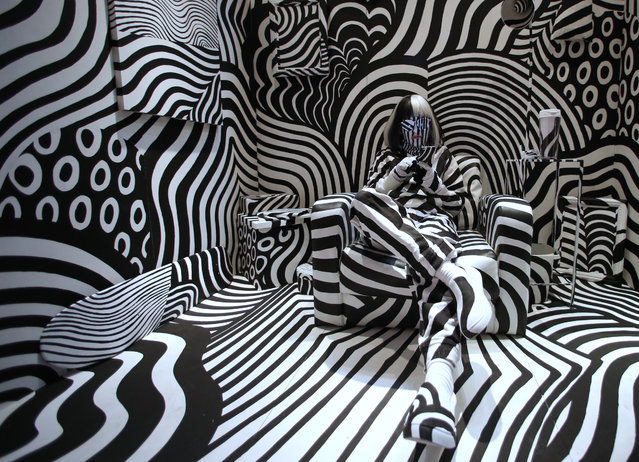
Model feebee poses as part of art installation “Dazzle room” made by artist Shigeki Matsuyama at Room 32 fashion and design exhibition in Tokyo, Friday, February 19, 2016. Matsuyama's installation features a strong contrast of black and white, which he learned from dazzle camouflage used mainly in World War I, in Tokyo, Friday, Feb. 19, 2016. (Photo by Shuji Kajiyama/AP Photo)

Model feebee poses as part of art installation “Dazzle room” made by artist Shigeki Matsuyama at Room 32 fashion and design exhibition in Tokyo, Friday, February 19, 2016. Matsuyama's installation features a strong contrast of black and white, which he learned from dazzle camouflage used mainly in World War I, in Tokyo, Friday, Feb. 19, 2016. (Photo by Shuji Kajiyama/AP Photo)
Details
20 Feb 2016 10:55:00
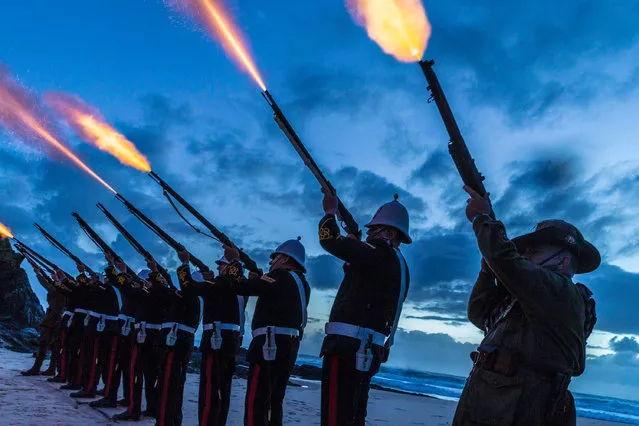
Members of the Albert Battery perform a gun salute during the Anzac Day dawn service held by the Currumbin RSL on the Gold Coast in Currumbin, Australia, 25 April 2016. The Anzac day marks the landing of the Australian and New Zealand Army Corps (Anzac) troops at Gallipoli in what is today Turkey during WWI. World War One, also called the Great War, according to official statistics cost more than 37 million military and civilian casualties between 1914 and 1918. (Photo by Glenn Hunt/EPA)

Members of the Albert Battery perform a gun salute during the Anzac Day dawn service held by the Currumbin RSL on the Gold Coast in Currumbin, Australia, 25 April 2016. The Anzac day marks the landing of the Australian and New Zealand Army Corps (Anzac) troops at Gallipoli in what is today Turkey during WWI. World War One, also called the Great War, according to official statistics cost more than 37 million military and civilian casualties between 1914 and 1918. (Photo by Glenn Hunt/EPA)
Details
26 Apr 2016 12:23:00