Loading...
Done
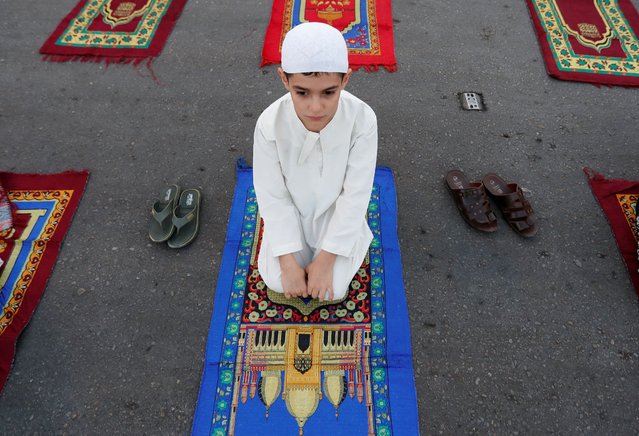
A boy attends Eid al-Adha prayers on the street outside Abu Hanifa mosque in Baghdad Adhamiya district, during the outbreak of the coronavirus disease (COVID-19), in Iraq, July 31, 2020. (Photo by Thaier Al-Sudani/Reuters)

A boy attends Eid al-Adha prayers on the street outside Abu Hanifa mosque in Baghdad Adhamiya district, during the outbreak of the coronavirus disease (COVID-19), in Iraq, July 31, 2020. (Photo by Thaier Al-Sudani/Reuters)
Details
08 Aug 2020 00:01:00
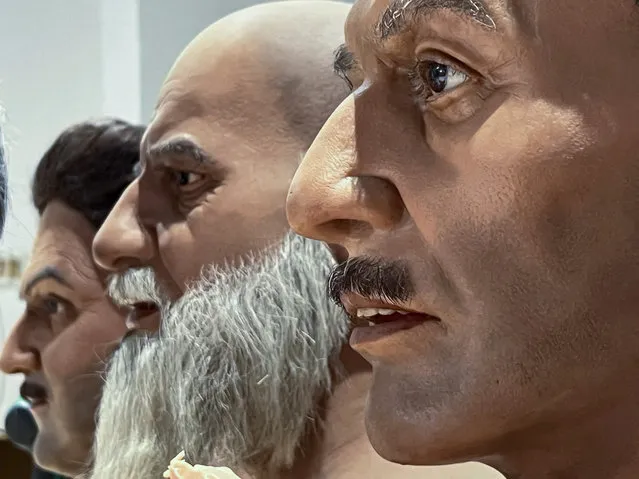
Human wax figures to build scenes depicting traditional life in a new museum are seen in Basra, Iraq on June 12, 2023. (Photo by Mohammed Aty/Reuters)

Human wax figures to build scenes depicting traditional life in a new museum are seen in Basra, Iraq on June 12, 2023. (Photo by Mohammed Aty/Reuters)
Details
18 Jul 2023 04:10:00
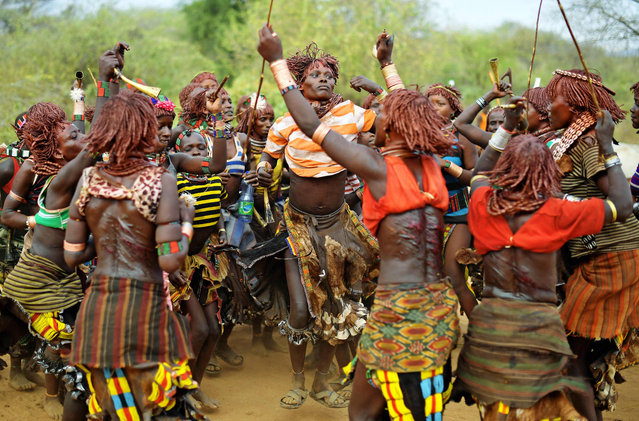
Hamar women dance before a bull jumping ceremony in Ethiopia's southern Omo Valley region near Turmi on September 19, 2016. The Hamar are a Nilotic ethnic group in Ethiopia. The construction of the Gibe III dam, the third largest hydroelectric plant in Africa, and large areas of very “thirsty” cotton and sugar plantations and factories along the Omo river are impacting heavily on the lives of tribes living in the Omo Valley who depend on the river for their survival and way of life. Human rights groups fear for the future of the tribes if they are forced to scatter, give up traditional ways through loss of land or ability to keep cattle as globalisation and development increases. (Photo by Carl De Souza/AFP Photo)

Hamar women dance before a bull jumping ceremony in Ethiopia's southern Omo Valley region near Turmi on September 19, 2016. The Hamar are a Nilotic ethnic group in Ethiopia. The construction of the Gibe III dam, the third largest hydroelectric plant in Africa, and large areas of very “thirsty” cotton and sugar plantations and factories along the Omo river are impacting heavily on the lives of tribes living in the Omo Valley who depend on the river for their survival and way of life. (Photo by Carl De Souza/AFP Photo)
Details
02 Oct 2016 08:45:00
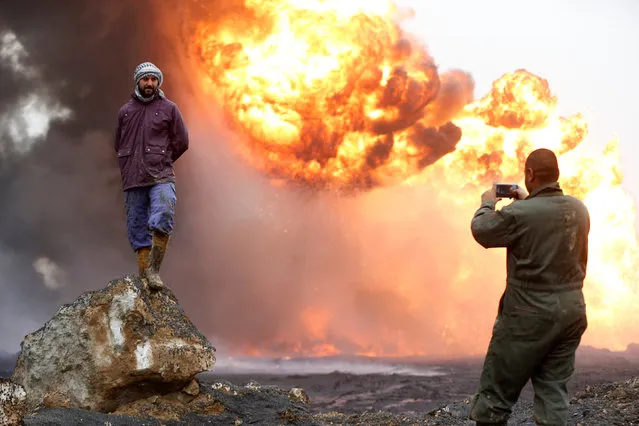
A man takes a photograph of his friend as thick smoke rises from a fire, which broke out at oil wells set ablaze by Islamic State militants before they fled the oil-producing region of Qayyara, Iraq, January 28, 2017. (Photo by Muhammad Hamed/Reuters)

A man takes a photograph of his friend as thick smoke rises from a fire, which broke out at oil wells set ablaze by Islamic State militants before they fled the oil-producing region of Qayyara, Iraq, January 28, 2017. (Photo by Muhammad Hamed/Reuters)
Details
03 Jan 2018 07:39:00
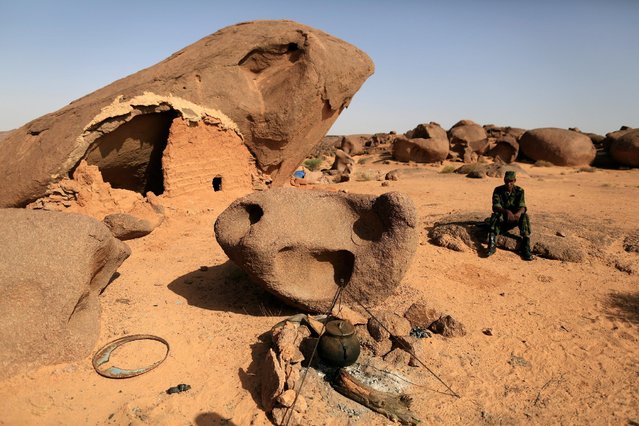
A Polisario fighter sits on a rock at a forward base on the outskirts of Tifariti, Western Sahara, September 9, 2016. At a rocky outpost in Western Sahara, a new generation of soldiers who have never known war are mobilising as tensions resurface in one of Africa's oldest disputes after a quarter century of uneasy peace. Young Sahrawi troops man new desert posts for the Polisario Front, which for more than 40 years has sought independence for the vast desert region - first in a guerrilla war against Morocco and then politically since a ceasefire deal in 1991. Now a standoff with Morocco, which controls the majority of Western Sahara, is renewing pressure for a diplomatic solution to ensure foot soldiers don't return to fighting as the last generation of commanders once did. The standoff since August has brought Moroccan and Polisario forces within 200 metres of each other in a narrow strip of land near the Mauritanian border. Rich in phosphate, Western Sahara has been contested since 1975 when Spanish colonial powers left. Morocco claimed the territory and fought the 16-year war with Polisario. (Photo by Zohra Bensemra/Reuters)

A Polisario fighter sits on a rock at a forward base on the outskirts of Tifariti, Western Sahara, September 9, 2016. At a rocky outpost in Western Sahara, a new generation of soldiers who have never known war are mobilising as tensions resurface in one of Africa's oldest disputes after a quarter century of uneasy peace. (Photo by Zohra Bensemra/Reuters)
Details
04 Nov 2016 12:09:00
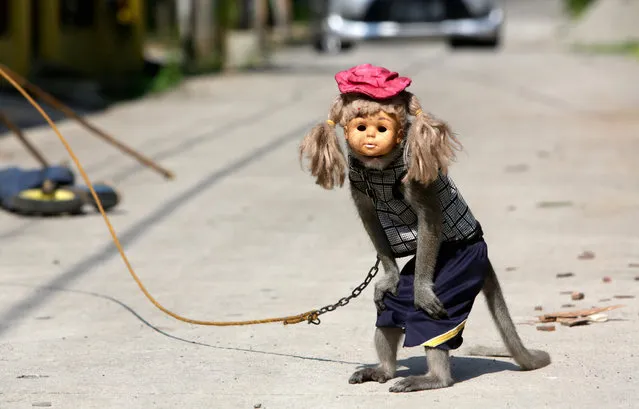
A chained male monkey in a costume and wearing a toy mask performs at a street in Depok, West Java, Indonesia, 30 September 2021. A performing monkey in a street, known as “Topeng Monyet” (lit. Monkey Mask), is a popular form of cheap entertainment in Indonesia, especially on the island of Java. During a street monkey show, a trainer issues orders by pulling the chain tied around the primate's neck, forcing it to perform tricks such as wearing a mask or riding a toy motorcycle. The Indonesian government in 2013 banned the Topeng Monyet in the capital Jakarta to improve public order and ending animal abuse. However, monkey performances are still popular in several other parts of the country, such as West Java, especially after the government lowered the level of Enforcement of Restrictions on Community Activities (PPKM) in a number of areas during the COVID-19 pandemic. (Photo by Adi Weda/EPA/EFE)

A chained male monkey in a costume and wearing a toy mask performs at a street in Depok, West Java, Indonesia, 30 September 2021. A performing monkey in a street, known as “Topeng Monyet” (lit. Monkey Mask), is a popular form of cheap entertainment in Indonesia, especially on the island of Java. (Photo by Adi Weda/EPA/EFE)
Details
16 Oct 2021 09:08:00
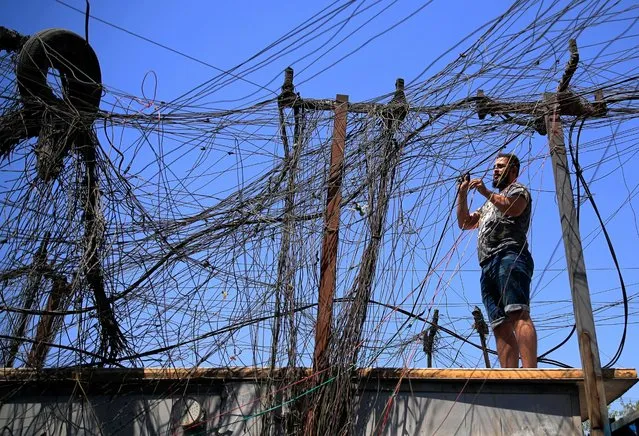
Muqtada Haider turns the switches to transfer electricity to private homes in Baghdad, Iraq, Friday, September 10, 2021. In Iraq, electricity is a potent symbol of endemic corruption, rooted in the country’s sectarian power-sharing system. This contributes to chronic electrical outages of up to 14 hours a day in a major oil-producing nation with plentiful energy resources. (Photo by Hadi Mizban/AP Photo)

Muqtada Haider turns the switches to transfer electricity to private homes in Baghdad, Iraq, Friday, September 10, 2021. In Iraq, electricity is a potent symbol of endemic corruption, rooted in the country’s sectarian power-sharing system. This contributes to chronic electrical outages of up to 14 hours a day in a major oil-producing nation with plentiful energy resources. (Photo by Hadi Mizban/AP Photo)
Details
29 Sep 2021 08:03:00
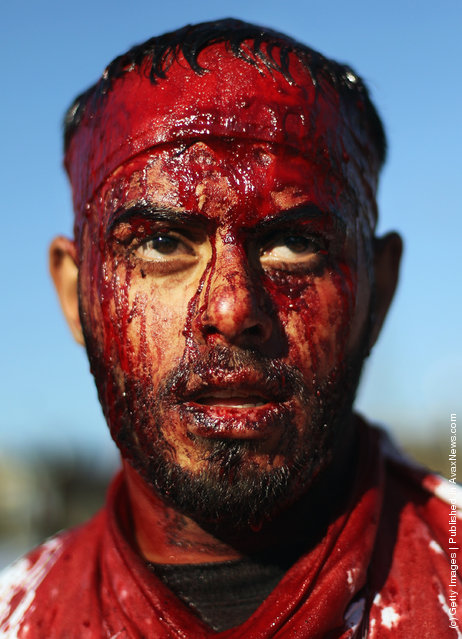
A Shi'ite worshiper bleeds after cutting his scalp in a ritual display of mourning during an Ashura commemoration ceremony outside Kadhimiya shrine in Baghdad, Iraq

A Shi'ite worshiper bleeds after cutting his scalp in a ritual display of mourning during an Ashura commemoration ceremony outside Kadhimiya shrine on December 6, 2011 in Baghdad, Iraq. Ashura marks the death of Prophet Muhammad's grandson the revered Imam Hussein in Karbala, Iraq in 680 AD. Shi'ite festivals were prohibited during the time of Sunni dictator Saddam Hussein's rule. (Photo by Mario Tama/Getty Images)
Details
12 Dec 2011 11:52:00