Loading...
Done
This aerial picture taken on August 16, 2020, shows the MV Wakashio bulk carrier that had run aground and broke into two parts near Blue Bay Marine Park, Mauritius. A ship that has leaked more than 1,000 tonnes of oil in pristine waters off the Mauritius coast has split into two, its Japanese operator said August 16, 2020. (Photo by AFP Photo/Stringer)

This aerial picture taken on August 16, 2020, shows the MV Wakashio bulk carrier that had run aground and broke into two parts near Blue Bay Marine Park, Mauritius. A ship that has leaked more than 1,000 tonnes of oil in pristine waters off the Mauritius coast has split into two, its Japanese operator said August 16, 2020. (Photo by AFP Photo/Stringer)
Details
08 Sep 2020 00:03:00
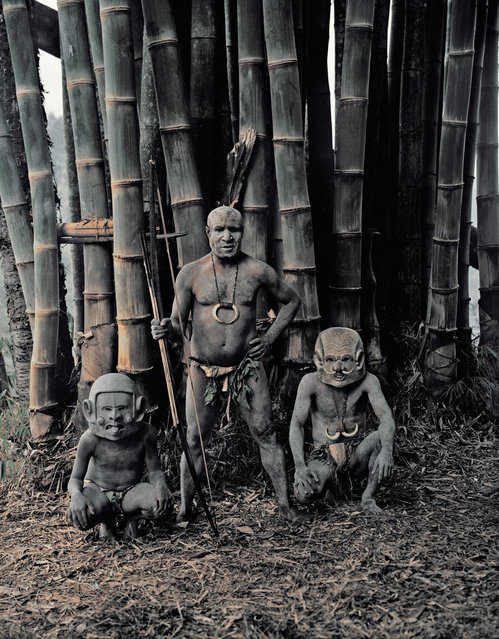
“Asaro from the Eastern Highlands”. The mudmen could not cover their faces with mud because the people of Papua New Guinea thought that the mud from the Asaro river was poisonous. So instead of covering their faces with this alleged poison, they made masks from pebbles that they heated and water from the waterfall, with unusual designs such as long or very short ears either going down to the chin or sticking up at the top, long joined eyebrows attached to the top of the ears, horns and sideways mouths. (Jimmy Nelson)

“Asaro from the Eastern Highlands”. The mudmen could not cover their faces with mud because the people of Papua New Guinea thought that the mud from the Asaro river was poisonous. So instead of covering their faces with this alleged poison, they made masks from pebbles that they heated and water from the waterfall, with unusual designs such as long or very short ears either going down to the chin or sticking up at the top, long joined eyebrows attached to the top of the ears, horns and sideways mouths. (Photo and caption by Jimmy Nelson)
Details
20 Oct 2013 08:54:00
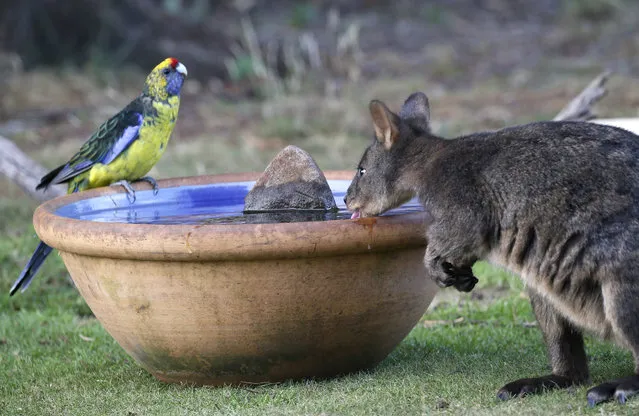
A green rosella and a wallaby, known as a Pademelon, eye off as they drink from a water bowl put out for thirsty wild animals at a back-yard in Kayena, in northern Tasmania, 01 February 2019. Australia recorded its hottest month on record in January; it was also the hottest and driest month on record for the Australian island state of Tasmania. (Photo by Barbara Walton/EPA/EFE)

A green rosella and a wallaby, known as a Pademelon, eye off as they drink from a water bowl put out for thirsty wild animals at a back-yard in Kayena, in northern Tasmania, 01 February 2019. Australia recorded its hottest month on record in January; it was also the hottest and driest month on record for the Australian island state of Tasmania. (Photo by Barbara Walton/EPA/EFE)
Details
03 Feb 2019 00:03:00
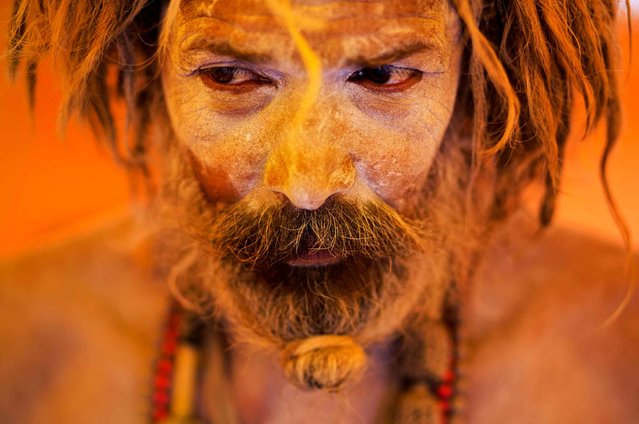
A Naga sadhu, or naked Hindu holy man, pauses inside a tent during Kumbh Mela, or Pitcher festival, at Trimbakeshwar, India, Thursday, August 27, 2015. Hindus believe taking a dip in the waters of a holy river during the festival will cleanse them of their sins. The festival is held four times every 12 years. (Photo by Bernat Armangue/AP Photo)

A Naga sadhu, or naked Hindu holy man, pauses inside a tent during Kumbh Mela, or Pitcher festival, at Trimbakeshwar, India, Thursday, August 27, 2015. Hindus believe taking a dip in the waters of a holy river during the festival will cleanse them of their sins. The festival is held four times every 12 years. (Photo by Bernat Armangue/AP Photo)
Details
27 Aug 2015 11:24:00
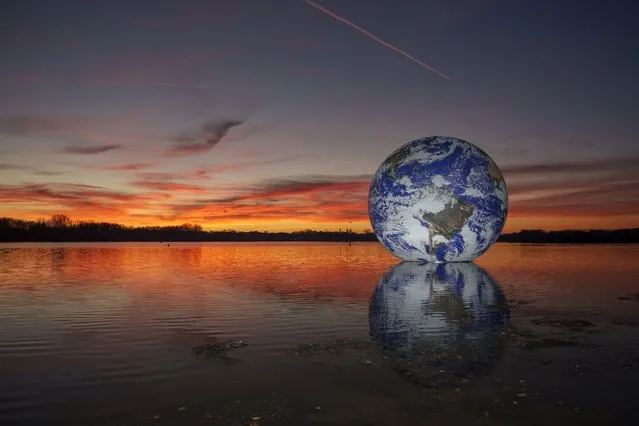
The sun sets behind artist Luke Jerram's “Floating Earth” at Pennington Flash on November 22, 2021 in Wigan, England. The floating Earth will hover over Pennington Flash for 10 days from November 19, as part of a celebration of Wigan and Leigh's watercourses and is the first time one of Jerram's globes has been floated on an open expanse of water. (Photo by Christopher Furlong/Getty Images)

The sun sets behind artist Luke Jerram's “Floating Earth” at Pennington Flash on November 22, 2021 in Wigan, England. The floating Earth will hover over Pennington Flash for 10 days from November 19, as part of a celebration of Wigan and Leigh's watercourses and is the first time one of Jerram's globes has been floated on an open expanse of water. (Photo by Christopher Furlong/Getty Images)
Details
31 Dec 2021 05:57:00
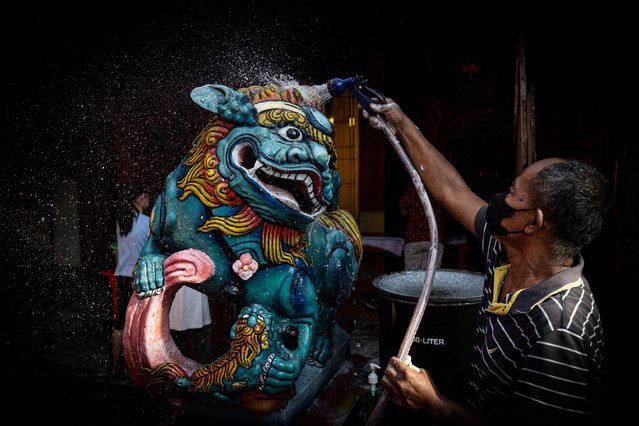
An Indonesian devotee cleans and purifies a holy statue of the Gods with tea, roses and cendana water at Suka Loka Tri Dharma Temple on January 26, 2022 in Surabaya, Indonesia. Countries around Southeast Asia are set to welcome a lively Chinese New Year, despite implementing strict health protocols as Chinese populations curtail celebrations due to the COVID-19 pandemic. The first day of the Lunar New Year, on February 1, will usher in the Year of the Tiger. (Photo by Robertus Pudyanto/Getty Images)

An Indonesian devotee cleans and purifies a holy statue of the Gods with tea, roses and cendana water at Suka Loka Tri Dharma Temple on January 26, 2022 in Surabaya, Indonesia. Countries around Southeast Asia are set to welcome a lively Chinese New Year, despite implementing strict health protocols as Chinese populations curtail celebrations due to the COVID-19 pandemic. The first day of the Lunar New Year, on February 1, will usher in the Year of the Tiger. (Photo by Robertus Pudyanto/Getty Images)
Details
04 Feb 2022 07:31:00
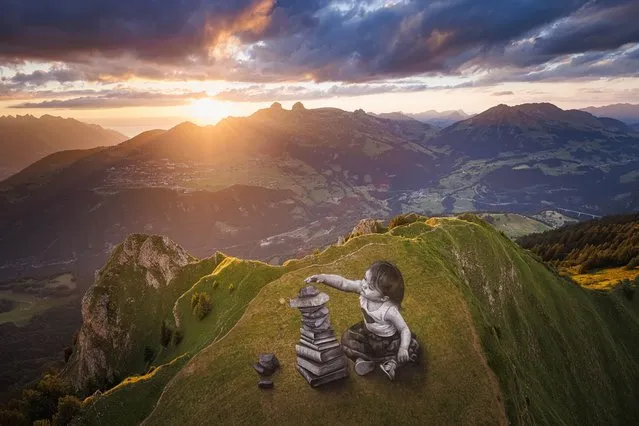
A giant biodegradable landart painting entitled “Vers l'equilibre” (Towards balance) by French-Swiss artist Saype is pictured near the summit of the Grand Chamossaire mountain, above the alpine resort of Villars-sur-Ollon, Switzerland, Wednesday, July 06, 2022. Extending over an area of 2500 square meters, this fresco was created using biodegradable pigments made out of charcoal, chalk, water and milk proteins. (Photo by Valentin Flauraud/Keystone via AP Photo)

A giant biodegradable landart painting entitled “Vers l'equilibre” (Towards balance) by French-Swiss artist Saype is pictured near the summit of the Grand Chamossaire mountain, above the alpine resort of Villars-sur-Ollon, Switzerland, Wednesday, July 06, 2022. Extending over an area of 2500 square meters, this fresco was created using biodegradable pigments made out of charcoal, chalk, water and milk proteins. (Photo by Valentin Flauraud/Keystone via AP Photo)
Details
10 Aug 2022 05:26:00
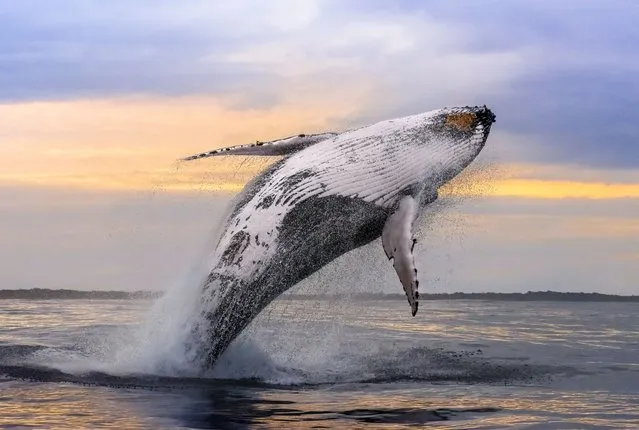
A 40-tonne humpback launching out of the water in an incredible breach in New South Wales, Australia on October 2022 in front of a sunset. The humpback whale can grow up to 56 feet long and typically covers 9,900 miles a year as it travels through the oceans of the world. Humpback whales are a species of Baleen whale, meaning they don't have teeth. Instead, they have baleen which helps them to filter feed. Their main source of food is krill or tiny bait fish. (Photo by Jodie Lowe/Media Drum Images)

A 40-tonne humpback launching out of the water in an incredible breach in New South Wales, Australia on October 2022 in front of a sunset. The humpback whale can grow up to 56 feet long and typically covers 9,900 miles a year as it travels through the oceans of the world. Humpback whales are a species of Baleen whale, meaning they don't have teeth. Instead, they have baleen which helps them to filter feed. Their main source of food is krill or tiny bait fish. (Photo by Jodie Lowe/Media Drum Images)
Details
30 Oct 2022 04:28:00