Loading...
Done
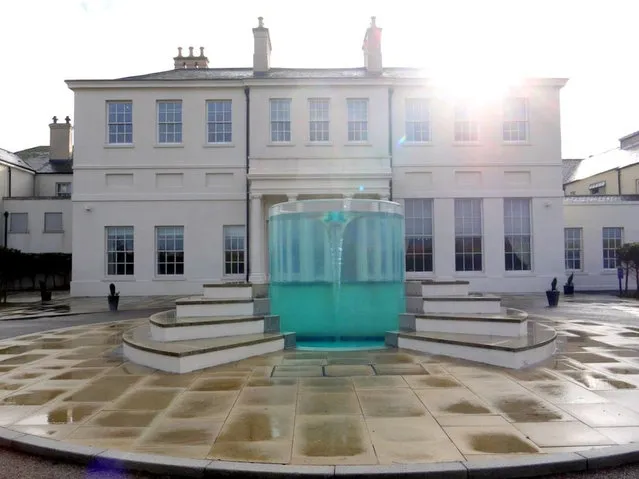
Charybdis Vortex Water Fountains

The sirens Charybdis and Scylla resided in the Sicilian Sea. Homer tells us that because Charybdis had stolen the oxen of Hercules, Zeus struck her with a thunderbolt and changed her into a whirlpool whose vortex swallowed up ships. In Charybdis the circular movement of water inside a transparent acrylic cylinder forms an air-core vortex in the centre. Steps wrap around the cylinder and allow spectators to view the vortex from above. The cylinder was manufactured in Grand Junction, Colorado.
Details
14 Aug 2012 09:26:00
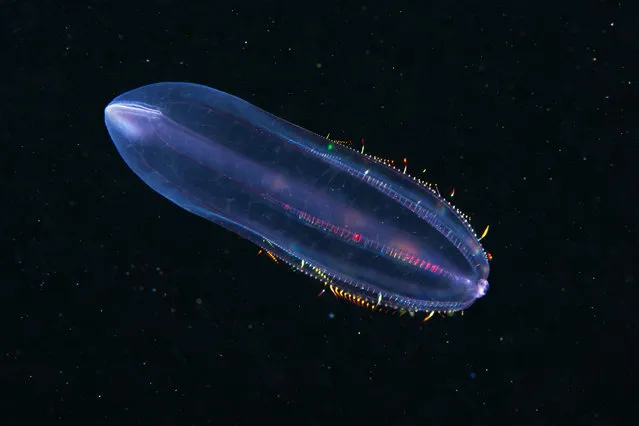
A Comb jelly – Beroe cucumis. (Photo by Alexander Semenovs/Caters News)

Underwater photographer Alexander Semenovs has snapped some of the most stunning, fragile life forms anywhere on planet Earth. Shot in deep, dark conditions, the images continue to provide an insight into what lies beneath, with glowing creatures appearing a lot like aliens in the pitch-black water. Semenovs has shot the likes of bioluminescent jellyfish, aggressive-looking worms and many species that leave a lot to the imagination. The 30-year-old from Moscow does the majority of his work in the White Sea, near the Arctic Circle. Here: A Comb jelly – Beroe cucumis. (Photo by Alexander Semenovs/Caters News)
Details
23 Nov 2015 08:06:00
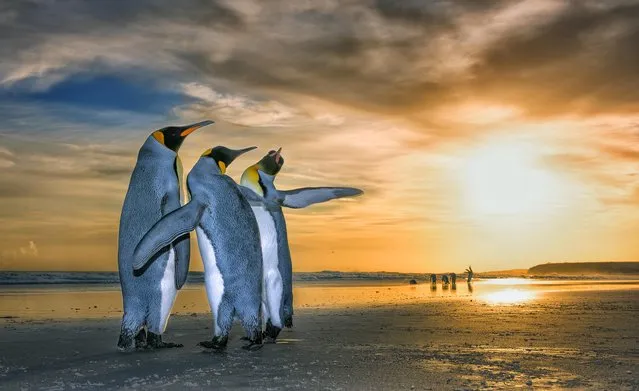
King Penguins marching during sunrise, Falkland Islands. (Photo by Wim van den Heever/Caters News)

Penguins majestically march on sand before heading out for a morning swim. Wildlife photographer Wim van den Heever, 45, visited the Falkland Islands this year to shoot pictures and scout the area for future tours. Wim’s breathtaking images show a small group of king penguins before they head out to sea at sunrise. Here: King Penguins marching during sunrise, Falkland Islands. (Photo by Wim van den Heever/Caters News)
Details
13 Oct 2017 06:32:00
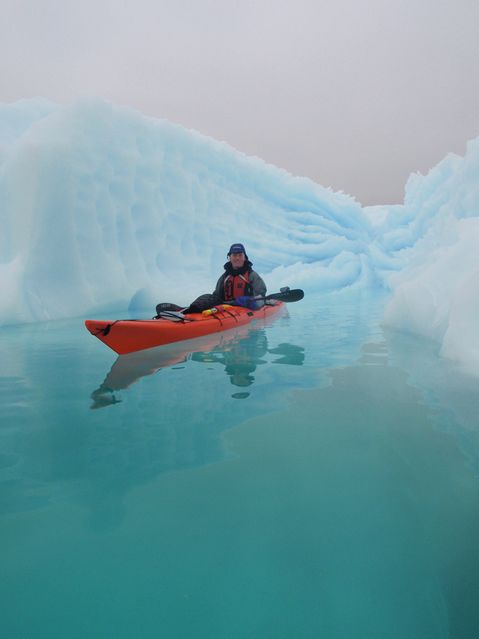
Chasing Ice in Greenland

The Greenland ice sheet is a vast body of ice covering 660,235 sq miles, roughly 80% of the surface of Greenland. It is the second largest ice body in the world, after the Antarctic Ice Sheet. Some scientists predict that climate change may be near a "tipping point" where the entire ice sheet will melt in about 2000 years. If the entire 2,850,000 cubic kilometres (683,751 cu mi) of ice were to melt, it would lead to a global sea level rise of 7.2 m (23.6 ft).
Details
30 Apr 2014 13:15:00


Cliff Promenade, Netanya

The Cliff Promenade in Netanya is considered to be one of the most beautiful in Israel. It's a nice place for walk, there are marvelous lawns, magnificent observation points, romantic sitting areas in front of the sea, paragliding sites and playgrounds for children. One of the specific features of the promenade, which attracts many people, is mosaic sculpture project "New Wave" created by the sculptor and designer Ruslan Sergeev. At the end of the film you can see The Victory Monument, located next to the promenade.
Details
05 Aug 2014 20:08:00
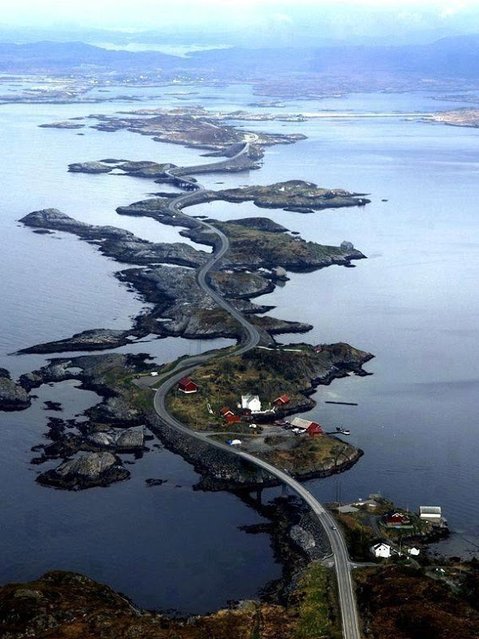
The Atlantic Road, Norway

The Atlantic Ocean Road or the Atlantic Road (Norwegian: Atlanterhavsveien) is a 8.3-kilometer (5.2 mi) long section of County Road 64 that runs through an archipelago in Eide and Averøy in Møre og Romsdal, Norway. It passes by Hustadvika, an unsheltered part of the Norwegian Sea, connecting the island of Averøy with the mainland and Romsdalshalvoya peninsula. It runs between the villages of Karvag on Averoy and Vevang in Eida. It is built on several small islands and skerries, which are connected by several causeways, viaducts and eight bridges – the most prominent being Storseisundet Bridge.
Details
18 Jan 2014 11:42:00
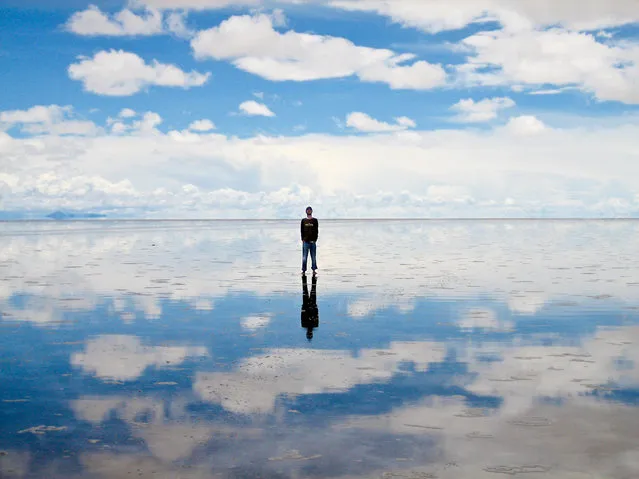
Salar de Uyuni

Salar de Uyuni (or Salar de Tunupa) is the world's largest salt flat at 10,582 square kilometers (4,086 sq mi). It is located in the Potosí and Oruro departments in southwest Bolivia, near the crest of the Andes, and is elevated 3,656 meters (11,995 ft) above mean sea level. The Salar was formed as a result of transformations between several prehistoric lakes. It is covered by a few meters of salt crust, which has an extraordinary flatness with the average altitude variations within one meter over the entire area of the Salar.
Details
04 Aug 2012 08:42:00
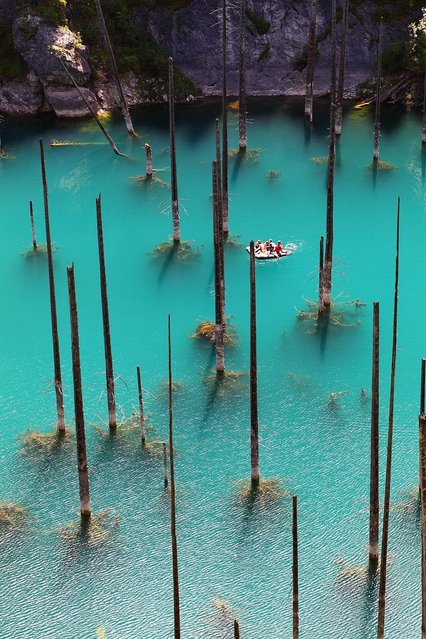
Kaindy Lake in Kazakhstan

Kaindy Lake (Kazakh: Қайыңды көлі, Qayındı köli) is a 400 metre long lake in Kazakhstan that reaches depths near 30 metres in some areas. It is located 129 km ESE of the city of Almaty and is 2,000 metres above sea level. It was created by the result of an enormous limestone landslide, triggered by the 1911 Kebin earthquake. The track to Kaindy lake has many scenic views to the Saty Gorge, the Chilik River valley and the Kaindy Gorge. Dried-out trunks of submerged Picea schrenkiana trees rise above the surface.
Details
06 Aug 2012 09:58:00