Loading...
Done
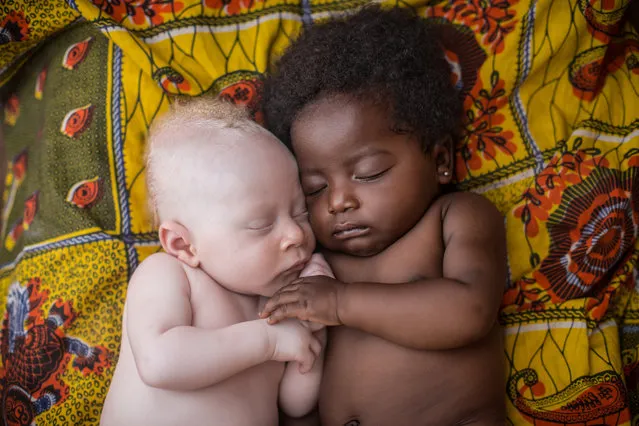
“Basunga”. Basunga (3 weeks-old newborn with albinism) is happily sleeping with his cousin. For now, he does not yet realize the difficulties he will face to integrate into the Congolese society as a PWA. The success of his integration will greatly depends of how he accepts himself and his skin condition a and how educated he will be. Photo location: Kinshasa, Congo RDC. (Photo and caption by Patricia Willocq/National Geographic Photo Contest)

“Basunga”. Basunga (3 weeks-old newborn with albinism) is happily sleeping with his cousin. For now, he does not yet realize the difficulties he will face to integrate into the Congolese society as a PWA. The success of his integration will greatly depends of how he accepts himself and his skin condition a and how educated he will be. Photo location: Kinshasa, Congo RDC. (Photo and caption by Patricia Willocq/National Geographic Photo Contest)
Details
09 Dec 2013 06:38:00
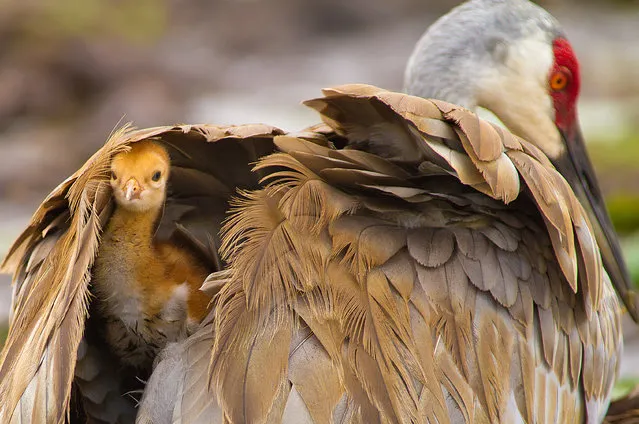
“Hiding In The Shadows”. This Baby Sandhill taking refuge under Moms wings while sitting on her second egg. I witnessed this baby being born earlier that day,and the next morning saw the other one hatch,what a sight to see. Photo location: Deland, Florida. (Photo and caption by Scott Helfrich/National Geographic Photo Contest)

“Hiding In The Shadows”. This Baby Sandhill taking refuge under Moms wings while sitting on her second egg. I witnessed this baby being born earlier that day,and the next morning saw the other one hatch,what a sight to see. Photo location: Deland, Florida. (Photo and caption by Scott Helfrich/National Geographic Photo Contest)
Details
08 Dec 2013 11:51:00
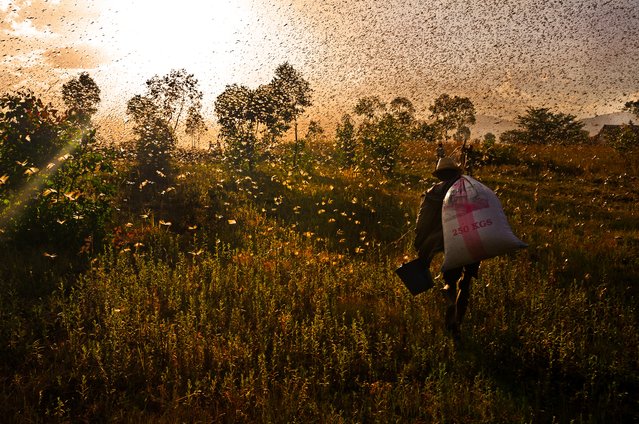
“Locusts & Men”. Oppression, interaction, collaboration. In the life cycle of nature nothing is lost, but the coexistence of different species is sometimes difficult. In Madagascar periodically returns the archaic antagonism between man and the migratory locust, in a circle of life where the two species are looking for space and food for their survival. Photo location: Madagascar, 2013. (Photo and caption by Michele Martinelli/National Geographic Photo Contest)

“Locusts & Men”. Oppression, interaction, collaboration. In the life cycle of nature nothing is lost, but the coexistence of different species is sometimes difficult. In Madagascar periodically returns the archaic antagonism between man and the migratory locust, in a circle of life where the two species are looking for space and food for their survival. At the end of the day a man walks home carrying on his shoulders the heavy bag which contains the locusts captured during the day. The insects provide nutritious meals for the man and his family. Photo location: Madagascar, 2013. (Photo and caption by Michele Martinelli/National Geographic Photo Contest)

ATTENTION! All pictures are presented in high resolution. To see Hi-Res images – just TWICE click on any picture. In other words, click small picture – opens the BIG picture. Click BIG picture – opens VERY BIG picture.
Details
03 Dec 2013 10:59:00
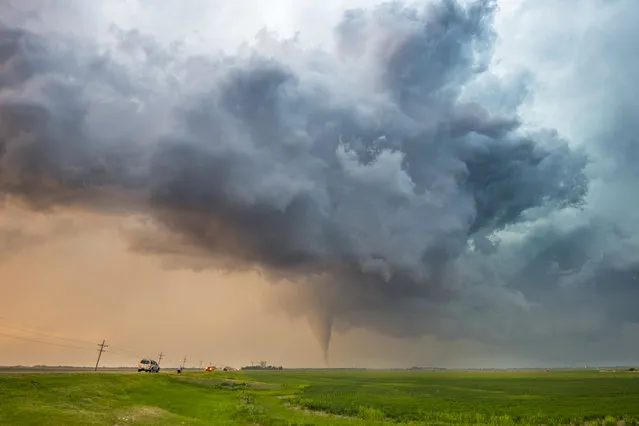
“The Sunsetter”. An EF-4 tornado rips through the open space of farmland near Rozel, Kansas. This tornado moves slowly but powerful towards the setting sun an gets its beautiful color right before sunset. Storm Chasers are spotting on the left side. Photo location: Rozel, Kansas. (Photo and caption by Dennis Oswald/National Geographic Photo Contest)

“The Sunsetter”. An EF-4 tornado rips through the open space of farmland near Rozel, Kansas. This tornado moves slowly but powerful towards the setting sun an gets its beautiful color right before sunset. Storm Chasers are spotting on the left side. Photo location: Rozel, Kansas. (Photo and caption by Dennis Oswald/National Geographic Photo Contest)

ATTENTION! All pictures are presented in high resolution. To see Hi-Res images – just TWICE click on any picture. In other words, click small picture – opens the BIG picture. Click BIG picture – opens VERY BIG picture.
Details
01 Dec 2013 11:03:00
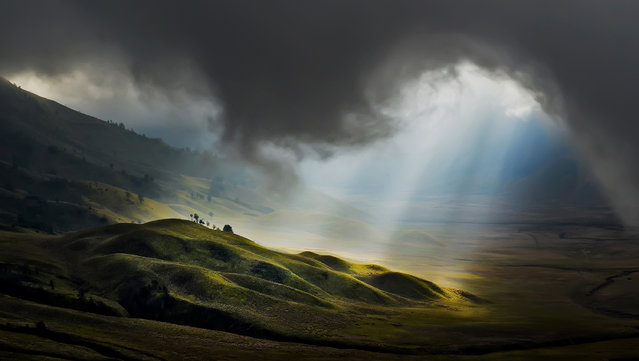
“Light From Heaven”. Taken around Mount Bromo, East Java, Indonesia in the morning. Photo location: East Java, Indonesia. (Photo and caption by Pimpin Nagawan/National Geographic Photo Contest)

“Light From Heaven”. Taken around Mount Bromo, East Java, Indonesia in the morning. Photo location: East Java, Indonesia. (Photo and caption by Pimpin Nagawan/National Geographic Photo Contest)

ATTENTION! All pictures are presented in high resolution. To see Hi-Res images – just TWICE click on any picture. In other words, click small picture – opens the BIG picture. Click BIG picture – opens VERY BIG picture.
Details
29 Nov 2013 12:36:00
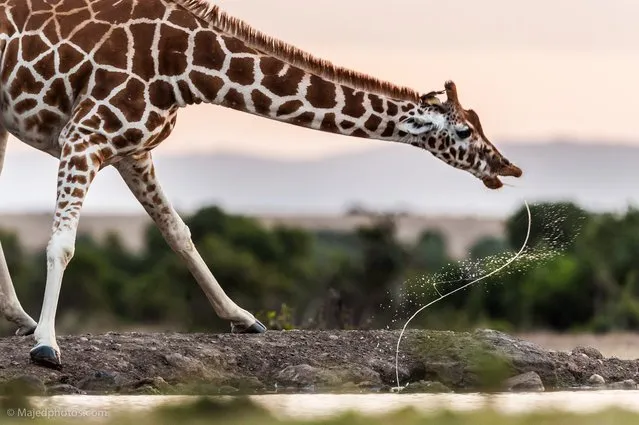
“We just want to move to search to the Leopard at that morning but we found a group of giraffes come toward a small lake and start drinking it was a nice moment when the Giraffe finish from drinking and leave a letters S with motion in the air”. (Photo and caption by Majed Ali)

National Geographic invites photographers from around the world to enter the 2013 National Geographic Photography Contest. The grand-prize winner will receive $10,000 (USD) and a trip to National Geographic headquarters in Washington, D.C., to participate in the annual National Geographic Photography Seminar in January 2014. Photo: “We just want to move to search to the Leopard at that morning but we found a group of giraffes come toward a small lake and start drinking it was a nice moment when the Giraffe finish from drinking and leave a letters “S” with motion in the air”. (Photo and caption by Majed Ali/National Geographic Photography Contest)
Details
15 Nov 2013 14:34:00
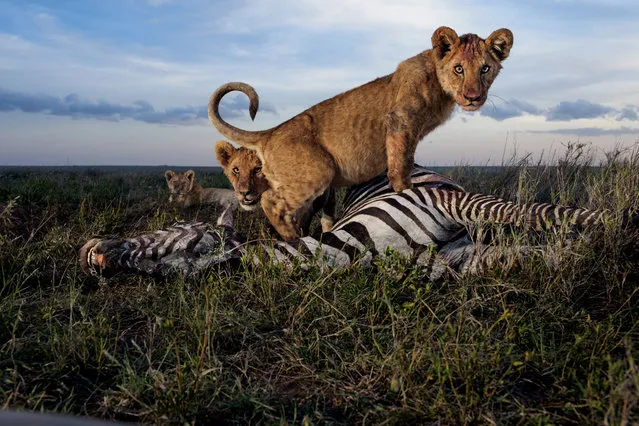
Cubs of the Simba East pride: too young to kill but old enough to crave meat. Adult females, and sometimes males, do the hunting. Zebras and wildebeests rank high as chosen prey in the rainy season. (Photo by Michael Nichols/National Geographic via The Atlantic)

“Serengeti National Park encompasses 5,700 square miles of grassy plains and woodlands near the northern border of Tanzania, and is home to more than 3,500 lions grouped into a couple dozen prides. Photographer Nick Nichols and videographer Nathan Williamson made several extended trips to the Serengeti between July 2011 and January 2013, determined to break new visual ground in their coverage of the Serengeti Lions”. Photo: Cubs of the Simba East pride: too young to kill but old enough to crave meat. Adult females, and sometimes males, do the hunting. Zebras and wildebeests rank high as chosen prey in the rainy season. (Photo by Michael Nichols/National Geographic via The Atlantic)
Details
09 Aug 2013 08:15:00
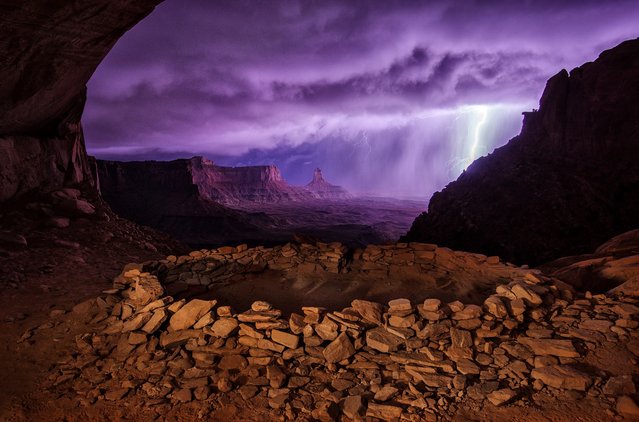
Second Place Winner: “Thunderstorm at False Kiva”. I hiked out to these ruins at night hoping to photograph them with the Milky Way, but instead a thunderstorm rolled through, creating this dramatic image. – Max Seigal. (Photo and caption by Max Seigal/National Geographic Traveler Photo Contest)

Second Place Winner: “Thunderstorm at False Kiva”. I hiked out to these ruins at night hoping to photograph them with the Milky Way, but instead a thunderstorm rolled through, creating this dramatic image. – Max Seigal. National Geographic Traveler Director of Photography Dan Westergren, one of this year's judges, shares his thoughts on the second place winner: “This photo combines two different scenes into one: the small kiva in a cliff dwelling and the grand vista of Canyonlands National Park across the valley. I really like the two different color palettes – warm inside and purple outside. This two-for-one scene was caused by the lightning storm outside the dwelling, which lit up the landscape like it was a huge electronic flash. Looking at this picture I can imagine what a wonderful sight it must have been for the ancient people who lived here. It doesn't seem too amazing now in our modern world, but might have been mind-blowing for the prehistoric residents”. Location: Utah. (Photo and caption by Max Seigal/National Geographic Traveler Photo Contest)
Details
02 Aug 2013 06:16:00