Loading...
Done


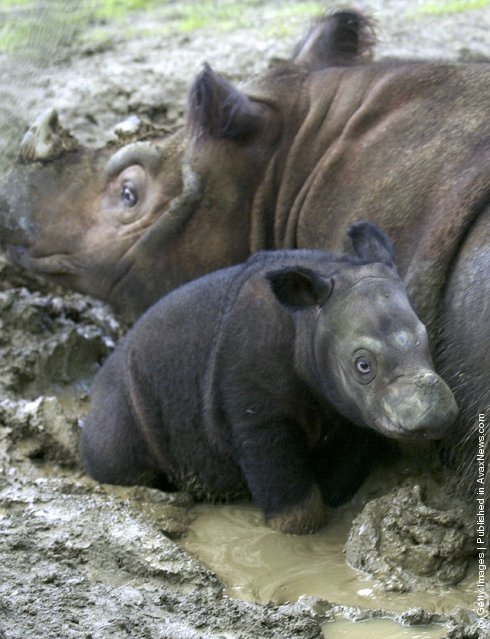
“The Sumatran Rhinoceros (Dicerorhinus sumatrensis) is a member of the family Rhinocerotidae and one of five extant rhinoceroses. It is the only extant species of the genus Dicerorhinus. It is the smallest rhinoceros, standing about 120–145 centimetres (3.9–4.76 ft) high at the shoulder, with a body length of 250 centimetres (8.2 ft) and weight of 500–800 kilograms (1,100–1,800 lb). Like the African species, it has two horns; the larger is the nasal horn, typically 15–25 centimetres (5.9–9.8 in), while the other horn is typically a stub. A coat of reddish-brown hair covers most of the Sumatran Rhino's body”. – Wikipedia

Photo: Emi, a Sumatran rhinoceros lies in the mud with her three-week-old female calf at the Cincinnati Zoo and Botanical Garden August 19, 2004 in Cincinnati, Ohio. Emi made history by becoming the first Sumatran rhino to produce two calves in captivity. (Photo by Mike Simons/Getty Images)
Details
22 Jun 2011 12:37:00


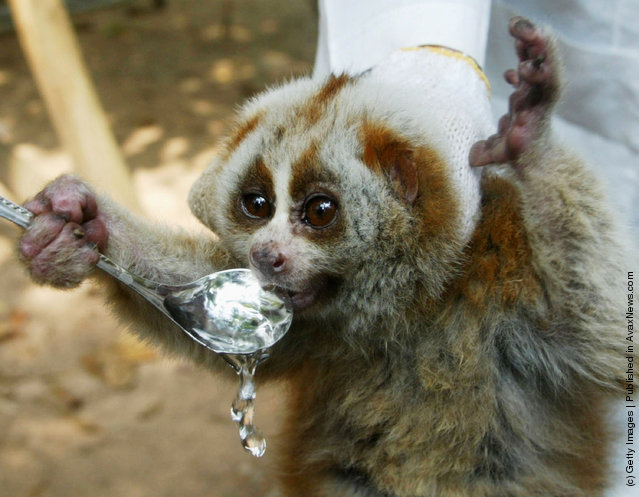
Workers feed water to a Slow Loris at the Guangdong Wild Animal Rescue Centre on December 21, 2004 in Guangzhou, China. Many protected species at the Centre have been seized by Police from illegal traders. (Photo by China Photos/Getty Images)
Details
17 Jun 2011 12:10:00


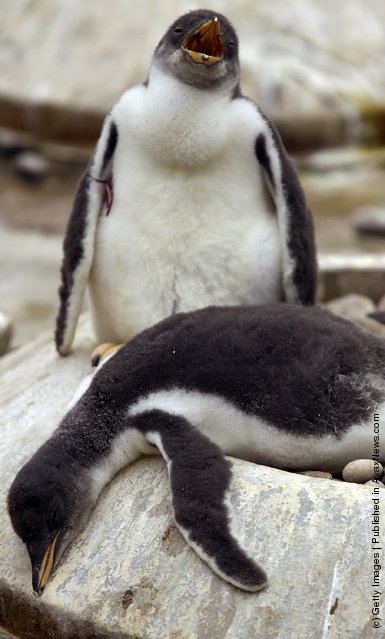
Adult gentoo penguins keep an eye on their newly born chick at Edinburgh Zoo on June 10, 2011 in Edinburgh, Scotland. The gentoo chicks which started hatching in early May are looked after by both parents who regurgitate part digested food. When the chicks are hungry they peck the beaks of their parents to signal feeding time. (Photo by Jeff J Mitchell/Getty Images)
Details
11 Jun 2011 12:26:00


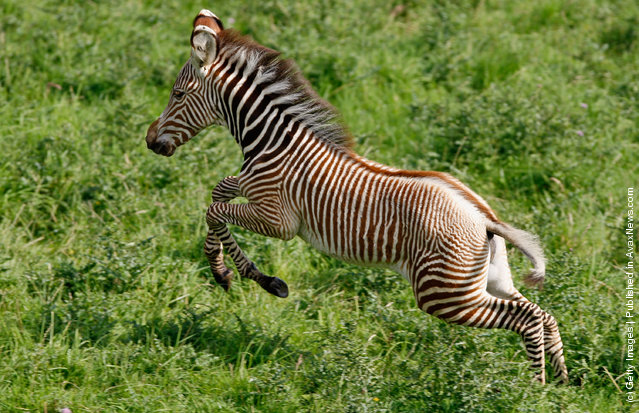
Florence the baby zebra foal, runs in its enclosure at Edinburgh zoo September 4, 2008 in Edinburgh, Scotland. This arrival at the zoo is particularly important as the Grevy's zebra is listed as endangered, with only an estimated 1,500 to 2,000 remaining in the wild. (Photo by Jeff J Mitchell/Getty Images)
Details
02 Jun 2011 11:34:00


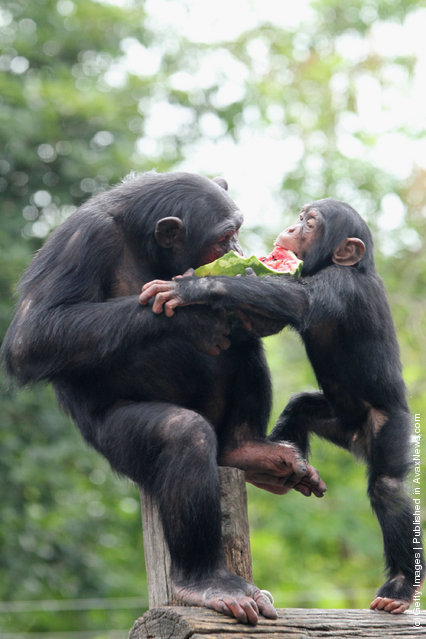
Two chimpanzees share a piece of watermelon at Taronga Zoo on December 23, 2010 in Sydney, Australia. (Photo by Rick Stevens/Taronga Zoo via Getty Images)
Details
29 May 2011 10:52:00


A rare white kiwi chick is seen only days after being hatched on May 22, 2011 in Wellington, New Zealand. The all-white kiwi, named “Manukura” is suspected to be the first white chick born in captivity. The chick is the thirteenth of fourteen baby kiwis hatched at the wildlife centre this season. (Photo by Mike Heydon/Jet Productions NZ Limited via Getty Images)
Details
24 May 2011 09:07:00


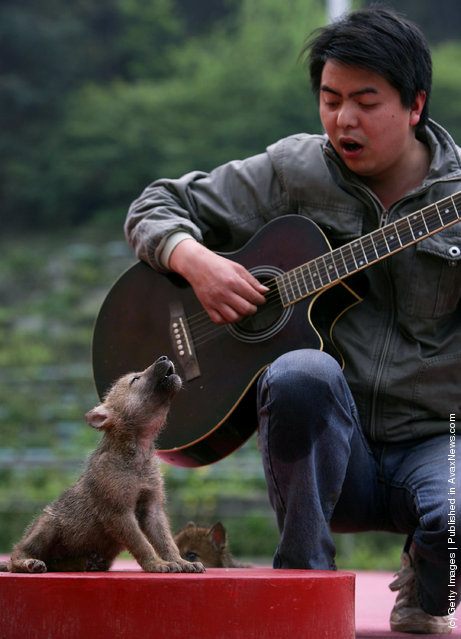
A one-month-old wolf cub ululate as zookeeper Luo Yong plays guitar at the Chongqing Yongchuan Safari Park on March 27, 2008 in Chongqing, China. Luo has worked as a keeper in the wolf zone of the park after he graduated university. Luo has developed a special way to communicate with the wolves by trying to imitate the noises they make. He also teaches wolf cubs to ululate and some wolves will howl along when he plays guitar. (Photo by China Photos/Getty Images)
Details
23 May 2011 06:54:00


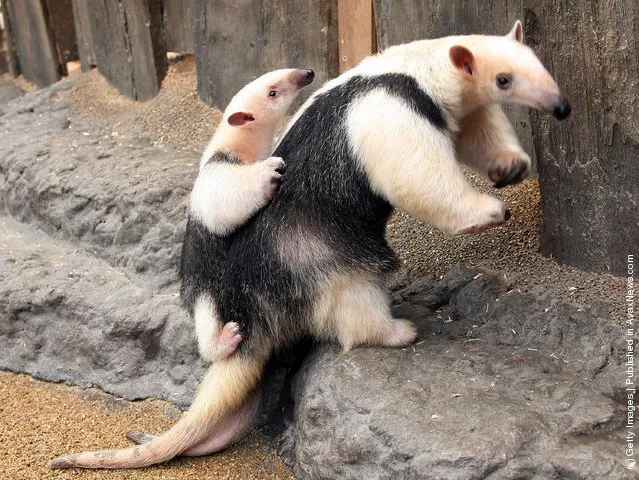
“The Southern Tamandua, Collared Anteater or Lesser Anteater (Tamandua tetradactyla) is a species of anteater from South America. It is a solitary animal, found in many habitats from mature to highly disturbed secondary forests and arid savannas. It feeds on ants, termites and bees. It has very strong foreclaws that can be used to break insect nests or to defend itself”. – Wikipedia

Photo: A three-month-old baby Southern Tamandua “Konbu” lies on its mother Tae's back at Sunshine International Aquarium on July 7, 2009 in Tokyo, Japan. Baby Southern Tamandua feels safe and comfortable holding onto something and normally stays on the mother's back until around 3 months old. (Photo by Junko Kimura/Getty Images)
Details
19 May 2011 10:31:00