Loading...
Done
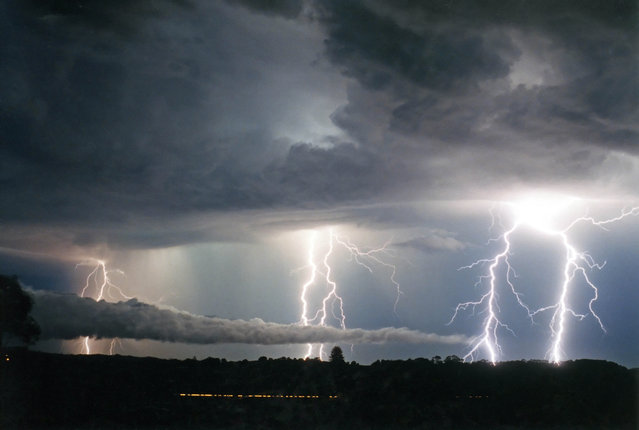
“Lightning Flash Photography”. Alstonville, New South Wales, Australia – January 8, 2003. (Photo by Michael Bath/Caters News)

Michael Bath, from McLeans Ridges in New South Wales, Australia, estimates that in his lifetime he has taken more than 3,500 images of lightning bolts illuminating the sky. Photo: Alstonville, New South Wales, Australia – January 8, 2003. (Photo by Michael Bath/Caters News)
Details
04 Apr 2014 11:44:00
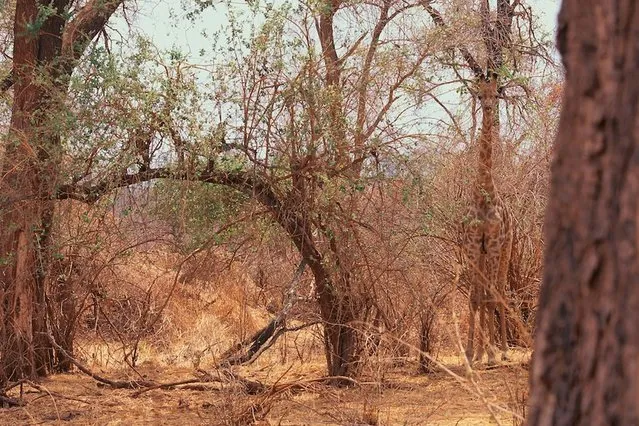
Tall story: Can you spot the giraffe? (Photo by Caters News)

These snaps show a series of crafty critters camouflaged out of view. Many adventurous animals love to stand out from a crowd, but there are times when they need to blend in a bit more too. Photo: Tall story – can you spot the giraffe? (Photo by Caters News)
Details
04 Apr 2014 09:53:00
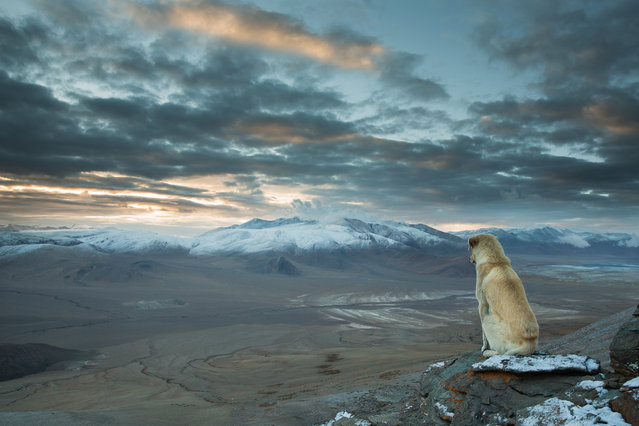
“Himalayan Dog”. This dog just appeared out of nowhere and followed us for an entire week during our trekking trip in the Himalayan outback. He always used to sleep in front of our tent and guarded us in the nights. When I decided to get up at 4 a.m. to climb the next 5000 m peak for sunrise he accompanied me as well. On the top he was sitting for the entire 30 minutes on this place looking straight into the countryside. Photo location: Ladakh, India. (Photo and caption by Sebastian Wahlhuetter/National Geographic Photo Contest)

“Himalayan Dog”. This dog just appeared out of nowhere and followed us for an entire week during our trekking trip in the Himalayan outback. He always used to sleep in front of our tent and guarded us in the nights. When I decided to get up at 4 a.m. to climb the next 5000 m peak for sunrise he accompanied me as well. On the top he was sitting for the entire 30 minutes on this place looking straight into the countryside. Photo location: Ladakh, India. (Photo and caption by Sebastian Wahlhuetter/National Geographic Photo Contest)
Details
01 Apr 2014 10:47:00
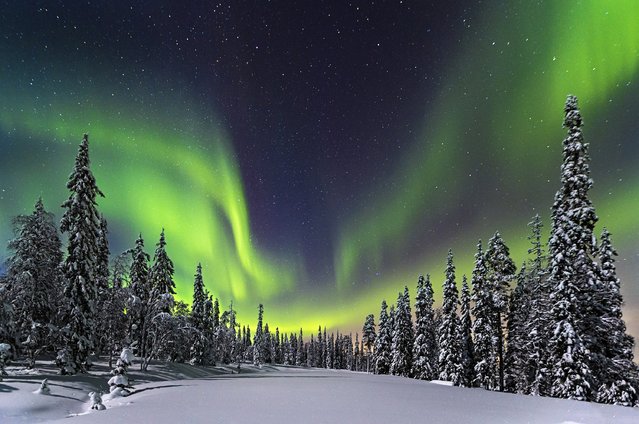
“Forest lights”. Aurora Borealis over the forest of the Pyhae Luosto National Park, Finland. (Photo and caption by Nicholas Roemmelt/National Geographic Traveler Photo Contest)

The 26th annual National Geographic Traveler Photo Contest is now accepting submissions. Official categories include: “Travel Portraits”, “Outdoor Scenes”, “Sense of Place” and “Spontaneous Moments”. The contest is accepting entries until June 30. Photo: “Forest lights”. Aurora Borealis over the forest of the Pyhae Luosto National Park, Finland. (Photo and caption by Nicholas Roemmelt/National Geographic Traveler Photo Contest)
Details
30 Mar 2014 08:02:00
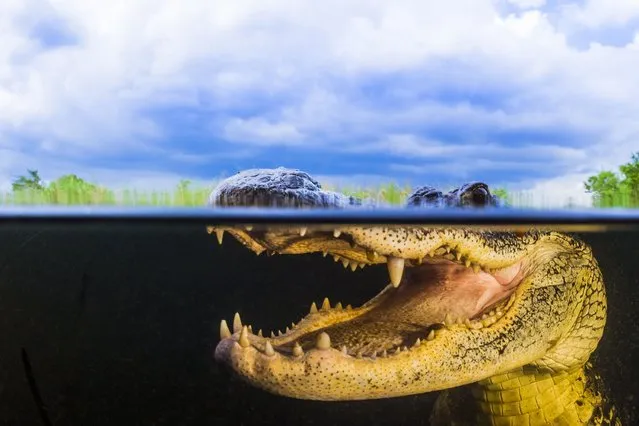
American Alligator By Masa Ushioda

Brave photographer Masa Ushioda captured the shots of this wild gator in vast marsh land in the Everglades National Park, in Florida, USA. He said: “Bright sunlight and blue sky were critical elements in this picture – in addition to getting a wild 10-foot alligator in the middle of the viewfinder with a perfect angle”.

Details
29 Mar 2014 12:02:00
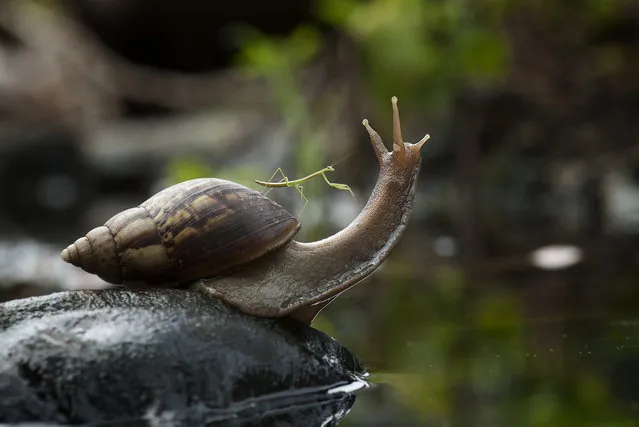
Praying Mantis Rides Snail Through Borneo Jungle. (Photo by Nordin Seruyan/Barcroft Media)

“Check out this praying mantis totally bossing a trek through the Borneo jungle – on the back of a snail. Yes, it may not be the fastest mode of transport for the discerning traveller, but at least the green chap isn't getting his feet wet. The slightly sinister sight was captured by snapper Nordin Seruyan in central Borneo”. – Sara C. Nelson via Barcroft Media. (Photo by Nordin Seruyan/Barcroft Media)
Details
28 Mar 2014 09:25:00
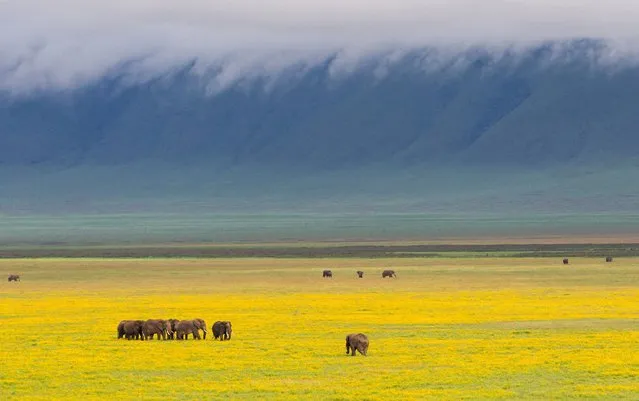
Ngorongoro Crater (Tanzania). At 610m deep and 260 sq km, this is the largest unflooded caldera in the world. A blue-green vision from above it's a haven for engangered wildlife and Maasai livestock. The crater was formed three million years ago when a giant volcano, which could have been as high as Kilimanjaro, exploded and collapsed. The caldera formed the concentric fractures in the crust cracked down to a magma reservoir deep underground. (Photo by John Bryant/Getty Images)

Ngorongoro Crater (Tanzania). At 610m deep and 260 sq km, this is the largest unflooded caldera in the world. A blue-green vision from above it's a haven for engangered wildlife and Maasai livestock. The crater was formed three million years ago when a giant volcano, which could have been as high as Kilimanjaro, exploded and collapsed. The caldera formed the concentric fractures in the crust cracked down to a magma reservoir deep underground. (Photo by John Bryant/Getty Images)
Details
28 Mar 2014 08:08:00
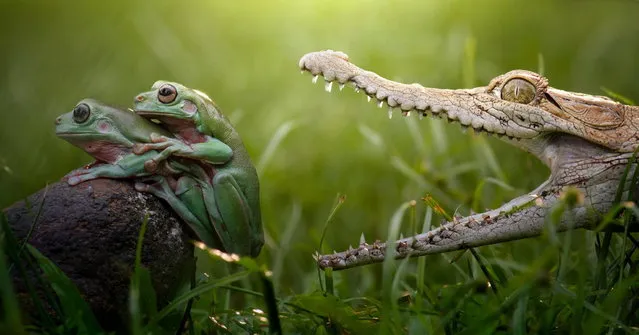
“Ultimate Love”. (Photo by Fahmi Bhs)

“I am an amateur photographer, live in Jakarta, Indonesia. Photography is my new passion”. – Fahmi Bhs. Photo: “Ultimate Love”. (Photo by Fahmi Bhs)
Details
27 Mar 2014 05:44:00