Loading...
Done
Photographers: Robert Wilson

“Born in London in 1969 Robert has had a passion for photography since the age of 14. After studying photography at Blackpool and Flyde College he undertook and completed a personal project, which went on to be published into a book called ‘One, Images of a Goalkeeping Season’. Robert has been commissioned for editorial and advertising projects by client based throughout Europe and the U.S. and undertakes commissions for many of the top advertising agencies”. – Tim Mitchell
Details
05 Apr 2012 10:50:00
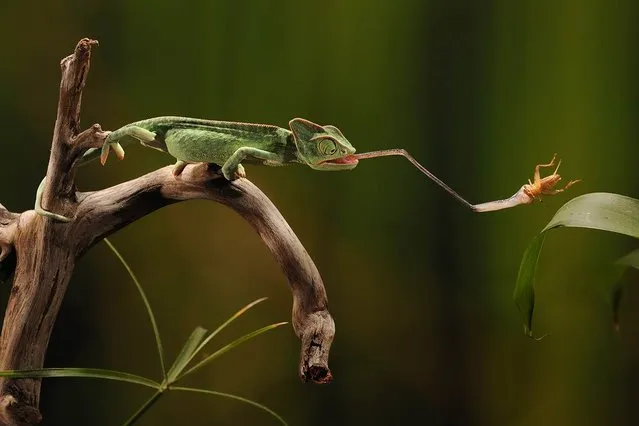
A veiled chameleon extends its tongue to catch a cricket

“Scott Linstead is an internationally published, freelance wildlife photographer/writer. His clients include Natural History Magazine, Hewlett Packard, Ranger Rick Magazine and a number of wildlife publications in North America and Europe. Scott's column on the techniques of bird photography appears in every issue of Outdoor Photography Canada”.

Photo: A veiled chameleon extends its tongue to catch a cricket. Canadian wildlife photographer Scott Linstead, formerly an aerospace engineer and high school teacher, uses a device called Phototrap “to not only photograph the elusive, but also the unimaginably quick”. (Photo by Scott Linstead)
Details
22 May 2012 11:32:00
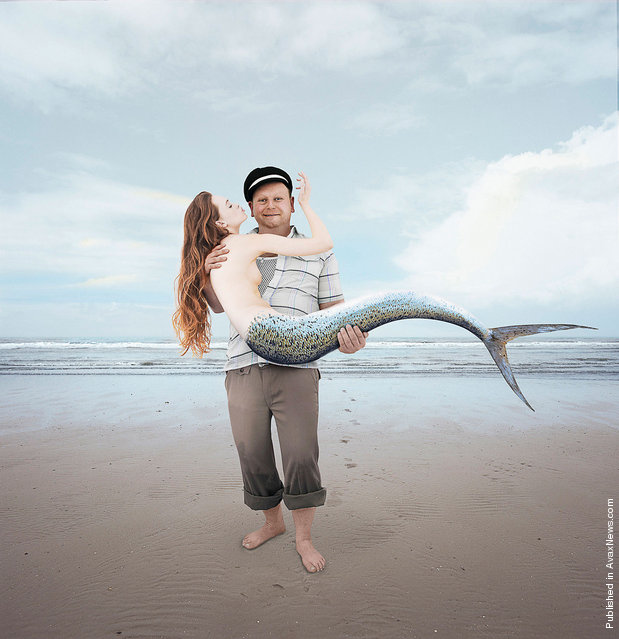
Untitled. (Patric Shaw)

Untitled. (Photo by Patric Shaw)

Details
24 Nov 2012 11:32:00
Photographers: Frank Uyttenhove

“Frank Uyttenhove is an exceptionally talented photographer and film director. He has an extensive career, which has seen many interesting projects and many awards”. – Tim Mitchell
Details
18 Feb 2012 11:12:00
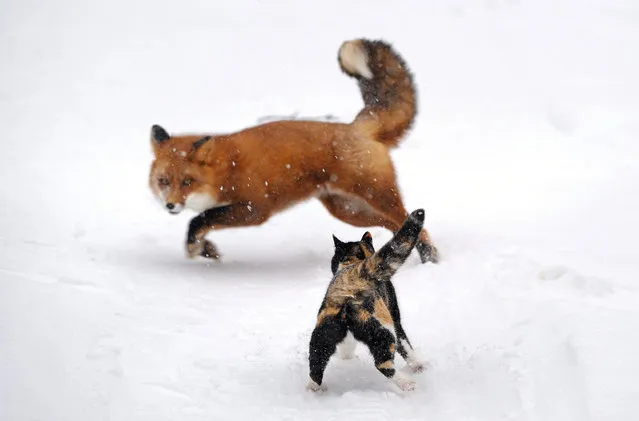
Respect, Kronotsky nature reserve, Russia. The photographer’s cat, Ryska – her name means little lynx in Russian – stands outside their cabin and with aggressive posturing warns off a fox. In winter, foxes would regularly visit the cabin searching for food. If one peered in at the window, possible when the snow was deep, Ryska would sit on the other side, fur raised, and growl. When outside, she would hold her ground. The foxes were not always frightened and so encounters could be a sort of dance. (Photo by Igor Shpilenok/Unforgettable Behaviour/NHM)

Respect, Kronotsky nature reserve, Russia. The photographer’s cat, Ryska – her name means little lynx in Russian – stands outside their cabin and with aggressive posturing warns off a fox. In winter, foxes would regularly visit the cabin searching for food. If one peered in at the window, possible when the snow was deep, Ryska would sit on the other side, fur raised, and growl. When outside, she would hold her ground. The foxes were not always frightened and so encounters could be a sort of dance. (Photo by Igor Shpilenok/Unforgettable Behaviour/NHM)
Details
08 Apr 2017 09:14:00
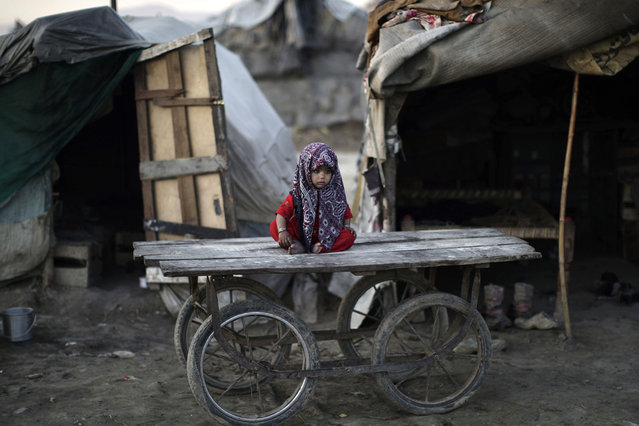
A Pakistani child, whose family was displaced by 2010 floods from a village in Pakistan's Sindh province, sits on a wooden cart outside her family's makeshift home, in a slum on the outskirts of Islamabad, on February 8, 2013. (Photo by Muhammed Muheisen/AP Photo)

A Pakistani child, whose family was displaced by 2010 floods from a village in Pakistan's Sindh province, sits on a wooden cart outside her family's makeshift home, in a slum on the outskirts of Islamabad, on February 8, 2013. (Photo by Muhammed Muheisen/AP Photo)
Details
29 Apr 2013 11:49:00


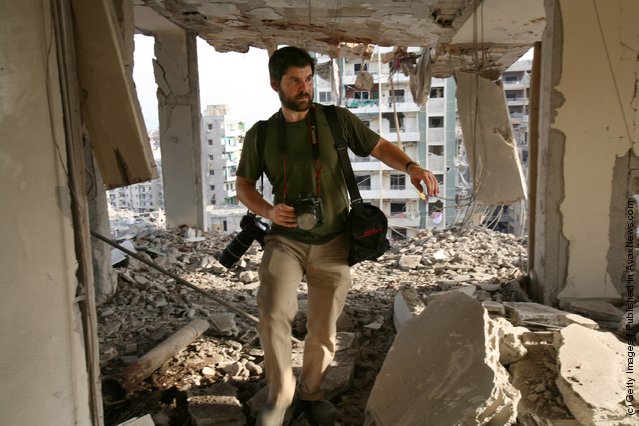
In this publication you can see some best pictures of photographer Chris Hondros, who was killed on April 20, 2011 by a rocket-propelled grenade (RPG) in Misrata, Libya.

Photo: “Getty Images” photographer Chris Hondros (1970–2011) walks the ruins of a building August 21, 2006 in southern Beirut, Lebanon. (Photo by Getty Images)
Details
23 Apr 2011 11:13:00
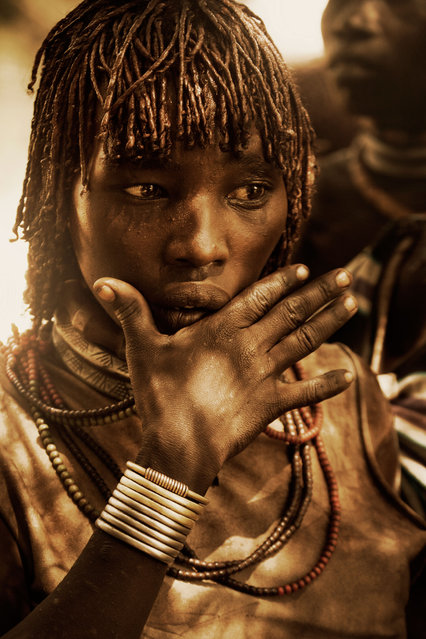
The Hamar people traditionally use red ocher clay to braid the hair of their women. (Photo by Diego Arroyo)

During his time in Ethiopia, New York-based art director and photographer Diego Arroyo spent time with the Hamar, Mursi, Dassanech, and Arbore Tribes. They, along with several others tribes, make up the 200,000 people situated in Africa’s Great Rift Valley. The people of the Omo Valley are still primarily herders and farmers, living an isolated and simple life. While they have yet to be truly touched by globalization, they could soon disappear. Their way of life is being threatened by a massive hydroelectric dam. (Photo by Diego Arroyo)
Details
13 Aug 2014 10:00:00