Loading...
Done


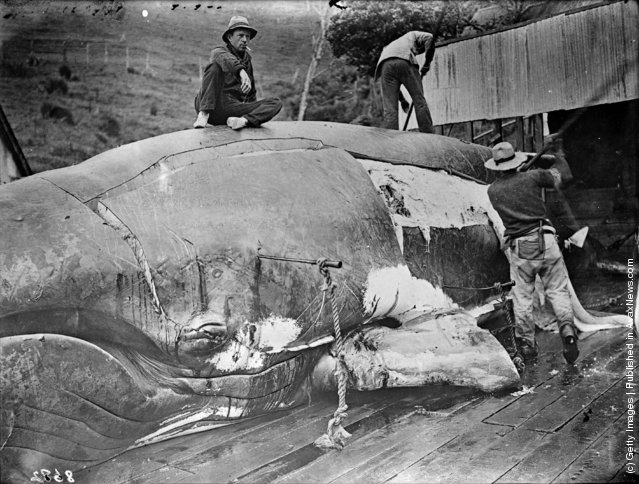
Men slicing blubber off a large, dead whale. (Photo by Topical Press Agency/Getty Images). Circa 1912
Details
08 Jun 2011 09:12:00
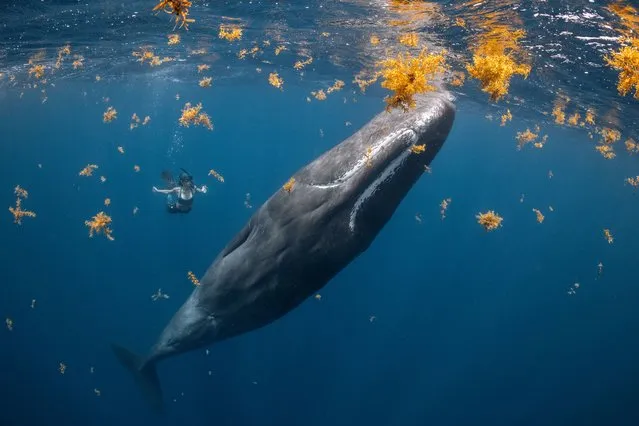
Human Connection Award: People and Planet Ocean – Winner – Steve Woods. A free diver interacts with a sperm whale among a cloud of sargassum weed, Dominica. (Photo by Steve Woods/Ocean Photographer of the Year 2022)

Human Connection Award: People and Planet Ocean – Winner – Steve Woods. A free diver interacts with a sperm whale among a cloud of sargassum weed, Dominica. (Photo by Steve Woods/Ocean Photographer of the Year 2022)
Details
09 Oct 2022 03:56:00
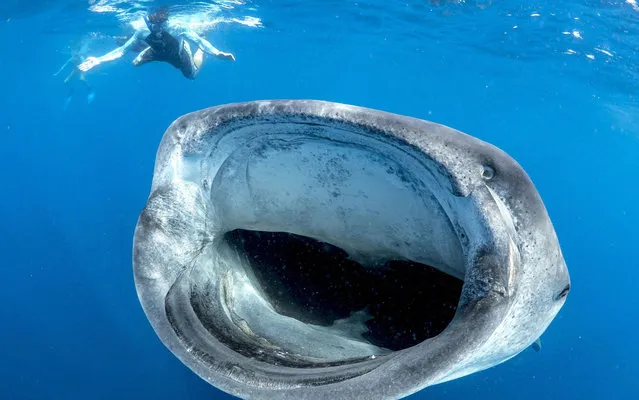
Marine biologist Simon Pierce, who studies whale sharks, happened to be in the right place at the right time to capture amazing photo off Cancun, Mexico. (Photo by Simon Pierce/Mercury Press/Caters News)

Marine biologist Simon Pierce, who studies whale sharks, happened to be in the right place at the right time to capture amazing photo off Cancun, Mexico. (Photo by Simon Pierce/Mercury Press/Caters News)
Details
09 Feb 2014 12:45:00
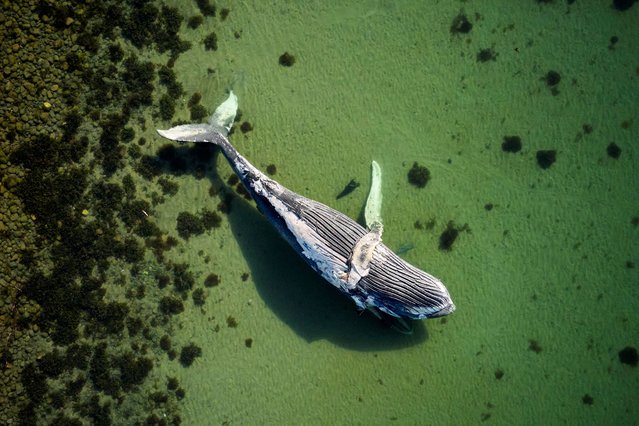
Drone photo of a dead humpback whale at Foelle Strand in Loegten Bay, Djursland, Denmark, on April 2, 2025. (Photo by Mikkel Berg Pedersen/Ritzau Scanpix via Reuters)

Drone photo of a dead humpback whale at Foelle Strand in Loegten Bay, Djursland, Denmark, on April 2, 2025. (Photo by Mikkel Berg Pedersen/Ritzau Scanpix via Reuters)
Details
28 May 2025 03:05:00
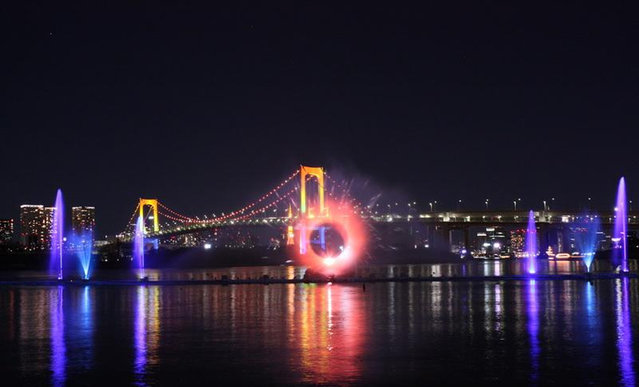
Japan Odaiba Water Illumination

An image of a breaching whale is projected on a screen created by a water fountain during the Odaiba water illumination show in Tokyo. The show, which projects images of whales, sharks, tropical fish and Easter Island statues on a water screen 23 meters tall and 60 meters wide, will be held through April 11.
Details
09 Aug 2012 12:20:00
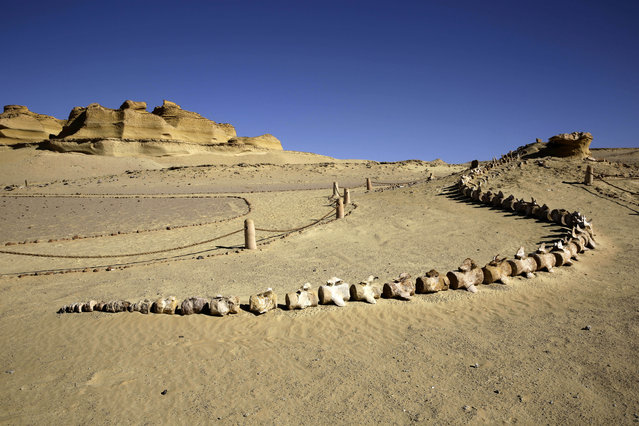
Fossilized whale bones are on display  outside the Wati El Hitan Fossils and Climate Change Museum, a UNESCO natural World Heritage site, on the opening day, in the Fayoum oasis, Egypt, Thursday, January 14, 2016. Egypt has cut the ribbon on the Middle East's first fossil museum housing the world's largest intact skeleton of a "walking whale" in an attempt to attract much-needed tourists driven off by recent militant attacks. The construction of the much-hyped Fossils and Climate Change Museum was covered a 2 billion euros (2. 17 billion dollars) grant from Italy, according to Italian Ambassador Maurizio Massari. (Photo by Thomas Hartwell/AP Photo)

Fossilized whale bones are on display outside the Wati El Hitan Fossils and Climate Change Museum, a UNESCO natural World Heritage site, on the opening day, in the Fayoum oasis, Egypt, Thursday, January 14, 2016. Egypt has cut the ribbon on the Middle East's first fossil museum housing the world's largest intact skeleton of a "walking whale" in an attempt to attract much-needed tourists driven off by recent militant attacks. The construction of the much-hyped Fossils and Climate Change Museum was covered a 2 billion euros (2. 17 billion dollars) grant from Italy, according to Italian Ambassador Maurizio Massari. Its centerpiece is an intact, 37-million-year-old and 20-meter-long skeleton of a legged form of whale that testifies to how modern-day whales evolved from land mammals. The sand-colored, dome-shaped museum is barely discernible in the breathtaking desert landscape that stretches all around. (Photo by Thomas Hartwell/AP Photo)
Details
16 Jan 2016 08:06:00
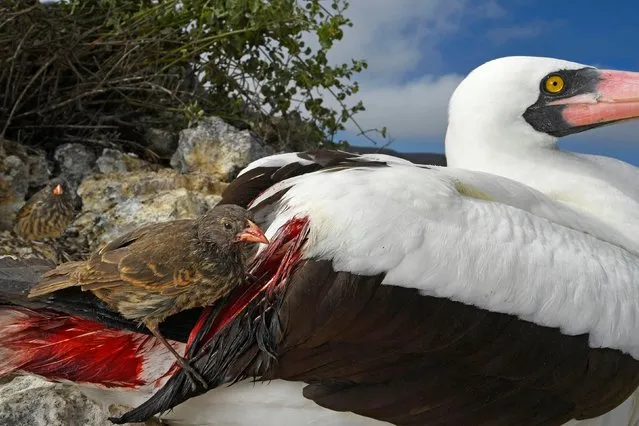
Bloodthirsty by Thomas P Peschak, Germany/South Africa — winner, Behaviour: birds. When rations run short on Wolf Island, in the remote northern Galápagos, the sharp-beaked ground finches become vampires. Their sitting targets are Nazca boobies and other large birds. The finches rely on a scant diet of seeds and insects, which regularly dries up, so they drink blood to survive. ‘I’ve seen more than half a dozen finches drinking from a single Nazca booby,’ says Tom. Rather than leave their nests the boobies tolerate the vampires, and the blood loss doesn’t seem to cause permanent harm. (Photo by Thomas P Peschak/2018 Wildlife Photographer of the Year)

Bloodthirsty by Thomas P. Peschak, Germany/South Africa — winner, Behaviour: birds. When rations run short on Wolf Island, in the remote northern Galápagos, the sharp-beaked ground finches become vampires. Their sitting targets are Nazca boobies and other large birds. The finches rely on a scant diet of seeds and insects, which regularly dries up, so they drink blood to survive. ‘I’ve seen more than half a dozen finches drinking from a single Nazca booby,’ says Tom. Rather than leave their nests the boobies tolerate the vampires, and the blood loss doesn’t seem to cause permanent harm. (Photo by Thomas P. Peschak/2018 Wildlife Photographer of the Year)
Details
19 Oct 2018 00:05:00
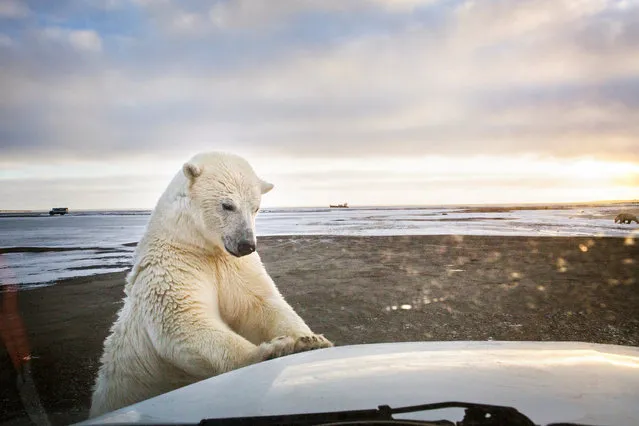
In late summer and early autumn polar bears flock to the native village of Kaktovik in the Alaskan Arctic to eat at “the boneyard” – the remains of whales annually hunted by the community. (Photo by Katie Orlinsky/Getty Images)

A selection of work by four photojournalists who have won grants of $10,000 and editorial support from the agency. Here: “Chasing Winter” by Katie Orlinksy. In late summer and early autumn polar bears flock to the native village of Kaktovik in the Alaskan Arctic to eat at “the boneyard” – the remains of whales annually hunted by the community. (Photo by Katie Orlinsky/Getty Images)
Details
02 Sep 2016 13:55:00