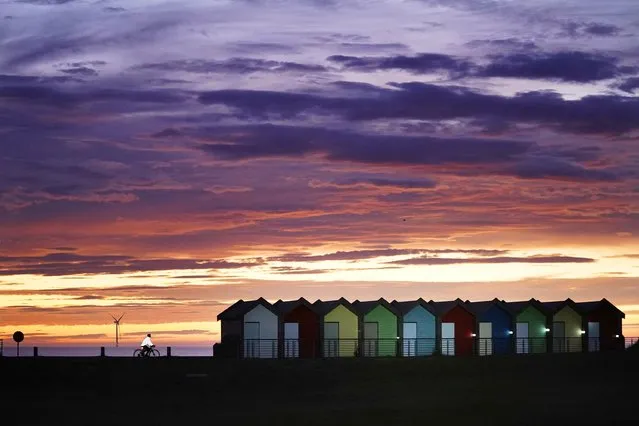
Dawn at Blyth beach huts in Northumberland, with the prospect of warm weather over the coming weekend on Friday, October 8, 2021. (Photo by Owen Humphreys/PA Images via Getty Images)
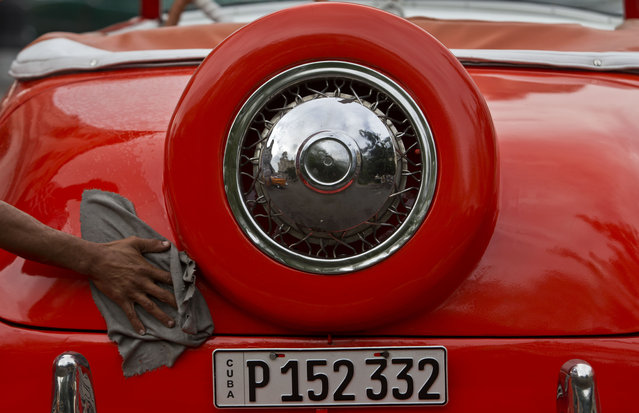
In this October 16, 2014 photo, a man cleans his American classic car before going to work in Havana, Cuba. While the U.S. embargo that took effect in 1961 stopped the flow of new cars, and most parts, a few Cubans now manage to bring in replacement parts when friends or family visit from the U.S. (Photo by Franklin Reyes/AP Photo)
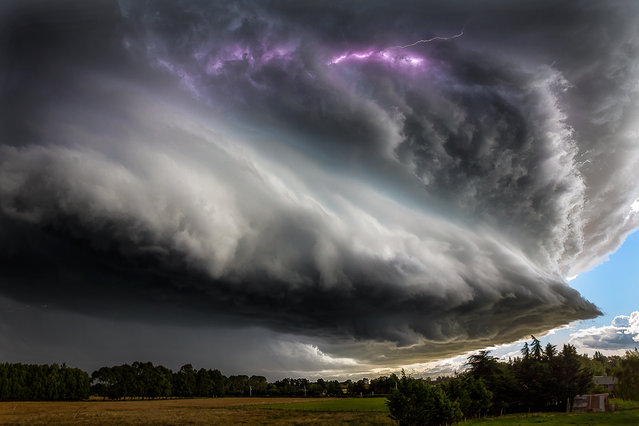
“Thunderstruck”. Summer stom. A super cell formed off the coast of New Zealand, intensified and swept across Christchurch and North Canterbury, February 23, 2014. Photo location: Christchurch, New Zealand. (Photo and caption by David Hardy/National Geographic Photo Contest)
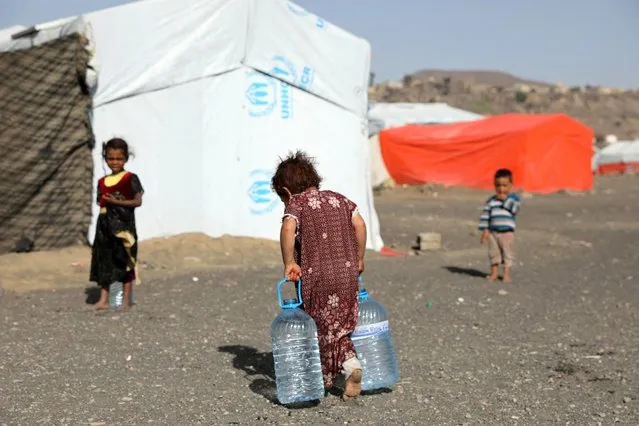
A girl carries bottles of water filled from a charity tank at a camp for internally displaced people (IDPs) near Sanaa, Yemen on March 25, 2022. (Photo by Khaled Abdullah/Reuters)
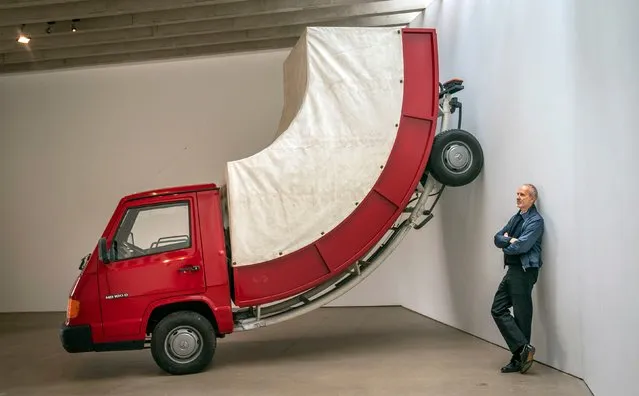
Austrian artist Erwin Wurm on Thursday, June 8, 2023 with his work Truck II, 2011, as he presents first UK museum exhibition and his largest show to date featuring over 100 works indoors and in the landscape at Yorkshire Sculpture Park, Wakefield. (Photo by Danny Lawson/PA Images via Getty Images)
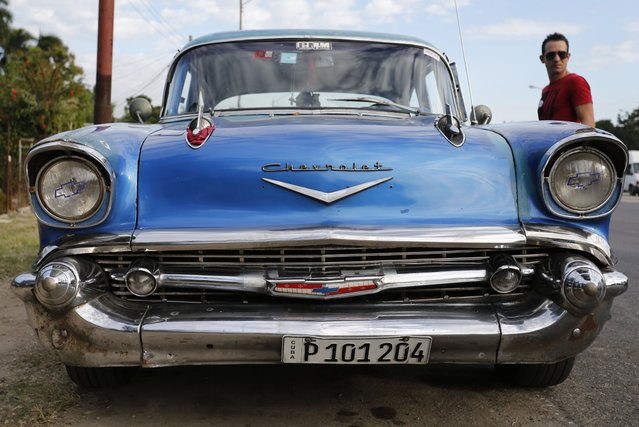
In this December 19, 2014 photo, a man stands beside his 1957 Chevrolet Bel-Air car in Havana, Cuba. U.S. car sales have been banned in Cuba since 1959. Cubans have been have been forced to patch together Fords, Chevrolets and Chryslers that date back to before Fidel Castro's revolution which can make it appear like the country is stuck in a 1950s time warp. Since the Communist economic system isn't likely to change soon, many of those cars will have to stay on the road for years. (Photo by Desmond Boylan/AP Photo)
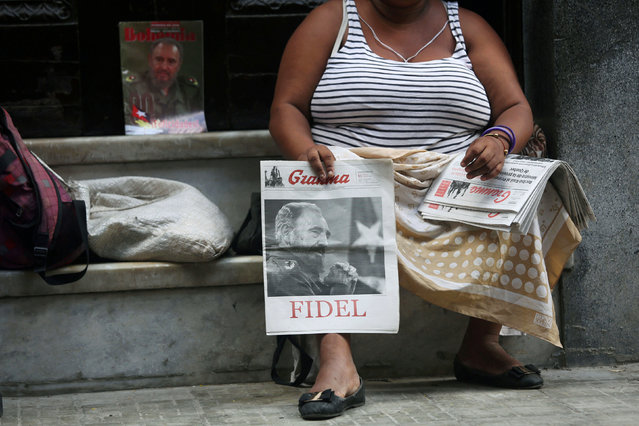
A woman sells Cuban Communist Party (PCC) official newspaper Granma with a picture of former Cuba's President Fidel Castro at the front page, at the main touristic road in Havana, Cuba, September 14, 2016. (Photo by Alexandre Meneghini/Reuters)