Volunteers distribute water to a woman carrying a child along a street during a hot summer day in Karachi on May 14, 2022. (Photo by Rizwan Tabassum/AFP Photo)
Young devotees carry oil lamps in the early morning of the tenth day celebrations of Hindu Nepali festival “Dashain” at a temple in Bhaktapur on the outskirts of Kathmandu on October 24, 2023. (Photo by Prakash Mathema/AFP Photo)
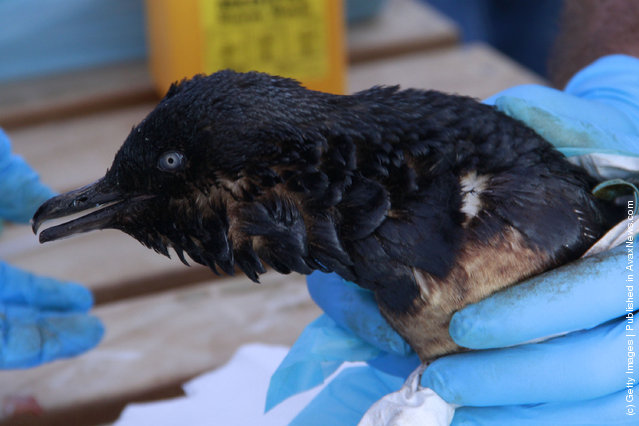
A little blue penguin which was found at Papamoa Beach, covered in oil after the Liberian cargo ship, Rena, hit a reef, on October 7, 2011, in Tauranga, New Zealand. Reports of an oil sheen have been spotted on the surface of the water surrounding the ship and two penguins have been found covered in oil. (Photo by SUNLIVE New Zealand/Getty Images)
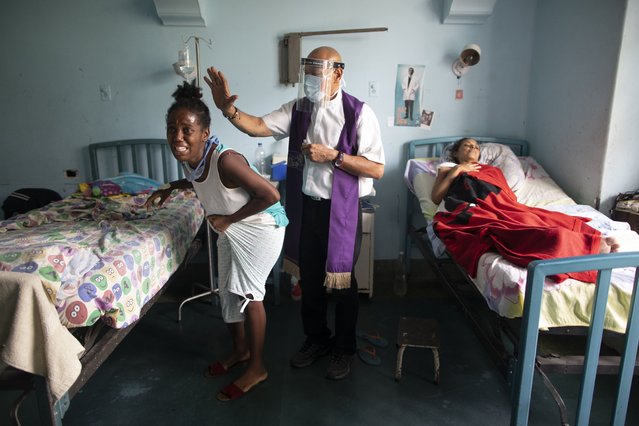
Father Felix Mendoza, a Venezuelan Catholic priest, center, prays over a woman who cries, saying she is in physical pain, at a public hospital in Caracas, Venezuela, Tuesday, May 11, 2021, amid the new coronavirus pandemic. Father Felix has been visiting patients at the hospital to comfort the sick, for the last 20 years. (Photo by Ariana Cubillos/AP Photo)
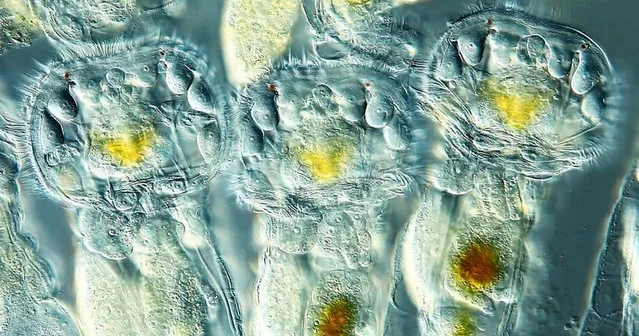
Microscope images forge an extraordinary bond between science and art, said Hidenao Tsuchiya, Olympus America's Vice President and General Manager for the Scientific Equipment Group. We founded this competition to focus on the fascinating stories coming out of today's life science research laboratories. The thousands of images that people have shared with the competition over the years reflect some of the most exciting work going on in research today – work that can help shed light on the living universe and ultimately save lives. We look at BioScapes and these beautiful images as sources of education and inspiration to us and the world
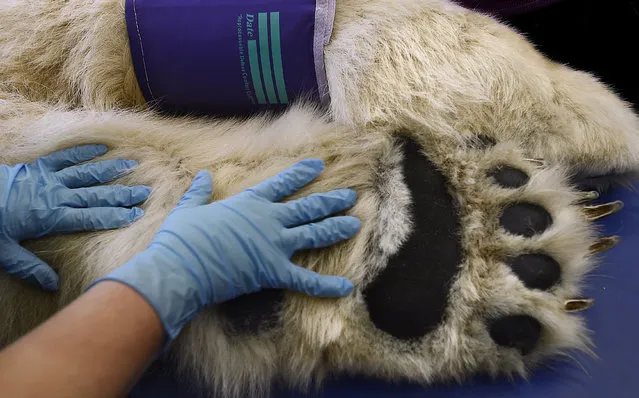
A pair of gloved hands are dwarfed by the furry paws of Boris the Polar Bear at the Point Defiance Zoo & Aquarium's animal health care hospital Saturday, February 23, 2013 in Tacoma, Washington. (Dean J. Koepfler/Tacoma News Tribune/MCT)
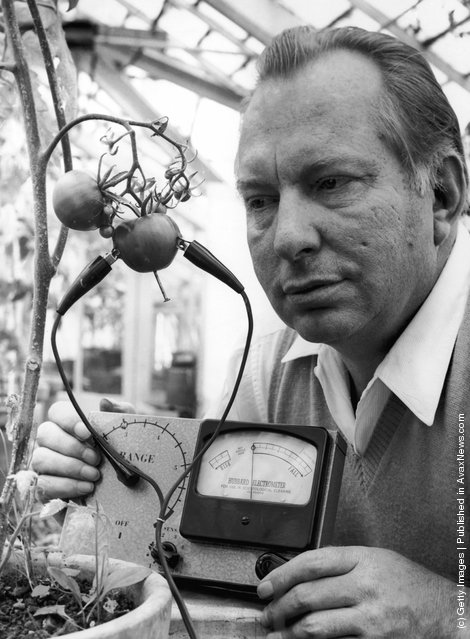
“Lafayette Ronald Hubbard (March 13, 1911 – January 24, 1986), better known as L. Ron Hubbard (and often referred to by his initials, LRH), was an American pulp fiction author and religious leader who founded the Church of Scientology. After establishing a career as a writer, becoming best known for his science fiction and fantasy stories, he developed a self-help system called Dianetics which was first published in May 1950. He subsequently developed his ideas into a wide-ranging set of doctrines and rituals as part of a new religious movement that he called Scientology. His writings became the guiding texts for the Church of Scientology and a number of affiliated organizations that address such diverse topics as business administration, literacy and drug rehabilitation”. – Wikipedia
Photo: American science fiction writer L. Ron Hubbard, founder of the Church of Scientology, uses his Hubbard Electrometer (patent pending) to determine whether tomatoes experience pain, 1959. His work led him to the conclusion that tomatoes “scream when sliced”. (Photo by Scott Lauder/Evening Standard/Hulton Archive/Getty Images)