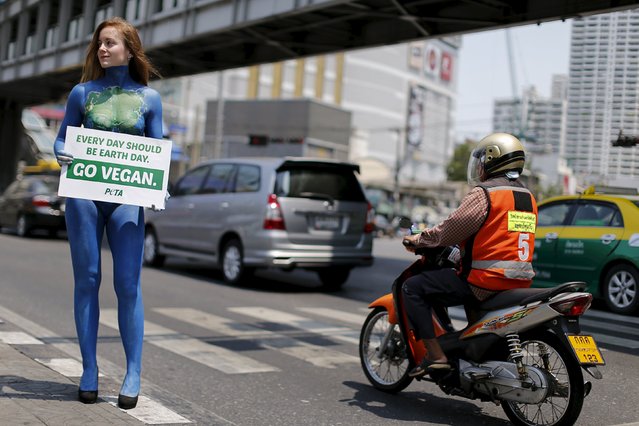
A PETA (People for the Ethical Treatment of Animals) activist with her body painted promotes veganism in Bangkok April 21, 2016. (Photo by Jorge Silva/Reuters)
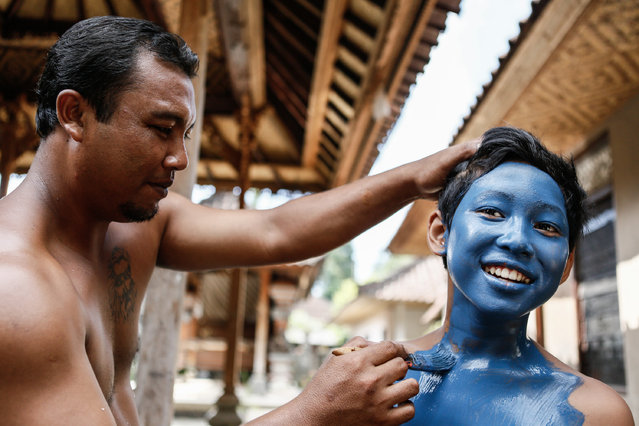
A man paints a boy's body in preparation for the Grebeg ritual on June 25, 2014 in Tegallalang Village, Gianyar, Bali, Indonesia. During the biannual ritual, young members of the community parade through the village with painted faces and bodies to ward off evil spirits. (Photo by Putu Sayoga/Getty Images)
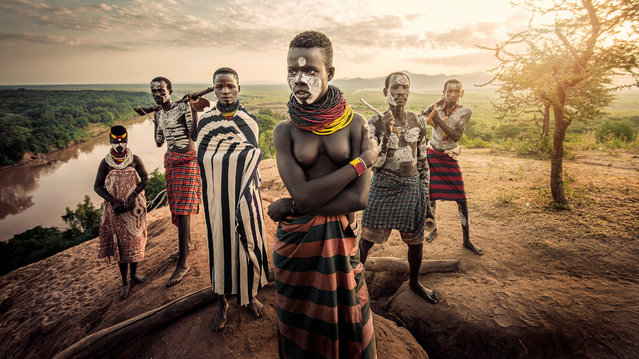
“People of the River”. This is a Karo tribe family; father, mother, two sisters and two brothers. The tribe, who live along the Omo River in east Africa, incorporate rich symbolism into their rituals by using ornate body art, headdresses and body scarification to express beauty and significance. (Photo by Jatenipat Ketpradit/International Portrait Photographer of the Year)
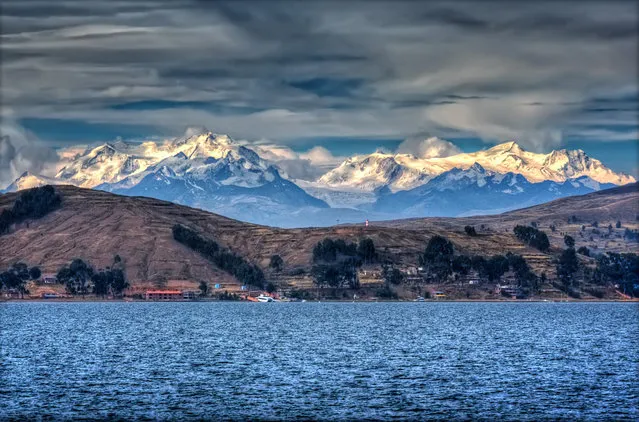
Titicaca or Titiqaqa is a large, deep lake in the Andes on the border of Peru and Bolivia. By volume of water, it is the largest lake in South America. Lake Maracaibo has a larger surface area, though some consider it to be a large brackish bay due to its direct connection with the sea.
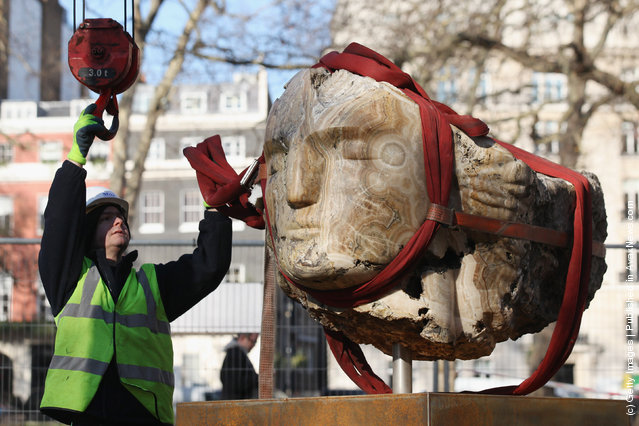
Workmen use a crane to winch a large stone head, created by British sculptor Emily Young, into Berkeley Square on February 2, 2012 in London, England. (Photo by Oli Scarff/Getty Images)
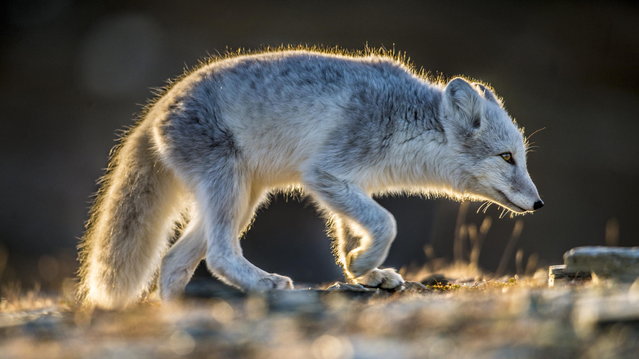
“The arctic fox (Vulpes lagopus), also known as the white fox, polar fox, or snow fox, is a small fox native to the Arctic regions of the Northern Hemisphere and is common throughout the Arctic tundra biome. It is well adapted to living in cold environments. It has a deep thick fur which is brown in summer and white in winter. It averages in size at about 85.3 cm (33.6 in) in body length, with a generally rounded body shape to minimize the escape of body heat. – Wikipedia. (Photo by Trond Eriksen)