Loading...
Done
Innovative Photo Fusion By Ysabel LeMay’s

You might think Ysabel LeMay’s works are hyper-realistic paintings but they’re created through an innovative technique called photo fusion. The Quebec-born, U.S.-based artist takes hundreds of photographs for each piece, attunes the light and visual properties, then assembles one detail at a time in a painterly fashion to form a single composition. Each work takes 4 to 8 weeks on average.
Details
30 May 2013 10:47:00
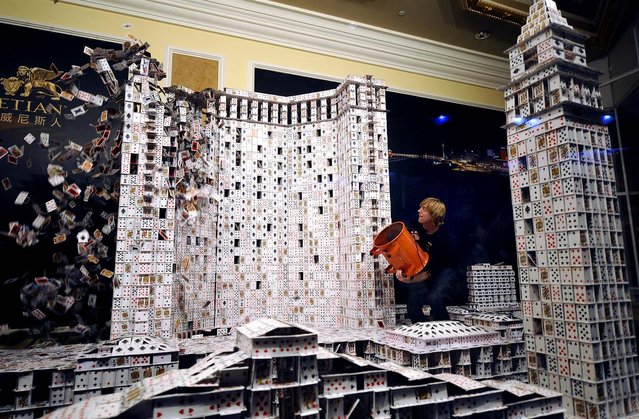
Cardstacker: Bryan Berg

Bryan Berg was introduced to card-stacking by his grandfather at the age of 8. He is a self-taught artist in all of the techniques he uses today. Berg's freestanding card structures are based on a grid-like arrangement, which Berg tested in a structural engineering lab to support 660 lbs per square foot―using no tape, no glue, no folding, and no tricks.
Details
05 Jun 2013 11:52:00
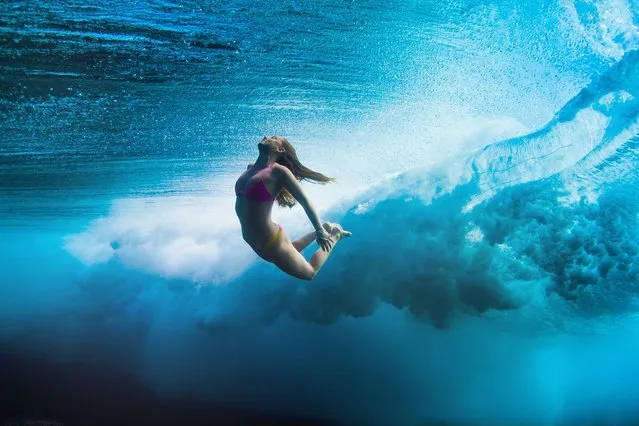
A surfer comes free from her surfboard. (Photo by Sarah Lee/Caters News)

Underwater photographer Sarah Lee uses a technique known as “duck diving” to capture these stunning photos of surfers in Hawaii. Surfers “duck dive” under the water to avoid incoming waves so they can get further out to sea. Photo: A surfer comes free from her surfboard. (Photo by Sarah Lee/Caters News)
Details
24 Jun 2013 12:37:00
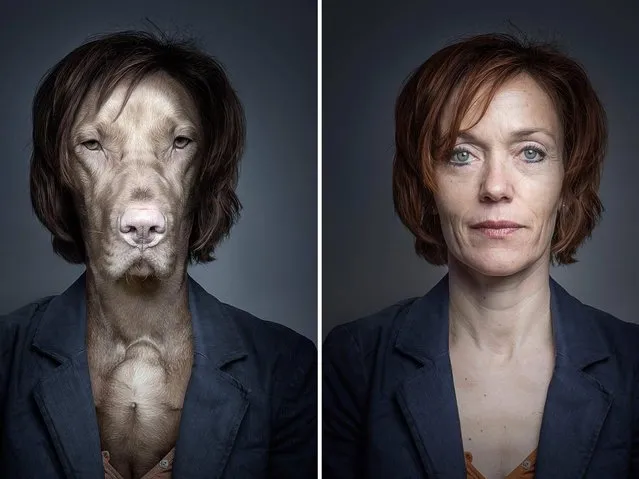
The “Underdogs” Project by Sebastian Magnani

This barking set of images takes the saying “dogs look like their owners” to the ultimate conclusion. Photographer Sebastian Magnani, 28, has cleverly spliced the features of four-legged friends with the head and shoulders of their owners. In a series called “Underdogs”, the Swiss photographer shot the owners and their respective pets in the same portrait style. Then he used expert photo-manipulation techniques to seamlessly transplant the canine faces onto the human bodies. (Photo by Sebastian Magnani)
Details
04 Jul 2013 12:05:00
Intha leg rowing fishermen starts to fish in the early morning hours on Inle Lake in Myanmar

An Intha leg rowing fisherman paddles on Inle Lake December 17, 2011 in Inle Lake, Myanmar. The famous lake is 22 kilometers long and 11 wide and has been a fisherman's paradise for years where they use their leg rowing technique, standing on the stern on one leg and wrapping the other leg around the oar. (Photo by Paula Bronstein /Getty Images)
Details
22 Dec 2011 12:17:00
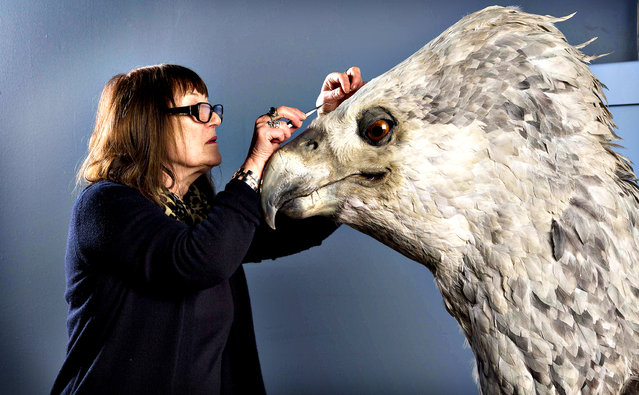
Undated handout photo of Buckbeak, a Hippogriff that lived with Rubeus Hagrid in the Harry Potter series, has his feathers preened and replenished by featherologist Val Jones, as he will feature in the the Feathers and Flight event at Warner Bros. Studio Tour London. (Photo credit should read: Tim Anderson/PA Wire)

Undated handout photo of Buckbeak, a Hippogriff that lived with Rubeus Hagrid in the Harry Potter series, has his feathers preened and replenished by featherologist Val Jones, as he will feature in the the Feathers and Flight event at Warner Bros. Studio Tour London. This is the first make-over Buckbeak has received since the hugely popular Harry Potter film series was made. His intricate coat is created from thousands of individually airbrushed chicken and goose feathers that Val will carefully clean and replenish in time for the start of Feathers and Flight. Val will lead an expert team to demonstrate the techniques that made winged wonders such as Buckbeak and Fawkes the Phoenix a reality on screen. (Photo by Tim Anderson/PA Wire)
Details
22 Mar 2014 13:56:00
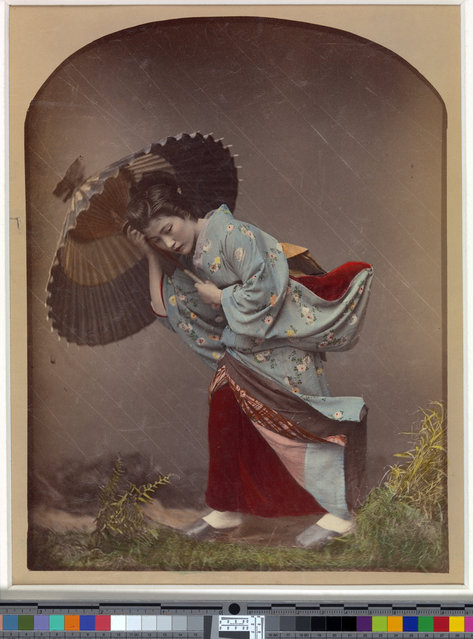
“Woman with Umbrella in Rain” by Raimund von Stillfried. Artist: Kusakabe Kimbei (Japanese, 1841–1934), 1870s. (Photo courtesy of The Metropolitan Museum of Art)

“Woman with Umbrella in Rain” by Raimund von Stillfried. Artist: Kusakabe Kimbei (Japanese, 1841–1934), 1870s. Commercial photography studios in Meiji-era Japan were renowned for the subtlety and refinement of their coloring techniques. This hand-tinted image of a young woman caught in a heavy rainstorm achieved its naturalistic effect by knitting together multiple strands of artifice: the greenery in the foreground was a studio prop; the flaps of the kimono were suspended by thin wires to create the impression of a strong wind; and long, diagonal marks were made on the negative to suggest streaks of rain. (Photo courtesy of The Metropolitan Museum of Art)
Details
12 May 2013 10:13:00
Anamorphic Art By Jonty Hurwitz

The truth can never be seen right away. Only by looking from a certain angle can we view the true nature of things. At other times, only with the help of some special object can we discern order in chaos. Anamorphosis is a form of art that allows us to see an object only by viewing it from a certain angle or by using cylindrical or conical mirror. Unsurprisingly, the first person in history to ever use this type of technique was the Leonardo Da Vinci. During late Renaissance period this technique was popularized as a children’s toy. Now, however, few people use this form of imagery due to its intricacy. Istvan Orosz, born in 1951, is one of the few people who specialize in anamorphosis. In our opinion, his most stunning piece of art is the one where a shipwreck scene turns into a portrait when viewed through a cylindrical mirror. (Photo by Jonty Hurwitz)
Details
05 Jan 2015 13:07:00