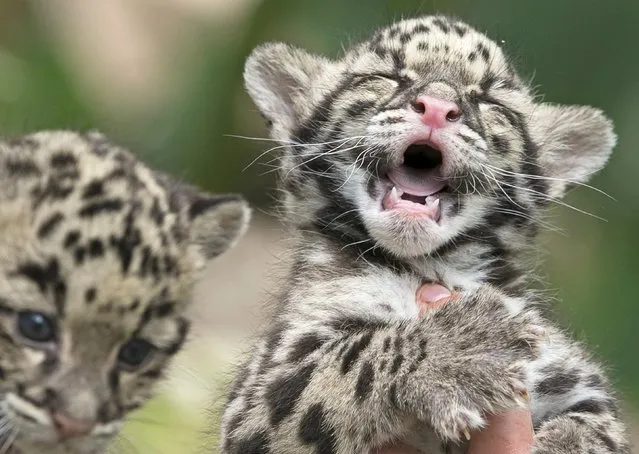
Baby clouded leopards, born early in March 2015, are presented by zoo keepers at the Olmense Zoo in Olmen, Belgium, April 16, 2015. The clouded leopard is an endangered species with only some 10,000 specimen remaining on earth, said Robby Van der Velden, a biologist at the Olmense Zoo. (Photo by Yves Herman/Reuters)
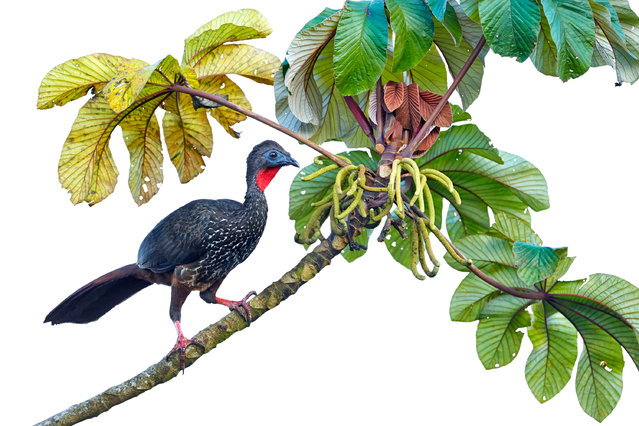
Highly commended birds : Crested guan by Tim Hunt (UK). ‘This photo shows a crested guan in the cloud forests of Costa Rica as it pauses while foraging on a lone branch. Due to the clouds that are so typical for this habitat, I could often only photograph the bird’s silhouette against a grey sky. But then, for a short moment only, the sun broke through the clouds, and I overexposed the image by over two stops in order to blow out the background and allow this beautifully marked bird to stand out’. (Photo by Tim Hunt/GDT European Wildlife Photographer of the Year 2015)
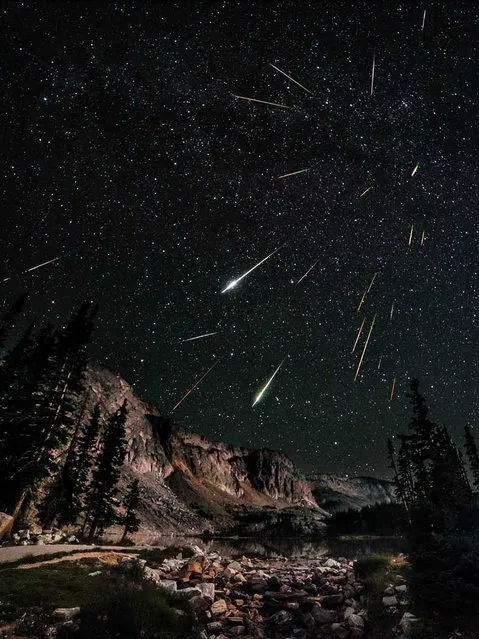
Starting on Monday, August 12, Perseid meteors will streak across the summer sky for a couple of nights, offering casual stargazers and serious nighttime photographers a chance to capture a glimpse of the annual meteor shower. Photo: Photographer David Kingham created this composite image from 23 photos on August 12, 2012. (Photo by David Kingham)
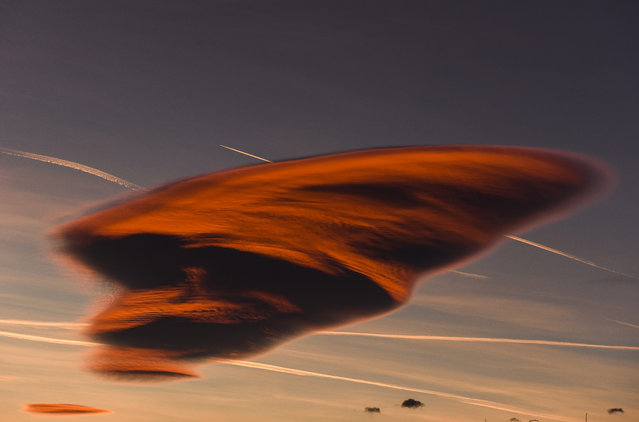
This photo taken on December 2, 2015 shows a lenticular cloud forming as white streaks from airplanes mark the blue sky, in a rare atmospheric phenomena above the town of Gevgelija on December 2, 2015. Lenticular clouds have been regularly confused for UFOs throughout history due to the their smooth, round or oval lens-shaped structure. (Photo by Armend Nimani/AFP Photo)
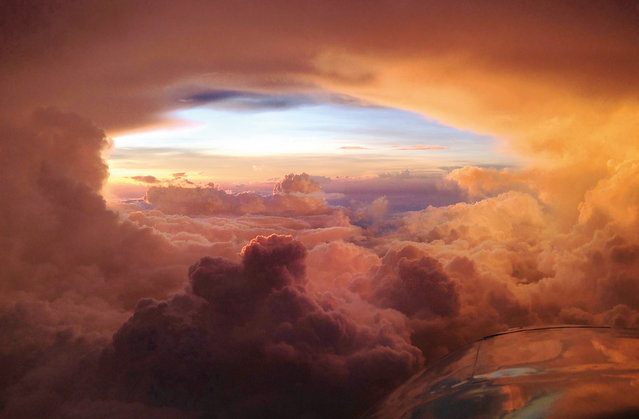
The annual calendar features stunning shots of lighting, cloud formations and the aurora australis. Hundreds of photographers from every Australian state and territory submitted images to the Bureau of Meteorology for selection in the year’s calendar, with only the best chosen to represent the full spectrum of Australian weather. Here: April. A path through the clouds between Townsville and Richmond, Queensland. (Photo by Captain Victoria Harrison/Australian Bureau of Meteorology)