Loading...
Done
In this Thursday, May 16, 2013 file photo, Finland's Krista Siegfrids, second right, kisses a dancer as she performs her song “Marry Me” during the second semifinal of the Eurovision Song Contest at the Malmo Arena in Malmo, Sweden. That was the first girl-on-girl kiss in the history of the annual competition. Previously, organizers had sought to prevent similar embraces citing the competition's status as a family event. (Photo by Alastair Grant/AP Photo)

In this Thursday, May 16, 2013 file photo, Finland's Krista Siegfrids, second right, kisses a dancer as she performs her song “Marry Me” during the second semifinal of the Eurovision Song Contest at the Malmo Arena in Malmo, Sweden. That was the first girl-on-girl kiss in the history of the annual competition. Previously, organizers had sought to prevent similar embraces citing the competition's status as a family event. (Photo by Alastair Grant/AP Photo)
Details
12 May 2016 13:42:00
Sculptures By Susan Lordi

Susan Lordi's art reflects our relationships with people and the world around us. Her keen observation of the human form is further inspired by dance, art history, nature, and personal experiences with family and friends. These influences are revealed in her Willow Tree® sculptures, from which emotion is communicated through gestures only.
Details
05 Sep 2013 10:06:00
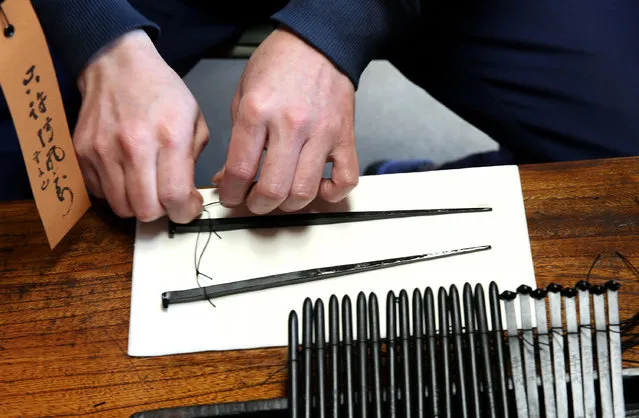
Myouchin Munehisa, 44, as he finishes Hibashi iron bells made of iron on a production line at Myochin Honpo shop on April 25, 2014 in Himeji, Japan. (Photo by Buddhika Weerasinghe/Getty Images)

Myouchin Munehisa, 44, as he finishes Hibashi iron bells made of iron on a production line at Myochin Honpo shop on April 25, 2014 in Himeji, Japan. Myochin family's iron business, started in the Heian period (794-1185) of Japan as an armor and helmet maker, shifted as the needs of people changed in the course of history. (Photo by Buddhika Weerasinghe/Getty Images)
Details
27 Apr 2014 06:29:00
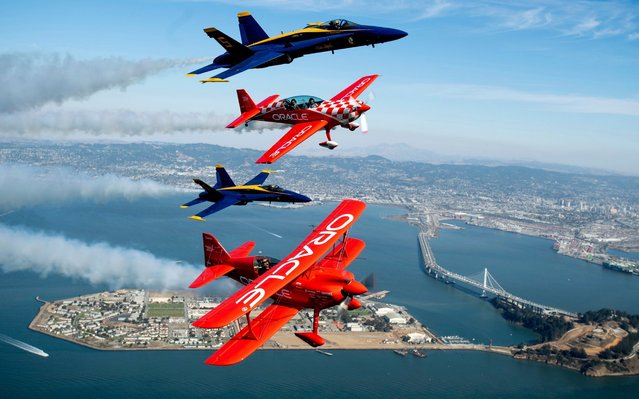
In advance of Fleet Week performances, U.S. Navy Blue Angels fly above San Francisco with Team Oracle aerobatics pilots Sean D. Tucker and Jessy Panzer on Thursday, October 10, 2019. (Photo by Noah Berger/AP Photo)

In advance of Fleet Week performances, U.S. Navy Blue Angels fly above San Francisco with Team Oracle aerobatics pilots Sean D. Tucker and Jessy Panzer on Thursday, October 10, 2019. (Photo by Noah Berger/AP Photo)
Details
13 Oct 2019 00:07:00


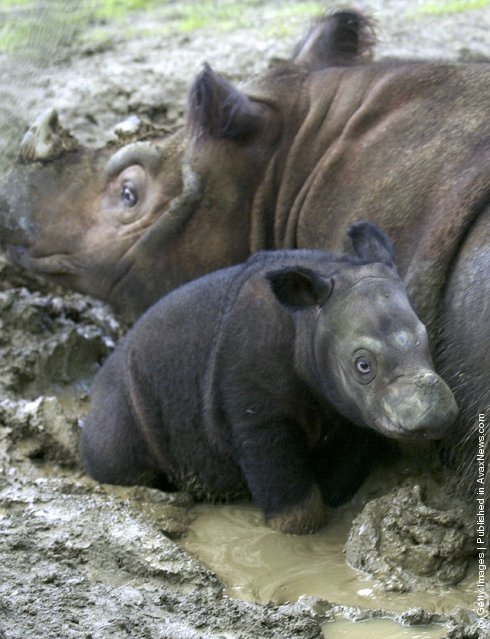
“The Sumatran Rhinoceros (Dicerorhinus sumatrensis) is a member of the family Rhinocerotidae and one of five extant rhinoceroses. It is the only extant species of the genus Dicerorhinus. It is the smallest rhinoceros, standing about 120–145 centimetres (3.9–4.76 ft) high at the shoulder, with a body length of 250 centimetres (8.2 ft) and weight of 500–800 kilograms (1,100–1,800 lb). Like the African species, it has two horns; the larger is the nasal horn, typically 15–25 centimetres (5.9–9.8 in), while the other horn is typically a stub. A coat of reddish-brown hair covers most of the Sumatran Rhino's body”. – Wikipedia

Photo: Emi, a Sumatran rhinoceros lies in the mud with her three-week-old female calf at the Cincinnati Zoo and Botanical Garden August 19, 2004 in Cincinnati, Ohio. Emi made history by becoming the first Sumatran rhino to produce two calves in captivity. (Photo by Mike Simons/Getty Images)
Details
22 Jun 2011 12:37:00
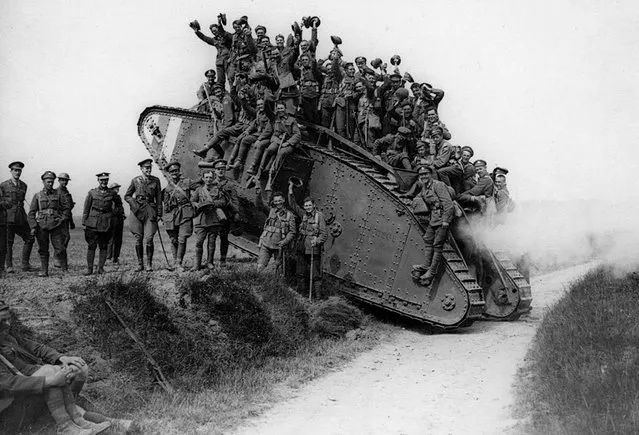
These black-and-white photos are taken from the new book “Armoured Warfare in the First World War 1916 – 1918” by Anthony Tucker-Jones and published by Pen & Sword Military. “Interestingly the British, French and Germans took completely different approaches with varying results”. The British military produced “Little Willie” in Autumn 1915 weighing 18 tonnes, which had a crew of two plus four gunners. “Inspired by a tracked artillery tractor “Little Willie” was referred to as a water tank – hence the name tank – to ensure secrecy”, said Anthony. “This led to the strange looking Mark I with its peculiar rhomboid shape, designed to cross trenches with guns in sponsons on either side. The Germans saw the tank as unchivalrous and were slow to grasp its utility. They favoured the Stormtrooper (specialist soldiers used to infiltrate enemy trenches) and artillery, not the tank”, said Anthony. “However, they didn’t hesitate to make use of captured British tanks. Although the tank helped secure victory and German soldiers dubbed it “Germany’s Downfall” the country was ultimately brought to its knees by the Allies blockade”. Here: British troops hitch a ride on a Mark IV after the massed tank fleet spearheading attack at Cambrai on November 20, 1917. (Photo by Anthony Tucker-Jones/Mediadrumworld.com)

These black-and-white photos are taken from the new book “Armoured Warfare in the First World War 1916 – 1918” by Anthony Tucker-Jones and published by Pen & Sword Military. Here: British troops hitch a ride on a Mark IV after the massed tank fleet spearheading attack at Cambrai on November 20, 1917. (Photo by Anthony Tucker-Jones/Mediadrumworld.com)
Details
23 Feb 2017 00:02:00
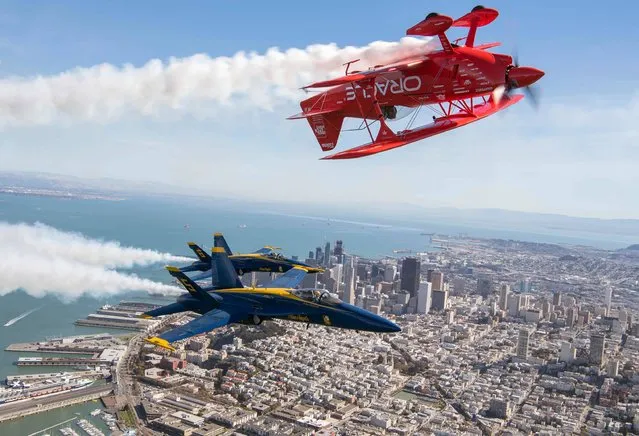
The US Navy Blue Angels numbers 5 and 6 fly below Sean Tucker (above) as he pilots the Oracle Challenger III over San Francisco, California as part of a practice run for Fleet Week on October 6, 2016. (Photo by Josh Edelson/AFP Photo)

The US Navy Blue Angels numbers 5 and 6 fly below Sean Tucker (above) as he pilots the Oracle Challenger III over San Francisco, California as part of a practice run for Fleet Week on October 6, 2016. (Photo by Josh Edelson/AFP Photo)
Details
10 Oct 2016 10:06:00
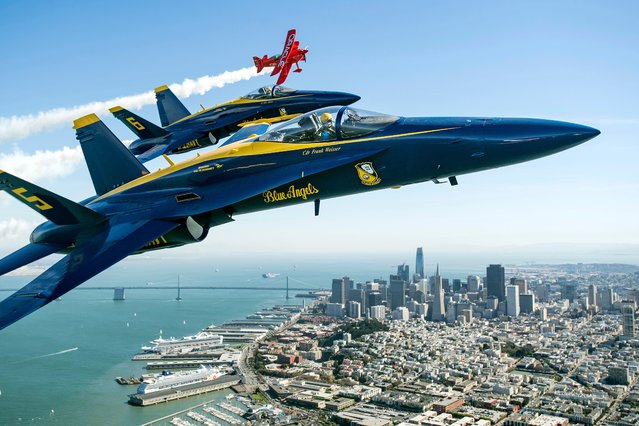
In advance of Fleet Week performances, the U.S. Navy Blue Angels and Team Oracle aerobatics pilot Sean D. Tucker fly over the San Francisco Bay during a photo flight on Thursday, October 5, 2017. (Photo by Noah Berger/AP Photo)

In advance of Fleet Week performances, the U.S. Navy Blue Angels and Team Oracle aerobatics pilot Sean D. Tucker fly over the San Francisco Bay during a photo flight on Thursday, October 5, 2017. (Photo by Noah Berger/AP Photo)
Details
08 Oct 2017 07:02:00