Loading...
Done
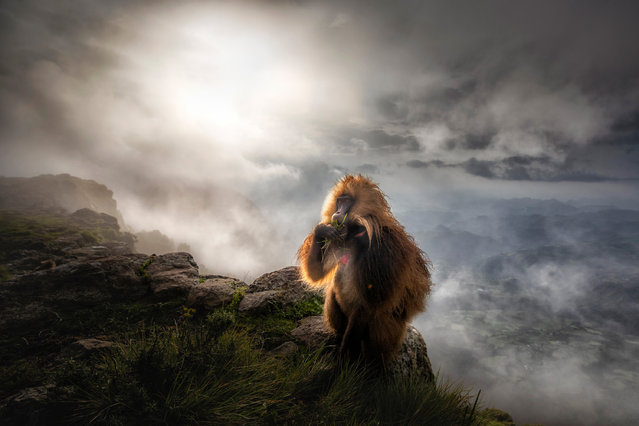
Highly commended, mammals: Gelada after the storm – Marco Gaiotti (Italy). “Gelada baboons are the only monkey species in the world that feed on grasses. They are native to the tableland of Ethiopia. Every morning large family groups wander from their sleeping places in the steep rock face, up to 1,000 metres high, to the feeding grounds at the tablelands. This image clearly depicts their feeding strategy: they pull out bunches of grass, sort the stalks and then lift them to their mouth. This shot was taken towards the end of the rainy season after a heavy storm”. (Photo by Marco Gaiotti/2019 GDT European Wildlife Photographer of the Year)

Highly commended, mammals: Gelada after the storm – Marco Gaiotti (Italy). “Gelada baboons are the only monkey species in the world that feed on grasses. They are native to the tableland of Ethiopia. Every morning large family groups wander from their sleeping places in the steep rock face, up to 1,000 metres high, to the feeding grounds at the tablelands. This image clearly depicts their feeding strategy: they pull out bunches of grass, sort the stalks and then lift them to their mouth. This shot was taken towards the end of the rainy season after a heavy storm”. (Photo by Marco Gaiotti/2019 GDT European Wildlife Photographer of the Year)
Details
31 Oct 2019 00:03:00
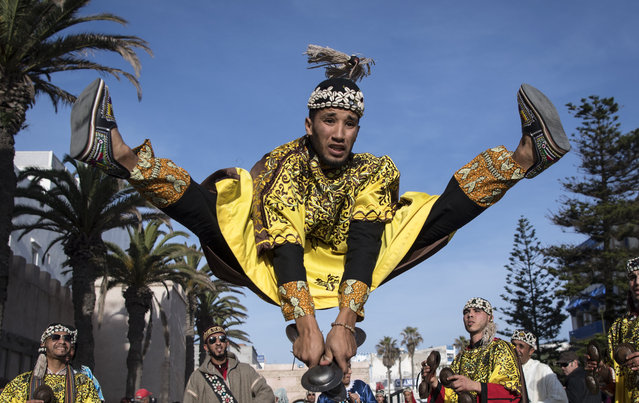
A Gnawa traditional group performs in the city of Essaouira on December 14, 2019, to celebrate the decision of adding the Gnawa culture to UNESCO's list of Intangible Cultural Heritage of Humanity. Gnawa culture, a centuries-old Moroccan practice rooted in music, African rituals and Sufi traditions, was added to UNESCO's list of Intangible Cultural Heritage of Humanity earlier in the week. Gnawa refers to a “set of musical productions, fraternal practices and therapeutic rituals where the secular mixes with the sacred”, according to the nomination submitted by Morocco. Often dressed in colourful outfits, Gnawa musicians play the guenbri, a type of lute with three strings, accompanied by steel castanets called krakebs. (Photo by Fadel Senna/AFP Photo)

A Gnawa traditional group performs in the city of Essaouira on December 14, 2019, to celebrate the decision of adding the Gnawa culture to UNESCO's list of Intangible Cultural Heritage of Humanity. Gnawa culture, a centuries-old Moroccan practice rooted in music, African rituals and Sufi traditions, was added to UNESCO's list of Intangible Cultural Heritage of Humanity earlier in the week. Gnawa refers to a “set of musical productions, fraternal practices and therapeutic rituals where the secular mixes with the sacred”, according to the nomination submitted by Morocco. Often dressed in colourful outfits, Gnawa musicians play the guenbri, a type of lute with three strings, accompanied by steel castanets called krakebs. (Photo by Fadel Senna/AFP Photo)
Details
18 Dec 2019 00:05:00
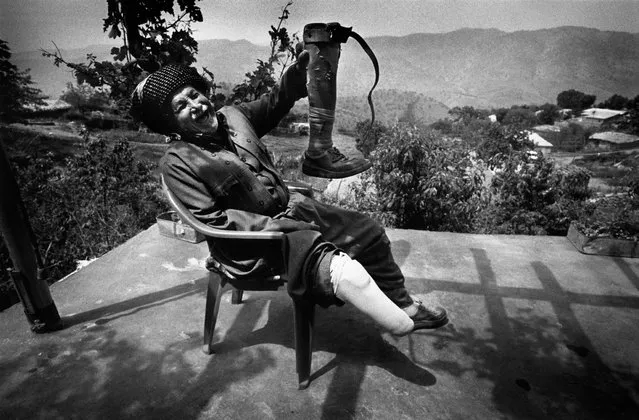
Ismail Mustafa, seen in 2007. “I was collecting mushrooms on the hill near here. I didn’t see the mine. There was a huge explosion. When I woke up I saw that both my legs were gone; I thought my life was over. My brother and another guy were with me. They made a stretcher from sticks and tied it together with clothing. It took two hours to get off the mountain. ‘My daughter has also been injured. She found a shell and brought it into the house and put it on the fire. She didn’t know what she was doing at the time – she was only three. She is blind and has lost an arm”. (Photo by Sean Sutton for the Mines Advisory Group/The Guardian)

Ismail Mustafa, seen in 2007. “I was collecting mushrooms on the hill near here. I didn’t see the mine. There was a huge explosion. When I woke up I saw that both my legs were gone; I thought my life was over. My brother and another guy were with me. They made a stretcher from sticks and tied it together with clothing. It took two hours to get off the mountain. ‘My daughter has also been injured. She found a shell and brought it into the house and put it on the fire. She didn’t know what she was doing at the time – she was only three. She is blind and has lost an arm”. (Photo by Sean Sutton for the Mines Advisory Group/The Guardian)
Details
08 Sep 2017 09:33:00
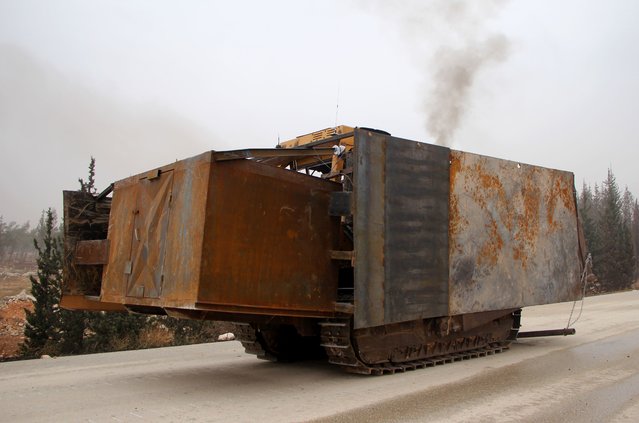
Rebel fighters from the Jaish al- Fatah (or Army of Conquest) brigades manoeuver an alleged explosive- rigged make- shift armoured vehicle during a major assault on Syrian government forces West of Aleppo city on October 28, 2016 Syrian opposition fighters launched a major assault on government forces to break a months- long siege of rebel- held neighbourhoods of the battered city of Aleppo. Rebel groups including the powerful Ahrar al- Sham faction and former Al- Qaeda affiliate Fateh al- Sham Front fired waves of rockets into government- held western Aleppo, killing at least 15 civilians, a monitor said. (Photo by Omar Haj Kadour/AFP Photo)

Rebel fighters from the Jaish al- Fatah (or Army of Conquest) brigades manoeuver an alleged explosive- rigged make- shift armoured vehicle during a major assault on Syrian government forces West of Aleppo city on October 28, 2016 Syrian opposition fighters launched a major assault on government forces to break a months- long siege of rebel- held neighbourhoods of the battered city of Aleppo. Rebel groups including the powerful Ahrar al- Sham faction and former Al- Qaeda affiliate Fateh al- Sham Front fired waves of rockets into government- held western Aleppo, killing at least 15 civilians, a monitor said. (Photo by Omar Haj Kadour/AFP Photo)
Details
29 Oct 2016 11:51:00
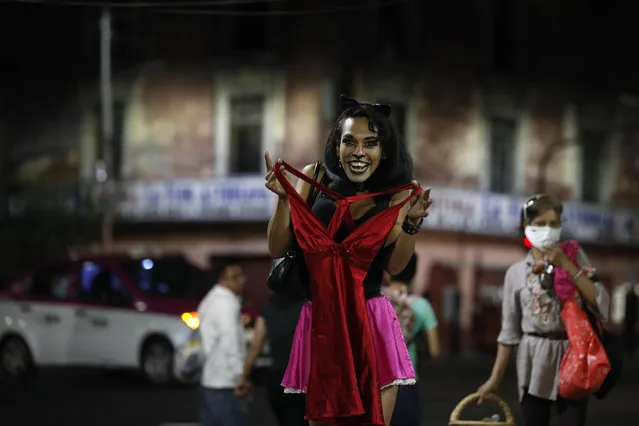
Sеx worker Geraldine, wearing cat make-up, excitedly holds up a dress she is thinking of buying from a street vendor, so that her partner, sitting nearby to keep her company, can see it, as she waits for clients outside the Revolution subway station, in Mexico City, Saturday, March 13, 2021. According to Geraldine, 30, the pandemic has cut clients and increased risks to the sеx workers but has also brought out more assistance for them too, both from dedicated organizations such as the activist group Brigada Callejera or “The Street Brigade” and from individuals who have donated food or clothing. (Photo by Rebecca Blackwell/AP Photo)

Sеx worker Geraldine, wearing cat make-up, excitedly holds up a dress she is thinking of buying from a street vendor, so that her partner, sitting nearby to keep her company, can see it, as she waits for clients outside the Revolution subway station, in Mexico City, Saturday, March 13, 2021. According to Geraldine, 30, the pandemic has cut clients and increased risks to the sеx workers but has also brought out more assistance for them too, both from dedicated organizations such as the activist group Brigada Callejera or “The Street Brigade” and from individuals who have donated food or clothing. (Photo by Rebecca Blackwell/AP Photo)
Details
25 Apr 2021 07:38:00
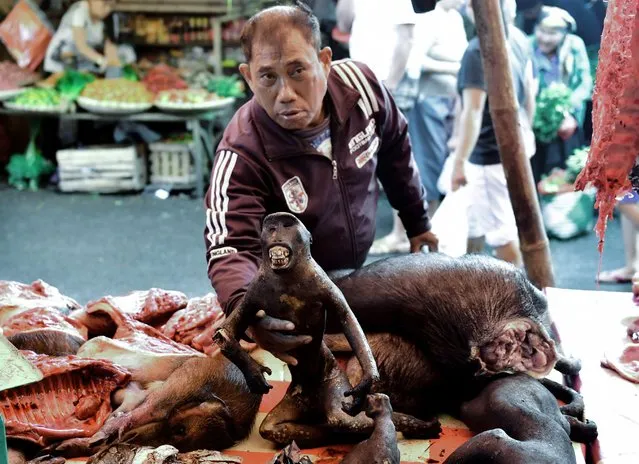
This picture taken on February 18, 2017 shows a customer holding a crested black macaque in Tomohon market in northern Sulawesi, Indonesia. (Photo by Bay Ismoyo/AFP Photo)

This picture taken on February 18, 2017 shows a customer holding a crested black macaque in Tomohon market in northern Sulawesi, Indonesia. Authorities and activists are stepping up efforts to persuade villagers on Sulawesi island to stop consuming the critically endangered crested black macaques, one of many exotic creatures that form part of the local indigenous community' s diet. The macaque' s meat is prized by the ethnic Minahasan people, a largely Christian group in the world' s most populous Muslim- majority country, who have no reservation about eating exotic animals, unlike Indonesia' s Islamic communities. (Photo by Bay Ismoyo/AFP Photo)
Details
04 Apr 2017 10:01:00
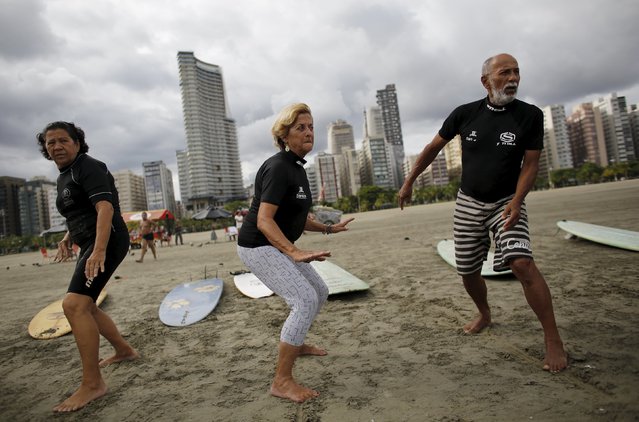
(L-R) Edmea Pereira, 69, Elsa Rodrigues, 61, and Osmidio Conde, 71, take part in their surf class in Santos, Sao Paulo state, Brazil, March 16, 2016. (Photo by Nacho Doce/Reuters)

(L-R) Edmea Pereira, 69, Elsa Rodrigues, 61, and Osmidio Conde, 71, take part in their surf class in Santos, Sao Paulo state, Brazil, March 16, 2016. When work is up, surf is up in Brazil, as a group of retired citizens take to the waves in keep-fit, keep-young sessions at a surf school in the city of Santos. The classes are run for free, three times a week at the Cisco Arana school, which aims to prove that age is just a number. (Photo by Nacho Doce/Reuters)
Details
19 Mar 2016 12:31:00
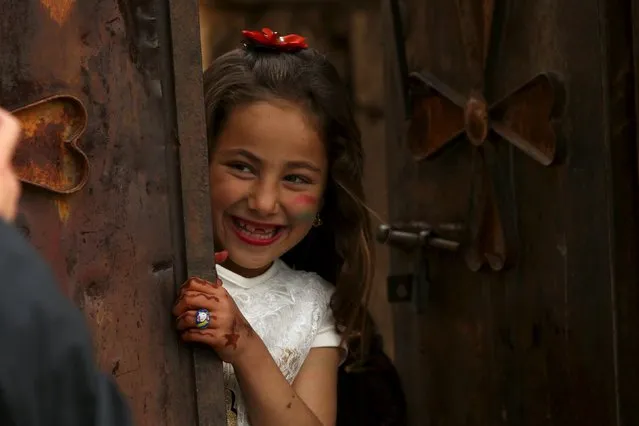
A Kurdish girl celebrates Newroz Day, a festival marking spring and the new year, in Akra, Iraq March 20, 2016. (Photo by Ari Jalal/Reuters)

A Kurdish girl celebrates Newroz Day, a festival marking spring and the new year, in Akra, Iraq March 20, 2016. Nowruz is the name of the Iranian New Year also referred to as Persian New Year which is celebrated worldwide by Iranian peoples, along with some other ethno-linguistic groups. Nowruz is the day of the vernal equinox, and marks the beginning of spring in the Northern Hemisphere. It usually occurs on March 21 or the previous/following day, depending on where it is observed. Although having Persian and religious Zoroastrian origins, Nowruz has been celebrated by people from diverse ethno-linguistic communities for thousands of years. (Photo by Ari Jalal/Reuters)
Details
21 Mar 2016 12:47:00