MY Raven, a former steamer now converted to diesel, cruises across Ullswater from Glenridding to Pooley Bridge in Cumbria, UK on October 25, 2024. (Photo by Andrew McCaren/London News Pictures)
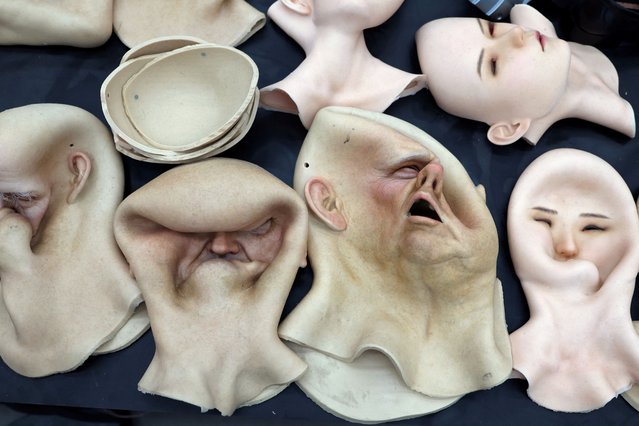
Heads for humanoid robots lie on a table at the office of developer Ex-Robots in Dalian, Liaoning province, China on June 6, 2024. (Photo by Florence Lo/Reuters)
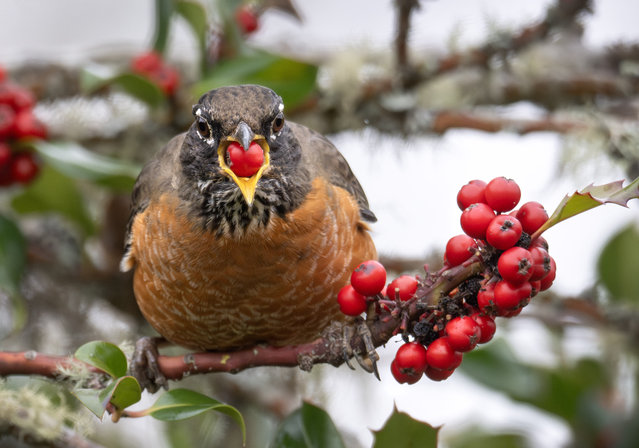
An American robin feeds on holly berries in a thicket near Elkton in southwestern Oregon on November 16, 2024. Many birds can safely consume holly berries, including blackbirds, redwings, and thrushes. There is an old wives tale that if you see a bird eating a berry, it is safe for humans to eat, but this is not true. Birds consume many plants that are poisonous to humans, holly berries included. (Photo by Robin Loznak/ZUMA Press Wire/Rex Features/Shutterstock)
Jordan Mann (R) falls into the water as he and Jordan Cross compete in the first round of Men's 3000 Meters Steeplechase during day four of the 2020 U.S. Olympic Track & Field Team Trials at Hayward Field on June 21, 2021 in Eugene, Oregon. (Photo by Patrick Smith/Getty Images)
A supporter of BJP dances during celebrations after learning of initial poll results outside the party headquarters in New Delhi, on May 16, 2014. (Photo by Anindito Mukherjee/Reuters)
I know, this answer was a little too short, so let me explain in a little more detail.
Imagine tossing a coin. Normally, any normal coin toss has two possible outcomes - heads or tails - with each one having a 50% chance of happening. Ideally, that is, because factors like the force of your finger tossing the coin, gravity, the wind, the moon phase and a passing TARDIS can all influence the outcome of the toss - but I have deviated from the subject.