Loading...
Done
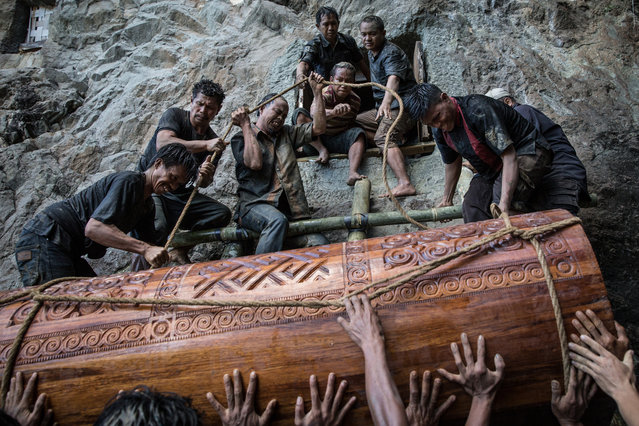
It is said that Torajans are people who “live to die”. For this Indonesian ethnic group, funerals are such extravagant events that they sometimes attract tourists. Families can postpone burials years (and the deceased are considered sick and hosted at home until the funeral) until the family can raise enough money and gather as many relatives as possible. And then it’s a jubilant multiday social event with a parade, dances and animal sacrifices. Agung Parameswara photographed these funerary practices when he traveled to South Sulawesi province, where the Torajans live. But often, their funeral isn’t the last time the dead are seen. In August, crypts are opened, coffins are slid back out and bodies delicately unsheathed. This tender ritual is known as Ma’Nene, which is customarily performed every few years. (Photo by Agung Parameswara/The Washington Post)

It is said that Torajans are people who “live to die”. For this Indonesian ethnic group, funerals are such extravagant events that they sometimes attract tourists. Families can postpone burials years (and the deceased are considered sick and hosted at home until the funeral) until the family can raise enough money and gather as many relatives as possible. And then it’s a jubilant multiday social event with a parade, dances and animal sacrifices. Agung Parameswara photographed these funerary practices when he traveled to South Sulawesi province, where the Torajans live. (Photo by Agung Parameswara/The Washington Post)
Details
06 Oct 2016 09:15:00
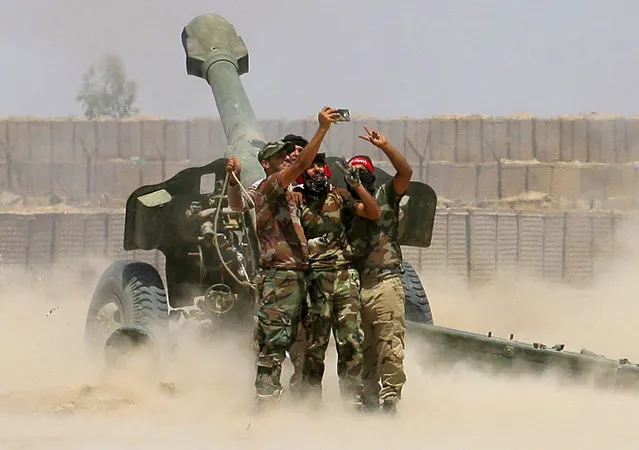
In this Sunday, May 29, 2016 photo, fighters take a selfie while firing artillery during fight against Islamic State militants in Fallujah, Iraq. Iraqi forces this week pushed into the city's southern sections after securing surrounding towns and villages more than 50,000 people are believed to be trapped inside the Sunni majority city, about 65 kilometers (40 miles) west of Baghdad. (Photo by Anmar Khalil/AP Photo)

In this Sunday, May 29, 2016 photo, fighters take a selfie while firing artillery during fight against Islamic State militants in Fallujah, Iraq. Iraqi forces this week pushed into the city's southern sections after securing surrounding towns and villages more than 50,000 people are believed to be trapped inside the Sunni majority city, about 65 kilometers (40 miles) west of Baghdad. (Photo by Anmar Khalil/AP Photo)
Details
04 Jun 2016 12:18:00
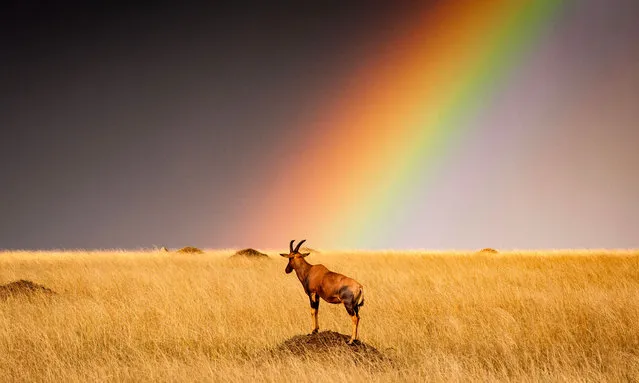
Early morning storms over the Masai Mara National Reserve, Kenya on August 26, 2016. (Photo by Action Press/Rex Features/Shutterstock)

Early morning storms over the Masai Mara National Reserve, Kenya on August 26, 2016. (Photo by Action Press/Rex Features/Shutterstock)
Details
03 Sep 2016 09:34:00
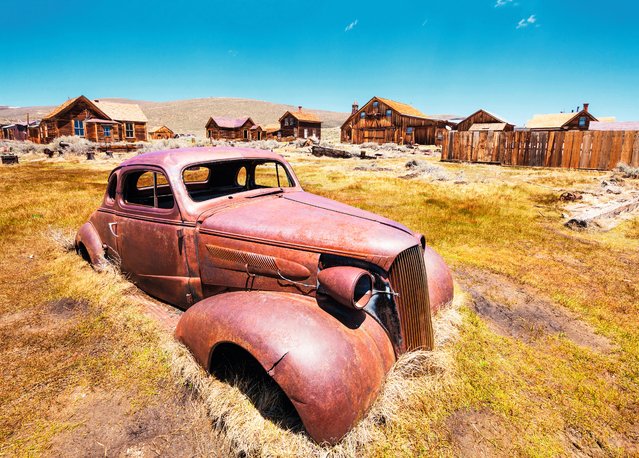
Bodie, Mono County, California. Gold was discovered at Bodie in 1859 (just after the initial California gold rush) and it went from mining camp to boomtown. Its decline began in 1880, when word spread of new boomtowns elsewhere. The Standard Consolidated Mine closed in 1913, and four years later the Bodie Railway was abandoned. By 1940 the population was down to 40. Today, Bodie is maintained in a state of arrested decay as a visitor attraction. (Photo by Alamy Stock Photo)

Kieron Connolly’s new book of photographs of more than 100 once-busy and often elegant buildings gives an idea of how the world might look if humankind disappeared. Here: Bodie, Mono County, California. Gold was discovered at Bodie in 1859 (just after the initial California gold rush) and it went from mining camp to boomtown. Its decline began in 1880, when word spread of new boomtowns elsewhere. The Standard Consolidated Mine closed in 1913, and four years later the Bodie Railway was abandoned. By 1940 the population was down to 40. Today, Bodie is maintained in a state of arrested decay as a visitor attraction. (Photo by Alamy Stock Photo)
Details
07 Sep 2016 09:50:00
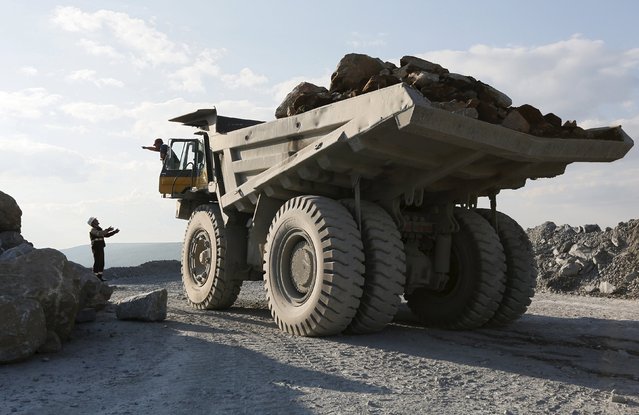
An engineer (L) talks to a driver of a dump truck loaded with gold-bearing soil at the Vostochny opencast of the Olimpiada gold operation, owned by Polyus Gold International company, in Krasnoyarsk region, Eastern Siberia, Russia, June 30, 2015. (Photo by Ilya Naymushin/Reuters)

An engineer (L) talks to a driver of a dump truck loaded with gold-bearing soil at the Vostochny opencast of the Olimpiada gold operation, owned by Polyus Gold International company, in Krasnoyarsk region, Eastern Siberia, Russia, June 30, 2015. Polyus Gold International is the largest gold producer in Russia and one of the top 10 gold miners globally by ounces produced, according to the official web site of the company. Olimpiada is Polyus Gold's largest operation. (Photo by Ilya Naymushin/Reuters)
Details
04 Jul 2015 11:12:00
A model has her hair sprayed backstage at the Ukrainian Fashion Week in Kyiv, Ukraine on August 31, 2020. (Photo by Gleb Garanich/Reuters)

A model has her hair sprayed backstage at the Ukrainian Fashion Week in Kyiv, Ukraine on August 31, 2020. (Photo by Gleb Garanich/Reuters)
Details
02 Sep 2020 00:07:00
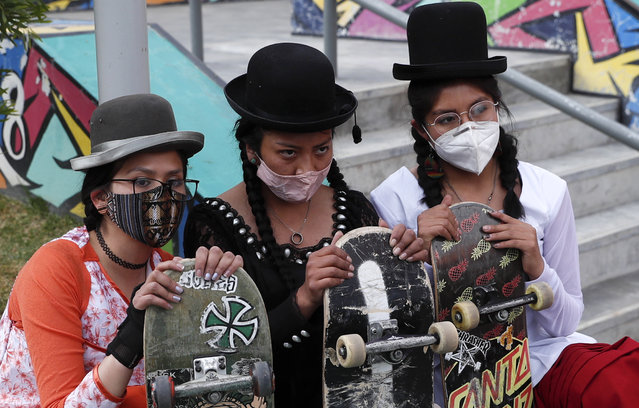
Yanira Villarreal, left, Ayde Choque, center, and Milenda Limachi, wearings masks amid the COVID-19 pandemic and dressed as a “Cholita” pose for a photo with their skateboards during a youth talent show in La Paz, Bolivia, Wednesday, September 30, 2020. Young women called “Skates Imillas”, using the Aymara word for girl Imilla, use traditional Indigenous clothing as a statement of pride of their Indigenous culture while playing riding their skateboards. (Photo by Juan Karita/AP Photo)

Yanira Villarreal, left, Ayde Choque, center, and Milenda Limachi, wearings masks amid the COVID-19 pandemic and dressed as a “Cholita” pose for a photo with their skateboards during a youth talent show in La Paz, Bolivia, Wednesday, September 30, 2020. Young women called “Skates Imillas”, using the Aymara word for girl Imilla, use traditional Indigenous clothing as a statement of pride of their Indigenous culture while playing riding their skateboards. (Photo by Juan Karita/AP Photo)
Details
02 Oct 2020 00:07:00
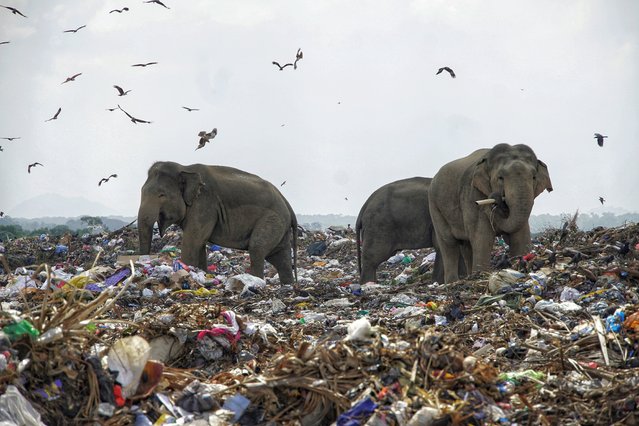
Elephants forage for food at a rubbish dump encroaching on their jungle habitat in Oluvil, Sri Lanka in September 2020. Examination of dead elephants has revealed undigested polythene and other plastic waste. (Photo by Tharmaplan Tilaxan/Cover Images)

Elephants forage for food at a rubbish dump encroaching on their jungle habitat in Oluvil, Sri Lanka in September 2020. Examination of dead elephants has revealed undigested polythene and other plastic waste. (Photo by Tharmaplan Tilaxan/Cover Images)
Details
11 Nov 2020 00:05:00