Loading...
Done
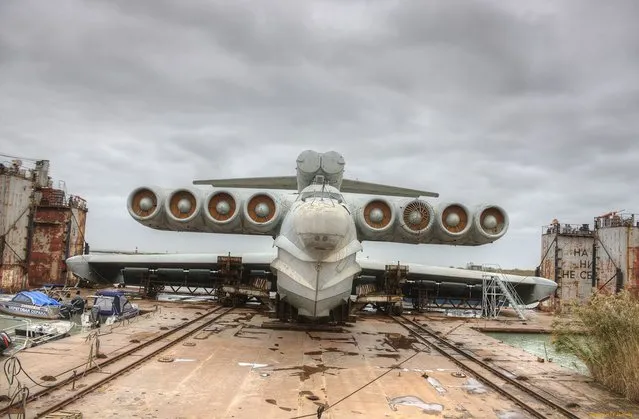
The Lun-class Ekranoplane was used by the Soviet Navy starting in 1987, and wasn't retired until the late 1990s, after the Soviet Union's fall. (Igor113)

“The Lun-class ekranoplan (NATO reporting name Duck) was a ground effect vehicle (GEV) designed by Rostislav Evgenievich Alexeev and used by the Soviet and Russian navies from 1987 until sometime in the late 1990s. It “flew” using the lift generated by the ground effect of its large wings when close to the surface of the water – about four metres or less. Although they might look similar and/or have related technical characteristics, ekranoplans like the Lun are not aircraft, seaplanes, hovercraft, or hydrofoils – ground effect is a separate technology altogether. The International Maritime Organization classifies these vehicles as maritime ships. The name Lun comes from the Russian for harrier”. – Wikipedia (Photo by Igor113)
Details
08 Aug 2014 10:51:00
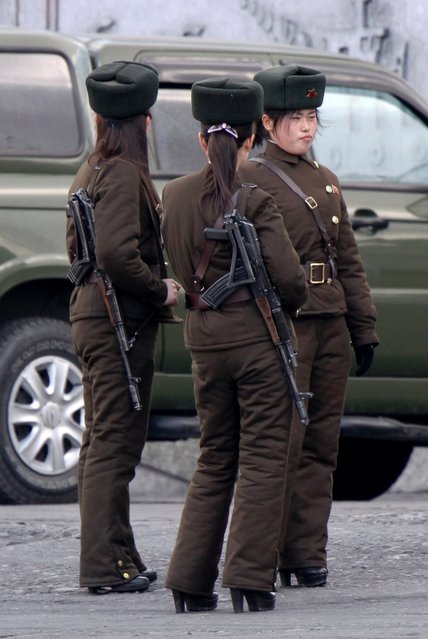
In this Thursday, April 11, 2013 photo, North Korean female soldiers stand watch on the river bank of the North Korean town of Sinuiju, opposite to the Chinese border city of Dandong. (Photo by AP Photo)

In this Thursday, April 11, 2013 photo, North Korean female soldiers stand watch on the river bank of the North Korean town of Sinuiju, opposite to the Chinese border city of Dandong. (Photo by AP Photo)
Details
22 May 2013 13:28:00
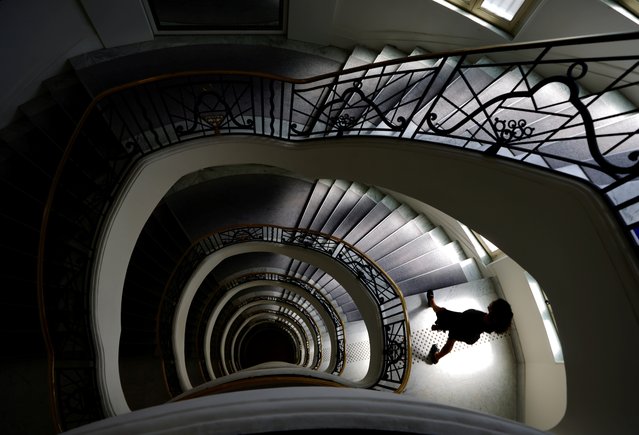
A woman walks in the stairs of the Hotel Martinez in Cannes as the French Riviera prepares for the 2021 edition of the Cannes Film Festival which will take place next July, in France, June 3, 2021. (Photo by Eric Gaillard/Reuters)

A woman walks in the stairs of the Hotel Martinez in Cannes as the French Riviera prepares for the 2021 edition of the Cannes Film Festival which will take place next July, in France, June 3, 2021. (Photo by Eric Gaillard/Reuters)
Details
09 Jun 2021 10:34:00
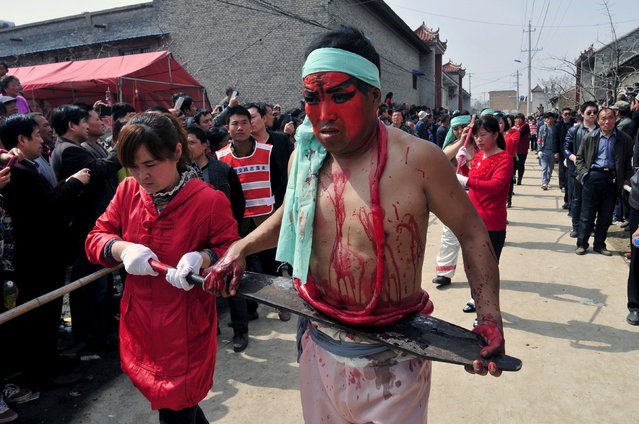
A folk performer (front R) with make-up and props takes part in a “Blood Shehuo” parade, during a performance in Linyi county, Shanxi province March 21, 2015. “Shehuo” is the common name of Chinese traditional activities consisting of folk performances in northern China. The "Blood Shehuo" performers use make-up and props to re-enact scenes of horror in classic Chinese novels like Water Margin. (Photo by Reuters/Stringer)

A folk performer (front R) with make-up and props takes part in a “Blood Shehuo” parade, during a performance in Linyi county, Shanxi province March 21, 2015. “Shehuo” is the common name of Chinese traditional activities consisting of folk performances in northern China. The “Blood Shehuo” performers use make-up and props to re-enact scenes of horror in classic Chinese novels like Water Margin. (Photo by Reuters/Stringer)
Details
23 Mar 2015 10:33:00
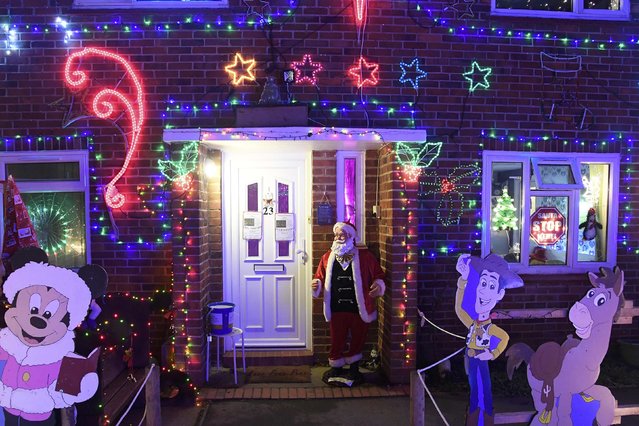
A home is decorated with a display of  Christmas of lights in a tradition that has grown over recent years in the small village of Westfield in Sussex, south east England, December 15, 2016. (Photo by Toby Melville/Reuters)

A home is decorated with a display of Christmas of lights in a tradition that has grown over recent years in the small village of Westfield in Sussex, south east England, December 15, 2016. (Photo by Toby Melville/Reuters)
Details
19 Dec 2016 06:53:00
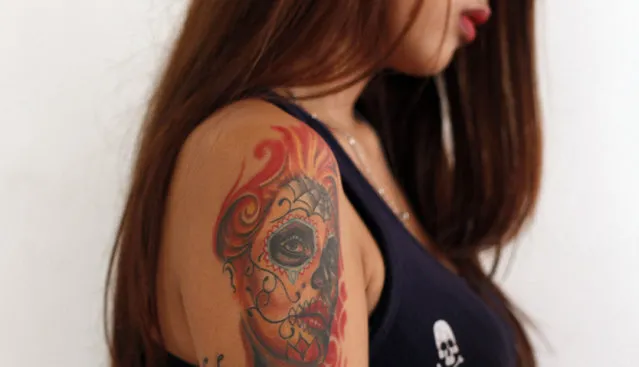
A tattoo is displayed on the arm of a girl during Bandung Body Art Festival at in Bandung, West Java, on December 7, 2014. Upon its establishment in 2010, founders of the Bandung Body Art Festival sought to celebrate an art form that was once taboo and associated with criminals. Tattoos are now an increasingly acceptable part of Indonesia’s urban landscape, and the annual event this year continued its campaign with 45 tattoo artists offering their services for free at the Ganesha Cultural Center. (Photo by Rezza Estily/JG Photo)

A tattoo is displayed on the arm of a girl during Bandung Body Art Festival at in Bandung, West Java, on December 7, 2014. Upon its establishment in 2010, founders of the Bandung Body Art Festival sought to celebrate an art form that was once taboo and associated with criminals. Tattoos are now an increasingly acceptable part of Indonesia’s urban landscape, and the annual event this year continued its campaign with 45 tattoo artists offering their services for free at the Ganesha Cultural Center. (Photo by Rezza Estily/JG Photo)
Details
24 Dec 2014 14:08:00
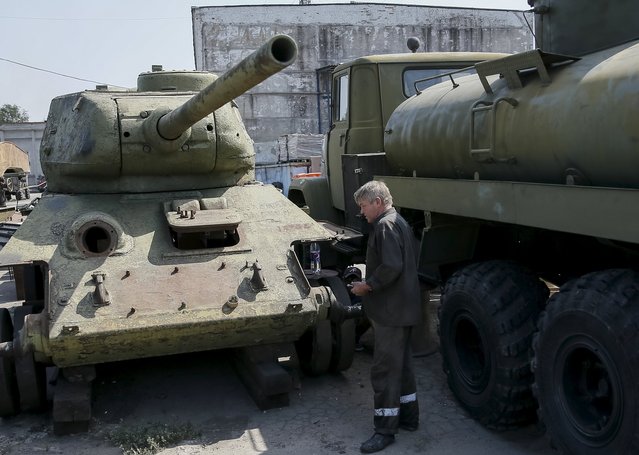
A worker looks at an old soviet tank T-34 (L) as he fixes military vehicle (R) at a Phaeton museum in Zaporizhia, Ukraine, August 11, 2015. (Photo by Gleb Garanich/Reuters)

A worker looks at an old soviet tank T-34 (L) as he fixes military vehicle (R) at a Phaeton museum in Zaporizhia, Ukraine, August 11, 2015. The museum stopped the restoration works of their collection of about 120 retro autos and motorcycles to help the Ukrainian army to restore military vehicles and equipment which will be used in the conflict in Ukraine eastern regions. (Photo by Gleb Garanich/Reuters)
Details
12 Aug 2015 12:54:00
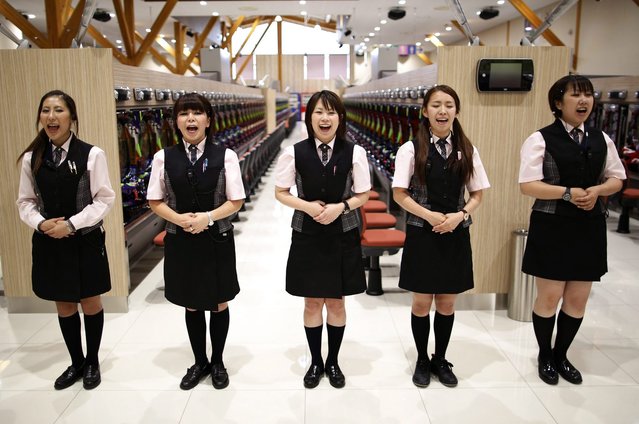
Dynam employees say a greeting message as they receive customer-care training ahead of the grand opening of the company's pachinko parlour in Fukaya, north of Tokyo July 29, 2014. (Photo by Issei Kato/Reuters)

Dynam employees say a greeting message as they receive customer-care training ahead of the grand opening of the company's pachinko parlour in Fukaya, north of Tokyo July 29, 2014. Japan's once-booming pachinko industry, grappling with a greying customer base and the threat of new competition from casinos, is adopting a softer touch and smoke-free zones to lure a new generation of players, particularly women. Pachinko, a modified version of pinball, is a fading national obsession, with about 12,000 parlours nation-wide and one in thirteen people playing the game. But that figure is declining as the population shrinks and younger people prefer games on their mobile phones. (Photo by Issei Kato/Reuters)
Details
25 Aug 2014 10:18:00