Loading...
Done
A makeshift aircraft plummets into the Moskva River during the Red Bull Flugtag Moscow 2011 competition. (Photo by Sergei Karpukhin/Reuters)

Spectators in Moscow were treated to the site of humorously designed makeshift aircraft plunging into the Muskova River during the Red Bull Flugtag Moscow 2011 competition. 38 teams took part at the Flugtag – which means “flying day” – a competition in which teams in fancy dress attempt to pilot human-powered, home-made flying machines off a six-meter-high platform into water.

Photo: A makeshift aircraft plummets into the Moskva River during the Red Bull Flugtag Moscow 2011 competition. (Photo by Sergei Karpukhin/Reuters)
Details
27 Jul 2012 08:09:00
“Where the Summer Grass Leads”. (Kindra Nikole)

“Hello! My name is Kindra, and photography, over the last six months has become a happily all-consuming activity for me. Through my photos and creation of them, I escape into another world entirely, and then share that world with others. It brings me unending amounts of joy, and I never plan to stop!”. – Kindra Nikole

Photo: “Where the Summer Grass Leads”. (Photo by Kindra Nikole)
Details
25 Nov 2012 11:03:00


Two of the first six “neighborhood electric vehicles” (NEV) to be leased by the U.S. Army are on display during an introductory ceremony at Fort Myer January 12, 2009 in Arlington, Virginia. The Army has leased 800 of the non-tactical NEVs with a goal of 4,000 vehicles by 2011. These NEVs are manufactured by the Global Electric Motorcars division of Chrysler Corporation. With a full eight-hour charge, the NEVs can traverse 30 miles at a top speed of 25-miles-per-hour. (Photo by Chip Somodevilla/Getty Images)
Details
14 Apr 2011 09:37:00
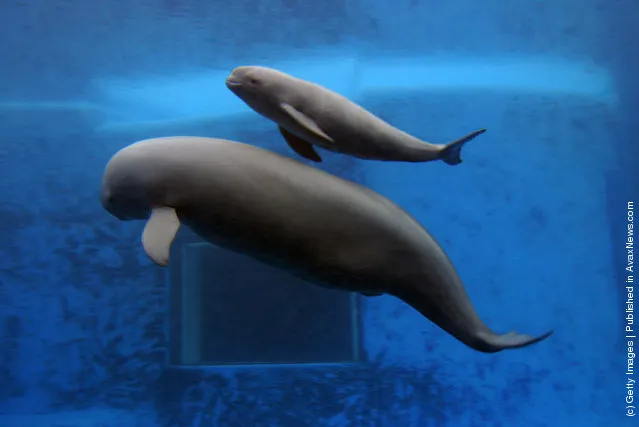
A newly born Yangtze finless porpoise (top) swims with his mother at the Hydrobiology Institute of the Chinese Academy of Sciences

“The finless porpoise (Neophocaena phocaenoides) is one of six porpoise species. In the waters around Japan, at the northern end of its range, it is known as the sunameri. A freshwater population found in the Yangtze River in China is known locally as the jiangzhu or «river pig»”. – Wikipedia

Photo: A newly born Yangtze finless porpoise (top) swims with his mother at the Hydrobiology Institute of the Chinese Academy of Sciences on June 3, 2007 in Wuhan of Hubei Province, China. (Photo by China Photos/Getty Images)
Details
20 Feb 2012 12:23:00
Women wearing Dirndl, a traditional Alpine folk dress, run to get a place in a tent for the opening of the 185th Oktoberfest beer festival in Munich, Germany, 22 September 2018. (Photo by Karl- Josef Hildenbrand/DPA/Alamy Live News)

Women wearing Dirndl, a traditional Alpine folk dress, run to get a place in a tent for the opening of the 185th Oktoberfest beer festival in Munich, Germany, 22 September 2018. The Oktoberfest lasts until October 7 and is the world's largest beer festival. The beer festival typically draws over six million visitors. (Photo by Karl- Josef Hildenbrand/DPA/Alamy Live News)
Details
24 Sep 2018 00:05:00
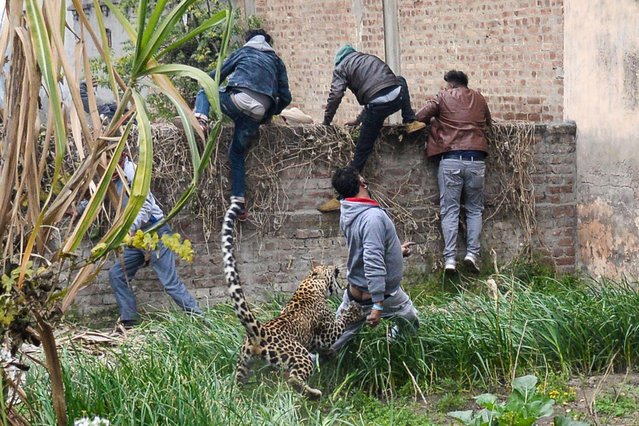
A leopard attacks an Indian man as others climb a wall to get away from the animal in Lamba Pind area in Jalandhar on January 31, 2019. (Photo by Shammi Mehra/AFP Photo)

A leopard attacks an Indian man as others climb a wall to get away from the animal in Lamba Pind area in Jalandhar on January 31, 2019. After a leopard was spotted in a house in Lamba Pind area of Jalandhar city, subsequent attempts to capture it led to the animal attacking at least six people, though none was injured seriously, local media said. (Photo by Shammi Mehra/AFP Photo)
Details
04 Feb 2019 00:07:00
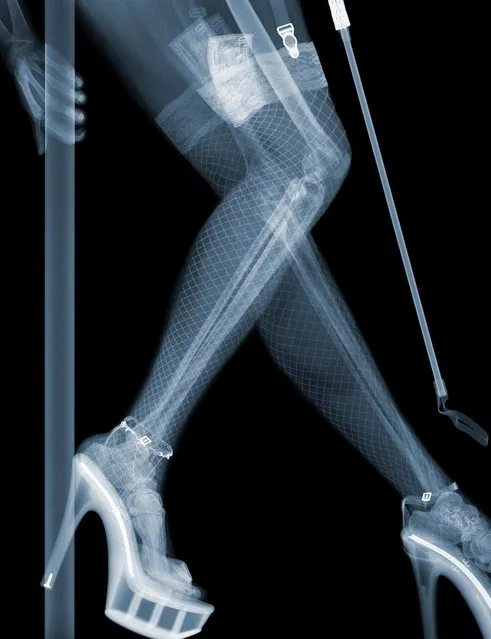
“Stripper”: Has tucked her cash away safely. (Photo by Nick Veasey/Barcroft Media)

British artist Nick Veasey used an X-ray machine to show us exactly what's going on under people's clothes. The equipment took copies of items separately before they were mashed together to create characters and situations. The work is part of Veasey's latest exhibition named “X-ray Voyeurism”. In order to create the work, the 51-year-old has spent the last 20 years exposing himself to harmful radiation in his studio. Photo: “Stripper”: Has tucked her cash away safely. (Photo by Nick Veasey/Barcroft Media)
Details
22 Jun 2014 10:49:00
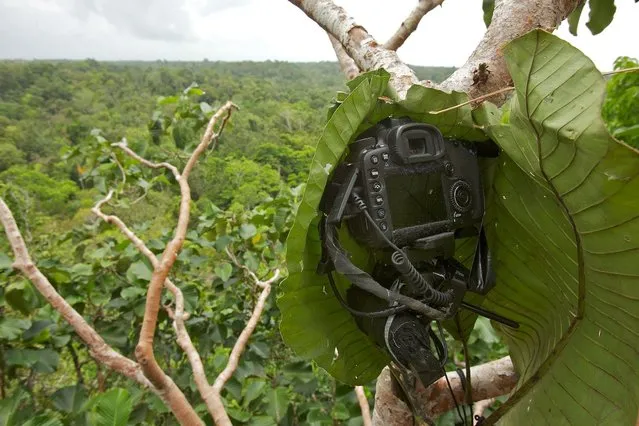
Tim Laman - Wildlife Photojournalist

Tim Laman is a field biologist and wildlife photojournalist. His pioneering research in the rain forest canopy in Borneo led to a PhD from Harvard and his first National Geographic article in 1997. Since then, he has pursued his passion for exploring wild places and documenting little-known and endangered wildlife by becoming a regular contributor to National Geographic. He has eighteen articles to his credit to date, all of which have had a conservation message. Some have focused on endangered species such as Orangutans or Hornbills, while others, such as a series of articles on Conservation International’s Biodiversity Hotspots, have highlighted regions under intense pressure.
Details
14 Sep 2013 10:13:00