Loading...
Done
Wang Shang-chi, 75, a mobile hats vender, rides his bike on a parking lot next to the Taipei City Zoo on July 9, 2020. (Photo by Sam Yeh/AFP Photo)

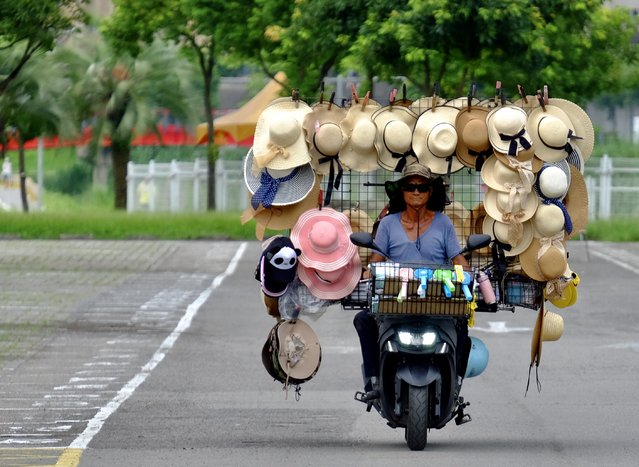
Wang Shang-chi, 75, a mobile hats vender, rides his bike on a parking lot next to the Taipei City Zoo on July 9, 2020. (Photo by Sam Yeh/AFP Photo)
Details
11 Jul 2020 00:07:00

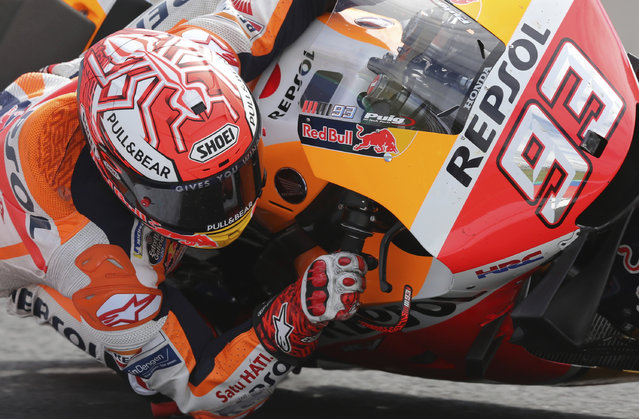
In this Sunday, March 31, 2019, file photo, Marc Marquez, of Spain, drives his motorcycle during the Moto GP race at the Termas de Rio Hondo circuit in Argentina. The reigning MotoGP champion has dominated the Circuit of the Americas from the year it opened and the Repsol Honda rider comes back right back on top of the season standings in a chase for a sixth title in seven years. (Photo by Nicolas Aguilera/AP Photo/File)

In this Sunday, March 31, 2019, file photo, Marc Marquez, of Spain, drives his motorcycle during the Moto GP race at the Termas de Rio Hondo circuit in Argentina. The reigning MotoGP champion has dominated the Circuit of the Americas from the year it opened and the Repsol Honda rider comes back right back on top of the season standings in a chase for a sixth title in seven years. (Photo by Nicolas Aguilera/AP Photo/File)
Details
15 Apr 2019 00:01:00
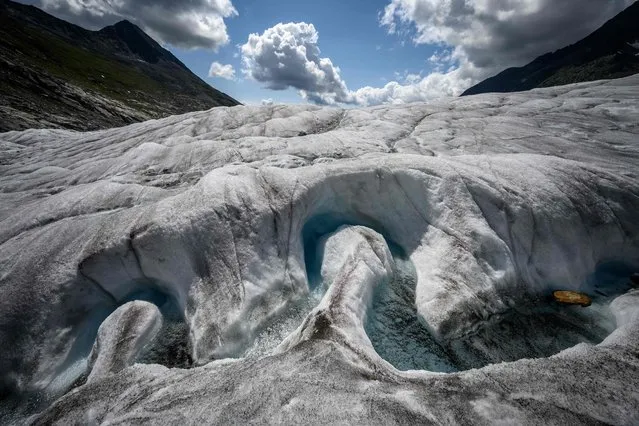
A picture taken on August 25, 2021 shows a view of the Aletsch Glacier. After hiking for hours across the mountain and a vast expanse of white, Swiss glaciologist Matthias Huss crouches down near the middle of the massive glacier and checks the measurements. Analysis of the data gathered from Aletsch, the largest glacier in the Alps, paints a dire picture of the toll that climate change is taking on the behemoth. (Photo by Fabrice Coffrini/AFP Photo)

A picture taken on August 25, 2021 shows a view of the Aletsch Glacier. After hiking for hours across the mountain and a vast expanse of white, Swiss glaciologist Matthias Huss crouches down near the middle of the massive glacier and checks the measurements. Analysis of the data gathered from Aletsch, the largest glacier in the Alps, paints a dire picture of the toll that climate change is taking on the behemoth. (Photo by Fabrice Coffrini/AFP Photo)
Details
21 Oct 2021 08:38:00
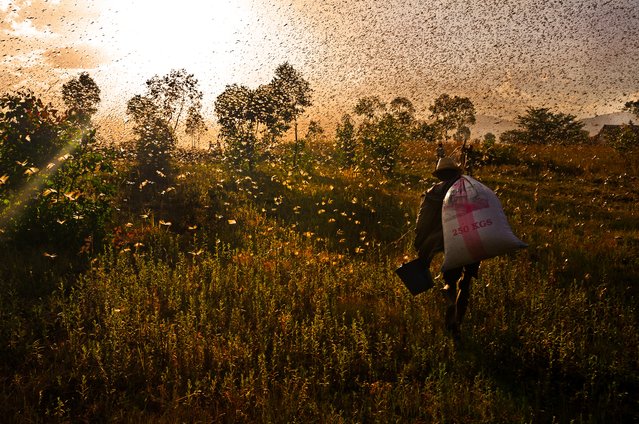
“Locusts & Men”. Oppression, interaction, collaboration. In the life cycle of nature nothing is lost, but the coexistence of different species is sometimes difficult. In Madagascar periodically returns the archaic antagonism between man and the migratory locust, in a circle of life where the two species are looking for space and food for their survival. Photo location: Madagascar, 2013. (Photo and caption by Michele Martinelli/National Geographic Photo Contest)

“Locusts & Men”. Oppression, interaction, collaboration. In the life cycle of nature nothing is lost, but the coexistence of different species is sometimes difficult. In Madagascar periodically returns the archaic antagonism between man and the migratory locust, in a circle of life where the two species are looking for space and food for their survival. At the end of the day a man walks home carrying on his shoulders the heavy bag which contains the locusts captured during the day. The insects provide nutritious meals for the man and his family. Photo location: Madagascar, 2013. (Photo and caption by Michele Martinelli/National Geographic Photo Contest)

ATTENTION! All pictures are presented in high resolution. To see Hi-Res images – just TWICE click on any picture. In other words, click small picture – opens the BIG picture. Click BIG picture – opens VERY BIG picture.
Details
03 Dec 2013 10:59:00
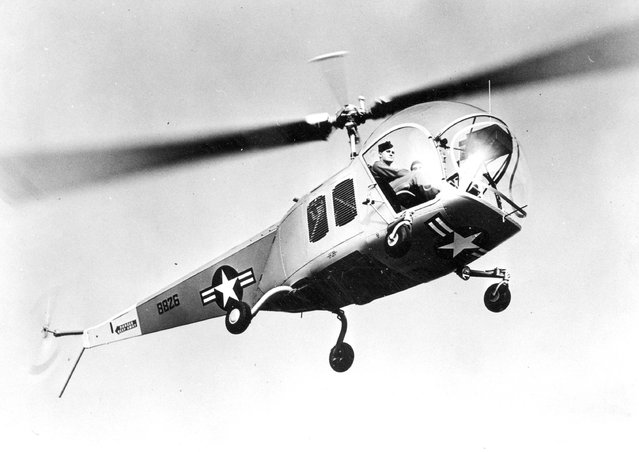
Number 10. BELL H-13 SIOUX was a two-bladed, single engine, light helicopter built by Bell Helicopter. Westland Aircraft manufactured the Sioux under license for the British military as the Sioux AH.1 and HT. (Photo by AP Photo)

Number 10. BELL H-13 SIOUX was a two-bladed, single engine, light helicopter built by Bell Helicopter. Westland Aircraft manufactured the Sioux under license for the British military as the Sioux AH.1 and HT. In 1947, the United States Air Force ordered the improved Bell Model 47A. Most were designated YR-13 and three winterized versions were designated YR-13A. The United States Army first ordered Bell 47s in 1948 under the designation H-13. These would later receive the name Sioux. The Bell-built H-13 B is seen airborne in this April 29, 1951 photo. The helicopter is equipped with a 173 horsepower engine, cruises at 85 miles per hour, climbs 900 feet in a minute and has a service ceiling of 11,500 feet. (Photo by AP Photo)
Details
08 Aug 2014 11:59:00
An infrared portrait from NASA's Spitzer Space Telescope which shows generations of stars is seen in this undated NASA handout image released February 14, 2013. In this wispy star-forming region, called W5, the oldest stars can be seen as blue dots in the centers of the two hollow cavities (other blue dots are background and foreground stars not associated with the region). Red shows heated dust that pervades the region's cavities, while green highlights dense clouds. (Photo by NASA/Reuters/JPL-Caltech/Harvard-Smithsonian/Handout)

An infrared portrait from NASA's Spitzer Space Telescope which shows generations of stars is seen in this undated NASA handout image released February 14, 2013. In this wispy star-forming region, called W5, the oldest stars can be seen as blue dots in the centers of the two hollow cavities (other blue dots are background and foreground stars not associated with the region). Red shows heated dust that pervades the region's cavities, while green highlights dense clouds. (Photo by NASA/Reuters/JPL-Caltech/Harvard-Smithsonian/Handout)
Details
03 Mar 2013 08:44:00
This handout picture released by Jordan's Aqaba Special Economic Zone Authority (ASEZA) on July 23, 2019 shows a Jordanian Armed Forces armored vehicle lies on the seabed of the Red Sea off the coast of the southern port city of Aqaba, part of a new underwater military museum. (Photo by Aqaba Special Economic Zone Authority via Reuters)

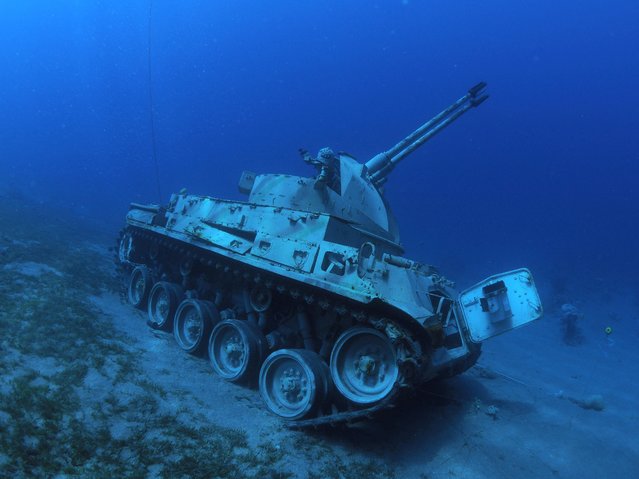
This handout picture released by Jordan's Aqaba Special Economic Zone Authority (ASEZA) on July 23, 2019 shows a Jordanian Armed Forces armored vehicle lies on the seabed of the Red Sea off the coast of the southern port city of Aqaba, part of a new underwater military museum. (Photo by Aqaba Special Economic Zone Authority via Reuters)
Details
26 Jul 2019 00:07:00
Bloodthirsty by Thomas P Peschak, Germany/South Africa — winner, Behaviour: birds. When rations run short on Wolf Island, in the remote northern Galápagos, the sharp-beaked ground finches become vampires. Their sitting targets are Nazca boobies and other large birds. The finches rely on a scant diet of seeds and insects, which regularly dries up, so they drink blood to survive. ‘I’ve seen more than half a dozen finches drinking from a single Nazca booby,’ says Tom. Rather than leave their nests the boobies tolerate the vampires, and the blood loss doesn’t seem to cause permanent harm. (Photo by Thomas P Peschak/2018 Wildlife Photographer of the Year)

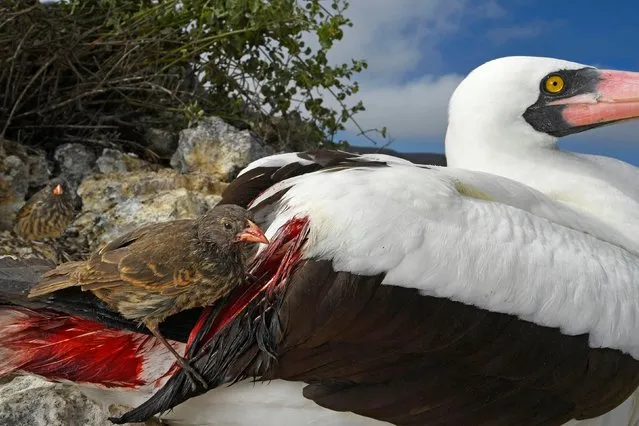
Bloodthirsty by Thomas P. Peschak, Germany/South Africa — winner, Behaviour: birds. When rations run short on Wolf Island, in the remote northern Galápagos, the sharp-beaked ground finches become vampires. Their sitting targets are Nazca boobies and other large birds. The finches rely on a scant diet of seeds and insects, which regularly dries up, so they drink blood to survive. ‘I’ve seen more than half a dozen finches drinking from a single Nazca booby,’ says Tom. Rather than leave their nests the boobies tolerate the vampires, and the blood loss doesn’t seem to cause permanent harm. (Photo by Thomas P. Peschak/2018 Wildlife Photographer of the Year)
Details
19 Oct 2018 00:05:00